
I urge you, first of all, to pray for all people. Ask God to help them; intercede on their behalf, and give thanks for them. [1 Timothy 2:1 (NLT)]
 The eight of us were brainstorming a difficult and heartbreaking situation facing a family we know. We had plenty of ideas about getting them the assistance and guidance they needed but we could only direct them to the resources. They were the ones who needed to take action. Unfortunately, people often want the easy way out of their problems and desire money rather than counsel. Money, however, is usually only a stop gap measure and it frequently enables a bad situation to continue or get worse. The problem we were discussing required change, compromise, work and sacrifice far more than money. These people had to take action and, truth be told, I’m not so sure they wanted to step forward and act.
Those of us sitting around the table that day are people of action. Asking “What can I do? How can I help?” we wanted to roll up our sleeves, get to work, and make things right. This was one of those times, however, when there was nothing more we could do and no way we could make things right. There always will be hurts that we can’t heal, needs that we can’t satisfy, situations we can’t fix, and wrongs that we can’t make right. Sadly, this was one of them.
I learned something important that day, something even more important than understanding when it is time to step back from someone else’s problem. Our discussion had reached a dead end and we started repeating ourselves. At that point, we had a choice. We could beat a dead horse and keep talking which probably would have turned our constructive discussion into gossip and censure. On the other hand, we could stop and pray. Fortunately, understanding we were helpless onlookers and seeing we were dangerously close to becoming judge and jury, someone suggested prayer! Knowing we can’t fix everything but that we can love and pray for everyone, we prayed and handed the situation to God.
The thing I learned that day? While I’ve always believed in the power of prayer, I hadn’t realized the power of just saying, “Let’s pray!” Pausing for prayer changed the entire tenor of the discussion. The next time I’m in one of those conversations that starts to go downhill into the territory of gossip, disapproval, or scorn, I know to say, “Let’s pray!” Prayer can change more than situations and other people; it can change the people doing the praying!
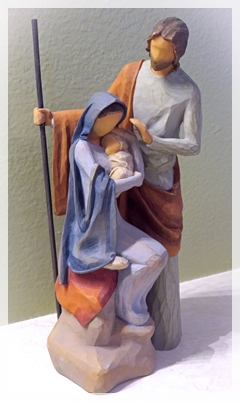 Although Epiphany celebrates the magi’s visit to the Christ child, for many people it simply marks the official end to the holiday season. It’s the day the tree goes down, lights are removed, and nativity scenes get stowed for another year. British tradition holds that if you haven’t removed the holiday décor by January 6, you must leave it in place all year long to avoid misfortune. I don’t know about misfortune but, in our community, you’ll face a fine if holiday lights or decorations remain after this week!
 In his gospel, Matthew writes of wise men from eastern lands who saw a ”star in the East.” This actually was a Greek term used in astrology at the time, en te Anatole, which meant “at the rising.” Now known as a heliacal rising, it describes a planet that rises above the eastern horizon shortly before dawn. Just moments after its appearance, it disappears in the sun’s glare. Better reflecting this astrological meaning, many Bibles translate the wise men seeing the star “as it rose.” While we’re not exactly sure what happened in the sky that drew the Magi to Judea, today’s astronomers have a pretty good idea.
 Although humanity started out as a perfect creation, we quickly lost that perfection in the Garden of Eden; Jesus was the only sinless perfect man. If He’s telling us to be perfectly sinless when He calls us to be perfect, we’re in trouble. I suppose we should be able to resist all sin (as did Jesus) but, in reality, no one else (not even the Apostle Paul) has managed to do that. Perfection is God’s alone and we flawed mortals will never be His equals. If Jesus means things like spotless kitchens, beds made with hospital corners, and clean mirrors when He says to be perfect, even without having guests, I’m still in serious trouble. Yet, Jesus’s answer to the rich young man that, to be perfect, he should sell his possessions and give to the poor tells us that possessions and how neatly they’re arranged have no importance to Him. So, what does it mean to be perfect?
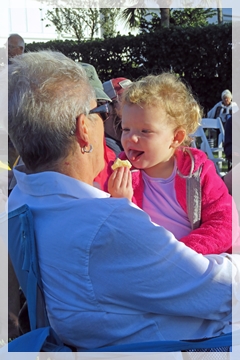 As we sang carols at the beach Christmas Eve, Sarah’s grand sat on her lap while finishing off a holiday cookie. By the time the little one was done with the cookie and cuddling her gram, Sarah’s shirt was a wrinkled mess of frosting, crumbs and cookie drool. I couldn’t help but think of the gospel story of parents bringing their children to Jesus for a blessing. Even in the first century, I imagine little children meant grubby hands, sticky fingers, and runny noses. From what we know of Jesus, though, I picture him welcoming those children onto His lap along with all of the mess that came with them. Perhaps some even left drool on his robe.
 Explaining her years of addiction, Alice said, “It’s all because my parents moved from Illinois to Texas while I was in high school.” Was the move a contributing factor to Alice’s drug use? Maybe, but that was more than twenty-five years ago and has nothing to do with her failure to deal with her behavior today. Since high school, she’s abandoned a child, served time in prison, been in and out of a well-known residential rehab so often that she should have her own room, and is still lying, stealing, and using. Like many of us, Alice is simply blame shifting.
 Devotions of the Heart