
All of this occurred to fulfill the Lord’s message through his prophet: “Look! The virgin will conceive a child! She will give birth to a son, and they will call him Immanuel, which means ‘God is with us.’” [Matthew 1:22-23 (NLT)]

In the first century, the prescribed time for a Jewish boy to be circumcised and officially receive his name was eight days after birth. Joseph and Mary brought their baby boy to be circumcised on the eighth day of His life; at that time, they named him Jesus. As with his cousin John (whose name meant “the Lord is gracious”), Jesus’s name was not chosen by His parents but was directed by a visiting angel.
Even if the God hadn’t chosen it, Jesus was the prefect name for this boy. In Hebrew, “Jesus” means “to deliver or to rescue” or “the Lord saves” and the angel told Joseph the child would save His people from their sins. The message in Jesus’s name was that God would deliver mankind. But, truth be told, the baby’s name wasn’t really Jesus! There was no letter J in either the Hebrew or Greek alphabets so our Savior’s name actually would have been Yeshua (a shortened form of Yehoshua) which translates from Hebrew to English as “Joshua.” The New Testament, however, was written in Greek and the Greek translation of Yeshua is Iesous which translates into English as “Jesus.”
While true meaning came with Jesus’s name, that’s not true of all names. My husband’s, for example, is Robert, which comes from the German Hrodebert. Although it means “bright fame,” he’s not famous and I’ve never seen his name in bright lights. He has other, more descriptive names, as well. I call him “honey,” our children call him “Dad,” the grands call him “Poppie,” his mother calls him “son,” his best buddies call him “friend,” and his employees called him “boss” (and maybe other things behind his back).
Just as my husband can be called many names, Jesus had other designations. Both Joseph and Mary were told that the baby would be called “Immanuel,” meaning “God with us,” but “Immanuel” wasn’t His only other name. Mary also was told that her child would be called both “the Son of the Most High” and the “Son of God.” Jesus referred to himself as “the bread of life, the good shepherd, the light of the world, the resurrection and the life, the true vine” and “the alpha and omega.” At Jesus’s baptism, John the Baptist called Him “the Lamb of God” and God called Him “my dearly loved son.” I imagine the Pharisees had several much less pleasant names for Him. Perhaps my favorite titles given to Jesus are from the book of Isaiah. They are the names we recently heard sung so joyfully from Handel’s Messiah: “Wonderful Counselor, the Mighty God, the Everlasting Father, the Prince of Peace.” Jesus is, indeed, all of that and much more!
There are two hundred and fifty-six names given in the Bible for the Lord Jesus Christ, and I suppose this was because He was infinitely beyond all that any one name could express. [Billy Sunday]

 In honor of that first Christmas, the one without decorations, piles of gaily wrapped presents or a feast, let’s try to keep it simple today and tomorrow. It’s not too late to change our plans and readjust our expectations. I’m sure Joseph and Mary didn’t plan on birthing in a stable, but their Christmas was a blessed one even though life didn’t go as they’d intended. Accept in advance that some things are certain to go wrong: guests won’t arrive on time, a gift will disappoint, food will burn, a drink will spill, toys will break, tears will be shed, directions will get thrown away, someone’s feelings will be hurt, and we’ll miss those who are absent. That’s as much a part of this holiday as church, carols, family, prayers, candy canes, laughter, a Christmas tree, and pine-scented candles.
 When we think of the Pharisees, we usually think of their hypocrisy and self-righteousness but they started out with good motives. Like us, they simply wanted to avoid sin. I have no doubt that some were well meaning, with high standards and pure motives. Since Jesus was teaching in the Temple, it was only right that these interpreters of the law would want to examine His teachings.
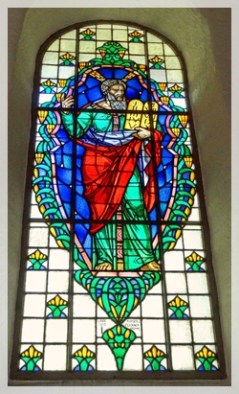 Throughout Scripture, we find Jesus at odds with the Pharisees, one of the most important Jewish sects of the day. Not priests, the Pharisees were laymen (mostly merchants and tradesmen) who zealously followed Mosaic Law, often by adding non-Biblical traditions to it. Considered interpreters of the law, they were known for their austere life style and vast knowledge. The Pharisees accepted the oral explanations and additions of earlier generations to be equally inspired and authoritative as the written words of the Torah (the first five books of the Bible).
 The following is a holiday pass-along story that has made the rounds on the Internet. Years ago, little Jimmy was shocked when his big sister told him there was no Santa. He tearfully went to his grandmother and asked her. Assuring Jimmy that Santa existed and she’d prove it to him, Grandma took him to the local department store. Instead of seeing the store Santa, as Jimmy expected they would, his grandmother gave him $10 and told him to use it to purchase a present for someone who needed one. Alone in the store, the boy pondered who should get a gift and finally decided on Robby, a boy in his classroom. Robby never went out at recess; although he said it was because he wanted to study, everyone knew it was because he didn’t have a warm coat. Jimmy found a brown wool coat, took it to the clerk and asked the price. After telling her he hoped he could afford it since it was a gift for a boy at school who didn’t have a coat, the clerk questioned how much he had. Proudly showing her his ten dollar bill, she told him that was the exactly what the coat cost and bagged it up for him.
 Devotions of the Heart