LET’S PRAY

I urge you, first of all, to pray for all people. Ask God to help them; intercede on their behalf, and give thanks for them. [1 Timothy 2:1 (NLT)]

snowy egretsThe eight of us were brainstorming a difficult and heartbreaking situation facing a family we know. We had plenty of ideas about getting them the assistance and guidance they needed but we could only direct them to the resources. They were the ones who needed to take action. Unfortunately, people often want the easy way out of their problems and desire money rather than counsel. Money, however, is usually only a stop gap measure and it frequently enables a bad situation to continue or get worse. The problem we were discussing required change, compromise, work and sacrifice far more than money. These people had to take action and, truth be told, I’m not so sure they wanted to step forward and act.

Those of us sitting around the table that day are people of action. Asking “What can I do? How can I help?” we wanted to roll up our sleeves, get to work, and make things right. This was one of those times, however, when there was nothing more we could do and no way we could make things right. There always will be hurts that we can’t heal, needs that we can’t satisfy, situations we can’t fix, and wrongs that we can’t make right. Sadly, this was one of them.

I learned something important that day, something even more important than understanding when it is time to step back from someone else’s problem. Our discussion had reached a dead end and we started repeating ourselves. At that point, we had a choice. We could beat a dead horse and keep talking which probably would have turned our constructive discussion into gossip and censure. On the other hand, we could stop and pray. Fortunately, understanding we were helpless onlookers and seeing we were dangerously close to becoming judge and jury, someone suggested prayer! Knowing we can’t fix everything but that we can love and pray for everyone, we prayed and handed the situation to God.

The thing I learned that day? While I’ve always believed in the power of prayer, I hadn’t realized the power of just saying, “Let’s pray!” Pausing for prayer changed the entire tenor of the discussion. The next time I’m in one of those conversations that starts to go downhill into the territory of gossip, disapproval, or scorn, I know to say, “Let’s pray!” Prayer can change more than situations and other people; it can change the people doing the praying!

If you claim to be religious but don’t control your tongue, you are fooling yourself, and your religion is worthless. [James 1:26 (NLT)]

Since God chose you to be the holy people he loves, you must clothe yourselves with tenderhearted mercy, kindness, humility, gentleness, and patience. Make allowance for each other’s faults, and forgive anyone who offends you. Remember, the Lord forgave you, so you must forgive others. Above all, clothe yourselves with love, which binds us all together in perfect harmony. And let the peace that comes from Christ rule in your hearts. For as members of one body you are called to live in peace. And always be thankful. [Colossians 3:12-15 (NLT)]

Copyright ©2019 jsjdevotions. All rights reserved.

THE STAR – Epiphany

But you, O Bethlehem Eph′rathah, who are little to be among the clans of Judah, from you shall come forth for me one who is to be ruler in Israel. [Micah 5:2a (RSV)]

star ornamentIn his gospel, Matthew writes of wise men from eastern lands who saw a ”star in the East.” This actually was a Greek term used in astrology at the time, en te Anatole, which meant “at the rising.” Now known as a heliacal rising, it describes a planet that rises above the eastern horizon shortly before dawn. Just moments after its appearance, it disappears in the sun’s glare. Better reflecting this astrological meaning, many Bibles translate the wise men seeing the star “as it rose.” While we’re not exactly sure what happened in the sky that drew the Magi to Judea, today’s astronomers have a pretty good idea.

To begin, we have to clarify a few of our misunderstandings about Christmas. While we think of Jesus’s birth as being in December, it probably occurred between March and October. Winters are cold and rainy in Judea; rather than sheep being in the fields in December, the shepherds would have sought shelter for their flocks. Moreover, the shepherds would have been keeping watch over their flocks at night only during lambing season (March and April). We also often think of Jesus’s birth as being the dividing line between B.C. and A.D. when, in fact, our calendar is about six years off.

Because there is nothing accidental or random about the universe, the movement patterns of the sun, moon, planets and stars can be observed and predicted. From what they’ve observed of these patterns, astronomers can also work backwards. Using a computer program to do just that, Rutgers University astronomer Michael Molnar found that, at twilight on March 20, 6 B.C., the moon eclipsed Jupiter. Then, on April 17, there was a heliacal rising of Jupiter and, at noon, the moon again eclipsed Jupiter. The heliacal rising continued until December 19 and, during that time, both Jupiter and Mars appeared in Aries, a constellation traditionally associated with Judea.

Picturing the magnificent star we often see depicted on Christmas cards, I’d wondered why the Magi were the only ones to take notice this stellar event. As Molnar explains it, these astronomical happenings were not spectacular because of their appearance but because of their rarity and would have had little significance to most people. The wise men, however, were not “most people.” Most likely astrologers from Babylon, they knew the prophecies that a king would be born to the house of David. Believing this king would be born when the moon eclipsed Jupiter, they probably had been searching the sky for years looking for signs like these.

While Molnar even offers a scientific explanation for the star appearing to stop, there also are other plausible explanations for this “star,” such as a close conjunction between Saturn and Jupiter. Whether it was an unexplainable miracle or an amazing natural phenomenon that miraculously coincided with Jesus’s birth, we know that these men saw something that made them believe a king had been born in Judea. Although we celebrate their visit to the Christ child on January 6 (often called Three Kings Day), they weren’t kings, we don’t know how many there were, and they probably arrived in Jerusalem anywhere from several months to two years after Jesus’s birth.

Although the events in the sky got them close to the new king, they had to stop and ask directions to actually find the child; it was only logical that they’d ask King Herod about this new king’s birth. Astrology was prohibited to the Jews and Herod had no astrologers but he did have priests and scribes. Knowing Micah’s prophecy, they directed the wise men to Bethlehem where they found Jesus.

Throughout Scripture we read that God speaks to us and reveals Himself in nature. It was through God’s amazing celestial creation that God revealed the birth of His son to these Gentile wise men. Yet, to find the king, nature wasn’t enough; they needed Scripture. The star told of His existence and got them close but it was the Word that got them there! Let us learn from these wise men. God reveals His power, majesty, and presence in nature but merely knowing that He exists is not enough. It is through Scripture that we actually will find and meet Him; it is though God’s word that we will come to know the King.

The Lord looks down from heaven upon the children of men, to see if there are any that act wisely, that seek after God. [Psalm 14:2 (RSV)]

Copyright ©2019 jsjdevotions. All rights reserved.

PERFECTION

He is the Rock; his deeds are perfect. Everything he does is just and fair. He is a faithful God who does no wrong; how just and upright he is! [Deuteronomy 32:4 (NLT)]

But you are to be perfect, even as your Father in heaven is perfect. [Matthew 5:48 (NLT)]

water lilyAlthough humanity started out as a perfect creation, we quickly lost that perfection in the Garden of Eden; Jesus was the only sinless perfect man. If He’s telling us to be perfectly sinless when He calls us to be perfect, we’re in trouble. I suppose we should be able to resist all sin (as did Jesus) but, in reality, no one else (not even the Apostle Paul) has managed to do that. Perfection is God’s alone and we flawed mortals will never be His equals. If Jesus means things like spotless kitchens, beds made with hospital corners, and clean mirrors when He says to be perfect, even without having guests, I’m still in serious trouble. Yet, Jesus’s answer to the rich young man that, to be perfect, he should sell his possessions and give to the poor tells us that possessions and how neatly they’re arranged have no importance to Him. So, what does it mean to be perfect?
Of course, Jesus wants us to be as flawless as humanly possible. Nevertheless, He isn’t expecting us to be completely faultless. By telling us to be perfect, He’s telling us to reflect the moral excellence of God, something God told people to do centuries earlier when He said, “Be holy because I am holy.” [Leviticus 19:2] Jesus is asking us to imitate God, just as children imitate their parents. The original Hebrew word used in this verse was tamim. Rather than perfect (meaning without fault, flaw or defect), it might better be translated as complete in all its parts, full grown or mature. Jesus is the standard by which we set our goal and He wants us become mature in our faith by growing more like Him.

The Pharisees tried to achieve perfection through exacting obedience to the law but, while they looked good on the outside, they were soiled inside (and Jesus took them to task for that). Our perfection will never be found their way. By telling us to be perfect, our words and actions are to match up with our faith. Jesus wants us to be resolute, wholehearted and completely committed to walking with Him and living His way. We’ll become perfect by living through the power of the Holy Spirit: by letting God’s glory shine through our imperfect and flawed lives into the world. Our call is not to have spotless mirrors but to mirror the spotless character of God.

Imitate God, therefore, in everything you do, because you are his dear children. Live a life filled with love, following the example of Christ. [Ephesians 5:1-2 (NLT)]

Don’t copy the behavior and customs of this world, but let God transform you into a new person by changing the way you think. Then you will learn to know God’s will for you, which is good and pleasing and perfect. [Romans 12:2 (NLT)]

And as we live in God, our love grows more perfect. So we will not be afraid on the day of judgment, but we can face him with confidence because we live like Jesus here in this world. [1 John 4:17 (NLT)]

Copyright ©2019 jsjdevotions. All rights reserved.

THE BEST CHRISTMAS EVER

And while they were there, the time came for her baby to be born. She gave birth to her first child, a son. She wrapped him snugly in strips of cloth and laid him in a manger, because there was no lodging available for them. [Luke 2:6-7 (NLT)]

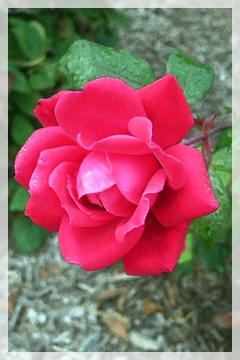
red roseIn honor of that first Christmas, the one without decorations, piles of gaily wrapped presents or a feast, let’s try to keep it simple today and tomorrow. It’s not too late to change our plans and readjust our expectations. I’m sure Joseph and Mary didn’t plan on birthing in a stable, but their Christmas was a blessed one even though life didn’t go as they’d intended. Accept in advance that some things are certain to go wrong: guests won’t arrive on time, a gift will disappoint, food will burn, a drink will spill, toys will break, tears will be shed, directions will get thrown away, someone’s feelings will be hurt, and we’ll miss those who are absent. That’s as much a part of this holiday as church, carols, family, prayers, candy canes, laughter, a Christmas tree, and pine-scented candles.
We’re all anxious about Christmas. No one, however, was more anxious than Mary on that first Christmas. She had plenty of reasons to be apprehensive and nervous. She’d conceived miraculously, endured an eighty-mile journey from Nazareth to Bethlehem, and was in labor in a strange place with no women nearby to reassure or help her. There were no prenatal classes, birthing coaches, monitors, epidurals, fancy birthing rooms, comfy pillows, soft music in the background, warmed blankets, or medical care. Without a doubt, with the sheep and cows as her midwives, she was a frightened young girl. Yet, somehow, through God’s grace, she managed quite well. She had the simplest and most meaningful Christmas celebration ever! Things may not have gone right but they went perfectly—just as God planned!

Thank you, Lord, for the salvation brought to us by a baby in a manger. Tonight, as we celebrate Christ’s birth, please replace our apprehension with anticipation, our anxiety with hope, our chaos with peace, and our stress with serenity. Let there be joy, not sorrow; generosity, not selfishness; and love, not rancor.

This Flow’r, whose fragrance tender With sweetness fills the air,
Dispels with glorious splendor The darkness everywhere.
True man, yet very God, From sin and death He saves us,
And lightens every load. [“Lo, How a Rose E’re Blooming” (Friedrich Layritz)]

All who heard the shepherds’ story were astonished, but Mary kept all these things in her heart and thought about them often. [2 Luke 2:18 (NLT)]

Copyright ©2018 jsjdevotions. All rights reserved.

NEITHER ADD NOR SUBTRACT 

Jesus replied, “You hypocrites! Isaiah was right when he prophesied about you, for he wrote, ‘These people honor me with their lips, but their hearts are far from me. Their worship is a farce, for they teach man-made ideas as commands from God.’ For you ignore God’s law and substitute your own tradition.” [Mark 7:6-8 (NLT)]

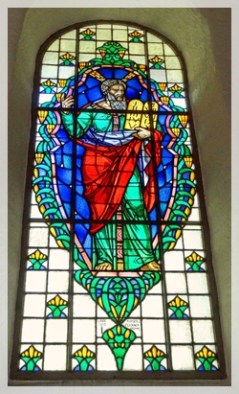
Moses - Meiringen - MichaelskircheThroughout Scripture, we find Jesus at odds with the Pharisees, one of the most important Jewish sects of the day. Not priests, the Pharisees were laymen (mostly merchants and tradesmen) who zealously followed Mosaic Law, often by adding non-Biblical traditions to it. Considered interpreters of the law, they were known for their austere life style and vast knowledge. The Pharisees accepted the oral explanations and additions of earlier generations to be equally inspired and authoritative as the written words of the Torah (the first five books of the Bible).

These oral traditions consisted of highly specific rules and regulations that were based on the belief that, when God gave Moses the written law on Mt. Sinai, He also elaborated on how those laws were to be kept. Unwritten, those explanations became oral tradition. This devotion to oral law developed during Judah’s Babylonian captivity. Jerusalem’s destruction and their exile was God’s punishment for the neglect of His law so it’s understandable that no one wanted to endure God’s wrath again. Restrictions evolved that were designed to “build a hedge” around the Torah and guard against any possible breach of the law, whether by ignorance or accident.

With their detailed laws regarding nearly every aspect of life, the Pharisees were legalists. Jesus didn’t approve of the way they’d replaced God’s simple law with complex man-made laws that placed a heavy burden on the people—a burden that God hadn’t given them. Although work on the Sabbath clearly was prohibited, the Pharisees determined that meant a tailor could not carry a needle stuck in his coat, someone couldn’t carry ink enough to write two letters of the alphabet, and no one could spit on the ground because that might make a hole, which would be digging, which would be work! It was the Pharisees who said the disciples had sinned by reaping and preparing food on the Sabbath when they picked heads of grain off their stalks!

Jesus criticized the Pharisees’ devotion to the letter of the law while ignoring the spirit of the law: love of God and love of neighbor. Some of the Pharisees’ man-made rules, such as a loophole allowing people to renege on promises, actually helped them get around God’s law. If someone swore by the Temple or the altar, the oath wasn’t binding but, if someone swore by the gold of the temple or the offerings on the altar, it was! Because of their inability to be consistent in their interpretation of oral and written laws, Jesus compared the Pharisees to the blind leading the blind.

For many Pharisees, there was a disparity between what they professed (righteousness) and what they put into practice (self-righteousness). Jesus certainly didn’t like the gap between what they proclaimed and what they actually practiced and frequently called them out for their pretense and hypocrisy.

There’s much we can learn from the Pharisees: not to be pompous, hypocritical, judgmental prigs is perhaps the most obvious. That we shouldn’t think we can earn heaven by following a false gospel of salvation through works is another. The hardest lesson is probably the most subtle: never to confuse human dogma for Godly doctrine. When we give our personal preferences or denominational rules and traditions equal billing to God’s law, as did the Pharisees, it’s easy to become pompous, hypocritical, judgmental prigs.

Do not add to or subtract from these commands I am giving you. Just obey the commands of the Lord your God that I am giving you. [Deuteronomy 4:2 (NLT)]

Copyright ©2018 jsjdevotions. All rights reserved.

THE OLIVE BRANCH

Forget about the wrong things people do to you, and do not try to get even. Love your neighbor as you love yourself. [Leviticus 19:18 (NCV)]

Humility has such power. Apologies can disarm arguments. Contrition can defuse rage. Olive branches do more good than battle axes ever will. [Max Lucado]

mourning doveIn a “Baby Blues” comic strip, Zoe, the big sister approaches her brother and tells him, “About that fight we had a while ago…I would like to extend an olive branch.” With a panicked look on his face, the little brother screams, “MOM!!! Zoe’s threatening me with a stick!” Having had an older brother who delighted in tormenting me, I completely sympathized with the little boy. There were times when my brother just had to come near me and I would frantically call out, “Mom, Steve’s hitting me again!” I wanted to avoid another painful punch but, who knows, maybe one of those times he, like Zoe, was just offering an olive branch.

Long before the ancient Greeks and Romans used the olive branch as a symbol for victory and peace, the story of Noah recorded that a dove brought an olive branch back to the ark which meant the end of the flood and the earth’s rebirth. Symbolizing peace and reconciliation, the olive branch requires two things: someone to extend it and someone else to accept it. An apology and its acceptance are two sides of the same coin, as are the asking of forgiveness and the granting of it. Both are necessary for peace in our lives.

I have been like Zoe, the one extending the olive branch; I admitted my offense, apologized, and asked forgiveness but was rebuffed. Unfortunately, there are people who will never accept an apology, no matter how humbly or amiably it is offered. All we can do is keep the olive branch extended, pray that God will open their hearts, and continue to love.

Like Zoe’s little brother, however, it’s not always easy to accept that olive branch. Wanting to protect ourselves from further hurt or disappointment, we may prefer suspicion, aloofness, hostility, or anger. Forgiveness doesn’t mean we have to trust people who are untrustworthy or believe those who are dishonest. An act of love, mercy and grace, forgiveness is releasing the offense and offender to God; it is giving up our right to hurt those who’ve hurt us. Being the wronged party never gives us permission to continue the wrong with unforgiveness.

Along with an olive branch, the handshake is a gesture of peace. In ancient Greece, hands were grasped to demonstrate that neither person held a weapon. In Rome, the grasp became more of an arm grab as a way of seeing whether any weapons were hidden in someone’s sleeves. The shaking part is said to come from medieval England when knights would shake hands in an attempt to shake loose any concealed weapons.

Hopefully, we don’t need to worry about lethal weapons hiding in sleeves when we shake hands this holiday season. Nevertheless, we need to put aside the invisible weapons we carry: things like anger, gossip, blame, intolerance, pettiness, jealousy, resentment, and disrespect. Let’s extend any olive branches that need to be extended and accept any that are offered. If there can’t be peace throughout the world this holiday season (and from the news that looks unlikely), let there at least be peace and reconciliation in our homes and families.

To be forgiven is such sweetness that honey is tasteless in comparison with it. But yet there is one thing sweeter still, and that is to forgive. As it is more blessed to give than to receive, so to forgive rises a stage higher in experience than to be forgiven. [Charles Spurgeon]

When you are praying, if you are angry with someone, forgive him so that your Father in heaven will also forgive your sins. But if you don’t forgive other people, then your Father in heaven will not forgive your sins. [Mark 11:25-26 (NCV)]

Copyright ©2018 jsjdevotions. All rights reserved