
Fools have short fuses and explode all too quickly; the prudent quietly shrug off insults. … Overlook an offense and bond a friendship; fasten on to a slight and—good-bye, friend! … Smart people know how to hold their tongue; their grandeur is to forgive and forget. [Proverbs 12:16,17:9,19:11 (MSG)]
 Our sermon series was titled “Cage Fighting” but, rather than learning about fighting one another, we were learning about the ways Satan attacks and keeps us in his stronghold with things like shame, doubt, fear, and unforgiveness. While chatting with the pastor before church, I asked about the day’s topic. When he said offense, I immediately thought we’d learn how to take offensive action against the enemy.
Imagine my surprise when I looked at the program and read the above proverbs. What did they have to do with spiritual weaponry? I was annoyed that I’d been misled until I realized I’d misunderstood the pastor. While I was thinking about taking the offense and attacking, the pastor would be speaking about taking offense and feeling attacked! He’d be talking about the kind of offense that leaves us feeling outraged, insulted, or (in my case) annoyed. My error that morning illustrates why we’re easily offended; I had a preconceived idea, misunderstood what I heard, and didn’t ask for an explanation.
In this day of political correctness — when BC (before Christ) has become BCE (before the common era), Christmas trees are called holiday trees, no one is quite sure how to refer to a disability, and The Journal of Animal Ethics says calling pets “pets” is demeaning (they’re now “companion animals” to their “human carers”) — mistakes are bound to happen.
Everyone should be treated fairly and with dignity but never giving offense is nearly impossible. In reality, most people don’t mean to be racist, sexist, ageist, elitist, narrow-minded, impolite, or behind the times but sometimes they are. We can give offense inadvertently simply because words may have different connotations to different people, many words have changed their meaning over the years, or we don’t know the history of a symbol or phrase. For example, since my black postman wears a pith helmet, I didn’t know it was considered by some to be a symbol of white imperialism until Melania Trump was criticized for wearing one in Kenya.
Although wrong, rudeness and thoughtlessness are part and parcel of modern life. Today’s world offers an unlimited opportunity to both give and take offense and Satan loves it. To fight him, we must act and speak with love and do our best to never give offense, whether intentionally or unintentionally. Nevertheless, just as we must act and speak with love, we must listen and respond with love, as well. Knowing how easy it is to be offensive, we must work harder at not taking offense. Unfortunately, self-involved creatures that we are, we often choose to see bias, insult, or aggression even where none is meant. Taking offense just leads to anger, resentment, and retaliation (some of the enemy’s favorite weapons). Often translated as forbearance, patience is a fruit of the spirit and literally means “long temper.” Indeed, we should be slow to anger, give the benefit of doubt, not respond to provocation, turn the other cheek, love, and forgive.
I actually did learn how to fight the enemy that day, just not the way I thought. While some may say the best defense is a good offense, I learned that the best defense is not to take offense at all! As for me, I’m going to spend my time and energy being offended by the things that really matter: human trafficking, hunger, lack of safe drinking water for much of the world, poverty, homelessness, discrimination and injustice.
Whenever anyone has offended me, I try to raise my soul so high that the offense cannot reach it. [Rene Descartes]
We should be too big to take offense and too noble to give it. [Abraham Lincoln]
 It was the first night of a new small group study and, as we gathered our books to leave, one woman said she’d have to read more about the author since he sounded like a Calvinist. Believing that everyone has the God-given ability to choose God’s grace, she didn’t want to participate in the class if the book’s author believed that, in the past, God chose some among mankind for His own and that that Christ died only for those elect.
 For I am the Lord, your healer. [Exodus 15:26b (RSV)]
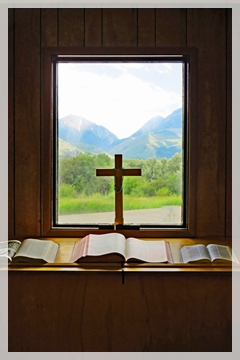 Before the incarnation of Christ, God dwelt first in the tabernacle and then in the temple. The innermost room of the temple was called the “Most Holy Place” and it was in this inner room that God’s glory was said to dwell. This was where the Ark of the Covenant was kept and where the high priest came with a sacrifice to atone for his and the nation’s sins every year. With the incarnation of Jesus, God no longer dwelt in the temple but in the flesh of His son and, for a brief time, God actually walked among His people. Yet, when Jesus lived as a man, only a few people at a time could be in His presence. With His death, there is no yearly atonement ritual because Jesus atoned for our sins once and for all. Moreover, because of His resurrection, ascension, and the presence of the Holy Spirit, it is possible for countless people, everywhere, to be in His presence at the same time. Once we become believers, the Holy Spirit moves into our hearts and each one of us, as members of Christ’s church, become part of His body and the temple of God.
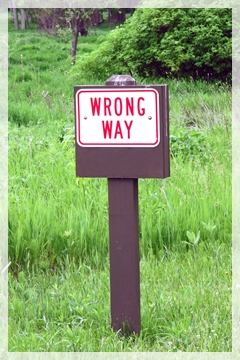 We were at the symphony watching Alfred Hitchcock’s Psycho while the orchestra played Bernard Herrman’s chilling soundtrack. When Janet Leigh’s character, Marion Crane, stepped into the shower, a man in the audience yelled, ”Don’t do it!” Since most of us saw the movie decades ago, we didn’t want her to take that fatal shower either. In spite of the warning, however, she did. Since Marion was at the Bates Motel because she’d embezzled $40,000 from her boss, perhaps that man should have yelled, “Don’t do it!” much sooner.
 In 2009, the United Methodist Church and the Evangelical Lutheran Church of America became full Communion partners. This agreement, while showing respect for each other’s differences, created a relationship based on a common confession of faith and a mutual recognition of Baptism and the sharing of Holy Communion. That the partnership included a mutual recognition of ordained ministers of both denominations meant that a local Methodist church could hire a soon-to-be ordained Lutheran minister. Her ordination, done by the Lutheran bishop, was held in the Methodist church she would be serving. The only sticking point for the rite was the Lutheran Bishop’s insistence that actual wine be used for Communion. Methodists have a strong temperance tradition and this church uses only grape juice. The senior Methodist pastor managed to find an excellent compromise when he obtained a non-alcoholic wine that satisfied both Methodist and Lutheran sensibilities; the ordination went off without a hitch.
