
Since we believe that Christ died for all, we also believe that we have all died to our old life. He died for everyone so that those who receive his new life will no longer live for themselves. Instead, they will live for Christ, who died and was raised for them. … This means that anyone who belongs to Christ has become a new person. The old life is gone; a new life has begun! [2 Corinthians 5: 14b-15,17 (NLT)]
Sanctification is the work of God’s free grace, whereby we are renewed in the whole man after the image of God, and are enabled more and more to die unto sin, and live unto righteousness. [Westminster Shorter Catechism]
 In writing about the Sinner’s Prayer yesterday, I wondered if, by saying it, a new believer gets the false impression that his responsibility ends with a prayer when, in fact, it has just begun! Justification takes only a moment but sanctification takes a lifetime. Addressing the guilt of our sins, justification is when, by the grace of God, we are made righteous through God’s grace and our faith. It’s as if we’re guilty criminals, standing in God’s courtroom, and God pardons us. Telling us our debt to society has been paid, He sets us free. While it’s easy to walk out of the courthouse, it’s not so easy to alter the behavior that led to our life of crime. Like any felon, we need to change our ways, which is where sanctification comes in. Rather than the reformation of a criminal, it is the transformation of a sinner.
Powered by our faith and the Holy Spirit, sanctification transforms our sinful character so we grow more and more like Christ. Focusing on the destructive power of sin in our lives, it gradually shapes our hearts, minds, and desires to those of God. Sanctification is the work part of our salvation and requires diligence in study, prayer, fellowship, witness and service. It’s coming to know Jesus, loving and obeying God, and letting both His word and the Holy Spirit convict us when we sin. It’s allowing God to work in and through us, not as a way to earn His blessings and favor, but because we delight in His will.
While holiness is the goal of sanctification, I don’t think any mortal can live a life completely free from sin in this world. Nevertheless, even though we can’t attain sinless perfection, like the Apostle Paul, we will continue to struggle against sin and temptation as long as we’re on this side of the grass. We persevere and, through the power of the Holy Spirit, continue to grow more and more like Christ every day.
The Christian life requires hard work. Our sanctification is a process wherein we are coworkers with God. We have the promise of God’s assistance in our labor, but His divine help does not annul our responsibility to work. [R.C. Sproul]
 I’ve been reading The Pilgrim’s Progress by John Bunyan. I vaguely remember reading some of this 1678 allegory in senior English class but that time it was in the original Middle English (the language of the King James Bible) and difficult to read. Although I thought myself a Christian, I was unfamiliar with most of the biblical references and concepts. In reality, all I wanted to do was to get through it (along with Beowulf, Canterbury Tales, and Ulysses). With less pressure, more biblical knowledge, and an annotated modern version, I’m actually enjoying the tale of Christian: a man who leaves his home in the City of Destruction in search of the Celestial City.
 Look carefully then how you walk, not as unwise but as wise, making the best use of the time, because the days are evil. Therefore do not be foolish, but understand what the will of the Lord is. [Ephesians 5:15-17 (ESV)]
 Knowing it was important for both the leaders and the people to be reminded of their rights and duties, Moses instructed the people that every seven years the Book of the Law was to be publicly read to the entire nation (including children and foreigners). This reading was to be done following the Feast of Shelters during the Sabbath year.
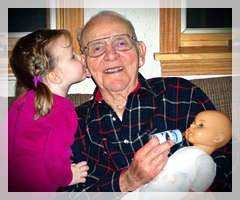 I actually thought the prayer’s words that Sunday asked God to show us what children can teach us about love. Looking through old photos of my children and grands later that day, I thought about the ways children love. Unconcerned with decorum (or potential lawsuits), they’re demonstrative: touching freely and unabashedly. They cuddle and climb on laps, hold hands, and spontaneously give hugs and kisses. They burrow under the covers with us and aren’t bothered by morning breath or bed head. It doesn’t matter if they’re soaking wet from the sprinkler or their faces are covered with jelly or chocolate nor do they care if we’re sweaty and dirty from working in the garden or dressed in our finest for a night on the town. Children know that touch, whether a high-five or hug, is an important part of love.
