CLAIMING PROMISES

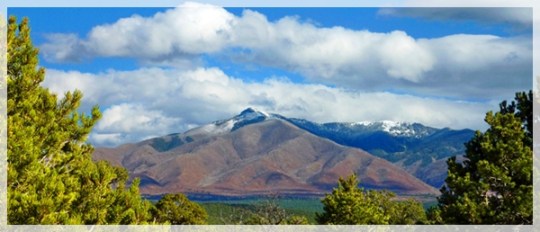
Tao New MexicoThe Lord said to Abram after Lot had parted from him, “Look around from where you are, to the north and south, to the east and west. All the land that you see I will give to you and your offspring forever. [Genesis 13:14-15 (NIV)]

We were visiting an area church when the pastor referred to the above verse from Genesis in which God tells Abram (Abraham) he can have all that he sees. As the sermon continued, the pastor recited a litany of God’s promises and he seemed to be preaching a “name it and claim it” theology only, in this case, it was more like a “see it and have it” one. Granted, it was the first sermon of the year and the pastor clearly wanted to start 2018 on a high note. Nevertheless, claiming God’s promises and thinking they mean He’ll give me everything I visualize isn’t Bible-based.

Our faith and thoughts do not create our reality. If they did, among other things, I would be two inches taller, a whole lot shapelier, and without a wrinkle or any arthritis. Our faith doesn’t promise to give us what we want; our faith allows us to trust in a loving God who will give us what we need.

It is God, not us, who chooses when and how to bless us or, as in the case of Job, afflict us with trials. Job didn’t suffer for lack of faith; the man was filled with faith and yet he endured the loss of everything but his life. As baffled as Job was by his troubles, he knew that blessings and misfortune are not a measure of faith; the faithful can suffer and the wicked can prosper.

Not every promise made by God in the Bible is a wholesale across-the-board promise to us. That promise to Abram was a specific promise about a particular piece of land. God said nothing about seeing and having boyfriends, better jobs, new businesses, babies, healing, bigger paychecks, larger houses, or freedom from debt. Jesus came to save us from our sins and not from bankruptcy, infertility, illness, bad marriages, poor choices, difficult in-laws, unemployment, demanding bosses, or a host of other life challenges. Moreover, He calls us to sacrifice and deny rather than want and get.

Although God wants our love, worship, faith and obedience, He doesn’t need any of those to operate the universe. As Christians, we believe in the power of faith and prayer but we must remember the real power lies in God and His plan. We’re not God’s customers who can order what they see; we’re His children who thankfully accept what He gives us. Much of what we envision never will be ours simply because it’s not in God’s plan. When we become so intent on seeing what we want, we may miss seeing the blessings we’ve been given or different ones waiting in another direction.

I will continue to have faith and claim God’s promises—the promises of His presence, unfailing love, strength, wisdom, comfort, forgiveness, salvation, eternal life, the power of Holy Spirit, and the peace of God. What He hasn’t promised me is that if I see it, believe it or name it, it will be mine.

 Faith is not the belief that God will do what you want. It is the belief that God will do what is right. [Max Lucado]

Do not be anxious about anything, but in every situation, by prayer and petition, with thanksgiving, present your requests to God. And the peace of God, which transcends all understanding, will guard your hearts and your minds in Christ Jesus. [Philippians 4:6-7 (NIV)]

Copyright ©2018 jsjdevotions. All rights reserved.

A MATTER OF PERSPECTIVE

When I was with the Jews, I lived like a Jew to bring the Jews to Christ. When I was with those who follow the Jewish law, I too lived under that law. Even though I am not subject to the law, I did this so I could bring to Christ those who are under the law. When I am with the Gentiles who do not follow the Jewish law, I too live apart from that law so I can bring them to Christ. But I do not ignore the law of God; I obey the law of Christ. [1 Corinthians 9:20-21 (NLT)]

raccoons - Corkscrew swamp sanctuaryLike the rest of the east coast, Florida had a cold spell last week. With a temperature of 40, the weatherperson warned of a windchill of 36. Cautioning about the hazardous weather, she suggested that small children and animals stay indoors. That same morning, our son’s family in the north woke to -4 with a windchill of -20. For them, it was just another cold winter morning. They calmly bundled up the kids and walked them to school as they do every day. What a difference of perspective 1,400 miles makes!

How we view the world around us often depends on how it affects us. We were enjoying the antics of a pair of raccoons as they dug in the water for snails and crayfish when we heard, “Where’s my rifle now that I need it?” Stunned by such a negative reaction to what was an “Aha!” moment for us, we turned to look at the speaker who explained his vehement reaction to these engaging animals. To this farmer from Iowa, raccoons are masked marauders who wreak havoc with his corn crop and in his hen house. One person’s pleasure easily can be another’s pain in the neck! Where we saw two of God’s delightful creatures, he saw only destructive pests and I had to concede he made a good point.

Before meeting Jesus on the road to Damascus, the Apostle Paul was a devout Jew. As a Pharisee, he carefully abided by every one of the Torah’s 613 commandments. Gentiles, however, didn’t abide by the restrictive Jewish laws. They shaved their beards with a razor, didn’t recite the Shema (a Jewish prayer) twice a day, didn’t wear tefillin on their heads and arms or have tzitzit on the corners of their robes, made no distinction between kosher and non-kosher, and didn’t follow a host of other rules about food, work, and clothing. When Paul met with them, he didn’t go into their homes and tell them how wrong they were. He didn’t insist they keep kosher, add tassels to their robes or put mezuzahs on their door posts. Knowing that Christ had freed the Jews from the Torah’s regulations, the only law about which Paul was concerned was the law of Christ. Understanding the Gentiles’ different point of view, Paul respected it and lived their way with them. On the other hand, Paul also respected the perspective of the Jews. Having always followed the strict ritual observances of the Torah, he knew they’d be disturbed to see him break from any of them. When with the Jews, Paul followed their traditions, probably recited the Shema, and refrained from eating pork, shellfish, or milk and meat together. That didn’t make Paul a hypocrite—he openly admitted the way he changed behavior depending on his company. It simply meant that, rather than being judgmental, he respected others enough to look at things from their viewpoint. With each group, he found common ground in Jesus Christ. When we take the time to see the world from someone else’s perspective, we might just learn something; I know we’d be better evangelists!

Yes, I try to find common ground with everyone, doing everything I can to save some. I do everything to spread the Good News and share in its blessings. … So whether you eat or drink, or whatever you do, do it all for the glory of God. Don’t give offense to Jews or Gentiles or the church of God. I, too, try to please everyone in everything I do. I don’t just do what is best for me; I do what is best for others so that many may be saved. [1 Corinthians 9:22b-23, 10:31-33 (NLT)]

Copyright ©2018 jsjdevotions. All rights reserved.

WHERE IS GOD?

DARK GREEN FRITILLARY“You intended to harm me, but God intended it all for good. He brought me to this position so I could save the lives of many people. No, don’t be afraid. I will continue to take care of you and your children.” So he reassured them by speaking kindly to them. [Genesis 50:20-21 (NLT)]

The above words were spoken by Joseph to his brothers—the men who planned on killing him until greed entered into it and they sold him into slavery for twenty pieces of silver. In retrospect, God’s plan made sense to Joseph but what about the thirteen years he spent between being thrown into a cistern like a piece of trash and becoming second in command to Pharaoh? Was Jacob’s beloved son so confident of God’s plan while standing on the slave auction block in Egypt? What about when he was unjustly accused of rape by Potiphar’s wife? He may have been the warden’s favorite prisoner, but he languished in jail for a crime he refused to commit! What did he think of God’s plan then? When Pharaoh’s cup-bearer was restored to his former position, Joseph’s hopes rose only to have them dashed when the man forgot about his cell mate for another two years. Did Joseph ever doubt? Did he ever ask, “Where’s God in all of this?”

I thought of Joseph’s words after praying for a toddler who is fighting a losing battle with metastasized cancer. In terrible pain, her physicians are running out of treatment options. “Where is God in all of this?” I wondered. “What good can possibly come from it?” If I’m asking these questions, I know her family must be asking them as well. As they watch their daughter suffer, do they ever wonder if God has abandoned them? In retrospect, maybe it will make sense someday. Perhaps the knowledge the toddler’s oncologists glean from her treatment will save some other child. Who knows? Right now, however, her parents can’t look back—they can only look forward and the future is bleak.

It’s times like these that call for faith and hope. God didn’t walk away from us when He finished with creation and He hasn’t walked away from us now. He is still here—at large and in charge! No matter how desolate the circumstances appear, God has not forgotten, abandoned or ignored us.

If I truly believe God is good and in control, I must trust in His inexplicable plan. I believe He is gently holding this little girl and wiping her tears. I believe He is standing with His arms around her worried parents as they stand beside her and that He’s guiding the hospital staff as they insert IVs and search for ways to save her precious life. I know His Holy Spirit is giving voice to my silent prayers for her.

In retrospect, Joseph saw God’s purpose in all he endured. Whether or not we will ever understand God’s actions regarding this beautiful child, I don’t know. From Joseph’s story, we know that God can reroute evil to accomplish good. God was there for Joseph and He’s there for this little girl and her family. He is present; we’re just having trouble seeing Him. Open our eyes, O Lord, open our eyes.

We want Christ to hurry and calm the storm. He wants us to find Him in the midst of it first. [Beth Moore]

And we know that God causes everything to work together for the good of those who love God and are called according to his purpose for them. [Romans 8:28 (NLT)]

Yet I still dare to hope when I remember this: The faithful love of the Lord never ends! His mercies never cease. Great is his faithfulness; his mercies begin afresh each morning. I say to myself, “The Lord is my inheritance; therefore, I will hope in him!” [Lamentations 3:21-24 (NLT)]

Copyright ©2018 jsjdevotions. All rights reserved.

SINNERS ALL

Well then, if you teach others, why don’t you teach yourself? You tell others not to steal, but do you steal?  You say it is wrong to commit adultery, but do you commit adultery? You condemn idolatry, but do you use items stolen from pagan temples? You are so proud of knowing the law, but you dishonor God by breaking it. [Romans 2:21-23 (NLT)]

Steamboat ski areaWhile yesterday’s story of the testy foul-mouthed grandpa was funny, it was also sad. That grouchy man with the bad vocabulary claims to be a God-fearing Christian and yet he thought nothing of losing his patience and taking God’s name in vain when annoyed by a little boy! His story points out the complaint so many have about the Christian church—we’re just a bunch of hypocrites!

I know a young pastor, raised in a church family, who was so disillusioned by the hypocrisy he saw that he gave up on God. Fortunately, God didn’t give up on him and He eventually came to Christ. I have several Roman Catholic friends who have left Christianity because of the hypocrisy they saw regarding priestly abuse in the church. The news has been filled with various preachers, celebrities, and politicians, claiming to be Christians with high moral values, who have been knocked off their pedestals with assorted scandals. Unfortunately, their public unmasking throws mud on the entire church.

In actuality, we all are guilty of hypocrisy. It’s just that, for most of us, our hypocrisy is rarely publicized. Nevertheless, just because our falseness isn’t exposed on the media doesn’t mean we’re any less guilty of it. Sometimes, all it takes is a little child’s repetition of our words to convict us!

Knowing that our behavior is our witness, we tend to focus on outward appearances and wear a false face of righteousness. Eventually, however, that perfect persona cracks, our hypocrisy is evident, and our witness becomes worthless. The best witnesses to the power of Christ are the Christians who are the most open and honest about their own weaknesses. When someone says we should forgive and doesn’t, that’s hypocrisy. When someone says we should forgive but confesses to difficulty doing so, that’s honesty. None of us are perfect and we all struggle with sin; why is that so hard for us to admit?

I write about praying and reading the Bible but do neither of them enough. I write about trusting God but I worry. I write about having a strong faith but have moments of doubt and even though I write about letting God lead me, I resist handing Him the reins! I would be a hypocrite if I denied being the terribly flawed person I am. My hypocrisy is in the pointing of my finger at the grumpy grandpa when I, too, have been known to let loose with a string of profanity! Admitting our flaws is not the same as accepting them and, like the Apostle Paul, we continue to be works in progress. Although better than we were, none of us are a good as we could be!

There’s not one Christian who completely lives up to the standard set by the Bible. Rather than trying to appear perfect on the outside, we must let God repair us from the inside. Through the power of the Holy Spirit, we can progress toward the goal of becoming more like Christ. Just because we haven’t attained that goal doesn’t make us hypocrites, it simply makes us human.

So get rid of all the filth and evil in your lives, and humbly accept the word God has planted in your hearts, for it has the power to save your souls. But don’t just listen to God’s word. You must do what it says. Otherwise, you are only fooling yourselves. [James 1:21-22 (NLT)]

Copyright ©2018 jsjdevotions. All rights reserved.

INTERRUPTIONS

Zion Ntl ParkAnd now I have a word for you who brashly announce, “Today—at the latest, tomorrow—we’re off to such and such a city for the year. We’re going to start a business and make a lot of money.” You don’t know the first thing about tomorrow. You’re nothing but a wisp of fog, catching a brief bit of sun before disappearing. Instead, make it a habit to say, “If the Master wills it and we’re still alive, we’ll do this or that.” [James 4:13-15 (MSG)]

The woman sadly told me they’d come here for a three-month job sixteen years ago. The position became permanent and southwest Florida had been their home ever since. Unfortunately, she added, they’d be moving back north that week. Hurricane Irma had interrupted their lives when it destroyed their home and all of their belongings. Over three months later, they were no closer to rebuilding than on the day after the storm. They’d been moving from hotel to hotel but, with tourist season fast approaching, there literally is no room at the inns. “It’s time to pack up and go,” she said tearfully, adding, “We’re just blessed to have a place to go up north.”

In the Bible, many names are used for the Lord: God Almighty/El-Shaddai, The Lord Our Peace/Yahweh-Shalom, God of Seeing/El-Roi, The Lord Will Provide/ Yahweh-Jireh, The Lord Who Heals/Yahweh-Rapha, and The Lord is There/Yahweh-Shammah. There is another quite fitting but non-Biblical name for the Lord: God of Interruption!

That woman’s life was interrupted and she is in good company. Life’s interruptions aren’t always bad but they’re usually inconvenient. Moses wasn’t looking for another job while tending sheep in Midian but God interrupted his life with a burning bush and a forty-year assignment. Joseph, the favored son of Jacob, had his life rudely interrupted when he was sold into slavery. Elisha was plowing his fields when God had Elijah lay his cloak on the man’s shoulders and anoint him as the prophet’s replacement. Both Mary and Joseph’s lives and wedding plans were interrupted with the angelic announcement of a pregnancy. For that matter, consider Elizabeth and Zechariah. They wanted a child but that unexpected pregnancy certainly interrupted the elderly couple’s lives. Simon Peter and Andrew were throwing their nets into the water and James and John were repairing theirs when Jesus interrupted their lives. Consider Paul. The Jewish zealot was on the road to Damascus when God interrupted with a visit from Jesus and blindness. His interruptions continued throughout Paul’s ministry; when he wanted to go to Bithynia, God intervened by sending him to Troas and his journey to Rome was interrupted by a shipwreck. The God of Interruption was at work.

Health issues, the death of a loved one, job transfers, car accidents, job loss, a job offer, finances, divorces, pregnancies, fires, flood, hurricanes, and the needs of others are just some of the ways our lives are interrupted. Let us never lose sight of the fact that, just because a life has been interrupted, it is not over—it has simply changed. God has placed those interruptions there for us; they are opportunities to trust in God, believe that His grace is sufficient, and to grow more like Christ. Circumstances can take much from us—homes, people, health, jobs, and even our reputations—but they can’t take away our loving God.

When the God of Interruption disrupts our lives, let us always remember that He also is God Almighty and the Lord of our Peace. He is the God who sees, provides for and heals us. He is there for us now and forevermore.

Father in Heaven, help us to see your hand in life’s many interruptions and to offer thanks for the many surprises and disruptions in our lives.

“I don’t think the way you think. The way you work isn’t the way I work.” God’s Decree. “For as the sky soars high above earth, so the way I work surpasses the way you work, and the way I think is beyond the way you think. [Isaiah 55:8-9 (MSG)]

Copyright ©2017 jsjdevotions. All rights reserved.

SEASONS

For everything there is a season, a time for every activity under heaven. A time to be born and a time to die. A time to plant and a time to harvest [Ecclesiastes 3:1-2 (NLT)]

aspens and pines - Steamboat COWhile some might groan, others may cheer on this the first day of winter. I remember being asked my favorite season and, since we were skiing in the mountains at the time, I said it was winter. I loved it for the powder days on the slopes, pines laden with snow cookies, and aspens glistening with hoarfrost. Winter meant snuggling by the fire with a hot drink while watching the snow fall and the wind blow the trees. Then, I remembered that winter brings shoveling, cleaning off the car, cold toes, drippy noses, falling on the ice, and heating bills so I quickly changed my answer.

Perhaps spring was the favorite—the snow starts to melt, song birds reappear, snowbells and crocuses peek out of the ground, coats and boots are shed, and we again feel the sun’s warmth. Then I remembered the crowds and traffic jams of spring break, rain, mud, spring cleaning, and tax day! Summer was a possibility with its peonies, peaches, butterflies, sandals, tank tops and lazy days at the lake. Then again, summer brings mosquitoes, allergies, humidity, weeding, mowing, and tornadoes. When I remembered the autumn colors, the cranes and geese gathering before migration, Thanksgiving dinner, and the sound of leaves rustling while walking through the woods, I thought my answer should be autumn except for the box elder bugs, gloomy days, leaf raking, more allergies, and hurricanes.

Years later, I’m still unable to give a decisive answer to which is my favorite season; I hope to never see it as one of those problematic online security questions. Fortunately, with the passing of each year, we get to return to all the things we like about a season and, when we tire of that season’s challenges, we know a new season will arrive within a few months’ time.

Unlike the calendar’s seasons, we only get one spring, summer, fall and winter in life. Unfortunately, much of our time in any season often is spent trying to move into the next or return to the previous one. The four-year old proudly tells you she’ll be five at her next birthday and, the day she turns fifteen, she claims to be almost sixteen. She may be OK with being twenty-two but she drags her heels as thirty approaches. Trying to hold the next season at bay, she “recently turned forty” at forty-five and, when the invitation to join AARP arrives at fifty, she bursts into tears. By sixty, she looks longingly at the clothes she used to wear a decade earlier, hates having her picture taken, and refuses to share her age. It’s not until her nineties that she again brags about how old she’ll be at her next birthday.

While we know the date and length of the calendar’s seasons, we have no such knowledge of our own personal seasons. My mother-in-law, at 101, is enjoying a lengthy winter; my mother died at 47 and had none. In answer to that question about a favorite season, perhaps the wisest answer is that our favorite season is the one we’re in! We can’t recapture yesterday and tomorrow comes way too quickly so let us thankfully and joyfully accept our today.

It’s only when we truly know and understand that we have a limited time on earth – and that we have no way of knowing when our time is up – that we will begin to live each day to the fullest, as if it was the only one we had. [Elizabeth Kübler Ross]

This is the day the Lord has made. We will rejoice and be glad in it. [Psalm 118:24 (NLT)]

Teach us to realize the brevity of life, so that we may grow in wisdom. [Psalm 90:12 (NLT)]

Copyright ©2017 jsjdevotions. All rights reserved.