
The community continually committed themselves to learning what the apostles taught them, gathering for fellowship, breaking bread, and praying. Everyone felt a sense of awe because the apostles were doing many signs and wonders among them. There was an intense sense of togetherness among all who believed; they shared all their material possessions in trust. [Acts 2:42-44 (VOICE)]
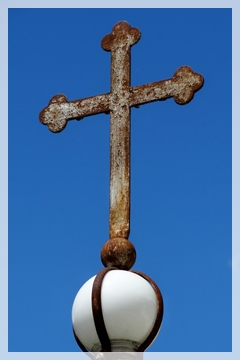 We’ve left our old church and have been house-of-worship hunting. At first, it was like trying various hotels once a week to discover one of good quality with the right character, location and features for us. Having found a good prospect, we returned several times, signed up for a community service opportunity, and joined a Bible study. Now, it’s more like we’re renting a house; we’re meeting the neighbors, becoming familiar with the community and getting an idea of what a long-term stay would be like. Nevertheless, we’re still just temporary residents and have no ties. As we settle into this new church, however, our prayer is that it will feel enough like home that we’ll want to join it, which is a commitment somewhat like buying a house (but without the mortgage and closing costs.)
Why should we bother to join a church? Couldn’t we continue as Christians-at-large and just visit churches? There are over 85 Christian churches in our town alone, so we’d have plenty from which to choose. Why not remain a renter and just drop our tithe into whatever basket is passed that morning?
There’s a big difference, however, between renting something and living in a home we own. In a nightly rental, we really don’t care about the mud we’ve tracked into the room, the burnt out light bulb, the coffee stain on the rug, or the people in the next room. Even when renting a house, as long as everything works, we aren’t concerned about the aging appliances, the armadillo digging under the deck, or the grubs in the grass; we can always move on elsewhere. It’s only when we buy the house that we become committed to it, our neighbors, and the well-being of our community. Because the house’s future is tied to ours, we invest our time, love and money; we look not just to today but also to tomorrow.
Church membership, like owning a house, is a commitment and one that means far more than maintaining a building. It’s a commitment to worship regularly, serve one another, spread God’s word, study, fellowship, pray for each other, uphold doctrine, be held accountable, and ensure its future for the next generation. Commitment is what keeps us caring for the homes we own and it’s what keeps a church functioning.
When we buy a house, we get a building but, when we join a church, we get much more than that. We get a ready-made family—a group of people who share the same foundation and love of Christ. And that, more than anything else, is why we’ll join the church that’s right for us once it’s found.
Why should you join a church? Because by committing yourself in that way you will help to fulfill your purpose as a Christian. It seems pretty obvious from biblical metaphors of building stones and body parts that the Christian life was not meant to be lived alone. You, as a Christian, were designed and created by God, not for a life of individuality and self-will, but to fill a niche in the spiritual building called the church. [Jim Elliff]
 The Lord said to Abram after Lot had parted from him, “Look around from where you are, to the north and south, to the east and west. All the land that you see I will give to you and your offspring forever. [Genesis 13:14-15 (NIV)]
 Like the rest of the east coast, Florida had a cold spell last week. With a temperature of 40, the weatherperson warned of a windchill of 36. Cautioning about the hazardous weather, she suggested that small children and animals stay indoors. That same morning, our son’s family in the north woke to -4 with a windchill of -20. For them, it was just another cold winter morning. They calmly bundled up the kids and walked them to school as they do every day. What a difference of perspective 1,400 miles makes!
 On the last day of 2017, the liturgist at church read Malachi 4, Revelation 22, Proverbs 31, and Psalm 150 – the last chapters of the Old and New Testaments, Proverbs and Psalms. It seemed fitting on the final day of the year to hear the final words in Scripture. It was only later that I learned there is one more psalm, but don’t look for it in your Bible. Unless you are Greek Orthodox, it probably won’t be there. Although both the traditional Hebrew and Christian Bibles have only 150 psalms, the Greek translation known as the Septuagint includes Psalm 151. We have to go back a bit in history to understand why the discrepancy.
 “You intended to harm me, but God intended it all for good. He brought me to this position so I could save the lives of many people. No, don’t be afraid. I will continue to take care of you and your children.” So he reassured them by speaking kindly to them. [Genesis 50:20-21 (NLT)]
 While yesterday’s story of the testy foul-mouthed grandpa was funny, it was also sad. That grouchy man with the bad vocabulary claims to be a God-fearing Christian and yet he thought nothing of losing his patience and taking God’s name in vain when annoyed by a little boy! His story points out the complaint so many have about the Christian church—we’re just a bunch of hypocrites!
 Devotions of the Heart