
For I know the plans I have for you,” says the Lord. “They are plans for good and not for disaster, to give you a future and a hope. [Jeremiah 29:11 (NLT)]
For I can do everything through Christ, who gives me strength. [Philippians 4:13 (NLT)]

If there were a Hall of Fame for favorite Bible verses, John 3:16, Jeremiah 29:11, and Philippians 4:13 would be in it; every year, they are the most popular verses on my favorite Bible web site. This year, in a stunning upset, Jeremiah 29:11 edged out perennial favorite John 3:16 for first place with Philippians 4:13 running a close third.
In 2017, John 3:16 easily held first place with Jeremiah 29:11 and Philippians 4:13 in a hotly contested race for the next two spots. In honor of the Electoral College meeting that year, the website determined which of those two verses carried each of the fifty states and gave them electoral votes. Had it been a presidential election, Jeremiah 29:11 would have won with 302 electoral votes. With the nation split into two camps, rather than dividing us into red or blue states, the site asked: “Do You Live in a ‘God Has a Plan’ State or an ‘I Can Do All Things’ State?” While my residence in is a “God Has a Plan” state, I wondered if that truly is my state of mind.
I’m a voter who splits her ticket. Sometimes, I’m accepting of circumstances, serenely confident in God’s plan, and (usually without complaint) easily can step forward in trust and faith. Other times, I’m sure that God has intentionally given me challenges to overcome—challenges to strengthen and mature my faith. Rather than accept the situation, confident in God’s power, I try to surmount the challenging circumstances. The problem arises when I’m unsure about whether I should trust and accept or trust and overcome.
Most of our decisions are made without consciously thinking about God—red or blue shirt, sneakers or sandals, oatmeal or yogurt, walk in the park or at the beach, and so on. We don’t ask God if we should go through the yellow light, where to park, or whether to buy peas or beans. We don’t consult Him about mowing the lawn, making the bed, balancing the checkbook, going to the grocery, or doing the laundry. Although we’re operating on auto-pilot, many of those little decisions can make a difference in our lives. They may determine if we’re in the right place at the right time or in the wrong place at the wrong time. Nevertheless, even if we did stop and pray about even the smallest decision, it’s unlikely that God would provide a definitive answer about all of them. I don’t think it’s because He doesn’t care but rather that He expects us to use our God-given common sense and free will to make our everyday choices godly ones.
Sometimes, even when we’ve asked for His guidance, God seems to be silent. We ask who to marry, which job to take, how much money to give, how much to keep, where to live, what cancer treatment to choose, how to deal with the addicted child, where to attend church, or whether to start a new business and His definitive answer just doesn’t seem to come. There’s no angel, star in the East, burning bush, writing on the wall, or wet fleece. The heavens don’t open, a lamb doesn’t miraculously appear, a donkey doesn’t speak, and a neon sign is unlikely. That God knows the detailed plan doesn’t mean He’s going to tell us what it is!
Perhaps knowing the plan isn’t as important for us as knowing the God who made the plan. He has revealed Himself and everything we need to know about living a godly life in Scripture. The more we know Him, the more we know His answers. We pray and proceed, trusting in the God who loved us enough to sacrifice His son for our salvation, the God whose plans are for good and not disaster, the God who wants to give us a future and hope. We do so, confident that we can do all we need to do through Christ who gives us strength.
Now may the God of peace—who brought up from the dead our Lord Jesus, the great Shepherd of the sheep, and ratified an eternal covenant with his blood—may he equip you with all you need for doing his will. May he produce in you, through the power of Jesus Christ, every good thing that is pleasing to him. All glory to him forever and ever! Amen. [Hebrews 13:20-21 (NLT)]
Copyright ©2018 jsjdevotions. All rights reserved.
 In honor of that first Christmas, the one without decorations, piles of gaily wrapped presents or a feast, let’s try to keep it simple today and tomorrow. It’s not too late to change our plans and readjust our expectations. I’m sure Joseph and Mary didn’t plan on birthing in a stable, but their Christmas was a blessed one even though life didn’t go as they’d intended. Accept in advance that some things are certain to go wrong: guests won’t arrive on time, a gift will disappoint, food will burn, a drink will spill, toys will break, tears will be shed, directions will get thrown away, someone’s feelings will be hurt, and we’ll miss those who are absent. That’s as much a part of this holiday as church, carols, family, prayers, candy canes, laughter, a Christmas tree, and pine-scented candles.
 When we think of the Pharisees, we usually think of their hypocrisy and self-righteousness but they started out with good motives. Like us, they simply wanted to avoid sin. I have no doubt that some were well meaning, with high standards and pure motives. Since Jesus was teaching in the Temple, it was only right that these interpreters of the law would want to examine His teachings.
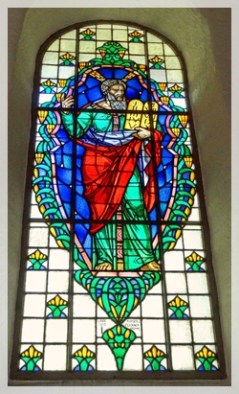 Throughout Scripture, we find Jesus at odds with the Pharisees, one of the most important Jewish sects of the day. Not priests, the Pharisees were laymen (mostly merchants and tradesmen) who zealously followed Mosaic Law, often by adding non-Biblical traditions to it. Considered interpreters of the law, they were known for their austere life style and vast knowledge. The Pharisees accepted the oral explanations and additions of earlier generations to be equally inspired and authoritative as the written words of the Torah (the first five books of the Bible).
 The following is a holiday pass-along story that has made the rounds on the Internet. Years ago, little Jimmy was shocked when his big sister told him there was no Santa. He tearfully went to his grandmother and asked her. Assuring Jimmy that Santa existed and she’d prove it to him, Grandma took him to the local department store. Instead of seeing the store Santa, as Jimmy expected they would, his grandmother gave him $10 and told him to use it to purchase a present for someone who needed one. Alone in the store, the boy pondered who should get a gift and finally decided on Robby, a boy in his classroom. Robby never went out at recess; although he said it was because he wanted to study, everyone knew it was because he didn’t have a warm coat. Jimmy found a brown wool coat, took it to the clerk and asked the price. After telling her he hoped he could afford it since it was a gift for a boy at school who didn’t have a coat, the clerk questioned how much he had. Proudly showing her his ten dollar bill, she told him that was the exactly what the coat cost and bagged it up for him.
 In a “Baby Blues” comic strip, Zoe, the big sister approaches her brother and tells him, “About that fight we had a while ago…I would like to extend an olive branch.” With a panicked look on his face, the little brother screams, “MOM!!! Zoe’s threatening me with a stick!” Having had an older brother who delighted in tormenting me, I completely sympathized with the little boy. There were times when my brother just had to come near me and I would frantically call out, “Mom, Steve’s hitting me again!” I wanted to avoid another painful punch but, who knows, maybe one of those times he, like Zoe, was just offering an olive branch.
 Devotions of the Heart