THE DAILY BLESSINGS OF FAITH

By his divine power, God has given us everything we need for living a godly life. We have received all of this by coming to know him, the one who called us to himself by means of his marvelous glory and excellence. [2 Peter 1:3 (NLT)]
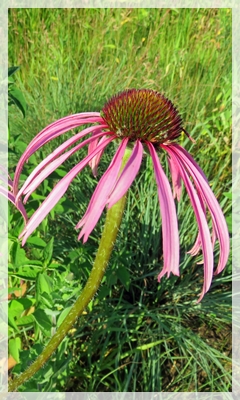
pale purple coneflowerI have a friend who describes herself as being a “Birth and Resurrectionist.” Her idea of Christianity simply consists of church attendance on Christmas and Easter (maybe), with an occasional funeral or wedding thrown in.

Setting aside the promise of salvation and how we will spend eternity, what would our lives be like if our relationship with Jesus and His church was merely a twice a year event? We’d still have a code of ethics, a sense of right and wrong. Yet knowing what’s right doesn’t mean we do the right thing. When we have a relationship with Jesus, we also get the Holy Spirit to guide (and prod) us through our moral choices. Without Jesus, our sense of worth would depend on things like social status, wealth, education and looks; without those assets, we would feel worthless and unlovable. With Jesus in our hearts, we know we’re worthy of God’s love not because of who we are or what we have but because of who made us. Without Jesus in our lives, the blessing of God’s forgiveness would be missing; we’d be burdened with guilt, regrets and even anger. If we had no relationship with Jesus, we’d miss that wonderful sense of peace that comes from Him. We’d always be searching for the next best thing without ever realizing that we have the best thing right beside us. Without Jesus in our hearts, would we be able to love? Probably, but certainly not with the unconditional love about which Jesus spoke. Finally, without Christ, we’d lose our sense of hope and trust; we’d fight our troubles instead of accepting them with the knowledge that God will get us through them. While salvation is the final reward for our faith in Christ, our daily lives are continually blessed for that faith.

Let us pray for those many “Christians in waiting.” May they accept Jesus as their Lord and come to know the joy and peace that can be theirs when, instead of occasionally visiting church, they have a daily relationship with our Savior. May they enjoy the rewards of Christianity that come both in this life and in the next.
Yes, I am the gate. Those who come in through me will be saved. They will come and go freely and will find good pastures. The thief’s purpose is to steal and kill and destroy. My purpose is to give them a rich and satisfying life. [John 10:9-10 (NLT)]

Copyright ©2017 jsjdevotions. All rights reserved.

A FIRM FOUNDATION

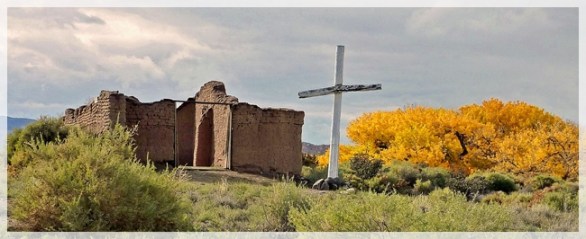
Santa Rose de Lima - Abiqui NM
You are members of God’s family. Together, we are his house, built on the foundation of the apostles and the prophets. And the cornerstone is Christ Jesus himself. [Ephesians 2:19b-20 (NLT)]

Four years ago, a Seffner, Florida, man went to bed and disappeared. As he screamed for help, he, his bed and then his entire bedroom vanished into the earth, never to be seen again. A sinkhole some twenty-feet across had formed beneath the house and the house simply collapsed into it. The house was demolished and the hole filled with four truckloads of gravel. Two year later, the hole reappeared, measuring 17-feet across and 20-feet deep and the area now is deemed uninhabitable.

Apparently, sinkholes are a natural component of Florida landscape and pose a geological hazard throughout the state. My “Sunshine State” lies on bedrock made of limestone or other carbonate rock which is dissolved by naturally acidic rainwater. As the rock dissolves, underground cavities or caves form. Eventually, the ceiling of the cavity can no longer support the overlying weight of what’s above it. Since our Florida home is made of poured concrete, I thought our foundation was firm until I learned about sinkholes. Florida is not alone; about 20% of our nation’s land is susceptible to sinkholes.

How firm is your foundation? If you live in the San Francisco area, not very! One of the most dangerous seismological zones in our country is the Hayward Fault in California, running between Richmond, south through Berkeley, Oakland, and Hayward to San Jose. Every year it spreads or creeps about 4.6 millimeters a year. That’s only about an ant’s length, which doesn’t sound like much, but it adds up. In a hundred years, that’s about a foot and a half. That little bit of creep every year moves curbs, creates gaps in roads, and cracks foundations and walls.

When Hayward’s paving crews repave and fill in cracks, they are only treating the symptoms, not the cause, and the pavement continues to crack. Steel bracing rods are inserted into buildings but they, too, are only short term solutions. Hayward’s first City Hall was built in 1931 directly on top of the fault line. Gradually splitting in two, no amount of plaster, cement or steel rods can hold it together; it is now unusable and abandoned. All along the fault line, the ground continually moves and pulls apart sidewalks, pipelines and any structures sitting on it. It’s not just the Hayward fault that endangers structures and people—we have the San Andreas (California), Cascadian (Pacific Northwest), New Madrid (Midwest), Ramapo (East Coast), Wasatch (Utah), Denali (Alaska) faults and numerous others. As the man who sank to his death in Florida learned too late, sometimes we think our foundation is much firmer than it actually is.

While sinkholes and earthquakes are a fact of life and reason for concern, we should be more concerned about the base upon which we build our lives. We may think we’ve got a disaster-proof life built on a firm foundation of money, job, health, family, education, skills, talent, friends, status, or even looks. If Jesus isn’t the cornerstone, watch those bricks start to collapse when even one of those things is removed. When we choose to build our lives on God’s bedrock, even if we live over a sinkhole or the Hayward fault, when disaster hits (and it will), we will neither cave in nor fall down!

Anyone who listens to my teaching and follows it is wise, like a person who builds a house on solid rock. Though the rain comes in torrents and the floodwaters rise and the winds beat against that house, it won’t collapse because it is built on bedrock. But anyone who hears my teaching and doesn’t obey it is foolish, like a person who builds a house on sand. When the rains and floods come and the winds beat against that house, it will collapse with a mighty crash. [Matthew 7:24-27 (NLT)]

Fear not, I am with thee, O be not dismayed, For I am thy God and will still give thee aid; I’ll strengthen and help thee, and cause thee to stand Upheld by My righteous, omnipotent hand. [“How Firm a Foundation” (attributed to Kirkham or John Keene)]

Copyright ©2017 jsjdevotions. All rights reserved.


CEASE FIRE

Then Solomon said, “Don’t kill the child! Give it to the first woman—she is its real mother.” [1 Kings 3:27 (GNT)]

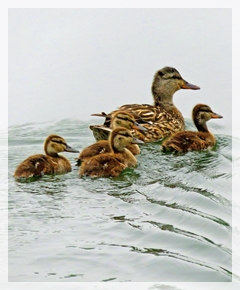
mallard - baby duckingsImmediately after finishing yesterday’s devotion about conflict and prayer, I received a call from a friend whose 11-year old granddaughter, Anna, has osteosarcoma (bone cancer). Having undergone chemotherapy for the past two months, she is scheduled for surgery this week. In the best case scenario, her knee and part of her femur will be removed and replaced by a metal prostheses; the worst case scenario involves complete amputation of the leg. In either case, more chemo and at least six to twelve months of physical therapy will follow.

As distressed as this grandfather is by his grand’s cancer, he is even more upset by her parents’ behavior. Divorced several years ago, they decided upon an “every other week” type of joint custody. Although this often sounds like a win-win solution, court battles about custody issues have continued since the divorce. Rather than a good compromise, their custody agreement is more like an, “If I can’t have her all of the time, neither can you!” sort of thing. Their story reminds me of the two women claiming to be the mother of the same infant who came to King Solomon to settle their dispute. As the women argued, King Solomon called for his sword and ordered that the child be cut in half so that each one could have a part of him. “No!” screamed one mother who said to give him to the other woman so that he could live. “Go ahead,” said the other woman since that way neither mother would have the baby. Solomon immediately knew the identity of the real mother—the woman who was willing to give up her own flesh and blood so that he could live. Real parents are willing to sacrifice their happiness for the sake of their children, even if that means losing them. Now, with a seriously ill youngster, instead of putting aside their differences and forming a united wall of protection around their daughter, Anna’s parents brought their dispute not just into the court but also into the hospital. Because tempers flared and things got so contentious, only that week’s custodial parent can be with the girl in hospital.

Yesterday, I wrote about turning to Scripture and prayer as a way of handling disputes. In this case, although counselling and the courts haven’t worked, Scripture and prayer haven’t been tried. It is in God’s word and prayer that these parents would find true wisdom, strength and the directions to sacrifice, forgive, and love in the way that the mother in Solomon’s court did. I know both of Anna’s parents love her but they are unwilling to put aside their anger, resentment, and selfish desires for the sake of their child. Instead of being sliced in half by a sword, an eleven year old girl is being torn apart by two adults who are more interested in winning every dispute than they are in finding a way to live in peace and bring healing to their daughter. So invested in winning, they can’t see the real loser in their hateful war. Unfortunately, while their situation is extreme, Anna is not the only child of divorce being used as a pawn in her parents’ game of revenge.

Father in Heaven, forgive us when we look to our needs and desires instead of to you. Watch over and strengthen, not just Anna, but all children caught in the middle of their parents’ battles. May we all learn to call to you in prayer, turn to your word for wisdom, be willing to sacrifice our desires for the good of others, and continually act with forgiveness and love.

Above everything, love one another earnestly, because love covers over many sins. [1 Peter 4:8 (GNT)]

Ask God to bless those who persecute you—yes, ask him to bless, not to curse. … If someone has done you wrong, do not repay him with a wrong. Try to do what everyone considers to be good. Do everything possible on your part to live in peace with everybody. … Do not let evil defeat you; instead, conquer evil with good. [Romans 12:14,17-18,21 (GNT)]

Copyright ©2017 jsjdevotions. All rights reserved.

WE WILL PRAY!

Work at living in peace with everyone, and work at living a holy life, for those who are not holy will not see the Lord. Look after each other so that none of you fails to receive the grace of God. Watch out that no poisonous root of bitterness grows up to trouble you, corrupting many. [Hebrews 12:14-15 (NLT)]

fireweedIn speaking about prayer recently, our pastor referred to the 2009 church-wide assembly of our denomination. Knowing that the agenda included some divisive topics, the Presiding Bishop asked the delegates to spend the 50 days leading up to the convention devoted to both prayer and the study of Scripture. Once the Assembly convened, there was heated discussion among the delegates about the writing of a statement on human sexuality. The debate about this controversial subject was unique because the Presiding Bishop, Mark Hanson, halted the proceedings every twenty minutes to lead the assembly in prayer. Delegates on opposing sides, who had been vehemently arguing minutes earlier, often would lay hands on one another and pray for each other during these breaks. Praying for unity in spite of their disagreements, the delegates showed respect and love for one another. Although the final statement passed by only one vote and there is still disagreement within the church about it, without those pauses for prayer, that debate could have caused far more damage to the church than did the tornado that accompanied the assembly.
As I thought about the power of prayer, I couldn’t help but think of a friend who recently left the church choir over a disagreement with the choir director. I have no idea what caused their rift but I’m sure it was less consequential and certainly less controversial than a church-wide statement regarding sexuality. I couldn’t help but wonder what would have happened if these two women of faith had paused, gently laid hands on one another, and prayed together. As it is now, neither woman won the argument; the choir lost a good soprano and the singer lost the opportunity to use her God-given talent to raise her voice in worship.

The Bishop’s consistent call for prayer demonstrates a Christian way of settling arguments. Following his example, perhaps we could rethink our approach to conflict resolution. When we have a concern or complaint, we could prepare with Scripture and prayer before voicing our point of view and then pause for prayer during our dispute. Praying with and for someone helps us connect with one another; it’s difficult to stay angry with someone when praying for him. Praying together takes our focus off us and puts it where it should be—on God and what He wants. Instead of asking God to change the other person, we find ourselves asking God to show us where we need to change. While prayer can help resolve conflict, even when it doesn’t, prayer brings us guidance, peace and the possibility of remaining friends with our adversaries. When we pray together, we just might find our confrontations sounding more like conversations and our squabbles, if not settled, becoming agreements to disagree.

Have no fear, we will pray! [Bishop Mark Hanson]

Is there any encouragement from belonging to Christ? Any comfort from his love? Any fellowship together in the Spirit? Are your hearts tender and compassionate? Then make me truly happy by agreeing wholeheartedly with each other, loving one another, and working together with one mind and purpose. Don’t be selfish; don’t try to impress others. Be humble, thinking of others as better than yourselves. Don’t look out only for your own interests, but take an interest in others, too. [Philippians 2:1-4 (NLT)]

Copyright ©2017 jsjdevotions. All rights reserved.

HUMBLING

The Lord detests the proud; they will surely be punished. … Pride goes before destruction, and haughtiness before a fall. First pride, then the crash—the bigger the ego, the harder the fall. [Proverbs 16:5,18 (NLT)]

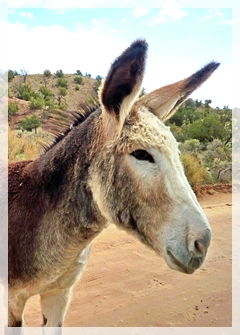
donkeyWhile reading C.S. Lewis’ The Horse and His Boy, I couldn’t help but think of the proud Babylonian King Nebuchadnezzar. He was so full of himself that he erected a 90-foot golden statue and then demanded that people fall down and worship it as a sign of loyalty to him. When interpreting one of the king’s dreams, Daniel told Nebuchadnezzar that he would be driven from human society and only regain his kingdom when the king learned that heaven, not man, rules. The king was warned to change his evil behavior. In spite of the caution and even though he’d seen the power of the Israelites’ one true God when Shadrach, Meshach, and Abednego survived the fiery furnace, Nebuchadnezzar didn’t change his ways. While looking down from his rooftop and surveying the wonders of Babylon, he expressed pride in his accomplishments and congratulated himself on his mighty power. Before the words were even out of his mouth, a voice from heaven pronounced judgment upon him. The king developed what is known as boanthropy, a psychological disorder in which one becomes delusional and thinks he or she is a cow. The high and mighty king was driven from society and lived and ate like an animal for the next seven years.

In The Horse and His Boy, instead of a king, the reader meets the pompous Prince Rabadash, the tale’s villain. Fancying himself a great warrior, he set off to seek revenge on a Narnian queen who spurned his advances. After being defeated in battle, the captured prince was told to forget his pride and anger and accept the mercy offered by Narnia’s kings. Even though he replied with an arrogant tirade, another chance to change his evil ways was offered to the proud prince. While responding with even more invective, Rabadash’s last words came out as braying. Unlike Nebuchadnezzar, who only thought he was an animal, the prince actually became one—a donkey.

Both true and fictional stories can help us understand God and life. After all, even Jesus made up stories with his parables. It is no mere coincidence that Rabadash’s fate resembles that of Nebuchadnezzar. C.S. Lewis considered pride to be the “great sin”—the sin that leads us to what he called “the complete anti-God state of mind” and the sin that leads us to all other sins. Pride causes us to look down on things and people (as it did with both Nebuchadnezzar and Rabadash) instead of looking up to God. It was only when the humbled king looked up at heaven that he returned to sanity and only when thousands had looked down at the four-legged prince that he regained his body.

Envy is private, lust and anger can be concealed, and selfishness and greed can be disguised as the virtues of prudence and fortitude. Things like pride, arrogance, contempt and conceit, however, are rather obvious and there is a sense of poetic justice to both men’s public humiliation. By the time they returned to their normal states, their subjects had witnessed them either acting like a cow or looking like a donkey. Behind the prince’s back while alive (and openly once dead), he was known as Prince Rabadash the Ridiculous. Although the Bible makes no mention of it, I can only imagine that the people of Babylon must have snickered when they saw the once powerful and proud king grazing in the fields, his hair long and matted and his untrimmed nails looking like claws.

God hates it when we’re proud and yet we all suffer from pride. Although Jesus took our punishment for that sin (and every other one), we often find ourselves recipients of some of God’s divine discipline when we err and stray. As for pride, God seems to have fitting and often public ways of knocking us down a peg or two when necessary. If we don’t keep ourselves humble, we can be pretty sure that God will do it for us. Like Nebuchadnezzar, we may find ourselves ostracized from society or, like Rabadash, looking like an awful lot like an ass.

Every Christian has a choice between being humble or being humbled. [Charles Spurgeon]

As the Scriptures say, “God opposes the proud but gives grace to the humble.” So humble yourselves before God. Resist the devil, and he will flee from you. Come close to God, and God will come close to you. Wash your hands, you sinners; purify your hearts, for your loyalty is divided between God and the world. … Humble yourselves before the Lord, and he will lift you up in honor. [James 4:6b-8,10 (NLT)]

Copyright ©2017 jsjdevotions. All rights reserved.

THE SWEET AROMA

Let Christ’s word with all its wisdom and richness live in you. Use psalms, hymns, and spiritual songs to teach and instruct yourselves about God’s kindness. Sing to God in your hearts. Everything you say or do should be done in the name of the Lord Jesus, giving thanks to God the Father through him. [Colossians 3:16-17 (GW)]

honeysuckleI’m in the midst of reading a series of seven children’s fantasy novels, The Chronicles of Narnia, by C.S. Lewis. Some of them, like The Lion, the Witch and the Wardrobe, I read as a girl but others are new to me. The world of Narnia is a world to which one wants to return again and again and I’m enjoying my visit ever so much. C.S. Lewis, however, was much more than a writer of fantasy, non-fiction and poetry; he was a well-known lecturer, a brilliant scholar and a renowned Christian apologist.

Because of his tremendous faith and knowledge of Scripture, there is much more to his fiction than first meets the eye. Intentionally (and probably unintentionally), Biblical truths and Christian themes are woven throughout all of his writing. Lewis was so aware of God, so steeped in Biblical knowledge, and so in tune with the Holy Spirit, that I don’t think he could have written any other way, even if he’d wanted to do so. His faith emanated from him the same way a honeysuckle blossom emits a sweet aroma. His writing reflects what all of us are asked to do—share Jesus. Lewis’ knowledge of Scripture, his insight into the Holy Spirit’s ways and the enemy’s wiles, his love of Christ, his faith in a God who is good even when life isn’t, and his awareness of God’s presence in all circumstances are evident in his stories and yet there is nothing sermon-like about them. The adventures of the Pevensie children in Narnia brought them closer to a great lion by the name of Aslan and those same adventures can bring the reader closer to someone who (as Lewis suggested) arrived at the same time as Father Christmas, was the son of the Great Emperor, gave himself up to be killed by wicked people, came to life again, and is often spoken of as a lamb.

While we’re not likely to teach at Oxford or Cambridge, write over 70 books, sell 100 million copies of anything we might write or be asked to explain Christianity on a radio show, we are asked to share our faith. If Biblical truths become a part of us, they will become second nature and will be evident in all that we say or do. We don’t have to become theologians or write a best-seller; we just have to emit the sweet aroma of Christ in our lives.

I believe in Christianity as I believe that the Sun has risen, not only because I see it but because by it I see everything else. [C.S. Lewis]

But I thank God, who always leads us in victory because of Christ. Wherever we go, God uses us to make clear what it means to know Christ. It’s like a fragrance that fills the air. To God we are the aroma of Christ among those who are saved and among those who are dying. [2 Corinthians 2:14-15 (GW)]

Copyright ©2017 jsjdevotions. All rights reserved.