FULLY AWARE

For I hold you by your right hand—I, the Lord your God. And I say to you, “Don’t be afraid. I am here to help you.” [Isaiah 41:13 (NLT)]

cousinsScientists have found that even a simple hug or the holding of hands can lower both blood pressure and heart rate in stressful situations. Gentle touch also causes a decrease in the stress hormone cortisol and an increase in oxytocin (often called the “cuddling hormone”). Where cortisol might give a “fight or flight” response, oxytocin causes more of a “tend and befriend” one by increasing feelings of trust and connection. Since we were at a funeral and the previous ten days had been a roller coaster of emotion and tension for everyone, the priest’s request to join hands as we stood in prayer benefitted us physically and psychologically as well as spiritually.

While holding hands during prayer wouldn’t be unusual in many evangelical Protestant churches, apparently it is in Roman Catholic ones (especially when done during every prayer) and it has become a point of contention in some dioceses and parishes. Being a rather touchy-feely Protestant, I enjoyed the hand holding and the feeling of solidarity in prayer that came with it. The priest, however, asked us to do more than simply join hands. “Take the hand of the person beside you,” he instructed, “and, fully aware of the soul you are touching, join in prayer.” As I held the hand of the stranger beside me, I thought of those words: “fully aware of the soul you are touching.” I didn’t know the man and will never see him again. From his rosary, I knew we do not attend the same church. Nevertheless, I knew we worshipped the same God and were there for the same reason: to celebrate the life of the man whose body lay in a casket near the altar. As I became more aware of the soul I was touching, my thoughts turned from my own personal sorrow to the sorrow shared by all who were present in the sanctuary. We were one community, united in our thanksgiving for the man we mourned, in our intercessions for his family, in our love for God, and in our belief in the resurrected Christ and the life everlasting.

I appreciate that some people are uncomfortable with the intimacy of holding hands and find doing it during worship an unwelcome innovation. Whether or not we touch one another during prayer is not as important as being fully aware of one another: not just of the people with whom we pray but of all with whom we interact. Fellow travelers through this troubled world, they are struggling as much as we are to navigate the challenges, sorrow, and pain in their paths. Is there some way we can make their journey easier? Sometimes, we find that answer in a simple touch. While we probably won’t bring healing to their bodies, we may bring some healing to their souls.

At the conclusion of the funeral, the deceased’s family followed the casket out of the sanctuary and his sister passed by our pew. My husband stepped into the aisle beside her and they joined hands as they walked out together. Although we hardly know her, fully aware of her mournful soul, he knew her need to be supported during that difficult walk.

Lord, teach us to be fully aware of the souls we encounter each day. Let our words be kind, our actions helpful, and our touch gentle and supportive.

When we honestly ask ourselves which person in our lives means the most to us, we often find that it is those who, instead of giving advice, solutions, or cures, have chosen rather to share our pain and touch our wounds with a warm and tender hand. [Henri Nouwen]

As it happened, Publius’s father was ill with fever and dysentery. Paul went in and prayed for him, and laying his hands on him, he healed him. [Acts 28:8 (NLT)]

Copyright ©2018 jsjdevotions. All rights reserved.

HEARING THE SHEPHERD

I myself will be the shepherd of my sheep, and I will make them lie down, says the Lord God. I will seek the lost, and I will bring back the strayed, and I will bind up the crippled, and I will strengthen the weak, and the fat and the strong I will watch over; I will feed them in justice. [Ezekiel 34:15-16 (RSV)]
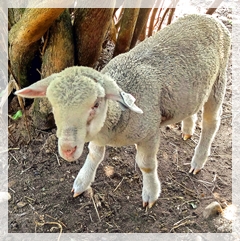
lambThroughout the Bible, there are many references to the Lord as our shepherd and mankind as His sheep. Sheep are not the brightest bulbs in the pasture and, considering the state of the world, it seems a fitting comparison! I came upon a true story that illustrates the need sheep have for a shepherd. In 2005, more than 400 sheep in Turkey died when they followed the lead sheep off a cliff and fell 15 meters. The death toll would have been greater except those first 400 cushioned the fall of the next 1,100 sheep that were stupid enough to follow them! Clearly, that herd of sheep needed someone to tell them when to stop. Unfortunately, mankind seems as willing to blindly follow the lead sheep wherever he leads us, only we call it belonging, accepting, keeping up, staying current, maintaining the status quo, or not rocking the boat, making waves or causing trouble.

I happened upon a cartoon by Mike Waters in which a sun-glassed sheep is relaxing in a lounge chair and wearing ear phones connected to the iPod at his side. The TV is on, a computer rests on his lap, the radio is blaring, and he’s got a copy of Sheep Digest in his hands. Hidden under the stack of magazines at his side is a Bible. In the background, a shepherd is calling. The sheep says, “I wonder why I don’t hear from the shepherd anymore!” The words in the caption beneath the comic are from John 10:27: “My sheep listen to my voice; I know them, and they follow me.” Of course, the sheep need to hear the shepherd to know his voice and nowadays we seem to be listening to everything but our shepherd’s voice (and reading everything but His word)! Worldly distractions, concerns, desires and possessions have drowned out His voice.

In the case of the unfortunate demise of the Turkish sheep, the problem wasn’t that they weren’t listening to the shepherd. The village’s shepherds had briefly abandoned the flock while they enjoyed breakfast. Unlike the Turkish shepherds, our Shepherd never takes a coffee break or goes off duty! He’s more like the shepherd in the cartoon—on the job and calling his flock. Like those suicidal sheep in Turkey, however, we rarely know enough to stop on our own. Fortunately, our Shepherd will step in and lead us. Of course, for that to happen, we have to be listening for His voice.
I am the good shepherd; I know my own and my own know me, as the Father knows me and I know the Father; and I lay down my life for the sheep. … My sheep hear my voice, and I know them, and they follow me; and I give them eternal life, and they shall never perish, and no one shall snatch them out of my hand. [John 10:14-15,27-28 (RSV)]

 Copyright ©2018 jsjdevotions. All rights reserved.

OUR PRAYERS

Sing praises to God, sing praises; sing praises to our King, sing praises! For God is the King over all the earth. Praise him with a psalm. [Psalm 47:6-7 (NLT)]

O what peace we often forfeit, O what needless pain we bear, All because we do not carry Everything to God in prayer! Have we trials and temptations? Is there trouble anywhere? We should never be discouraged, Take it to the Lord in prayer. [“What a Friend We Have in Jesus” by Joseph Scriven]

ZINNIA“That’s more like it!” I thought as I read Psalm 47; I certainly preferred it to the curses of the previous set of Psalms I’d read. I’m reading the Bible in chronological rather than in canonical order which means that the various books and chapters have been divided and rearranged. As a result, the psalms of lament and complaint were grouped together during David’s trials and the praise psalms were placed after the chapters outlining the duties in the Temple. These psalms of worship, adoration and thanksgiving seem more appropriate for Israel’s book of hymns than the earlier ones about wickedness, treachery, calamity and vengeance.

Although I prefer the joyful psalms, there is a reason Israel’s prayer book has lasted over 3,000 years and continues to be our prayer book today. Rather than a sappy feel-good book of poetry, Psalms reflects the gamut of human experience and emotions. When the disciples asked Jesus how to pray, I’m surprised He didn’t tell them they already knew and direct them to the Psalms for guidance. The Psalms’ words are intense, raw and honest; they conceal nothing. If the Psalmist is suffering, fearful, angry, depressed, or exhausted, he says so as readily as when he expresses his elation, adoration and thanksgiving. Never pretending that all is well when it isn’t, he fearlessly lays out his emotions before God. Wretchedness and joy, pain and jubilation, wickedness and virtue, despair and hope, grief and thanksgiving, fear and confidence: all are articulated. It is in that depth of personal expression and experience that we find words of consolation, faith, trust, and hope.

When I seriously evaluate my own prayer life, I’m nowhere near as honest and bold as the psalmists. Of course, God knows my personal struggles but, unlike David and the rest of the psalmists, I’m not as willing to lay them so passionately or openly at His feet. When Joseph Scriven wrote the words, “Take it to the Lord in prayer,” he meant all of it, not just the pretty stuff. I’m sure God would prefer honest words of grievance to false words of praise any day.

A human heart is like a ship on a wild sea, driven by the storm-winds from the four quarters of the world. Here it is struck with fear, and worry about coming disaster; there comes grief and sadness because of present evil. Here breathes a breeze of hope and of expectation of happiness to come; there blows security and joy in present blessings. These storm-winds teach us to speak with earnestness, and open the heart, and pour out what lies at the bottom of it. … What is the greatest thing in the Psalter but this earnest speaking amid these storm-winds of every kind? Where does one find such words of joy as in the psalms of praise and thanksgiving? … On the other hand, where do you find deeper, more sorrowful, more pitiful words of sadness than in the psalms of lamentation? … And, as was said, it is the best thing of all that they speak these words to God and with God. [Martin Luther, Preface to the Psalter]

The Lord is close to all who call on him, yes, to all who call on him in truth. [Psalm 145:18 (NLT)]

Copyright ©2018 jsjdevotions. All rights reserved.

IN EVEN THE BEST FAMILIES

mute swansBut Samuel’s sons did not live the same way he did. Joel and Abijah accepted bribes. They took money secretly and changed their decisions in court. They cheated people in court. [1 Samuel 8:3 (ERV)] 

Not all dads did as well with their boys as did my father-in-law. Eli and Samuel, for example, were both high priests and judges; while they were good at their jobs, neither is known for his parenting skills. Samuel’s sons, Joel and Abijah, were corrupt judges who took bribes. Eli’s boys, Hophni and Phinehas, were no better. They took advantage of their position to appropriate the best portion of every sacrifice for themselves and to have sexual relations with the sanctuary’s serving women. Even David had problems with his boys: Amnon was a rapist, Absalom a murderer and rebel, and Adonijah tried to seize his brother Solomon’s crown.

Clearly, being a godly parent doesn’t guarantee godly children. Were Eli and Samuel so busy with their temple duties that they failed to spend time with their boys? David had at least nineteen sons and probably several more with his concubines. Between the battlefield and his obligations as king, did he neglect being a father to his many children? In their busyness, did these men overlook their obligation to train their children in proper values? Were they as attentive as they should have been? I’m not pointing fingers because, at some time or another, we all have disregarded some of our parenting duties and short-changed our children with our time, attention, and affection.

Eli and Samuel knew their sons were corrupt and David knew of Amnon’s rape of his sister but the men did nothing about these offences. Perhaps, not wanting to face the unpleasant truth about their boys, they ignored their parental responsibility to discipline. At some time or another, in spite of evidence to the contrary, most of us have refused to believe our children are anything less than perfect, as well. Sometimes, we find it easier to ignore the elephant in the room than to address it.

These fathers were far from perfect but, then again, so are we. Nevertheless, we must remember that the failings of a child are not necessarily because of poor parenting. Even the best parent makes plenty of mistakes. We just do our best and pray (a whole lot). We’ll never know exactly what went wrong with those boys. After all, Solomon came from the same household as his malicious elder brothers and the same home that produced the honorable President Jimmy Carter, a Nobel peace prize winner, gave us his troubled and somewhat embarrassing brother, Billy.

Home may be a child’s first classroom but he continues to learn when he steps into society. As the church, we need to fill the voids in the spiritual, emotional and physical needs of our community’s children. Not all of us are parents, but we all share in the awesome responsibility of raising the next generation.

Lord, guide us in our homes, community, and churches so that all of your children become people of faith and good character.

My son, remember your father’s command, and don’t forget your mother’s teaching. Remember their words always. Tie them around your neck and keep them over your heart. Let this teaching lead you wherever you go. It will watch over you while you sleep. And when you wake up, it will give you good advice. [Proverbs 6:20-24 (ERV)]

Copyright ©2018 jsjdevotions. All rights reserved.

LEAVING THE NEST

anhinga chicksMy child, pay attention to what I say. … Guard your heart above all else, for it determines the course of your life. … Look straight ahead, and fix your eyes on what lies before you. Mark out a straight path for your feet; stay on the safe path. Don’t get sidetracked; keep your feet from following evil. [Proverbs 4:20a,23, 25-27 (NLT)]

This past spring we watched an anhinga family who’d nested near the swamp boardwalk. At first, mom and dad provided around the clock nest service for their brood of blind and helpless chicks. When the chicks were about three weeks old, rather than returning to the nest with food, the parents would perch nearby. If the youngsters wanted dinner, they had climb out of the nest and hop along a branch to get it. As the babies grew, mom and dad perched further and further from the nest until, at about six weeks, their chicks had to fly for their supper. Within two months of hatching, the youngsters were flying across the pond and the nest was abandoned. Mom and dad, however, were never too far away; perched nearby, they watched their brood learn to fend for themselves around the swamp. I wonder if they worried about their youngsters becoming dinner for an alligator while they fished or sunned on a log. Nevertheless, mom and dad knew their young ones had outgrown the nest; it was time to let them lead their own lives.

Today, my eldest grand receives her high school diploma. An honor student, she’s a delightful young woman and I know her parents are immensely proud of her many accomplishments. That pride, however, is combined with a fair amount of apprehension on their part. Later this summer, this young woman will leave the nest and move 5,500 miles to London where she’ll spend her freshman year of college. Although her parents won’t be worried about alligators, there will be plenty of other concerns that might keep them awake at night.

Our children: we love them, teach them, correct them, encourage them, support them, lead them, and guide them in an effort to prepare them for adulthood. As a mama, I know how difficult it is to let our children go, but let them go we must. After all, parenthood is a job that is supposed to become obsolete; it’s when our children are confident enough to leave home that we know we’ve done our job well. Let us praise God when we see them spread their wings and fly. No matter how far away they go, however, we still have the job of acting as prayer warriors for our children and we’ll do that for the rest of our lives.

Heavenly Father, we thank you for the gift of children and the privilege of leading them into adulthood. Reassure those parents who are struggling with letting go; may their tears of sadness become ones of joy as they watch their children take their next steps. As we release our children to your tender care, we ask you to wrap your loving arms around them and protect them from the dangers of the world. May they always walk in your ways and grow in courage, strength and wisdom. Let your Holy Spirit fill them with faith, hope, and love. Teach them, guard them, lead them and lift them so that they soar!

A wise woman once said to me that there are only two lasting bequests we can hope to give our children. One of these she said is roots, the other, wings. And they can only be grown, these roots and these wings, in the home. We want our sons’ roots to go deep into the soil beneath them and into the past, not in arrogance but in confidence. [Hodding Carter]

My child, never forget the things I have taught you. Store my commands in your heart. … Trust in the Lord with all your heart; do not depend on your own understanding. Seek his will in all you do, and he will show you which path to take. Don’t be impressed with your own wisdom. Instead, fear the Lord and turn away from evil. [Proverbs 3:1,5-7 (NLT)]

May the Lord bless you and protect you. May the Lord smile on you and be gracious to you. May the Lord show you his favor and give you his peace. [Numbers 6:24-26]

Copyright ©2018 jsjdevotions. All rights reserved.

THE TITHE

One-tenth of the produce of the land, whether grain from the fields or fruit from the trees, belongs to the Lord and must be set apart to him as holy. [Leviticus 27:30 (NLT)]

HibiscusTithe means ten percent and the Jews were required to give ten percent of all they earned or grew as part of their worship. Because there were three required tithes, the actual percentage given was more like 23%. One tithe went to the Levites, another was for the use of the temple and religious festivals, and a third one, required every third year, was for the poor. Although no tithes were collected from the land on the seventh (Sabbath) and 50th (Jubilee) years or when there was drought or famine, tithing was mandatory at any other time and the Israelites got in trouble with God when they didn’t fulfill this obligation.

With His sacrifice on the cross, Jesus fulfilled all of the requirements of the old law. As Christians, we’re no longer obliged to visit Jerusalem for the festivals of Passover, Shavuot, or Sukkot nor do we observe Yom Kippur. We don’t keep the Jewish dietary and butchering regulations, light Shabbat candles, refrain from work on the Sabbath, or require circumcision. Like tithing, those are the laws of the Old Covenant and Jesus brought us a New Covenant. Nevertheless, there are some Christian pastors who think that one specific Old Testament law remains: tithing.

In effect, the Old Testament tithe was an involuntary tax and no one I know cheerfully pays his or her taxes. Searching for every loophole, they may even employ some “creative accounting” to lessen their payment. When we think “tithe,” we can easily start nit picking and hair splitting like the Pharisees. Are we talking before or after income taxes? Can we take off tuition for a Christian school, medical expenses, property taxes or business expenditures? What about mileage to and from church? Is the tithe for our parish or the church at large? What about faith-based causes like World Vision, the Gideons or Samaritan’s Purse—are they part of the tithe? Can good causes that aren’t faith based, like the local food pantry or homeless shelter, qualify? Perhaps the greatest problem with tithing is that we begin to think that only 10% of our money is God’s when, in fact, it all belongs to Him! Moreover, He also owns our time and talents and how do we measure ten percent of those? The tithe can become what Randy Alcorn calls the “finish line” instead of the “starting block” for our giving.

If we don’t tithe, how do we decide how much to give? A pastor friend gives the perfect answer: we pray! We simply ask God exactly how much He wants us to give and how and where He wants us to give it. In obedience to Him, we then commit our resources—our finances, time, and talent—as He directs. What we don’t do is base our giving on feelings, recognition we may be given, or the entertainment value of the pastor’s sermons. Offering our first fruits rather than our leftovers, we don’t give thoughtlessly, randomly, or grudgingly. We base our giving on God’s principles of stewardship and use His gifts wisely to expand His kingdom. Whatever He tells us to give, we give joyfully and with thanks—remember, it’s all His!

You must each decide in your heart how much to give. And don’t give reluctantly or in response to pressure. “For God loves a person who gives cheerfully.” [2 Corinthians 9:7 (NLT)]

Wherever your treasure is, there the desires of your heart will also be. [Matthew 6:21 (NLT)]

Copyright ©2018 jsjdevotions. All rights reserved.