WORRY AND PRIDE

Give all your worries and cares to God, for he cares about you. [1 Peter 5:7 (NLT)]

tropical water lilyWhen the Israelites sent scouts out to Canaan, they were doing due diligence and getting the lay of the land. Let’s remember, Moses had only asked them to scout out the land, not to determine how or whether they should proceed. But, when they returned, ten of the twelve reported the Promised Land was the land of giants who were undefeatable. In spite of Moses’s leadership, the reassurances of Joshua and Caleb, and God’s promises and power, the Israelites pridefully decided they knew more than God and chose fear instead of stepping out in faith.

Right now, while I’m not looking over the Jordan to Canaan, I’m in the land of waiting—between tests and results, between diagnosis and treatment. On the plus side, at least I won’t be here for forty years as were the Israelites! Nevertheless, the land of waiting can turn into a land of fear and worry. Our “what is?” evolves into “what if?” Instead of scouting Canaan, we scour the Internet, sift through contradictory information, imagine assorted scenarios, try to make sense of medical terms, research, and recommendations without benefit of a medical degree, and turn unknown challenges into undefeatable giants.

It occurred to me that, to a great extent, my worry is the result of pride. The Israelites trusted themselves more than God and, apparently, I trust myself and my research more than either my doctors or God. Could I really think that I, whose only medical degree is that of Dr. Mom, am smarter than my doctors? There’s a fine line between understanding a condition and self-diagnosing or treating it, between concern about something and worry over it, and I’ve crossed that line. Having already researched the qualifications of my physicians, I was satisfied with their credentials, so why did I think I should second guess them? I must remember that God didn’t ask the Israelites for their opinion about Canaan; He asked them to trust Him. Not trusting our doctors can be a mistake but not trusting God is a sin!

I’ve been pridefully leaning on my own understanding when I should be leaning on God. He’s the one in control of my tomorrows and whatever they may bring. My prayer is no longer that I become more enlightened and better qualified than my doctors but that God leads me to the right doctors and gives wisdom to them.  We can worry or we can trust God, but we can’t do both! Let us cast our anxiety and cares on Him, our Great Physician.

Do what you can, and then trust God with what you cannot do. [Craig Groeschel]

Trust in the Lord with all your heart; do not depend on your own understanding. Seek his will in all you do, and he will show you which path to take. [Proverbs 3:5-6 (NLT)]

Copyright ©2019 jsjdevotions. All rights reserved.

SLOW THINKING

sliders - turtlesBut the wisdom from above is first of all pure. It is also peace loving, gentle at all times, and willing to yield to others. It is full of mercy and the fruit of good deeds. It shows no favoritism and is always sincere. And those who are peacemakers will plant seeds of peace and reap a harvest of righteousness. [James 3:17-18 (NLT)]

Someone has a small rubber ball tucked into the palm of his hand and you have just one minute to do whatever it takes to get the ball away from him. What would you do? If you were an inner city youth, chances are you’d start by trying to pry his hand open. Your efforts may even escalate into a wrestling match. I’m not sure you’d have to be an at-risk youngster to have that same response; my husband responded the same way. Imagine his reaction when learning that all he needed to do was ask for the ball and it would have been his!

That is just one of the exercises in a program called “Becoming a Man”®, a cognitive behavioral program offered in cities like Boston and Chicago. Knowing that small slights often can lead to pulling a trigger, the program is designed to help young men avoid life’s pitfalls and develop the social and emotional skills necessary for success: integrity, accountability, positive anger expression, self-determination, respect for women, and visionary goal setting. Young women are not exempt from needing life skills and a similar program called “Working on Woman”™ cultivates the core values of self-awareness, emotional intelligence, healthy relationships, visionary goal-setting, and leadership.

Instead of life skills, as Christians, we might call these faculties “Christ skills”, as does a local Christian school in my town. Instead of a formal code of conduct, the school’s teachers make a covenant with the students to live up to ideals listed as Christ skills: trustworthiness, cooperation, truthfulness, courage, organization, curiosity, patience, effort, perseverance, flexibility, pride, common sense, problem solving, caring, resourcefulness, personal best, responsibility, no put-downs, sense of humor, active listening, initiative, friendship, and integrity. With the goal of growing more like Christ, students learn to evaluate their choices and their consequences based on these skills.

All of these programs teach youngsters that there is power in slow thinking—in living deliberately rather than impetuously. Automatic thinking, such as assuming we have to force the ball out of a person’s hand, can mean the difference between life and death in the inner city but it can have bad consequences everywhere. Our typical weapons of anger and irritation may be less lethal than a gang member’s Smith & Wesson but none of us are exempt from needing to learn to think before acting or speaking.

We don’t need to live in the inner city to know it’s an angry, rude, intolerant, and violent world: a world of road rage, air rage, middle finger waving, swearing, bullying, pushing and shoving, domestic violence, tweet rants, peaceful demonstrations that turn violent, school shootings, child abuse, heckling, bickering, heated arguments, fights between students in school, fights between fans at the game, indignant outbursts, name calling, and a “do unto others before they do unto you” kind of mentality. Perhaps we all need a course in cognitive behavioral therapy or a list of desired Christ skills to emulate.

Even so, under our own power, we still will tend to act impulsively and heedlessly. On our own, we’ll never be the people God means for us to be. Maybe, instead of a list, we need a whole lot more of Jesus and the Fruit of the Spirit (love, joy peace, patience, kindness, goodness, faithfulness, gentleness, and self-control) and a whole lot less of self. Along with the power of slow thinking, let’s tap into the power of the Lord!

If someone claims, “I know God,” but doesn’t obey God’s commandments, that person is a liar and is not living in the truth. But those who obey God’s word truly show how completely they love him. That is how we know we are living in him. Those who say they live in God should live their lives as Jesus did. [1 John 2:4-6 (NLT)]

Copyright ©2019 jsjdevotions. All rights reserved.

OFFENSE

Fools have short fuses and explode all too quickly; the prudent quietly shrug off insults. … Overlook an offense and bond a friendship; fasten on to a slight and—good-bye, friend! … Smart people know how to hold their tongue; their grandeur is to forgive and forget. [Proverbs 12:16,17:9,19:11 (MSG)]

giant swallowtail butterflyOur sermon series was titled “Cage Fighting” but, rather than learning about fighting one another, we were learning about the ways Satan attacks and keeps us in his stronghold with things like shame, doubt, fear, and unforgiveness. While chatting with the pastor before church, I asked about the day’s topic. When he said offense, I immediately thought we’d learn how to take offensive action against the enemy.

Imagine my surprise when I looked at the program and read the above proverbs. What did they have to do with spiritual weaponry? I was annoyed that I’d been misled until I realized I’d misunderstood the pastor. While I was thinking about taking the offense and attacking, the pastor would be speaking about taking offense and feeling attacked! He’d be talking about the kind of offense that leaves us feeling outraged, insulted, or (in my case) annoyed. My error that morning illustrates why we’re easily offended; I had a preconceived idea, misunderstood what I heard, and didn’t ask for an explanation.

In this day of political correctness — when BC (before Christ) has become BCE (before the common era), Christmas trees are called holiday trees, no one is quite sure how to refer to a disability, and The Journal of Animal Ethics says calling pets “pets” is demeaning (they’re now “companion animals” to their “human carers”) — mistakes are bound to happen.

Everyone should be treated fairly and with dignity but never giving offense is nearly impossible. In reality, most people don’t mean to be racist, sexist, ageist, elitist, narrow-minded, impolite, or behind the times but sometimes they are. We can give offense inadvertently simply because words may have different connotations to different people, many words have changed their meaning over the years, or we don’t know the history of a symbol or phrase. For example, since my black postman wears a pith helmet, I didn’t know it was considered by some to be a symbol of white imperialism until Melania Trump was criticized for wearing one in Kenya.

Although wrong, rudeness and thoughtlessness are part and parcel of modern life. Today’s world offers an unlimited opportunity to both give and take offense and Satan loves it. To fight him, we must act and speak with love and do our best to never give offense, whether intentionally or unintentionally. Nevertheless, just as we must act and speak with love, we must listen and respond with love, as well. Knowing how easy it is to be offensive, we must work harder at not taking offense. Unfortunately, self-involved creatures that we are, we often choose to see bias, insult, or aggression even where none is meant. Taking offense just leads to anger, resentment, and retaliation (some of the enemy’s favorite weapons). Often translated as forbearance, patience is a fruit of the spirit and literally means “long temper.” Indeed, we should be slow to anger, give the benefit of doubt, not respond to provocation, turn the other cheek, love, and forgive.

I actually did learn how to fight the enemy that day, just not the way I thought. While some may say the best defense is a good offense, I learned that the best defense is not to take offense at all! As for me, I’m going to spend my time and energy being offended by the things that really matter: human trafficking, hunger, lack of safe drinking water for much of the world, poverty, homelessness, discrimination and injustice.

Whenever anyone has offended me, I try to raise my soul so high that the offense cannot reach it. [Rene Descartes]

We should be too big to take offense and too noble to give it. [Abraham Lincoln]

So, chosen by God for this new life of love, dress in the wardrobe God picked out for you: compassion, kindness, humility, quiet strength, discipline. Be even-tempered, content with second place, quick to forgive an offense. Forgive as quickly and completely as the Master forgave you. And regardless of what else you put on, wear love. It’s your basic, all-purpose garment. Never be without it. [Colossians 3:12-14 (MSG)]

Copyright ©2019 jsjdevotions. All rights reserved.

NO APPOINTMENT NECESSARY

sanderlingsFor I am the Lord, your healer. [Exodus 15:26b (RSV)]

In that hour he cured many of diseases and plagues and evil spirits, and on many that were blind he bestowed sight. And he answered them, “Go and tell John what you have seen and heard: the blind receive their sight, the lame walk, lepers are cleansed, and the deaf hear, the dead are raised up, the poor have good news preached to them. [Luke 7:21-22 (RSV)]

Here in southwest Florida it’s “season,” which means that flocks of snowbirds have arrived (and I don’t mean the kind with wings). While they boost the economy, locals groan at the busy traffic, the difficulty of getting into their favorite restaurants or hair salons, and the scarcity of parking places. One of the biggest problems is seeing a doctor! If we can find a doctor (or dentist) who is taking new patients (a challenge in itself) and takes our insurance, we’ll find a two month or longer wait before getting an appointment. Then, if we’re referred to a specialist, the whole routine begins again. As for urgent care clinics; unless the situation is life threatening, there is nothing urgent about the care one eventually receives. My best advice during season is not to get sick!

Our God truly is the Great Physician but, unlike the doctors in our town, He’ll take new patients. He won’t make us fill out detailed medical history forms; rather than past illnesses, He’s concerned about our wellness in the present and future. Insured or uninsured, Medicare or Medicaid, co-pay or no pay, it makes no difference; Jesus already paid our fee. God will never turn us away as incurable or hopeless because there are no lost causes in His office and He’ll never refer us to someone else because He specializes in whatever is ailing us. Best of all: no appointment is ever needed. God operates a walk-in clinic where the waiting room aways is empty and the doctor always is in!

At first, God being available 24/7 and taking His time during an appointment sounds like the concierge medicine that has become so popular in our area. God, however, doesn’t limit the number of patients in His practice nor does He require a hefty retainer fee before He gives you His number or listens to your complaint. God never takes a vacation and always has enough time and energy to deal with everyone who calls Him. Like a concierge physician, however, God is strong on preventative medicine: regular prayer, Bible study, Christian fellowship, and eating frequently at His table.

Of course, as with any physician, if we don’t recognize our sickness and the need for healing, we won’t call Him. We must have faith in our doctor’s wisdom and skill and follow his directions completely and we must do the same with our Great Physician. While He won’t be prescribing Lipitor, a flu shot, or more exercise, He’ll probably prescribe a healthy dose of repentance, forgiveness, love and prayer. Instead of giving us medical brochures about our condition, He’s already provided us with something better than the Merck Manual: Holy Scripture. As for any sort of long-term therapy—among other things, God is sure to recommend Christian community and service.

Our Great Physician hears our painful cries and heals our troubled souls. Thank you, God.

And when Jesus heard it, he said to them, “Those who are well have no need of a physician, but those who are sick; I came not to call the righteous, but sinners.” [Mark 2:17 (RSV)]

As for me, I said, “O Lord, be gracious to me; heal me, for I have sinned against thee!” [Psalm 41:4 (RSV)]

Copyright ©2019 jsjdevotions. All rights reserved.

NO WHINE ZONE

Lake Maligne - CanadaNot that I was ever in need, for I have learned how to be content with whatever I have. [Philippians 4:11 (NLT)]
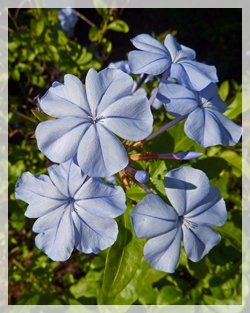
Perhaps it was because of the dreary weather, but I started my litany of complaints as soon as I got out of bed. It was chilly and damp (by Florida standards) and my arthritic knees ached. As I gingerly walked across the cold tile floor, I remembered a friend whose rheumatoid arthritis has left her unable to walk even moderate distances. In spite of a few creaky joints, I still manage to get in my 10,000 steps every day. As dreary as the day was, the only reason I didn’t complain about the weather is that, even at my grouchiest, I know that a bad winter day in southwest Florida is better than a good one just about anywhere else!

Nevertheless, my moaning and groaning continued as I faced the mirror and saw those pesky gray roots peeking out from my colored hair. I grumbled about those until I recalled my many friends who lost their tresses to chemo-therapy and radiation. I scrutinized the age spots on my face and the wrinkles around my eyes and then remembered my elderly friend whose skin cancer left him without an eye. While I was on a roll, though, I looked with disdain at my old lady neck and remembered Nora Ephron’s words: “You have to cut open a redwood tree to see how old it is, but you wouldn’t if it had a neck.” Truer words were never said but, before I could even voice that grievance, I thought of a friend’s wife who lost both her jaw and life to cancer; had she lived into her 70s, I don’t think she’d be complaining about a crepey neck.

Not yet done with negativity, though, I grumbled because the sundress I’d planned on wearing wouldn’t be warm enough. As I browsed through my over-full closet to pick a warmer outfit, I thought of all those people who have no closet stuffed with clothing, pantry filled with food, or furnace running to keep them warm. “Shame on me!” I thought, but I wasn’t done yet with my litany of complaint.

Later that morning, I became annoyed that my limping husband can no longer keep up with me. Before I could bemoan the fact that we can no longer ski together, I remembered the man who pushes his wife’s wheelchair along the boardwalk every morning. I’m sure they both would be thrilled if she could walk, even with a limp! I then thought about the neurosurgeon without whose skill my spouse couldn’t walk at all. There are many places in the world where the speedy and expert treatment my husband received would be unavailable and, like that woman, he would need a wheelchair.

“Count your blessings!” my mother used to say, but I’d wasted a fair amount of the morning counting petty complaints instead. How easy it is to gripe about stupid little things and forget how fortunate we really are. When I need an attitude adjustment, as I so desperately did that morning, I find reading Psalm 100 an excellent antidote to a case of the grumbles. My spirits improved once I’d stopped whining, taken stock of the many blessings of my life, and thanked God for them. While some of us are “glass half full!” kind of people, others are more of the “glass half empty!” sort. What we need to remember is to be thankful that we have a glass at all! Indeed, “Give thanks to him and praise his name.” 

The Lord afflicts us at times; but it is always a thousand times less than we deserve, and much less than many of our fellow-creatures are suffering around us. Let us therefore pray for grace to be humble, thankful, and patient. [John Newton]

Shout with joy to the Lord, all the earth!
Worship the Lord with gladness.
Come before him, singing with joy.
Acknowledge that the Lord is God!
He made us, and we are his.
We are his people, the sheep of his pasture.
Enter his gates with thanksgiving;
go into his courts with praise.
Give thanks to him and praise his name.
For the Lord is good.
His unfailing love continues forever,
and his faithfulness continues to each generation. [Psalm 100 (NLT)]

Copyright ©2018 jsjdevotions. All rights reserved.

TRUTH BE TOLD

Many of his disciples said, “This is very hard to understand. How can anyone accept it?” Jesus was aware that his disciples were complaining, so he said to them, “Does this offend you? … And the very words I have spoken to you are spirit and life. … At this point many of his disciples turned away and deserted him. [John 6:60-61,63b,66 (NLT]

plumbgoSome prophets weren’t bothered by the truth and were available for hire. Ahab, for example, had 400 prophets on his payroll acting as his “yes men.” When he asked Jehoshaphat to join him in a campaign against Aram, Jehoshaphat requested the advice of prophets so Ahab summoned his seers. Jehoshaphat, however, recognized them as pagans; when he asked for a true “prophet of the Lord,” Micaiah was summoned.

Honest prophets, like Micaiah had a difficult life; if they prophesized an unpleasant truth, they often were punished or killed. Although warned to promise victory, Micaiah was unafraid of offending the king and responded with God’s truth about Israel’s defeat and Ahab’s death. His reward for telling the truth was a slap on the face, prison and a diet of bread and water; Ahab’s reward for ignoring the truth was death by a randomly shot arrow.

Daniel served as prophet to four kings; facing a series of egocentric and powerful rulers and surrounded by idolatry, his was not an easy job. When Nebuchadnezzar had a dream about a tree, the troubled Daniel hesitated to tell the king that it predicted a period of insanity for him. Nevertheless, he truthfully interpreted the dream and, at the risk of offending the king, bravely advised him to stop sinning. When the proud king didn’t, he ended up spending time living in the fields like an animal.

When Belshazzar called Daniel to interpret the mysterious writing on the wall, the king offered him beautiful gifts and great power for explaining the message but Daniel declined. His prophetic gift was never about gaining reward or power and, knowing the words’ meaning, he knew the reward was worthless. Unafraid of offending the king, Daniel boldly began by taking him to task for the way he’d dishonored God with his sinful disobedience, pride, desecration of sacred objects, and idolatry. The prophet finished by telling Belshazzar that his days were numbered, his reign had been found deficient, and that Babylon would fall and be divided among the Medes and Persians. Confident that he had an impregnable fortress and enough provisions to survive a twenty-year siege, Belshazzar didn’t take the words of warning seriously. Daniel’s prophecies proved correct. The ancient historian Xenophon writes that while the Babylonians were in the midst of that drunken feast, Darius the Mede diverted the Euphrates. Walking on the dry river bed, his army easily entered the city through the water gates. Belshazzar died that very night and the kingdom of Babylon was divided into 120 provinces.

Even when they knew their messages were unpleasant and that the consequences for speaking the truth and offending a king could be severe, neither Micaiah nor Daniel ever sugar-coated God’s truth. Finding their prophecies distasteful, Ahab, Nebuchadnezzar, and Belshazzar chose to ignore them. Like those kings, many of the people who heard Jesus found His truth offensive and inconvenient; choosing to ignore it, they walked away from Him. The fact that the truth is often unpleasant and can be ignored, however, doesn’t change its veracity.

Sometimes, as Christians, we are afraid to offend people with the truth and so we say nothing when God calls us to speak. While we never want to come off as domineering, disparaging or arrogant, we must not let fear keep us from speaking the truth. That God’s truth, even when lovingly and considerately spoken, may offend some people doesn’t mean the truth must not be told.

And the judgment is based on this fact: God’s light came into the world, but people loved the darkness more than the light, for their actions were evil.  All who do evil hate the light and refuse to go near it for fear their sins will be exposed. But those who do what is right come to the light so others can see that they are doing what God wants. [John 3:19-21 (NLT)]

Copyright ©2019 jsjdevotions. All rights reserved.