THE BEST CHRISTMAS EVER

And while they were there, the time came for her baby to be born. She gave birth to her first child, a son. She wrapped him snugly in strips of cloth and laid him in a manger, because there was no lodging available for them. [Luke 2:6-7 (NLT)]

red roseIn honor of that first Christmas, the one without decorations, piles of gaily wrapped presents or a feast, let’s try to keep it simple today and tomorrow. It’s not too late to change our plans and readjust our expectations. I’m sure Joseph and Mary didn’t plan on birthing in a stable, but their Christmas was a blessed one even though life didn’t go as they’d intended. Accept in advance that some things are certain to go wrong: guests won’t arrive on time, a gift will disappoint, food will burn, a drink will spill, toys will break, tears will be shed, directions will get thrown away, someone’s feelings will be hurt, and we’ll miss those who are absent. That’s as much a part of this holiday as church, carols, family, prayers, candy canes, laughter, a Christmas tree, and pine-scented candles.

We’re all anxious about Christmas. No one, however, was more anxious than Mary on that first Christmas. She had plenty of reasons to be apprehensive and nervous. She’d conceived miraculously, endured an eighty-mile journey from Nazareth to Bethlehem, and was in labor in a strange place with no women nearby to reassure or help her. There were no prenatal classes, birthing coaches, monitors, epidurals, fancy birthing rooms, comfy pillows, soft music in the background, warmed blankets, or medical care. Without a doubt, with the sheep and cows as her midwives, she was a frightened young girl. Yet, somehow, through God’s grace, she managed quite well. She had the simplest and most meaningful Christmas celebration ever! Things may not have gone right but they went perfectly—just as God planned!

Thank you, Lord, for the salvation brought to us by a baby in a manger. Tonight, as we celebrate Christ’s birth, please replace our apprehension with anticipation, our anxiety with hope, our chaos with peace, and our stress with serenity. Let there be joy, not sorrow; generosity, not selfishness; and love, not rancor.

This Flow’r, whose fragrance tender With sweetness fills the air,
Dispels with glorious splendor The darkness everywhere.
True man, yet very God, From sin and death He saves us,
And lightens every load. [“Lo, How a Rose E’re Blooming” (Friedrich Layritz)]

All who heard the shepherds’ story were astonished, but Mary kept all these things in her heart and thought about them often. [2 Luke 2:18 (NLT)]

Copyright ©2018 jsjdevotions. All rights reserved.

NICODEMUS

Then I will sprinkle clean water on you, and you will be clean. Your filth will be washed away, and you will no longer worship idols. And I will give you a new heart, and I will put a new spirit in you. I will take out your stony, stubborn heart and give you a tender, responsive heart. And I will put my Spirit in you so that you will follow my decrees and be careful to obey my regulations. [Ezekiel 36:25-27 (NLT)]

impatiens flowerWhen we think of the Pharisees, we usually think of their hypocrisy and self-righteousness but they started out with good motives. Like us, they simply wanted to avoid sin. I have no doubt that some were well meaning, with high standards and pure motives. Since Jesus was teaching in the Temple, it was only right that these interpreters of the law would want to examine His teachings.
The Pharisee Nicodemus came to visit Jesus one night. Since Jesus seemed to spend his days surrounded by a crowd, the dark of night may have been the only time the Pharisee could meet one-on-one with the rabbi. On the other hand, perhaps he was afraid that others might see him talking to this teacher who challenged the behavior and beliefs of his sect. Nicodemus may have come as a seeker of truth or, possibly, as a spy who was hoping to catch Jesus in some sort of blasphemy. We don’t know his motives, only his questions, the most famous of which was, “How can an old man go back into his mother’s womb and be born again?”

When Jesus speaks of being born of water and the Spirit, this concept should not have been new to a scholar like Nicodemus. Jesus probably was referencing the above words found in Ezekiel 36 and the Pharisee should have been familiar with them. Yet, the man did not seem to understand that the Messiah would bring spiritual cleansing and a new heart—a new nature—to the people. I can imagine Jesus’s frustration as He rebuked the scholar for not recognizing that Scripture taught the necessity of a new birth by the Spirit. Their conversation ends with Jesus speaking of God’s light and people preferring darkness to light. Still not understanding, Nicodemus leaves in the darkness both of night and of spirit.

The next time we hear of Nicodemus, he’s in a meeting with the Sanhedrin. The Temple guards had been sent to arrest Jesus but, amazed at His teachings and unable to find any cause, they come back empty-handed. As the Pharisees condemn and curse the crowd following Jesus, Nicodemus speaks up: “Is it legal to convict a man before he is given a hearing?” [John 7:51] Could it be that Nicodemus reread the Messianic prophecies and was beginning to understand the meaning of Jesus’s words?

The last time we meet Nicodemus, he is with Joseph of Arimathea. A member of the Sanhedrin and Nicodemus’s friend, Joseph was probably a Pharisee; yet we read that he also was a secret disciple of Jesus. It was Joseph, not the disciples, who asked Pilate for permission to take down Jesus’s body and it was his tomb that became the brief resting place for Christ’s body. Nicodemus brought seventy-five pounds of myrrh and aloe with which he and Joseph prepared the Lord’s body for burial. No longer secret believers, it would seem that both Nicodemus and Joseph moved from the darkness into the light.

The Apostle John tells us that other Jewish leaders believed in Jesus but, fearing they’d be expelled from the synagogue, they kept silent. [12:42] Are we secret believers, keeping silent in the shadows or, like Nicodemus and Joseph, Peter and John, will we boldly proclaim our faith?

So they [the high council] called the apostles back in and commanded them never again to speak or teach in the name of Jesus. But Peter and John replied, “Do you think God wants us to obey you rather than him? We cannot stop telling about everything we have seen and heard.” … Then they preached the word of God with boldness. [Acts 4:18-19,31b (NLT)]

Copyright ©2018 jsjdevotions. All rights reserved.

NEITHER ADD NOR SUBTRACT 

Jesus replied, “You hypocrites! Isaiah was right when he prophesied about you, for he wrote, ‘These people honor me with their lips, but their hearts are far from me. Their worship is a farce, for they teach man-made ideas as commands from God.’ For you ignore God’s law and substitute your own tradition.” [Mark 7:6-8 (NLT)]

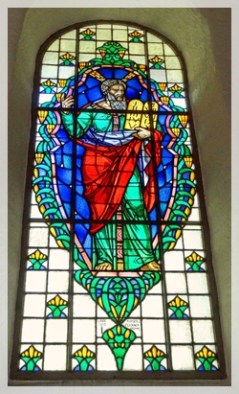
Moses - Meiringen - MichaelskircheThroughout Scripture, we find Jesus at odds with the Pharisees, one of the most important Jewish sects of the day. Not priests, the Pharisees were laymen (mostly merchants and tradesmen) who zealously followed Mosaic Law, often by adding non-Biblical traditions to it. Considered interpreters of the law, they were known for their austere life style and vast knowledge. The Pharisees accepted the oral explanations and additions of earlier generations to be equally inspired and authoritative as the written words of the Torah (the first five books of the Bible).

These oral traditions consisted of highly specific rules and regulations that were based on the belief that, when God gave Moses the written law on Mt. Sinai, He also elaborated on how those laws were to be kept. Unwritten, those explanations became oral tradition. This devotion to oral law developed during Judah’s Babylonian captivity. Jerusalem’s destruction and their exile was God’s punishment for the neglect of His law so it’s understandable that no one wanted to endure God’s wrath again. Restrictions evolved that were designed to “build a hedge” around the Torah and guard against any possible breach of the law, whether by ignorance or accident.

With their detailed laws regarding nearly every aspect of life, the Pharisees were legalists. Jesus didn’t approve of the way they’d replaced God’s simple law with complex man-made laws that placed a heavy burden on the people—a burden that God hadn’t given them. Although work on the Sabbath clearly was prohibited, the Pharisees determined that meant a tailor could not carry a needle stuck in his coat, someone couldn’t carry ink enough to write two letters of the alphabet, and no one could spit on the ground because that might make a hole, which would be digging, which would be work! It was the Pharisees who said the disciples had sinned by reaping and preparing food on the Sabbath when they picked heads of grain off their stalks!

Jesus criticized the Pharisees’ devotion to the letter of the law while ignoring the spirit of the law: love of God and love of neighbor. Some of the Pharisees’ man-made rules, such as a loophole allowing people to renege on promises, actually helped them get around God’s law. If someone swore by the Temple or the altar, the oath wasn’t binding but, if someone swore by the gold of the temple or the offerings on the altar, it was! Because of their inability to be consistent in their interpretation of oral and written laws, Jesus compared the Pharisees to the blind leading the blind.

For many Pharisees, there was a disparity between what they professed (righteousness) and what they put into practice (self-righteousness). Jesus certainly didn’t like the gap between what they proclaimed and what they actually practiced and frequently called them out for their pretense and hypocrisy.

There’s much we can learn from the Pharisees: not to be pompous, hypocritical, judgmental prigs is perhaps the most obvious. That we shouldn’t think we can earn heaven by following a false gospel of salvation through works is another. The hardest lesson is probably the most subtle: never to confuse human dogma for Godly doctrine. When we give our personal preferences or denominational rules and traditions equal billing to God’s law, as did the Pharisees, it’s easy to become pompous, hypocritical, judgmental prigs.

Do not add to or subtract from these commands I am giving you. Just obey the commands of the Lord your God that I am giving you. [Deuteronomy 4:2 (NLT)]

Copyright ©2018 jsjdevotions. All rights reserved.

ON SANTA’S TEAM

Be generous: Invest in acts of charity. Charity yields high returns. Don’t hoard your goods; spread them around. Be a blessing to others. This could be your last night. [Ecclesiastes 11:1-2 (MSG)]

santa ornamentThe following is a holiday pass-along story that has made the rounds on the Internet. Years ago, little Jimmy was shocked when his big sister told him there was no Santa. He tearfully went to his grandmother and asked her. Assuring Jimmy that Santa existed and she’d prove it to him, Grandma took him to the local department store. Instead of seeing the store Santa, as Jimmy expected they would, his grandmother gave him $10 and told him to use it to purchase a present for someone who needed one. Alone in the store, the boy pondered who should get a gift and finally decided on Robby, a boy in his classroom. Robby never went out at recess; although he said it was because he wanted to study, everyone knew it was because he didn’t have a warm coat. Jimmy found a brown wool coat, took it to the clerk and asked the price. After telling her he hoped he could afford it since it was a gift for a boy at school who didn’t have a coat, the clerk questioned how much he had. Proudly showing her his ten dollar bill, she told him that was the exactly what the coat cost and bagged it up for him.

Once home, Jimmy’s Grandma removed the price tag, tucked it into her Bible, and helped him box and wrap the coat. That evening the two of them went to Robby’s house. After placing the festively wrapped gift at his front door, they rang the bell and hid behind the bushes. The joy they felt when Robby answered the door and picked up the box convinced Jimmy that Santa did, indeed, exist and that he and his grandmother were on Santa’s team. That little boy is now a grown man and Grandma is gone. When she passed, Jimmy was given her Bible. It was when he found the coat’s $19.95 price tag between its pages that Jimmy realized there had been three on Santa’s team that day.

I remembered that holiday story last month when our church provided fifty-four Christmas shoeboxes for Samaritan’s Purse. Packed with toys, school supplies, books, clothing, hygiene items, and games, these boxes will bless children in over 100 countries around the world. My husband and I were on Santa’s team while roaming through stores picking out things that a nine-year-old boy and a fourteen-year-old girl would like to find in their boxes, when trying to fit everything into the shoe-box size green plastic boxes, when writing short notes to include with the gifts, and when hearing one woman share her experience of being on a mission trip and meeting Christmas box recipients who told her of the great impact those boxes had on their lives and faith.

As you do your Christmas shopping for family and friends in the coming weeks, why not think about getting on Santa’s team and purchasing some items for those less fortunate. In His parable, Jesus told us that He identifies with those in need—the hungry, thirsty, homeless, impoverished, sick and imprisoned—and when we do something for them, we are doing it for Him. On someone’s birthday, it’s traditional to give him a gift so, when we purchase Christmas gifts for the poor and needy, we’re really buying birthday gifts for Jesus!

“I was hungry and you fed me, I was thirsty and you gave me a drink, I was homeless and you gave me a room, I was shivering and you gave me clothes, I was sick and you stopped to visit, I was in prison and you came to me.” Then those ‘sheep’ are going to say, “Master, what are you talking about? When did we ever see you hungry and feed you, thirsty and give you a drink? And when did we ever see you sick or in prison and come to you?” Then the King will say, “I’m telling the solemn truth: Whenever you did one of these things to someone overlooked or ignored, that was me—you did it to me.” [Matthew 25:35-40 (MSG)]

Copyright ©2018 jsjdevotions. All rights reserved.

THE OLIVE BRANCH

Forget about the wrong things people do to you, and do not try to get even. Love your neighbor as you love yourself. [Leviticus 19:18 (NCV)]

Humility has such power. Apologies can disarm arguments. Contrition can defuse rage. Olive branches do more good than battle axes ever will. [Max Lucado]

mourning doveIn a “Baby Blues” comic strip, Zoe, the big sister approaches her brother and tells him, “About that fight we had a while ago…I would like to extend an olive branch.” With a panicked look on his face, the little brother screams, “MOM!!! Zoe’s threatening me with a stick!” Having had an older brother who delighted in tormenting me, I completely sympathized with the little boy. There were times when my brother just had to come near me and I would frantically call out, “Mom, Steve’s hitting me again!” I wanted to avoid another painful punch but, who knows, maybe one of those times he, like Zoe, was just offering an olive branch.

Long before the ancient Greeks and Romans used the olive branch as a symbol for victory and peace, the story of Noah recorded that a dove brought an olive branch back to the ark which meant the end of the flood and the earth’s rebirth. Symbolizing peace and reconciliation, the olive branch requires two things: someone to extend it and someone else to accept it. An apology and its acceptance are two sides of the same coin, as are the asking of forgiveness and the granting of it. Both are necessary for peace in our lives.

I have been like Zoe, the one extending the olive branch; I admitted my offense, apologized, and asked forgiveness but was rebuffed. Unfortunately, there are people who will never accept an apology, no matter how humbly or amiably it is offered. All we can do is keep the olive branch extended, pray that God will open their hearts, and continue to love.

Like Zoe’s little brother, however, it’s not always easy to accept that olive branch. Wanting to protect ourselves from further hurt or disappointment, we may prefer suspicion, aloofness, hostility, or anger. Forgiveness doesn’t mean we have to trust people who are untrustworthy or believe those who are dishonest. An act of love, mercy and grace, forgiveness is releasing the offense and offender to God; it is giving up our right to hurt those who’ve hurt us. Being the wronged party never gives us permission to continue the wrong with unforgiveness.

Along with an olive branch, the handshake is a gesture of peace. In ancient Greece, hands were grasped to demonstrate that neither person held a weapon. In Rome, the grasp became more of an arm grab as a way of seeing whether any weapons were hidden in someone’s sleeves. The shaking part is said to come from medieval England when knights would shake hands in an attempt to shake loose any concealed weapons.

Hopefully, we don’t need to worry about lethal weapons hiding in sleeves when we shake hands this holiday season. Nevertheless, we need to put aside the invisible weapons we carry: things like anger, gossip, blame, intolerance, pettiness, jealousy, resentment, and disrespect. Let’s extend any olive branches that need to be extended and accept any that are offered. If there can’t be peace throughout the world this holiday season (and from the news that looks unlikely), let there at least be peace and reconciliation in our homes and families.

To be forgiven is such sweetness that honey is tasteless in comparison with it. But yet there is one thing sweeter still, and that is to forgive. As it is more blessed to give than to receive, so to forgive rises a stage higher in experience than to be forgiven. [Charles Spurgeon]

When you are praying, if you are angry with someone, forgive him so that your Father in heaven will also forgive your sins. But if you don’t forgive other people, then your Father in heaven will not forgive your sins. [Mark 11:25-26 (NCV)]

Copyright ©2018 jsjdevotions. All rights reserved

THE NEXT STEP

Since we believe that Christ died for all, we also believe that we have all died to our old life. He died for everyone so that those who receive his new life will no longer live for themselves. Instead, they will live for Christ, who died and was raised for them. … This means that anyone who belongs to Christ has become a new person. The old life is gone; a new life has begun! [2 Corinthians 5: 14b-15,17 (NLT)]

Sanctification is the work of God’s free grace, whereby we are renewed in the whole man after the image of God, and are enabled more and more to die unto sin, and live unto righteousness. [Westminster Shorter Catechism]

waterfallIn writing about the Sinner’s Prayer yesterday, I wondered if, by saying it, a new believer gets the false impression that his responsibility ends with a prayer when, in fact, it has just begun! Justification takes only a moment but sanctification takes a lifetime. Addressing the guilt of our sins, justification is when, by the grace of God, we are made righteous through God’s grace and our faith. It’s as if we’re guilty criminals, standing in God’s courtroom, and God pardons us. Telling us our debt to society has been paid, He sets us free. While it’s easy to walk out of the courthouse, it’s not so easy to alter the behavior that led to our life of crime. Like any felon, we need to change our ways, which is where sanctification comes in. Rather than the reformation of a criminal, it is the transformation of a sinner.

Powered by our faith and the Holy Spirit, sanctification transforms our sinful character so we grow more and more like Christ. Focusing on the destructive power of sin in our lives, it gradually shapes our hearts, minds, and desires to those of God. Sanctification is the work part of our salvation and requires diligence in study, prayer, fellowship, witness and service. It’s coming to know Jesus, loving and obeying God, and letting both His word and the Holy Spirit convict us when we sin. It’s allowing God to work in and through us, not as a way to earn His blessings and favor, but because we delight in His will.

While holiness is the goal of sanctification, I don’t think any mortal can live a life completely free from sin in this world. Nevertheless, even though we can’t attain sinless perfection, like the Apostle Paul, we will continue to struggle against sin and temptation as long as we’re on this side of the grass. We persevere and, through the power of the Holy Spirit, continue to grow more and more like Christ every day.

The Christian life requires hard work. Our sanctification is a process wherein we are coworkers with God. We have the promise of God’s assistance in our labor, but His divine help does not annul our responsibility to work. [R.C. Sproul]

Work hard to show the results of your salvation, obeying God with deep reverence and fear. For God is working in you, giving you the desire and the power to do what pleases him. [Philippians 2:12b-13 (NLT)]

Since you have heard about Jesus and have learned the truth that comes from him, throw off your old sinful nature and your former way of life, which is corrupted by lust and deception. Instead, let the Spirit renew your thoughts and attitudes. Put on your new nature, created to be like God—truly righteous and holy. [Ephesians 4:21-24 (NLT)]

Copyright ©2018 jsjdevotions. All rights reserved.