BE STRONG AND COURAGEOUS

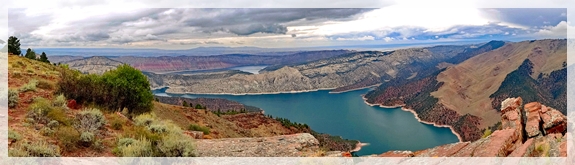
UtahThis is my command—be strong and courageous! Do not be afraid or discouraged. For the Lord your God is with you wherever you go.” [Joshua 1:6a,9 (NLT)]

Joshua 1:9 was my Bible verse for the day but I decided to make it my verse for the week. To make sure I kept it in mind, I wrote it on a post-a-note and stuck it where I’d be sure to see it: on my phone!

Wanting to put this inspirational verse in context, I reread the first chapter of Joshua. The book of Joshua is about the fulfillment of God’s promises to Abraham made four hundred years earlier. Its first chapter is one of my favorite chapters of the Old Testament narratives. To set the stage: Israel is camped on the east side of the Jordan River with the Promised Land in sight. Forty years have passed since the parting of the Red Sea. Moses is dead and only Caleb and Joshua remain of the adults who’d once been slaves in Egypt. The Israelites are standing on the edge of the unknown and the Jordan River is at flood stage. With no bridges or ferry boats, they must have wondered how they’d manage to get safely to the other side. Joshua is the new leader of the Israelites and God tells him to be strong and courageous.

Granted, God’s words were spoken to Joshua around 1400 BC in an entirely different setting but, because I’m standing on the edge of the unknown as well, God’s words to Joshua are both comforting and encouraging. Then again, we’re all standing on the edge of the unknown. None of us know what tomorrow (or even the rest of today) will bring: be it good news or bad, tornadoes or sunny skies, an accident or a near miss, the making of a new friend or the loss of an old one.

When Joshua is told to be strong, God wasn’t talking about working out at the gym. This strength had nothing to do with muscles unless, of course, we’re talking about spiritual muscles. It had to do with having the strength to prevail, withstand, and sustain. Being of good courage, is more than not being a fearful coward; it’s being alert both physically and mentally, steadfast, and determined. It wasn’t powerful foes or a lack of weapons, battle strategy, or seasoned warriors that threatened Israel; it was fear, discouragement, and weakness of faith.

Being strong and courageous is easier said than done. Nevertheless, God tells Joshua exactly how to do that: meditate on and obey the instructions in the Torah (the first five books of the Bible and the only scripture at the time). Authored by God through Moses, those books contained the people’s history and God’s law, promises and plan. If the Israelites had only done that, the Old Testament would be an entirely different (and far less violent) story! 3,400 years later, we’re no longer limited to a mere five books; we have both Old and New Testaments to make us strong and courageous. Just the same, knowing and obeying those words can be as much of a problem for us as it was for the Israelites.

At least for me, the best part of Joshua 1:9 is God’s promise that He is with us wherever we go. Whether we’re crossing a deep river or just going across the street, confronting an enemy army or a CT scan, or facing a walled city or the loss of a spouse, we know that, no matter what befalls us, God is with us. When we’re standing at an abyss, facing the great unknown, there is no need to be afraid or discouraged. We can be strong and courageous because we have his promise in writing; He is always with us, “even to the end of the age.”

If the Lord be with us, we have no cause of fear. His eye is upon us, His arm over us, His ear open to our prayer – His grace sufficient, His promise unchangeable. [John Newton]
Teach these new disciples to obey all the commands I have given you. And be sure of this: I am with you always, even to the end of the age. [Matthew 28:20 (NLT)]

Copyright ©2019 jsjdevotions. All rights reserved.

YOUR GIFT IS NEEDED

There are different kinds of gifts, but they are all from the same Spirit. There are different ways to serve but the same Lord to serve. And there are different ways that God works through people but the same God. God works in all of us in everything we do. Something from the Spirit can be seen in each person, for the common good. [1 Corinthians 12:4-7 (NCV)]

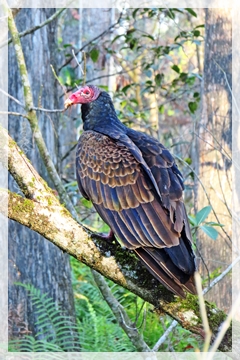
turkey vultureYesterday, when I compared vultures to mankind, I did vultures a disservice. Although unattractive, smelly, and with rather disgusting eating habits, vultures play a valuable role in keeping our ecosystem healthy and clean by disposing of rotting carcasses and preventing the spread of disease.

When in Tanzania, we came upon a committee of Rüppell’s vultures gathered by an impala carcass. The animal had collided with a vehicle and lay by the roadside—perfectly intact but clearly dead. The birds, however, weren’t eating and seemed to be waiting patiently while dinner lay right in front of them. When we asked our guide why they weren’t dining, he explained they were just waiting for the arrival of more vultures (but not out of politeness). The waiting vultures, while well-equipped to stick their heads into an animal’s carcass, didn’t have strong enough beaks to tear into its unbroken hide. They were awaiting the Lappet-faced Vultures who, with their strong beaks, could tear open the impala’s tough hide and through tendons and other coarse tissue to expose its insides. Being the larger dominant birds, the Lappets eat first. Once done, plenty of food remains deeper in the carcass for the medium-sized vultures like the Rüppell’s who, with their bald heads and necks are perfectly designed for getting down and dirty into the remains. Once they’re done, the Hooded Vultures get to eat. With their smaller heads and beaks, they are perfectly designed to extract the last bits of meat found deep in the animal’s remains. Last to dine is the Bearded Vulture. Unlike its cousins, this vulture has a feathered head making it ill-suited for eating flesh; fortunately, it likes the bones. When each vulture has done its part, their job of cleaning up the carcass is complete. When we wondered how all the different vultures managed to find this one dead animal, we were told that the White-backed Vulture has excellent eye sight and will “wheel” in the sky as a sort of dinner bell to alert all the others. Unable to tear open a carcass, it eats with the Rüppell’s.

There are twenty-three different species of vultures and God has equipped each one of them in a slightly different way. They all have the same assignment—to be nature’s garbage men—but each is equipped to do that in different ways. The White-backed Vulture signals, the Lappet-faced Vultures get the job started, the Rüppell’s do the dirty work, the Hooded-Vultures pick the bones, and the Bearded Vultures finish the job. Each vulture needs to do its part if their joint mission is to be accomplished.

God gave the vultures their assignment and, in Matthew 28:19-20, He gives us ours: “So go and make followers of all people in the world. Baptize them in the name of the Father and the Son and the Holy Spirit. Teach them to obey everything that I have taught you.” Within that greater assignment of expanding God’s Kingdom, however, we each have a distinct position to fill and a gift that will enable us to fulfill it. Like the vultures, the church cannot survive unless everyone uses his or her gift but, unlike the vultures, our gifts are rarely as obvious as a strong beak or a bald head.

While the Holy Spirit has gifted us, it is our obligation to determine the nature of His gift. In all of his discussion of spiritual gifts, however, the Apostle Paul gave no directions for recognizing those gifts. Perhaps he felt no need for guidance because recognizing our gift really isn’t so terribly difficult. All we really need to do is ask ourselves where we can best serve. Are we the guys with the big strong beaks or the ones who pick the bones clean? When we find the place where we can best serve effectively, we will have discovered our spiritual gift and we can get to work using it to further God’s kingdom.

Each of you has received a gift to use to serve others. Be good servants of God’s various gifts of grace. [1 Peter 4:10 (NCV)]

The most important thing is that I complete my mission, the work that the Lord Jesus gave me—to tell people the Good News about God’s grace. [Acts 20:24 (NCV)]

Copyright ©2019 jsjdevotions. All rights reserved.


WHICH ARE YOU? 

I will appoint over them four kinds of destroyers, says the Lord: the sword to kill, the dogs to tear, and the vultures and wild animals to finish up what’s left. [Jeremiah 15:3 (TLB)]

hummingbird - vulturesWe were enjoying hundreds of exotic butterflies amid tropical plants in the conservatory of a nearby botanic garden when I turned around to see a hummingbird hovering nearby. In spite of the building’s double-door containment procedures, this beautiful little bird managed to find his way into what, for him, must be paradise and no one seemed to mind. Seeing him reminded me of a question asked several years ago: “Which would you rather be—a hummingbird or a vulture?”  I thought, “That’s a no-brainer!” as I watched the iridescent bird hover over the flowers; then I remembered the question wasn’t what we wanted to be but rather what we actually were.
Most of us want to think we’re hummingbirds—those beautiful delicate birds with the fluttering wings—but I’m not sure we always are. Hummingbirds may be small but they’re fearless; they’ll even pursue hawks in defense of their nest. Are we that fearless? Hummingbirds are optimists who always look for the bright and sweet in the garden of life. Do we? These avian helicopters, often thought of as harbingers of good luck, are welcome everywhere. Does seeing us bring joy the way seeing a hummingbird does or is the reaction to us more like that of seeing vultures at the side of the road—something like “Yuk!”

When we search for something or someone to pick apart, we’re like the vultures soaring in the sky and sniffing for the stink of rotting carcasses. Rather than road kill, we’re sniffing around for rumor and scandal so we can dine on other people’s misery or disgrace. When we discourage rather than build up or disparage rather than praise, we’re not much different than the hungry vultures who gather as the swamp dries and anxiously wait for the fish to die so they can pick at the remains. When we remorselessly spew hate, bigotry, or anger, we’re like vultures that, with a well-aimed shot of acidic vomit, can slime someone or something they don’t like. When we choose to live with resentment, bitterness, and the rotten leftovers of yesterday, we’re not much different than vultures who defecate on their feet.

If we want to be hummingbirds, there can be no more concentrating on the unpleasant garbage of our lives or the lives of others. There can be no more feasting on sour guilt, fetid anger, foul-smelling regrets, or the rotten remains of past relationships and issues that died long ago. Hummingbirds don’t just seek out the sweeter things in life; they are one of those sweet things. As hummingbirds, we can’t just enjoy the happiness we find, we must bring joy to those we meet. After all, people plant brightly-colored flowers and hang special feeders for hummingbirds, but I’ve never heard of anyone trying to entice vultures into a garden.

The hummingbird and vulture have no choice—they are what they were born to be. We, however, can decide if we’re going to be hummingbirds and welcome spreaders of joy, or vultures, those unwelcome omens of misery. The choice is ours!

Lord, guide us in our thoughts and actions so we can be like hummingbirds from this day forth!

Always be full of joy in the Lord; I say it again, rejoice! … Fix your thoughts on what is true and good and right. Think about things that are pure and lovely, and dwell on the fine, good things in others. Think about all you can praise God for and be glad about. [Philippians 4:4,8b (TLB)]

Copyright ©2019 jsjdevotions. All rights reserved.

THE LAMB OF GOD – ASH WEDNESDAY

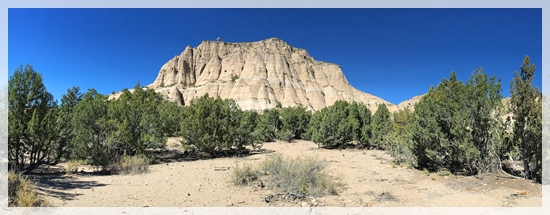
New mexicoThe next day John saw Jesus coming toward him and said, “Look! The Lamb of God who takes away the sin of the world! [John 1:29 (NLT)]

Today is the first day of Lent, a season in which we remember the time Jesus went into the wilderness and fasted for forty days and nights. Because Lent occurs in the weeks leading up to Good Friday and Easter, we tend to associate this period of Jesus’s life with the end of his ministry. It actually occurred early in His ministry, shortly after his baptism by John and his empowerment by the Holy Spirit.

During Jesus’s time in the wilderness, Satan visited and tempted Him. Jesus first was tempted to serve Himself—to alleviate his hunger by turning stones into bread. In the second temptation, Satan urged Jesus to jump off the Temple and reveal Himself in a spectacular display. This action would also test God’s love by coercing Him into saving Jesus. In the third test, Satan tempted Jesus to skip the cross altogether; all the kingdoms of the world would be His if only He’d worship the evil one.

Just because Jesus was divine doesn’t mean He couldn’t have fallen; He also was human and, like us all, susceptible to Satan’s wiles. He could have sinned as easily as Adam and Eve, but He didn’t! Resisting temptation was as essential to His mission as was suffering on the cross. Just as sin came into the world through one man, God would redeem the world through one man, but Jesus had to remain sinless for that to happen. If He hadn’t, there would have been no point to the cross; only a perfect sinless sacrifice could atone for mankind’s sins.

Because Jesus countered all of Satan’s temptations with Scripture, we tend to think of the temptation of Christ as sort of a “how to” manual on overpowering temptation. While it is that, it is so much more. Jesus didn’t go into the wilderness to teach us a lesson—He went into the wilderness to save us. He wasn’t just battling for His soul—He was fighting Satan for ours! He was defeating Satan by deliberating choosing to suffer for us as a man when He was God! He endured hunger when he could have spoken food into existence. He humbly chose to remain an obscure rabbi from Nazareth rather than use His power to win a following. Refusing to compromise with Satan, He chose obedience to God: to live, suffer and die as a man. Jesus, the spotless Lamb of God, chose to endure the cross for sinful selfish mankind: the very people who would put Him there!

For God made Christ, who never sinned, to be the offering for our sin, so that we could be made right with God through Christ. [2 Corinthians 5:21 (NLT)]

This High Priest of ours understands our weaknesses, for he faced all of the same testings we do, yet he did not sin. So let us come boldly to the throne of our gracious God. There we will receive his mercy, and we will find grace to help us when we need it most. [Hebrews 4:15-16 (NLT)]

Copyright ©2019 jsjdevotions. All rights reserved.

MINUTES PER DAY

Rejoice always, pray continually, give thanks in all circumstances; for this is God’s will for you in Christ Jesus. [1 Thessalonians 5:16-18 (NIV)]

sunset - vanderbilt beach - naplesFitbit recently notified me that I’ve logged 4,132 miles and awarded me a badge for having walked the length of the Nile River. And to think—I managed to do it all without ever leaving the country. With the aim of averaging 10,000 steps a day, I was curious to see how close to that goal I’ve gotten since getting the Fitbit. Some complicated math told me that, by now, I should have logged enough steps to be three-quarters of the way from the North to the South Pole. Granted, I haven’t always worn my pedometer and both foot and knee injuries temporarily benched me. Nevertheless, surprised to see how short I was of my goal, I realized how easy it is to think we’ve done far more than we actually have.
We don’t have prayometers to log our prayer time nor does God award badges for time spent talking with Him. If He did, I wouldn’t be anywhere near where I should be. By my next birthday, I will have lived 26,280 days (not counting leap days) which is 37,843,200 minutes. If I spent even five minutes a day in prayer, that would be 131,400 minutes or 91 days of my life. While I would have received the Kim Kardashian badge for praying longer than her 72-day marriage to Kris Humphries, I wouldn’t have prayed as long as the 98 days the Macarena was the number one hit song.  Even if I’d faithfully prayed ten minutes every day, I’d be short of the badge honoring James Garfield (who died 6 months and 15 days into his term). It would take twenty minutes of prayer every day to qualify me for the 365-day one year badge. One year out of 72 spent in prayer didn’t sound deficient until I realized that is a little less than 1.4% of my life. Although some of that time was spent in infancy when I was too young to pray, most of it wasn’t. Other than sleeping, what was I doing with the other 98.6% of my time? Then reality set in; days I spent twenty minutes in prayer were few and far between; on the average, five minutes is more like it.

Unfortunately, just as I over-estimated my steps, I’ve probably over-estimated even five minutes of daily prayer. We’re told to pray without ceasing but how? We don’t live in monasteries or convents, have servants to do our chores, or families we can ignore. Needing to eat, sleep, work, and serve family, church and community, how is it possible to pray continually? I suppose the answer is that our entire life should be a prayer—having our hearts open to the Lord’s leading, dedicating ourselves to being a blessing to others, and glorifying God in all we say and do. Nevertheless, in spite of saying grace or shooting out quick “please and thank you” prayers during the day, time needs to be set aside daily for daily chats with our Father in heaven.

God allots us twenty-four hours in a day; taking eight off for sleep, that leaves us sixteen hours (960 minutes) for eating, working, reading, Facebook, bathroom, television, talking, exercise, prayer and so on. If we gave God our undivided attention in prayer for only ten minutes each day, that would be a mere 1% of our waking time. I would venture a guess that we probably spend more than that on social media and email. As we move into this Lenten season of reflection, it might be a good time for us to consider our prayer life. Jesus withdrew into the wilderness for forty days; it would seem that we should be able to withdraw from the world and commune with God for ten minutes a day.

It’s not enough to splash a little prayer on in the morning or to run through a sprinkler of God’s mercy now and then. It’s not enough to double our spirits in an hour of worship on Sunday or to dash into a drizzle of teaching every month or so. Our souls need to soak in God’s presence. It’s no luxury, this time we spend in the healing waters of God’s grace. It’s neither excess nor indulgence to immerse ourselves in communion with our creator. It’s a spiritual necessity if we want to become the people God has created us to be. [Penelope J. Stokes]

Be joyful in hope, patient in affliction, faithful in prayer. [Romans 12:12 (NIV)]

Copyright ©2019 jsjdevotions. All rights reserved.

A MOUNTAINTOP EXPERIENCE – THE TRANFIGURATION

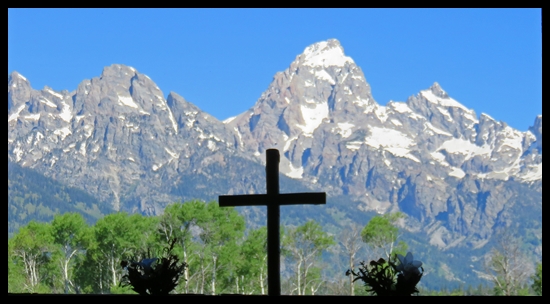
Chapel of the Transfiguration - Grand Teton National Park

Don’t misunderstand why I have come. I did not come to abolish the law of Moses or the writings of the prophets. No, I came to accomplish their purpose. [Matthew 5:17 (NLT)]

In the middle of Grand Teton Nation Park is a small log church, the Chapel of the Transfiguration. Built in 1925, it offers a beautiful view of the majestic Teton Mountain Range through a window behind the altar. When people gaze out that window, I wonder how many think of the amazing event—the transfiguration—that took place on another mountaintop more than 2,000 years ago.

About a week after Peter called Jesus “the Messiah sent from God!” and Jesus explained that He’d suffer, die, and be raised, Peter, John and James accompanied Him up a mountain to pray. While tradition says it was Mt. Tabor, both its height (only 1,800 feet) and location make that unlikely. While not as high as the 13,000 ft. Grand Teton, Mt. Hermon’s height (9,000 feet) and location make it the more likely location of this glorious event.

While praying, Jesus made a dramatic change: his face transformed and his clothes turned white and gleaming. Having only seen Jesus in his human form, His now glorious presence gave the disciples a greater understanding of his deity. Two men then appeared and spoke with Jesus about his exodus (or departure) from this world. They were Moses and Elijah—representing, at least symbolically, the Law and the Prophets. Jesus, as we know, was their fulfillment.

Amazed at what was the ultimate mountaintop experience, Peter foolishly suggested building three shelters for Jesus and his visitors. That, of course, was a mistake; neither the lawgiver not the prophet were Jesus’s equal. Furthermore, that Peter wanted this glorious event to continue would have kept Jesus from the mission He’d already explained to His disciples. A cloud then enveloped them all and a voice, unmistakably that of God, said, “This is my dearly loved Son, who brings me great joy. Listen to him.” [Matthew 17:5] The “Listen to him,” made it clear that the One who was new would be replacing the old way. After this powerfully dramatic event, the four men found themselves alone on the mountaintop.

Jesus commanded the disciples to keep silent as to what had taken place until after his resurrection. Looking for a Messiah who’d be a political deliverer rather than one who was a suffering servant, the world wouldn’t understand what had transpired. Even the disciples, the men who’d walked with Him for three years, didn’t fully understand the meaning of their mountaintop experience. It was not until Jesus joined them in that locked room on Easter that they finally understood that He’d come to conquer death rather than Romans.

The transfiguration was a foretaste of things yet to come and, someday, we all will see the fullness of Christ’s glory as did Peter, James, and John. Although Jesus told His disciples to keep his identity a secret, let us not forget that was only a temporary request. He later told them to “make disciples of all the nations.”

Jesus came and told his disciples, “I have been given all authority in heaven and on earth. Therefore, go and make disciples of all the nations, baptizing them in the name of the Father and the Son and the Holy Spirit. Teach these new disciples to obey all the commands I have given you. And be sure of this: I am with you always, even to the end of the age.” [Matthew 28:18-20 (NLT)]

Copyright ©2019 jsjdevotions. All rights reserved.