
Then he asked them, “Why are you afraid? Do you still have no faith?” [Mark 4:40 (NLT)]
Fear, he is a liar; He will take your breath;
Stop you in your steps. Fear, he is a liar;
He will rob your rest; Steal your happiness;
Cast your fear in the fire. Cause fear, he is a liar.
[Zach Williams, Jonathan Smith, Jason Ingram]
 I was singing along with Zach Williams, “Fear, he is a liar,” when I recalled one of my memory verses: “The Lord is my light and my salvation—so why should I be afraid?” [Psalm 27:1] I then realized a commonality in the Bible verses I’ve been memorizing: fear. If asked, I wouldn’t say I’m a fearful person and yet the Bible verses I’ve been memorizing contradict me. I don’t suffer an assortment of phobias nor do I see a threat around every corner. I’m not unduly anxious—I don’t pace, bite my nails, stay awake all night, or binge eat. While I’m cautious when the situation calls for caution, I don’t consider myself irrationally fearful, so why did I choose to memorize so many Bible verses dealing with fear?
I’m not afraid of public places like the grocery, losing my cell phone, or reading books, and a walk through my house would tell you I’m not afraid of dust; clearly, I don’t have agoraphobia, nomophobia, bibliophobia or koniophobia. When thinking about fear, however, I was mistaking phobias for a common garden variety fear that can afflict us all. It can keep us imprisoned in much the same way as agoraphobia—only instead of being trapped in our homes, we’re trapped in our small comfort zones. It’s the fear that we’re not enough: not good enough, strong enough or smart enough. It’s the malicious voice that tells us we’re unworthy, unwelcome, unloved, and unfit. It’s the fear that we’re not up to the task, we’ll be embarrassed, or we should be ashamed. It’s the apprehension that we’re either too young or too old and the whisper that says we’re not dedicated, loving or virtuous enough to do God’s work. It’s the fear of failure and of the unknown. It’s the same fear that plagued Gideon and Moses: the fear that we’re inadequate to the task at hand.
In a way, fear does tell the truth—alone, we are not enough. Fear, however, is a liar because he doesn’t tell us the whole truth; we have a more-than-enough God. He has more than enough riches, wisdom, strength, and love for us all. If we live by God’s power, there is nothing to fear! When we place our not-enough-selves into His hand, we become His more-than-enough servants. Indeed, fear is a liar.
Remember: even the smallest drop of God’s strength is more than enough to cover our frailties, our shortcomings, and the places where we deem ourselves weak. [Lysa Terkeurst]
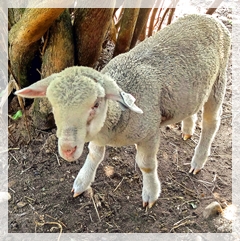 Throughout the Bible, there are many references to the Lord as our shepherd and mankind as His sheep. Sheep are not the brightest bulbs in the pasture and, considering the state of the world, it seems a fitting comparison! I came upon a true story that illustrates the need sheep have for a shepherd. In 2005, more than 400 sheep in Turkey died when they followed the lead sheep off a cliff and fell 15 meters. The death toll would have been greater except those first 400 cushioned the fall of the next 1,100 sheep that were stupid enough to follow them! Clearly, that herd of sheep needed someone to tell them when to stop. Unfortunately, mankind seems as willing to blindly follow the lead sheep wherever he leads us, only we call it belonging, accepting, keeping up, staying current, maintaining the status quo, or not rocking the boat, making waves or causing trouble.
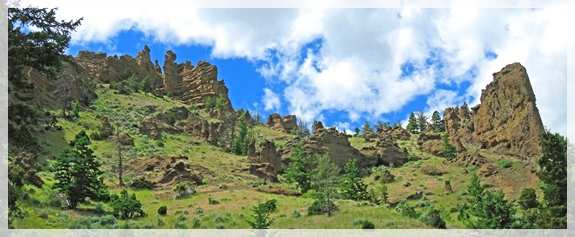 For ever since the world was created, people have seen the earth and sky. Through everything God made, they can clearly see his invisible qualities—his eternal power and divine nature. So they have no excuse for not knowing God. [Romans 1:20 (NLT)]
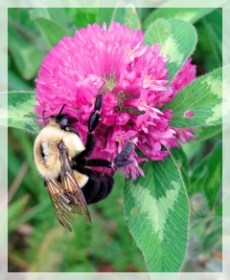 butterfly flitted among the blossoms and a marmot peeked out from behind a rock. So as to not spook the horses or spoil the day for my fellow riders, I silently sang the chorus to All Things Bright and Beautiful.
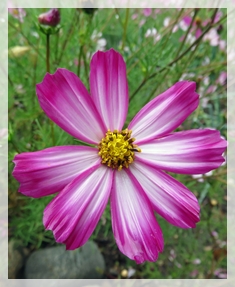 “I don’t do desserts!” my neighbor said. My initial thought was, “Anyone can bake brownies!” As it turns out, my neighbor was absolutely right; a horrible cook, she is proof that not everyone can bake a tray of brownies! Unlike me, however, she has a gift with animals and volunteers at the Conservancy caring for injured wildlife.
 “That’s more like it!” I thought as I read Psalm 47; I certainly preferred it to the curses of the previous set of Psalms I’d read. I’m reading the Bible in chronological rather than in canonical order which means that the various books and chapters have been divided and rearranged. As a result, the psalms of lament and complaint were grouped together during David’s trials and the praise psalms were placed after the chapters outlining the duties in the Temple. These psalms of worship, adoration and thanksgiving seem more appropriate for Israel’s book of hymns than the earlier ones about wickedness, treachery, calamity and vengeance.
 In one of our small group sessions earlier this year, we heard the story of a man who spent more than twenty years imprisoned for a crime he didn’t commit. The evidence proving his innocence had been suppressed by the police and he was a bitter angry man. Sixteen years into his incarceration, he became a Christian but he still struggled with forgiveness. Knowing Jesus expected him to forgive the men whose lies had stolen his life, he couldn’t find the power to do so. How can we forgive someone who has deliberately hurt us, someone who isn’t even contrite or repentant? Vengeance, anger, retribution, and revenge come much easier than forgiveness and yet forgiveness is what God calls us to do.
 Devotions of the Heart