ALL THINGS BRIGHT AND BEAUTIFUL

Absarokas - Cody WyomingFor ever since the world was created, people have seen the earth and sky. Through everything God made, they can clearly see his invisible qualities—his eternal power and divine nature. So they have no excuse for not knowing God. [Romans 1:20 (NLT)]

All things bright and beautiful, All creatures great and small,
All things wise and wonderful: The Lord God made them all.
[“All Things Bright and Beautiful” by Cecil F. Alexander]

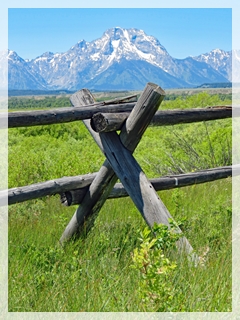
“When in doubt, trust your horse!” was the sign I’d seen earlier in the corral and so, as we slowly wended our way through the pinyon-juniper forest and up the mountain trail, I trusted my mount. After all, he didn’t want to fall down the ravine any more than did I. When we reached the ridge, I gasped—somewhat out of relief but more so out of wonder. The scenery was breathtaking! As I looked across the Wapiti Valley, I saw the incredible volcanic rock formations of the Absaroka Mountain Range and, when I looked down into the valley, I saw some of what Teddy Roosevelt called “The fifty most beautiful miles in America”. Surrounding us in the sage meadow on the ridge was an incredible array of wildflowers. An abundance of color, there were red Wyoming paintbrush, bright yellow mule’s ears and sunflowers, purple lupine, white snowbells, low pink bitterroot, tall green gentians, delicate bluebells, and a few pale yellow prickly pear cactus. Fritillaries and a white admiral red clover - beebutterfly flitted among the blossoms and a marmot peeked out from behind a rock. So as to not spook the horses or spoil the day for my fellow riders, I silently sang the chorus to All Things Bright and Beautiful.

Only able to remember the hymn’s chorus, I looked up the lyrics when I got home. The author is Cecil F. Alexander. An Irish woman known as Fanny to her friends and family, she lived in the mid-19th century and was married to a clergyman. It is said that she based her hymn on the words of the Apostles’ Creed: “I believe in God the Father, Maker of heaven and earth.” She easily could have been inspired by Psalms 19 or 104. I doubt she ever visited a ranch in Wyoming so she wasn’t thinking of the Absarokas and a colorful mountain meadow. Nevertheless, I imagine the Irish countryside can be just as extraordinary; perhaps Fanny’s inspiration came from visiting some place like Ireland’s Cliffs of Moher where she stood in awe of God’s handiwork.

I couldn’t help but think of the Apostle Paul’s words in the first chapter of Romans; we see evidence of God everywhere in His amazing creation and there is no excuse for denying His existence or not knowing Him. It doesn’t have to be majestic mountains and spectacular scenery; God’s workmanship is just as evident in our backyards in the exquisiteness of things like red clover and the wings of a bumblebee. Indeed, “How great is God Almighty, who has made all things well!”

Each little flow’r that opens, Each little bird that sings,
He made their glowing colors, He made their tiny wings.
The purple-headed mountains, The river running by,
The sunset and the morning That brightens up the sky. …
He gave us eyes to see them, And lips that we might tell
How great is God Almighty, Who has made all things well.
[“All Things Bright and Beautiful” by Cecil F. Alexander]

The heavens proclaim the glory of God. The skies display his craftsmanship. Day after day they continue to speak; night after night they make him known. They speak without a sound or word; their voice is never heard. Yet their message has gone throughout the earth, and their words to all the world. [Psalm 19:1-4 (NLT)]

O Lord, what a variety of things you have made! In wisdom you have made them all. The earth is full of your creatures. [Psalm 104:24 (NLT)]

Copyright ©2018 jsjdevotions. All rights reserved.

WHAT DON’T YOU DO?

I have become all things to all people, that by all means I might save some. [1 Corinthians 9:22b (ESV)]

I can do all things through him who strengthens me. [Philippians 4:13 (ESV)]

“I don’t do desserts!” my neighbor said. My initial thought was, “Anyone can bake brownies!” As it turns out, my neighbor was absolutely right; a horrible cook, she is proof that not everyone can bake a tray of brownies! Unlike me, however, she has a gift with animals and volunteers at the Conservancy caring for injured wildlife.

God gave each of us the gift of doing some things well. As important as it is to know what those gifts are and to use them wisely, it’s just as important to know what our gifts aren’t! We’re not divine and there will always be some things we don’t do well, no matter how hard we try. When Paul said he’d become all things to all people, he meant he could find common ground with them and was sensitive to their needs, not that he could do all things for them. Moreover, when he said he could do all things through Christ, He wasn’t claiming to be a superman. He was speaking of the strength God gives us to faithfully endure the challenges of life. We can’t be all things to all people nor can we do all things for them. Trying to be Superman or Wonder Woman brings unnecessary stress to us and poor results to everyone else. Only God can do it all!

God has given each of us different ways to best serve Him and others. There are certain things, such as painting, public speaking, guitar playing, computer programming, teaching, and even baking, that some of us can do. There are a number of things, like gossiping, enabling, hating or belittling, that none of us should do. There also are specific things, like worshipping, praying and serving, that all of us can and should do.

Father, help us recognize both our gifts and limitations. Show us how to manage our talents in the best possible way to bring honor and glory to you.

For as in one body we have many members, and the members do not all have the same function… Having gifts that differ according to the grace given to us, let us use them. [Romans 12:4,6a (ESV)]

As each has received a gift, use it to serve one another, as good stewards of God’s varied grace: [1 Peter 4:10 (ESV)]

Copyright ©2018 jsjdevotions. All rights reserved.

OUR PRAYERS

Sing praises to God, sing praises; sing praises to our King, sing praises! For God is the King over all the earth. Praise him with a psalm. [Psalm 47:6-7 (NLT)]

O what peace we often forfeit, O what needless pain we bear, All because we do not carry Everything to God in prayer! Have we trials and temptations? Is there trouble anywhere? We should never be discouraged, Take it to the Lord in prayer. [“What a Friend We Have in Jesus” by Joseph Scriven]

ZINNIA“That’s more like it!” I thought as I read Psalm 47; I certainly preferred it to the curses of the previous set of Psalms I’d read. I’m reading the Bible in chronological rather than in canonical order which means that the various books and chapters have been divided and rearranged. As a result, the psalms of lament and complaint were grouped together during David’s trials and the praise psalms were placed after the chapters outlining the duties in the Temple. These psalms of worship, adoration and thanksgiving seem more appropriate for Israel’s book of hymns than the earlier ones about wickedness, treachery, calamity and vengeance.

Although I prefer the joyful psalms, there is a reason Israel’s prayer book has lasted over 3,000 years and continues to be our prayer book today. Rather than a sappy feel-good book of poetry, Psalms reflects the gamut of human experience and emotions. When the disciples asked Jesus how to pray, I’m surprised He didn’t tell them they already knew and direct them to the Psalms for guidance. The Psalms’ words are intense, raw and honest; they conceal nothing. If the Psalmist is suffering, fearful, angry, depressed, or exhausted, he says so as readily as when he expresses his elation, adoration and thanksgiving. Never pretending that all is well when it isn’t, he fearlessly lays out his emotions before God. Wretchedness and joy, pain and jubilation, wickedness and virtue, despair and hope, grief and thanksgiving, fear and confidence: all are articulated. It is in that depth of personal expression and experience that we find words of consolation, faith, trust, and hope.

When I seriously evaluate my own prayer life, I’m nowhere near as honest and bold as the psalmists. Of course, God knows my personal struggles but, unlike David and the rest of the psalmists, I’m not as willing to lay them so passionately or openly at His feet. When Joseph Scriven wrote the words, “Take it to the Lord in prayer,” he meant all of it, not just the pretty stuff. I’m sure God would prefer honest words of grievance to false words of praise any day.

A human heart is like a ship on a wild sea, driven by the storm-winds from the four quarters of the world. Here it is struck with fear, and worry about coming disaster; there comes grief and sadness because of present evil. Here breathes a breeze of hope and of expectation of happiness to come; there blows security and joy in present blessings. These storm-winds teach us to speak with earnestness, and open the heart, and pour out what lies at the bottom of it. … What is the greatest thing in the Psalter but this earnest speaking amid these storm-winds of every kind? Where does one find such words of joy as in the psalms of praise and thanksgiving? … On the other hand, where do you find deeper, more sorrowful, more pitiful words of sadness than in the psalms of lamentation? … And, as was said, it is the best thing of all that they speak these words to God and with God. [Martin Luther, Preface to the Psalter]

The Lord is close to all who call on him, yes, to all who call on him in truth. [Psalm 145:18 (NLT)]

Copyright ©2018 jsjdevotions. All rights reserved.

TO FORGIVE IS DIVINE

And Jesus said, “Father, forgive them, for they know not what they do.” And they cast lots to divide his garments. [Luke 23:34 (ESV)]

deptford pinkIn one of our small group sessions earlier this year, we heard the story of a man who spent more than twenty years imprisoned for a crime he didn’t commit. The evidence proving his innocence had been suppressed by the police and he was a bitter angry man. Sixteen years into his incarceration, he became a Christian but he still struggled with forgiveness. Knowing Jesus expected him to forgive the men whose lies had stolen his life, he couldn’t find the power to do so. How can we forgive someone who has deliberately hurt us, someone who isn’t even contrite or repentant? Vengeance, anger, retribution, and revenge come much easier than forgiveness and yet forgiveness is what God calls us to do.

It was when this prisoner read Jesus’ words on Calvary that he understood where the power to forgive lay—in God the Father. “Father, forgive them!” said our Lord as He hung on that cross. Like him, Jesus was an innocent man and yet He prayed for His executioners. His words were not those of anger or complaint but of pity and compassion. The sinless tortured one was praying for his sin-filled torturers. Mind you, the people for whom He was praying hadn’t asked for forgiveness; they were neither remorseful nor repentant. Many had eaten His bread, seen His miracles and heard him speak, but they’d chosen the criminal Barabbas over him. Mocking Him, the soldiers were gambling for his clothing. While blood was dripping down his forehead and seeping out of the wounds on his hands and feet, the suffering Jesus was praying for pardon not revenge; He didn’t ask for justice but for forgiveness. It was on the cross that radical forgiveness met radical injustice and triumphed. If our sinless Savior can forgive, how much more should we?

Jesus’ words on Calvary told this prisoner that he didn’t have to forgive under his own power but that forgiveness was possible through God’s power. Like Jesus, he prayed for those who had persecuted him and he was finally able to forgive. Truth eventually prevailed several years later when his conviction was overturned but he’d been made a free man many years earlier when he forgave those who wronged him so horribly. It was Alexander Pope who wrote, “To err is human, to forgive, divine.’” Indeed, it is.

The Holy Spirit, thank God, often enables people to forgive even though they are not sure how they did it. [Lewis B. Smedes]

For if you forgive others their trespasses, your heavenly Father will also forgive you, but if you do not forgive others their trespasses, neither will your Father forgive your trespasses. [Matthew 6:14-15 (ESV)]

Copyright ©2018 jsjdevotions. All rights reserved.

SACRIFICES

I want you to show love, not offer sacrifices. I want you to know me more than I want burnt offerings. [Hosea 6:6 (NLT)]

And the King will say, “I tell you the truth, when you did it to one of the least of these my brothers and sisters, you were doing it to me!” [Matthew 25:40 (NLT)]

little blue heronA 2013 United Healthcare Group study found that volunteering is linked to better physical, mental and emotional health. Apparently it reduces stress, brings people together, promotes personal growth and self-esteem, strengthens our sense of community, and helps us learn new skills. Something their study did not mention is that volunteering is an act of worship and sacrifice. A sacrifice is an offering to God and every time we sacrifice time, talents, or resources by doing for His Kingdom, we are worshipping Him.

Because Jesus was the perfect and final sacrifice when He died for our sins, we no longer bring pigeons or sheep to God’s altar. Rather than dead animal sacrifices, we offer ourselves as living sacrifices, not to atone for sins but to worship our Lord. When we drop that envelope in the offering plate, give a dollar to a street person, write a check to a charity, or bring groceries to the food pantry, we’re really not giving to the church, homeless, Red Cross, or the hungry; we’re giving to God. When we lift a hammer at a Habitat home, sort clothes at the charity resale shop, pack lunches for the migrant workers, give someone a ride to church, visit the ill or assist at Sunday school, we are worshipping God with our service. Our sacrifice of resources, time, and talent is as much an act of worship as singing hymns or offering prayers of praise and thanksgiving.

The Old Testament often spoke of God being pleased with the aroma of a sacrifice. While our New Testament sacrifices are not burned on an altar and have no aroma, I think God finds them just as pleasing to His senses. When those ancient sacrifices were not the first and best or were accompanied by a bad attitude, God found a stench to them. It would seem to follow that when our Christian sacrifices are offered begrudgingly or we fail to give the best we can, our hypocrisy will cause them to stink, as well.

Let us worship the Lord with our hearts and hands as well as our voices! Let us joyfully worship Him with service as well as with song!

And so, dear brothers and sisters, I plead with you to give your bodies to God because of all he has done for you. Let them be a living and holy sacrifice—the kind he will find acceptable. This is truly the way to worship him. [Romans 12:1 (NLT)]

Therefore, let us offer through Jesus a continual sacrifice of praise to God, proclaiming our allegiance to his name. And don’t forget to do good and to share with those in need. These are the sacrifices that please God. [Hebrews 13:15-16 (NLT)]

Copyright ©2018 jsjdevotions. All rights reserved.

IN EVEN THE BEST FAMILIES

mute swansBut Samuel’s sons did not live the same way he did. Joel and Abijah accepted bribes. They took money secretly and changed their decisions in court. They cheated people in court. [1 Samuel 8:3 (ERV)] 

Not all dads did as well with their boys as did my father-in-law. Eli and Samuel, for example, were both high priests and judges; while they were good at their jobs, neither is known for his parenting skills. Samuel’s sons, Joel and Abijah, were corrupt judges who took bribes. Eli’s boys, Hophni and Phinehas, were no better. They took advantage of their position to appropriate the best portion of every sacrifice for themselves and to have sexual relations with the sanctuary’s serving women. Even David had problems with his boys: Amnon was a rapist, Absalom a murderer and rebel, and Adonijah tried to seize his brother Solomon’s crown.

Clearly, being a godly parent doesn’t guarantee godly children. Were Eli and Samuel so busy with their temple duties that they failed to spend time with their boys? David had at least nineteen sons and probably several more with his concubines. Between the battlefield and his obligations as king, did he neglect being a father to his many children? In their busyness, did these men overlook their obligation to train their children in proper values? Were they as attentive as they should have been? I’m not pointing fingers because, at some time or another, we all have disregarded some of our parenting duties and short-changed our children with our time, attention, and affection.

Eli and Samuel knew their sons were corrupt and David knew of Amnon’s rape of his sister but the men did nothing about these offences. Perhaps, not wanting to face the unpleasant truth about their boys, they ignored their parental responsibility to discipline. At some time or another, in spite of evidence to the contrary, most of us have refused to believe our children are anything less than perfect, as well. Sometimes, we find it easier to ignore the elephant in the room than to address it.

These fathers were far from perfect but, then again, so are we. Nevertheless, we must remember that the failings of a child are not necessarily because of poor parenting. Even the best parent makes plenty of mistakes. We just do our best and pray (a whole lot). We’ll never know exactly what went wrong with those boys. After all, Solomon came from the same household as his malicious elder brothers and the same home that produced the honorable President Jimmy Carter, a Nobel peace prize winner, gave us his troubled and somewhat embarrassing brother, Billy.

Home may be a child’s first classroom but he continues to learn when he steps into society. As the church, we need to fill the voids in the spiritual, emotional and physical needs of our community’s children. Not all of us are parents, but we all share in the awesome responsibility of raising the next generation.

Lord, guide us in our homes, community, and churches so that all of your children become people of faith and good character.

My son, remember your father’s command, and don’t forget your mother’s teaching. Remember their words always. Tie them around your neck and keep them over your heart. Let this teaching lead you wherever you go. It will watch over you while you sleep. And when you wake up, it will give you good advice. [Proverbs 6:20-24 (ERV)]

Copyright ©2018 jsjdevotions. All rights reserved.