
 The next day John saw Jesus coming toward him and said, “Look! The Lamb of God who takes away the sin of the world! [John 1:29 (NLT)]
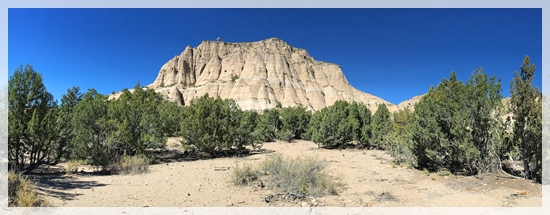
Today is the first day of Lent, a season in which we remember the time Jesus went into the wilderness and fasted for forty days and nights. Because Lent occurs in the weeks leading up to Good Friday and Easter, we tend to associate this period of Jesus’s life with the end of his ministry. It actually occurred early in His ministry, shortly after his baptism by John and his empowerment by the Holy Spirit.
During Jesus’s time in the wilderness, Satan visited and tempted Him. Jesus first was tempted to serve Himself—to alleviate his hunger by turning stones into bread. In the second temptation, Satan urged Jesus to jump off the Temple and reveal Himself in a spectacular display. This action would also test God’s love by coercing Him into saving Jesus. In the third test, Satan tempted Jesus to skip the cross altogether; all the kingdoms of the world would be His if only He’d worship the evil one.
Just because Jesus was divine doesn’t mean He couldn’t have fallen; He also was human and, like us all, susceptible to Satan’s wiles. He could have sinned as easily as Adam and Eve, but He didn’t! Resisting temptation was as essential to His mission as was suffering on the cross. Just as sin came into the world through one man, God would redeem the world through one man, but Jesus had to remain sinless for that to happen. If He hadn’t, there would have been no point to the cross; only a perfect sinless sacrifice could atone for mankind’s sins.
Because Jesus countered all of Satan’s temptations with Scripture, we tend to think of the temptation of Christ as sort of a “how to” manual on overpowering temptation. While it is that, it is so much more. Jesus didn’t go into the wilderness to teach us a lesson—He went into the wilderness to save us. He wasn’t just battling for His soul—He was fighting Satan for ours! He was defeating Satan by deliberating choosing to suffer for us as a man when He was God! He endured hunger when he could have spoken food into existence. He humbly chose to remain an obscure rabbi from Nazareth rather than use His power to win a following. Refusing to compromise with Satan, He chose obedience to God: to live, suffer and die as a man. Jesus, the spotless Lamb of God, chose to endure the cross for sinful selfish mankind: the very people who would put Him there!
 St. Valentine may (or may not) have been the Catholic bishop of Terni, a priest who helped persecuted Christians during the reign of Claudius II, one who suffered in Africa, one who secretly married couples when marriage was forbidden, or one who converted the family of a jailer named Asterius and restored sight to his blind daughter. It was a common name and whether there was only priest named Valentine who did all of these things or as many as three, supposedly he or they were beheaded by the Emperor Claudius II on February 14 around the end of the third century. The confusion about Valentine’s identity led the Roman Catholic Church to drop his saint day from their official calendar of feasts in 1969.
 But the wisdom from above is first of all pure. It is also peace loving, gentle at all times, and willing to yield to others. It is full of mercy and the fruit of good deeds. It shows no favoritism and is always sincere. And those who are peacemakers will plant seeds of peace and reap a harvest of righteousness. [James 3:17-18 (NLT)]
 Our sermon series was titled “Cage Fighting” but, rather than learning about fighting one another, we were learning about the ways Satan attacks and keeps us in his stronghold with things like shame, doubt, fear, and unforgiveness. While chatting with the pastor before church, I asked about the day’s topic. When he said offense, I immediately thought we’d learn how to take offensive action against the enemy.
 Not that I was ever in need, for I have learned how to be content with whatever I have. [Philippians 4:11 (NLT)]
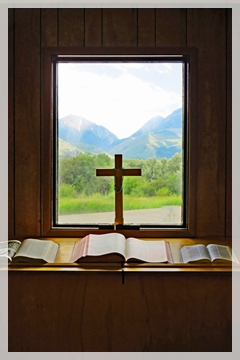 Before the incarnation of Christ, God dwelt first in the tabernacle and then in the temple. The innermost room of the temple was called the “Most Holy Place” and it was in this inner room that God’s glory was said to dwell. This was where the Ark of the Covenant was kept and where the high priest came with a sacrifice to atone for his and the nation’s sins every year. With the incarnation of Jesus, God no longer dwelt in the temple but in the flesh of His son and, for a brief time, God actually walked among His people. Yet, when Jesus lived as a man, only a few people at a time could be in His presence. With His death, there is no yearly atonement ritual because Jesus atoned for our sins once and for all. Moreover, because of His resurrection, ascension, and the presence of the Holy Spirit, it is possible for countless people, everywhere, to be in His presence at the same time. Once we become believers, the Holy Spirit moves into our hearts and each one of us, as members of Christ’s church, become part of His body and the temple of God.
 Devotions of the Heart