
O Lord, God of my salvation, I cry out to you by day. I come to you at night. Now hear my prayer; listen to my cry. For my life is full of troubles, and death draws near. [Psalm 88:1-3 (NLT)]
 I woke to yet another cold dreary winter day. Troubled by a variety of concerns and hoping to improve my glum mood, I turned to Psalms. Unfortunately, I made a bad choice in Psalm 88. Written by Heman the Ezrahite, I saw that originally it was to be sung to the tune “The Suffering of Affliction” (which should have been my clue to read no further).
During David’s time, Heman was one of three chief Levites appointed to conduct music in the tabernacle (the equivalent of today’s worship leader). Perhaps he wrote this psalm to console David in his sorrow after the loss of his son but there seems to be nothing consoling about it. The speaker’s life is full of troubles; he considers himself a lost cause and as good as dead. Repulsive and depressed, he’s been forgotten by his friends, feels God’s anger, and asks God why he’s been rejected. Typically, psalms of lament eventually turn from despair to hope and from misery to confidence but there’s not even a glimmer of hope in this one! “Darkness is my closest friend,” are the psalmist’s final words. Although the RSV Bible subtitles the psalm a “Prayer for Help in Despondency,” a far better title would be “Job’s Lament!”
Later that morning, we attended worship at our northern church. The service, an Advent tradition there, was a celebration of the beautiful music of the Christmas season. As I listened to the words of the carols, my spirits lifted. Unlike Heman, this was a worship leader who knew what songs would help the despondent.
With my improved outlook, I thought back to that mournful psalm and realized that, as miserable and depressed as the psalmist was, he hadn’t given up on God. His words were honest—he was wretched and desolate—and yet he knew God heard his complaint. Even though he felt abandoned, he continued to pray which means he knew he hadn’t been forsaken. In fact, knowing his words were not falling on deaf ears, he vowed to continue his prayers. He knew that tears and prayers go together—that his troubles were a reason to talk with God rather than a reason to stop praying
It was the words of John 3:16 that made me finally understand that the sorrowful psalm and the joyful carols were telling me the same thing. No matter how wretched we feel, no matter how distressing our situation, no matter how severe our suffering, we are loved. Unfortunately, faith is no protection from trouble and sometimes we will sink in sorrow. Nevertheless, like the psalmist, we can remain earnest in prayer. Knowing that God loved us enough to give us His only son, we can know He loves us enough to hear our prayers. Even when we feel abandoned, God is with us; Immanuel is His name.
Those who are in trouble of mind may sing this psalm [Psalm 88] feelingly; those that are not ought to sing it thankfully, blessing God that it is not their case. [Matthew Henry]
For this is how God loved the world: He gave his one and only Son, so that everyone who believes in him will not perish but have eternal life. [John 3:16 (NLT)]
Copyright ©2017 jsjdevotions. All rights reserved.
 Although more people prefer to believe in heaven than in hell, the Bible tells us that hell is as real as heaven. It exists whether or not someone likes the idea of a place of eternal punishment or refuses to believe in its actuality. The Bible uses words like fire, brimstone, pits of darkness, torment, anguish, weeping and gnashing of teeth to describe it. I won’t pretend to know what hell is like but, based on Scripture’s description (whether literal or figurative), hell doesn’t sound like any place I (or anyone I know) would deliberately choose to be.
 I’m not a good sitter and I’m even worse at soaking in a tub. Just wanting to get clean and get on with my day, I’m a shower person. Friends insist that sitting in the tub and reading is the best way to relax but that doesn’t work for me. I don’t have the patience to wait for the water to get high enough for a good soak or for the spa jets to work, I’ve never figured out how to turn pages without getting them wet and, rather than relaxing, I think about all the things I could and should be doing instead of sitting in hot water. I considered my inability to enjoy a bath when our pastor suggested that we bathe our decisions in prayer. Unfortunately, the same impatience that keeps me from enjoying my over-sized bath tub keeps me from bathing my decisions in prayer.
 These people are false apostles. They are deceitful workers who disguise themselves as apostles of Christ. But I am not surprised! Even Satan disguises himself as an angel of light. So it is no wonder that his servants also disguise themselves as servants of righteousness. In the end they will get the punishment their wicked deeds deserve. [2 Corinthians 11:13-15 (NLT)]
 Most of us think of sloth as laziness: a dislike of work or any physical exertion. Having watched the local zoo’s sloth in action (or, rather, inaction), I think the sluggish animal is appropriately named. Spiritual sloth, however, is far different than being a couch potato. Originally, the sin of sloth was two sins: sadness and acedia. Compiled by Evagrius of Ponticus, a 4th century monk, these two “capitals sins” were part of a list of eight he believed to the greatest threats to devout monasticism.
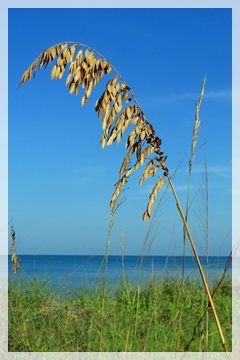 It’s not just light poles that were destroyed by Hurricane Irma’s winds; many trees also met their end at her hands. As I looked at the upended roots of a once mighty oak, I thought of one of Aesop’s fables about an oak in a storm. A proud oak stood by a stream, and like this one, had survived several storms in its many years. One day, a hurricane the likes of Irma arrived and the great oak fell with a thunderous crash. As the water rose, it was carried down to the sea. When the oak eventually came to rest along the shore, it looked up at the sea oats that were waving in the now gentle sea breeze, “How did you manage to weather such a terrible storm?” it asked. “I’m a great oak and even I didn’t have strength enough to battle the wind.”
 Devotions of the Heart