WOULD ANYONE NOTICE?

But you are not controlled by your sinful nature. You are controlled by the Spirit if you have the Spirit of God living in you. (And remember that those who do not have the Spirit of Christ living in them do not belong to him at all.)… For his Spirit joins with our spirit to affirm that we are God’s children. [Romans 8:9,16 (NLT)]
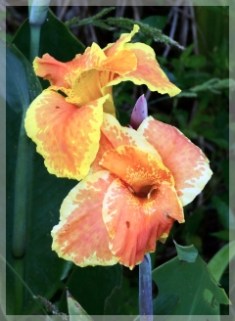
canna - bandanna of the evergladesIt was obvious we had ceiling fans in all three bathrooms but, because all their bulbs were burned out when we moved here, we didn’t know they also had lights. Never having seen how bright the bathrooms could be with working fan lights, we didn’t notice their absence. It was only when we had some electrical work done that we discovered the dead bulbs. Now that we’ve put in new LEDs, we’ll be sure to notice if any stop working in the future!

I bring up the fan lights because this question was asked: “If the Holy Spirit withdrew from your church, would anybody be able to tell?” That question forces us to ask whether our church is more of a social club than a spirit-powered community. Is it centered on Sunday’s service or serving others? Is it about entertainment or enlightenment, conversation or conviction? Does it believe more in the power of networking than the power of prayer? Is it about growing bigger or becoming better, pleasing people or glorifying God, filling pews or fulfilling God’s purpose?

As thought provoking as that first question is for pastors and church councils, it raises another and far more personal question. If the Holy Spirit were to withdraw from you, would anybody notice?

When we accept Jesus, we’re not given a membership card, pin, or secret handshake. Underwriters Laboratories doesn’t certify us and there’s no symbol like the OU from the Orthodox Union to indicate we’re kosher. The only thing attesting to our salvation is the presence of the Holy Spirit in our lives. He regenerates and guides us, convicts us of our sins, teaches us to live in Christ’s righteousness, equips and empowers us to do all that God asks us to do, and helps us discern between truth and falsehood, right and wrong. It is the power of the Holy Spirit that changes us so that we can grow and more and more like Christ and the only evidence of His presence is found in our changed lives.

We didn’t notice the missing lights in the bathroom because we’d never seen them on. In the same way, no one would notice that we’re no longer connected to the light of the Holy Spirit if we’ve never previously reflected “the glory of the Lord” in our lives. Life with the Spirit should look vastly different than life without!

While the Holy Spirit guides us, He doesn’t control us; we can ignore Him. Sin, like a burned out light bulb, can cause us to be unresponsive to the power of His presence. Although the Spirit will never abandon a true believer, the hypothetical question is one worth asking. Would anyone notice if the Spirit took a sudden leave of absence from our lives?  The answer to that will be found in another question: When we look into our hearts, do we see ourselves or the Holy Spirit?

O Holy Spirit, descend plentifully into my heart. Enlighten the dark corners of this neglected dwelling and scatter there Thy cheerful beams. [Augustine]

Trying to do the Lord’s work in your own strength is the most confusing, exhausting, and tedious of all work. But when you are filled with the Holy Spirit, then the ministry of Jesus just flows out of you. [Corrie Ten Boom]
So all of us who have had that veil removed can see and reflect the glory of the Lord. And the Lord—who is the Spirit—makes us more and more like him as we are changed into his glorious image. [[2 Corinthians 3:18 (NLT)]

Copyright ©2020 jsjdevotions. All rights reserved.

BAKING A PRAYER

Once Jesus was praying in a particular place. When he had finished, one of his disciples approached. “Teach us to pray, Master,” he said, “just like John taught his disciples.” [Luke 11:1 (NTE)]

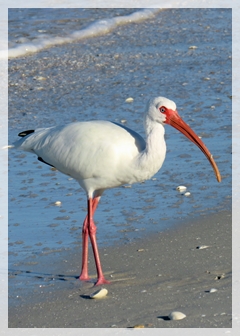
ibisI used to look forward to our occasional stops in the bank where a tray of homemade cookies always was laid out for their customers. I admit to having no will-power when it came to their white chocolate chip/macadamia nut cookies. With a hint of lemon, they were so delicious that I searched the internet to find the recipe so I could skip the bank visit. Several recipes came close but none were quite right so, using those as a guide, I developed a recipe that met the taste test!
When the disciples asked Jesus to teach them how to pray, He recited what we call “The Lord’s Prayer.” It’s important to remember that the disciples asked how to pray but not what exact words to use. Being a good teacher, instead of a lecture on praying, Jesus gave them a model prayer, but certainly not the only prayer to be said.

My recipe search told me the basic ingredients I needed for the cookies: flour, baking powder, brown and granulated sugars, butter, eggs, and lemon extract. Jesus’ model prayer included basics like praise, an acknowledgement of God’s holiness, acceptance of His will, confession, forgiveness, and petitions for daily provision and protection from evil. I found other recipes that included ingredients like cornstarch, lemon zest, nuts, and vanilla extract. If we look at other prayers said by Jesus, we find things like thanksgiving, a desire to bring God glory, and pleas for others and for the church.

When Jesus showed the disciples how to pray, He gave them an outline (or a basic recipe) rather than a comprehensive list of components. Like a recipe, it’s up to us to put them all together. Some days, I give God an extra cupful of thanks and praise because, unlike salt, we can never overdo those ingredients. It’s often easy to skip the confession and forgiving but, like forgetting the baking powder in cookies, prayers don’t seem to come out right without them. While it’s possible to add too much flour to a cookie recipe, our prayers seem to improve the more we pray for the needs of others. God, however, probably won’t find our prayers very appetizing if we spend more time mixing in petitions for ourselves than for others! Unlike a cookie recipe, there is no set amount of time for baking the perfect prayer; that’s a judgment call. As for me, I often find it necessary to bake my prayers a long time before acceptance of God’s plan forms in my heart.

When we grow bored with the food we’ve been preparing, we create new recipes or tweak the old ones by adding something extra like dried cherries or cinnamon chips to oatmeal cookies. The same goes for our prayers. If prayer seems boring, we need to change it up by gathering the ingredients and presenting them to God in a different way. Just as there are countless ingredients with which to bake delicious cookies, there are countless components that can go into our prayers. Regardless of the recipe, my grands are pleased whenever I bake; I think God feels the same way about our prayers!

Believers do not pray, with the view of informing God about things unknown to him, or of exciting him to do his duty, or of urging him as though he were reluctant. On the contrary, they pray, in order that they may arouse themselves to seek him, that they may exercise their faith in meditating on his promises, that they may relieve themselves from their anxieties by pouring them into his bosom; in a word, that they may declare that from him alone they hope and expect, both for themselves and for others, all good things. [John Calvin]

“So this is how you should pray: Our father in heaven, may your name be honoured may your kingdom come may your will be done as in heaven, so on earth. Give us today the bread we need now; and forgive us the things we owe, as we too have forgiven what was owed to us. Don’t bring us into the great trial, but rescue us from evil.” [Matthew 6:9-13 (NTE)]

Copyright ©2020 jsjdevotions. All rights reserved.

THE HALLEL

Praise the Lord! Yes, give praise, O servants of the Lord. Praise the name of the Lord! Blessed be the name of the Lord now and forever. Everywhere—from east to west—praise the name of the Lord. [Psalm 113:1-3 (NLT)

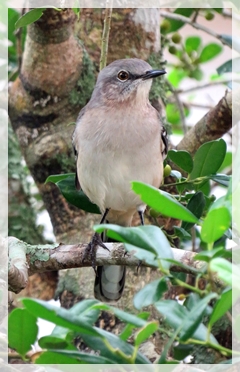
Southern MockingbirdSeveral years ago, our mountain church hosted a concert sponsored by the small Jewish congregation in town. I vividly remember the end of the program as Jews and Gentiles sang Hava Nagila, joined hands, and danced the hora around our large sanctuary. Impressed by the performer’s energy, passion, and love of God, I purchased one of his recordings. Yesterday, after sorting through some old books and CDs, I listened to it for the first time in over 10 years. The music was composed and performed by a man who still performs today but the Hebrew words he sang were those of the Hallel and over 2,000 years old.

Hallel means “praise” and the Hallel is a liturgical prayer found in Jewish prayer books today that consists of all or parts of Psalms 113 through 118. Considered the cornerstone of Jewish liturgy, it testifies to the glorious miracles performed by God. Except for the solemn days of Rosh Hashanah and Yom Kippur, the jubilant Hallel is said or sung on all major Jewish holidays.

The author or authors of the six psalms of the Hallel are unknown but the psalms share a common theme: the events surrounding the exodus, God’s covenant with Israel, and the people’s obligation of praise and thanksgiving for God’s loving-kindness and sovereignty over Israel and all nations.

It opens with the simple song of praise found in Psalm 113 which begins and ends with “Hallelu yah” meaning “Praise the Lord.” Psalm 114 follows with a poetic description of the exodus and all of nature reacting in dance to God’s great work. Psalm 115 is an appeal for God’s assistance, not for Israel’s sake, but to bring honor and glory to God’s name among the pagan nations. The next psalm is one of gratitude by someone who, in a time of trouble, called upon God and was saved. Ending with a commitment to serve the Lord, it is followed by the shortest of all the psalms with a call for all nations to praise the Lord. The final psalm, 118, begins with thanksgiving followed by recounting God’s salvation in troubled times. It echoes the words Moses and the people sang after crossing the Red Sea: “The Lord is my strength and my song; he has given me victory.” [Exodus 15:2] This last psalm ends as it began—with thanksgiving.

Until now, I don’t think I appreciated the psalms as what they are: an ancient hymnbook. Reciting or singing the Hallel was a well-established part of the Jewish Passover, Pentecost, and Sukkoth celebrations by the first century. When I’ve sung or spoken the psalms in unison at church, I didn’t think about Jesus singing or saying those very same words (in Hebrew, of course). That Jews continue to sing the same hymns of praise sung by Jesus and the disciples when they worshiped—the same songs they sang together during the seder on the night He was betrayed—is mind boggling. That we still have those beautiful words of praise and thanksgiving, words we can say or sing any time, is a blessing. Praise the Lord!

Praise the Lord, all you nations. Praise him, all you people of the earth. For his unfailing love for us is powerful; the Lord’s faithfulness endures forever. Praise the Lord! [Psalm 117]

Copyright ©2020 jsjdevotions. All rights reserved.

LEADING THE HERD

sheepDo not be deceived: “Bad company ruins good morals.” Come to your right mind, and sin no more. [1 Corinthians 15:33-34 (RSV)]
You’ve probably heard of herd mentality or herd behavior: when people’s natural desire to be part of the crowd affects their decisions. When herd behavior occurs, rather than relying on their own judgment, values, or natural instinct, people allow themselves to be influenced by the behavior of those around them. While copying what others are doing can be useful at times (it gets our garbage out the right nights), challenges arise when our personal beliefs contradict what the crowd is doing.

A few years ago, when we were in Chicago, my husband wanted to purchase his favorite cheddar/caramel popcorn mix at Garrett’s. While he waited in line inside the crowded store, I remained outside. The queue of customers eventually extended out the door and partway down the street. When a couple visiting from France asked me why people were waiting, my reply of popcorn surprised them. Telling me they could understand lining up for chocolate or ice cream but certainly not popcorn, I expected they’d continue walking. Instead, they decided to follow the herd and joined the long line.

Even though that couple weren’t fans of popcorn, they joined the herd, but do we only follow the herd when there are more of them than us? According to an experiment done in 2008 at Leeds University, the answer is no. 200 subjects were told to walk in a totally random path around a large hall without communicating with one another in any way. Unknown to them, however, a group of walkers had been given detailed instructions on where to walk. In a short time, the “random” walkers started following the ones who seemed to know where they were going and a long snake-like line formed. When the experiment was over, those “random” walkers admitted not realizing that they’d become followers. The researchers found that it took only 5% of the people to walk purposefully to get the other 95% to follow. Apparently humans, like sheep and birds, will subconsciously gather in flocks and follow a minority if that minority appears to know what they’re doing!

Scripture warns that bad company can corrupt good character but, if we consider herd behavior, could good company improve bad character? Believing their findings could be used when planning traffic flow in emergencies and crisis situations, the Leeds’ researchers called the people who were followed “informed individuals.” The world appears to be in crisis and, as Christ’s followers, we are the “informed individuals.” Could this be our call to lead the herd?

Jesus left His church in the hands of just a few followers and yet there were over 3,000 believers by the first Pentecost and the church continued to grow rapidly. In those early years, Christianity was illegal, believers were persecuted, and there were no church buildings, public ceremonies, famed evangelists, or mass media. Nevertheless, the church steadily expanded in the first 300 years. It spread because people saw the lives of Christ’s followers: that Christians walked with a sense of purpose in a different and better way. Knowing the route to take, the informed minority led the herd to Jesus. Do we walk as “informed individuals” or like someone with a bumper sticker reading, “Don’t follow me—I’m lost, too!”  Let our lights shine brightly that we might lead the way to the Lord!

We formerly rejoiced in uncleanness of life, but now love only chastity; before we used the magic arts, but now dedicate ourselves to the true and unbegotten God; before we loved money and possessions more than anything, but now we share what we have and to everyone who is in need; before we hated one another and killed one another and would not eat with those of another race, but now since the manifestation of Christ, we have come to a common life and pray for our enemies and try to win over those who hate us without just cause. [Justin Martyr describing Christians to Emperor Antoninus Pius in 153 AD]

You are the light of the world. A city set on a hill cannot be hid. Nor do men light a lamp and put it under a bushel, but on a stand, and it gives light to all in the house. Let your light so shine before men, that they may see your good works and give glory to your Father who is in heaven. [Matthew 5:14-16 (RSV)]

Do all things without grumbling or questioning, that you may be blameless and innocent, children of God without blemish in the midst of a crooked and perverse generation, among whom you shine as lights in the world. [Philippians 2:14-15 (RSV)]

Copyright ©2020 jsjdevotions. All rights reserved.

TRUE FREEDOM – INDEPENDENCE DAY 2020

Sin is no longer your master, for you no longer live under the requirements of the law. Instead, you live under the freedom of God’s grace. [Romans 6:14 (NLT)]

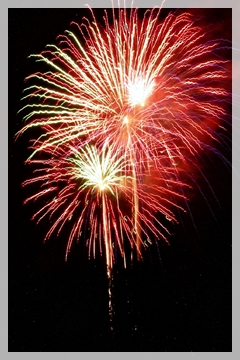
fireworksTomorrow, as we commemorate our nation’s birthday, the celebration will be a little different. Beaches are closed and the brat fests, chicken roasts, band concerts, parades, fireworks, neighborhood picnics, rodeos, and ice cream socials typical of this national holiday have been cancelled. Friends and family won’t be joining us to light sparklers, have a water balloon fight or baseball game, catch fireflies, eat popsicles and watermelon, or enjoy s’mores around a campfire.
Restrictions because of this pandemic have made some people bristle at their loss of personal freedom and these last few weeks have put a spotlight on both the shortcomings of our nation and the imperfections of our national heroes. Nevertheless, regardless of our nation’s faults and problems, we have an incredible amount of personal freedom. Here, we are free to disagree but, in nations like Syria, Turkmenistan, South Sudan, North Korea, and even our close neighbor Cuba, those demonstrations would never have taken place. There we’d have suppression of political opposition, restrictions on internet use, a one-party political system, government controlled media, prohibitions on worship, and harsh authoritarian rule with even more injustice and inequalities. While we’re far from perfect, we’re better than most!

As thankful as I am for the statesmen and patriots (flawed as they were) who made this great nation a reality, I am even more thankful for Jesus and his small band of Apostles who made it possible for us to live in true freedom! True freedom has more to do with belief in Jesus than it does with a Declaration of Independence or a Bill of Rights. Without Christ we will never truly be free because, no matter where we live or what kind of government we have, we will still be in bondage to sin. The Liberty Bell rang out for our nation’s freedom but it was the cross and an empty tomb that gave us our spiritual freedom. Our nation’s freedom began with its Declaration of Independence 244 years ago; our spiritual freedom came when we accepted Jesus and learned to live in dependence on Him.

We lift up our hearts, O God, on this day of celebration in gratitude for the gift of being Americans. We rejoice with all those who share in the great dream of freedom and dignity for all. 

With flags and feasting, with family and friends, we salute those who have sacrificed that we might have the opportunity to bring to fulfillment our many God-given gifts. 

As we deny all prejudice a place in our hearts, may we also clearly declare our intention to work for the time when all people, regardless of race, religion, or sex, will be granted equal dignity and worth. 

Come, O gracious God, who led your children Israel from slavery, keep us free from all that might hold us in bondage. 

Bless our country and join our simple celebration that we may praise you, our Source of freedom, the One in whom we place our trust. [Edward Hays, “A Pilgrim’s Almanac”]

For the Lord is the Spirit, and wherever the Spirit of the Lord is, there is freedom. So all of us who have had that veil removed can see and reflect the glory of the Lord. And the Lord—who is the Spirit—makes us more and more like him as we are changed into his glorious image. [2 Corinthians 3:17 (NLT)]

Copyright ©2020 jsjdevotions. All rights reserved.

IT’S THE THOUGHT THAT COUNTS

At the same time the Spirit also helps us in our weakness, because we don’t know how to pray for what we need. But the Spirit intercedes along with our groans that cannot be expressed in words. The one who searches our hearts knows what the Spirit has in mind. The Spirit intercedes for God’s people the way God wants him to. [Romans 8:26-27 (GW)]

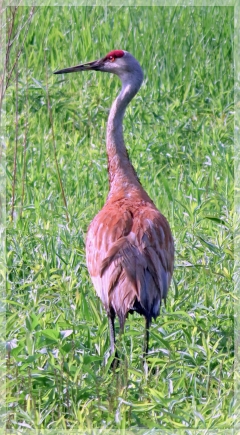
sandhill craneAs a writer, I like to create with words. When writing a devotion, I carefully organize my thoughts, often cutting and pasting while moving sentences or entire paragraphs around. Supporting Bible verses are sought and various commentaries are consulted. Every word is carefully chosen (often after a synonym search). Grammar and spelling are double-checked and editing and rewriting continue right up to publication. All of that messing around with words, phrases and punctuation may be fine when putting pen to paper or fingers to keyboard, but not when praying. Prayers would never get said if they required that amount of composing, revising and polishing!

God isn’t like an editor with a blue pencil telling us to shorten a paragraph, elaborate on an idea or find a better adjective before the prayer is worthy. He’s not like a teacher with a red pencil checking off our misspellings or grammatical errors. He’s doesn’t grade our prayers or refuse to listen if we’ve ended a sentence with a preposition or split an infinitive. He’s more like a mother who reads and treasures her young child’s letter from camp with its smudges, messy printing, and misspellings. He’s just glad to hear from us.

We’ve all felt painfully inarticulate when it comes to prayer but that shouldn’t prevent us from praying. Although our words may be clumsy, being eloquent is not a requirement for prayer. The power of our prayers is not contained in words, sentence structure, or eloquence; the power of our prayers is found only in the One who hears those prayers! Fortunately, in God’s infinite mercy, He’s given us the assistance of the Holy Spirit. This Spirit, living in us, intercedes for us in our hearts and it’s that heartfelt prayer that reaches God’s ears.

Don’t be so concerned about wrapping the gift that you never give it. … Better to pray awkwardly than not at all. [Max Lucado]

Dear friends, use your most holy faith to grow. Pray with the Holy Spirit’s help. [Jude 1:20 (GW)]

Copyright ©2020 jsjdevotions. All rights reserved.