
God blesses those who are persecuted for doing right, for the Kingdom of Heaven is theirs. [Matthew 5:10 (NLT)]
As they stoned him, Stephen prayed, “Lord Jesus, receive my spirit.” He fell to his knees, shouting, “Lord, don’t charge them with this sin!” And with that, he died. [Acts 7:59-60 (NLT)]
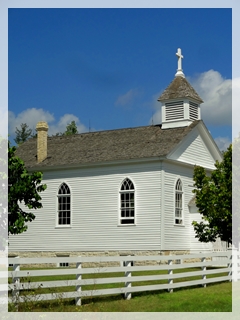 His testimony enraged the Jewish high council and he was taken from the city and stoned to death. Stephen was the first of the Christian martyrs but clearly not the last. We’ve all been horror-stricken by the recent news from Egypt where ISIS thugs attacked Coptic Christians on their way to a remote monastery. According to witnesses, the men were told their lives would be spared if they recited the shahada, the Islamic declaration of faith. When they refused to do so, they were gunned down. Since December, more than 100 Coptic Christians have died in Egypt in four different attacks. On Palm Sunday, two of their churches were bombed leaving forty-four dead. It’s not easy being a Christian in Egypt.
Apparently, it’s not that easy in India, either. Last winter, Bartu Urawn and his wife were forced to stand all night in a freezing pond. When they refused to renounce their Christian faith after being immersed in the frigid water for seventeen hours, they were beaten. Although his wife survived, Urawn died as a result of the torture. A decade ago, Christianity was embraced by ten families in this remote Indian village. Unfortunately, in the years that followed, seven of those families caved into threats and returned to their indigenous tribal religion. The Urawns, however, remained faithful to Jesus.
After watching the news of the Egyptian attack last night, my husband asked how I would respond in a similar situation. I wondered. Would I choose to be a martyr? I’d like to think I would. Like the Urawns, could I endure hours of torture and still stay true to Christ? I’d like to think I could. What if, rather than saving my life, renouncing Christ meant I could keep my children from suffering torture or death? Now it’s getting harder to know the answer. Could I watch them suffer? How could I live with myself in either scenario? Perhaps I’d find an excuse for verbally abandoning Jesus by telling myself that they were just empty words from my mouth and my heart didn’t mean them. I’m not so sure God would see it that way and it doesn’t much sound like something Jesus would do. These are not easy questions and, hopefully, I’ll never be forced to ask them. Nevertheless, the uncertainty of my answers indicates the level of my faith and it’s nowhere near as strong as I thought it was. Jesus told us to pick up our crosses and follow him; let us never forget that the cross was an instrument of torture and He was walking to Calvary. We have been called to share in His suffering and persecution should not deter us.
Living here in the United States, we’re not likely to be threatened with torture or death for our Christian faith. We don’t risk our lives by reading the Bible or gathering in worship and prayer. Perhaps, rather than wondering if we would stand up to ISIS soldiers or an angry mob of non-believers, we should ask ourselves how well we stand up to the world in which we live. Although we may never have to choose between Jesus and our physical survival (or that of our loved ones), there are plenty of opportunities every day to forsake Him in far more subtle ways. If we’re not walking in His footsteps and led by His Holy Spirit, we’re denying Him. There’s more than one way to lose one’s soul.
I will not deny Christ…I will continue to believe until my last breath. [Bartu Urawn]
 The “Last Lecture,” a tradition at many universities, is given by a professor as if it is the last one delivered in the speaker’s lifetime. Hoping to inspire the audience to become better versions of themselves, the lecturer usually reflects on his life’s journey and shares his hard-earned wisdom. New meaning was given to this tradition in 2007 when Randy Pausch, a professor at Carnegie Mellon University, gave what truly was his last lecture. Terminally ill with pancreatic cancer, he was dead less than a year after giving it.
 The heavens proclaim the glory of God. The skies display his craftsmanship. Day after day they continue to speak; night after night they make him known. They speak without a sound or word; their voice is never heard. Yet their message has gone throughout the earth, and their words to all the world. [Psalm 19:1-4 (NLT)]
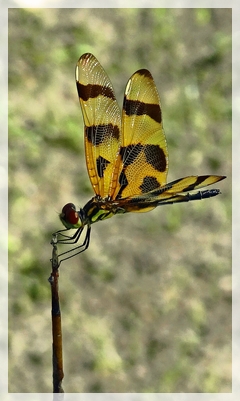 “We can’t attack those people! They’re too strong for us! … The land we explored is one that devours those who live there. All the people we saw there are very tall. … We felt as small as grasshoppers, and that’s how we must have looked to them.” [Numbers 13:31-33 (GW)]
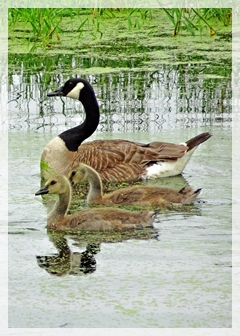 I recently happened upon a YouTube video about a goose and two police officers. A mother goose kept pecking at the window of a parked Cincinnati police car. When the officer opened the door, the goose led him over to one of her babies; it was tangled up in a string tied to a balloon. Concerned that mama goose would attack if he came close to the baby, the first officer stayed back. His partner was a woman and a mother; seeing the anguish of another mother, she went forward and carefully untangled the little gosling while its mama patiently watched and waited. Once free of the twine, the baby rejoined its siblings and the family swam off with their mother.
 The book of Daniel was written during the Babylonian captivity. Nebuchadnezzar had assaulted Judah, destroyed Jerusalem and the temple and exiled the people of Judah to Babylon. Jeremiah had prophesized that Jerusalem’s desolation would last seventy years and Daniel realized that their time of exile was nearly complete. After fasting, donning sackcloth, and covering himself with ashes, Daniel passionately prayed and pled with God to return His people to their land.
