
 Our fight is not against people on earth. We are fighting against the rulers and authorities and the powers of this world’s darkness. We are fighting against the spiritual powers of evil in the heavenly places. [Ephesians 6:12 (ERV)]
This morning, I quietly read my Bible, some Billy Graham, and prayed. Over coffee, I looked through the newspaper and watched the news. I laughed at a political cartoon, read editorials that both praised and criticized our president, and heard politicians from opposite sides of the aisle disagree about taxes and health care. Once at my computer, I checked my calendar (Bible study tonight) and read about Tuesday’s election. In my email, along with news from friends and Christian devotions, I got an action alert from a local conservation group asking me to contact my representative about a proposed bill. I also received several Veteran’s Day advertisements.
Veteran’s Day wasn’t meant to be another reason to go shopping. Originating in 1919 as Armistice Day, it celebrated the end of World War I — said to be the “war to end all wars” until WW II proved that wrong. In 1954, Armistice Day became Veteran’s Day — and a day to honor all military veterans for their service, patriotism, and willingness to sacrifice for the good of our nation.
Within the first two hours of my day, I’d experienced an incredible amount of freedom, in large part because of those veterans we’ll honor this weekend. We are comfortable and secure in our homes, able to speak openly, vote, run for political office, read without restrictions, gather together freely, and worship openly. We can even safely complain both about and to the government. We can do all that and much more because of the men and women who took a stand against evil—not just with their votes, voices, prayers, or money—but with their service. In many cases, they returned home with scars both visible and hidden. In some cases, they returned in body bags.
I came of age in an era of anti-war/anti-military sentiment and I continue to abhor the thought of weapons and warfare. Nevertheless, time has taught me that sometimes fighting evil means real soldiers and an actual battlefield. As the character Ransom learned in C.S. Lewis’ novel Perelandra, when reasoning fails to defeat Satan, one may have to resort to actual combat. The struggle against the enemy is not always a spiritual one; sometimes it is physical and the hands God uses belong to real men and women. Until the day when our weapons can be turned into agricultural tools, we will continue to need people who will put their lives on the line to fight evil. While we continue to pray for peace, may we also pray for the members of our armed forces (both past and present) and thank God for their service. Let’s remember to express our deep and lasting gratitude to them, as well.
 In the Sunday school stories we learned as children, the Bible’s heroes were larger than life. When we read about them as adults, however, we read the parts skipped in Sunday school and realize they were real people with feet of clay. Yet, it’s their sins and weaknesses that make their lives as relevant today as they were centuries ago. No matter how great, all except Jesus were flawed. Peter denied knowing Jesus, Matthew was a dishonest tax collector, Thomas doubted Jesus’ resurrection, Noah and Lot got drunk, Abraham lied to protect himself, David was an adulterer and murderer, Rahab was a prostitute, Jacob deceived his father, Jonah refused and fled, Sarah doubted and grew impatient, Samson allowed lust to lead him, Paul persecuted Christians, Elijah got so depressed he wanted to die, Gideon dared to question God, and, in spite of his great wisdom, Solomon disobeyed Him. The disciples argued amongst themselves and deserted Jesus, Isaac played favorites with his sons, and both Eli and Samuel tolerated the shameful behavior of their boys. Nevertheless, flawed as they all were, there is much to learn from their stories. We see the possibility of transformation and redemption. The prostitute was instrumental in an Israelite victory and became one of Jesus’ ancestors. The corrupt taxman became a disciple and turned his record keeping skills into gospel writing. The Pharisee became Christ’s messenger throughout the Roman Empire and the fisherman who denied Christ became the leader of the disciples. In spite of their faults, all of them were saints of God.
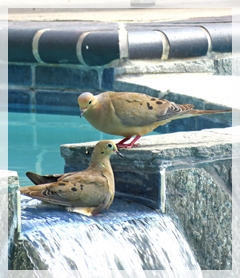 I’m not a good sitter and I’m even worse at soaking in a tub. Just wanting to get clean and get on with my day, I’m a shower person. Friends insist that sitting in the tub and reading is the best way to relax but that doesn’t work for me. I don’t have the patience to wait for the water to get high enough for a good soak or for the spa jets to work, I’ve never figured out how to turn pages without getting them wet and, rather than relaxing, I think about all the things I could and should be doing instead of sitting in hot water. I considered my inability to enjoy a bath when our pastor suggested that we bathe our decisions in prayer. Unfortunately, the same impatience that keeps me from enjoying my over-sized bath tub keeps me from bathing my decisions in prayer.
 These people are false apostles. They are deceitful workers who disguise themselves as apostles of Christ. But I am not surprised! Even Satan disguises himself as an angel of light. So it is no wonder that his servants also disguise themselves as servants of righteousness. In the end they will get the punishment their wicked deeds deserve. [2 Corinthians 11:13-15 (NLT)]
 When asked about her boys, a friend used to answer, “They’re doing their own thing.” Years later, I learned “their own thing” meant they were breaking her mama’s heart with their addictions and run-ins with the law. Because she kept her pain concealed, she carried the weight of that burden alone for many years. We often hear similar answers when we ask someone how they’re doing— brusque responses like, “I’m fine,” “It’s taken care of,” or “We don’t need a thing.” Maybe everything really is hunky dory but those answers are often used when life has gone seriously awry and things are anything but fine. Those vague but terse responses are conversation stoppers. Even best friends, who suspect something is amiss, won’t pry and the subject is politely changed.
 Most of us think of sloth as laziness: a dislike of work or any physical exertion. Having watched the local zoo’s sloth in action (or, rather, inaction), I think the sluggish animal is appropriately named. Spiritual sloth, however, is far different than being a couch potato. Originally, the sin of sloth was two sins: sadness and acedia. Compiled by Evagrius of Ponticus, a 4th century monk, these two “capitals sins” were part of a list of eight he believed to the greatest threats to devout monasticism.
