WHAT’S YOUR STATE?

For I know the plans I have for you,” says the Lord. “They are plans for good and not for disaster, to give you a future and a hope. [Jeremiah 29:11 (NLT)]

For I can do everything through Christ, who gives me strength. [Philippians 4:13 (NLT)]

african iris

If there were a Hall of Fame for favorite Bible verses, John 3:16, Jeremiah 29:11, and Philippians 4:13 would be in it; every year, they are the most popular verses on my favorite Bible web site. This year, in a stunning upset, Jeremiah 29:11 edged out perennial favorite John 3:16 for first place with Philippians 4:13 running a close third.

In 2017, John 3:16 easily held first place with Jeremiah 29:11 and Philippians 4:13 in a hotly contested race for the next two spots. In honor of the Electoral College meeting that year, the website determined which of those two verses carried each of the fifty states and gave them electoral votes. Had it been a presidential election, Jeremiah 29:11 would have won with 302 electoral votes. With the nation split into two camps, rather than dividing us into red or blue states, the site asked: “Do You Live in a ‘God Has a Plan’ State or an ‘I Can Do All Things’ State?” While my residence in is a “God Has a Plan” state, I wondered if that truly is my state of mind.

I’m a voter who splits her ticket. Sometimes, I’m accepting of circumstances, serenely confident in God’s plan, and (usually without complaint) easily can step forward in trust and faith. Other times, I’m sure that God has intentionally given me challenges to overcome—challenges to strengthen and mature my faith. Rather than accept the situation, confident in God’s power, I try to surmount the challenging circumstances. The problem arises when I’m unsure about whether I should trust and accept or trust and overcome.

Most of our decisions are made without consciously thinking about God—red or blue shirt, sneakers or sandals, oatmeal or yogurt, walk in the park or at the beach, and so on. We don’t ask God if we should go through the yellow light, where to park, or whether to buy peas or beans. We don’t consult Him about mowing the lawn, making the bed, balancing the checkbook, going to the grocery, or doing the laundry. Although we’re operating on auto-pilot, many of those little decisions can make a difference in our lives. They may determine if we’re in the right place at the right time or in the wrong place at the wrong time. Nevertheless, even if we did stop and pray about even the smallest decision, it’s unlikely that God would provide a definitive answer about all of them. I don’t think it’s because He doesn’t care but rather that He expects us to use our God-given common sense and free will to make our everyday choices godly ones.

Sometimes, even when we’ve asked for His guidance, God seems to be silent. We ask who to marry, which job to take, how much money to give, how much to keep, where to live, what cancer treatment to choose, how to deal with the addicted child, where to attend church, or whether to start a new business and His definitive answer just doesn’t seem to come. There’s no angel, star in the East, burning bush, writing on the wall, or wet fleece. The heavens don’t open, a lamb doesn’t miraculously appear, a donkey doesn’t speak, and a neon sign is unlikely. That God knows the detailed plan doesn’t mean He’s going to tell us what it is!

Perhaps knowing the plan isn’t as important for us as knowing the God who made the plan. He has revealed Himself and everything we need to know about living a godly life in Scripture. The more we know Him, the more we know His answers. We pray and proceed, trusting in the God who loved us enough to sacrifice His son for our salvation, the God whose plans are for good and not disaster, the God who wants to give us a future and hope. We do so, confident that we can do all we need to do through Christ who gives us strength.

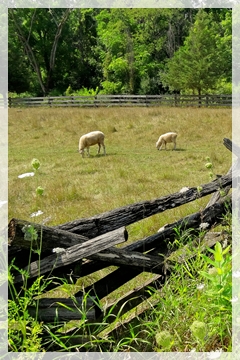
Now may the God of peace—who brought up from the dead our Lord Jesus, the great Shepherd of the sheep, and ratified an eternal covenant with his blood—may he equip you with all you need for doing his will. May he produce in you, through the power of Jesus Christ, every good thing that is pleasing to him. All glory to him forever and ever! Amen. [Hebrews 13:20-21 (NLT)]

Copyright ©2018 jsjdevotions. All rights reserved.

 

NICODEMUS

Then I will sprinkle clean water on you, and you will be clean. Your filth will be washed away, and you will no longer worship idols. And I will give you a new heart, and I will put a new spirit in you. I will take out your stony, stubborn heart and give you a tender, responsive heart. And I will put my Spirit in you so that you will follow my decrees and be careful to obey my regulations. [Ezekiel 36:25-27 (NLT)]

impatiens flowerWhen we think of the Pharisees, we usually think of their hypocrisy and self-righteousness but they started out with good motives. Like us, they simply wanted to avoid sin. I have no doubt that some were well meaning, with high standards and pure motives. Since Jesus was teaching in the Temple, it was only right that these interpreters of the law would want to examine His teachings.

The Pharisee Nicodemus came to visit Jesus one night. Since Jesus seemed to spend his days surrounded by a crowd, the dark of night may have been the only time the Pharisee could meet one-on-one with the rabbi. On the other hand, perhaps he was afraid that others might see him talking to this teacher who challenged the behavior and beliefs of his sect. Nicodemus may have come as a seeker of truth or, possibly, as a spy who was hoping to catch Jesus in some sort of blasphemy. We don’t know his motives, only his questions, the most famous of which was, “How can an old man go back into his mother’s womb and be born again?”

When Jesus speaks of being born of water and the Spirit, this concept should not have been new to a scholar like Nicodemus. Jesus probably was referencing the above words found in Ezekiel 36 and the Pharisee should have been familiar with them. Yet, the man did not seem to understand that the Messiah would bring spiritual cleansing and a new heart—a new nature—to the people. I can imagine Jesus’s frustration as He rebuked the scholar for not recognizing that Scripture taught the necessity of a new birth by the Spirit. Their conversation ends with Jesus speaking of God’s light and people preferring darkness to light. Still not understanding, Nicodemus leaves in the darkness both of night and of spirit.

The next time we hear of Nicodemus, he’s in a meeting with the Sanhedrin. The Temple guards had been sent to arrest Jesus but, amazed at His teachings and unable to find any cause, they come back empty-handed. As the Pharisees condemn and curse the crowd following Jesus, Nicodemus speaks up: “Is it legal to convict a man before he is given a hearing?” [John 7:51] Could it be that Nicodemus reread the Messianic prophecies and was beginning to understand the meaning of Jesus’s words?

The last time we meet Nicodemus, he is with Joseph of Arimathea. A member of the Sanhedrin and Nicodemus’s friend, Joseph was probably a Pharisee; yet we read that he also was a secret disciple of Jesus. It was Joseph, not the disciples, who asked Pilate for permission to take down Jesus’s body and it was his tomb that became the brief resting place for Christ’s body. Nicodemus brought seventy-five pounds of myrrh and aloe with which he and Joseph prepared the Lord’s body for burial. No longer secret believers, it would seem that both Nicodemus and Joseph moved from the darkness into the light.

The Apostle John tells us that other Jewish leaders believed in Jesus but, fearing they’d be expelled from the synagogue, they kept silent. [12:42] Are we secret believers, keeping silent in the shadows or, like Nicodemus and Joseph, Peter and John, will we boldly proclaim our faith?

So they [the high council] called the apostles back in and commanded them never again to speak or teach in the name of Jesus. But Peter and John replied, “Do you think God wants us to obey you rather than him? We cannot stop telling about everything we have seen and heard.” … Then they preached the word of God with boldness. [Acts 4:18-19,31b (NLT)]

Copyright ©2018 jsjdevotions. All rights reserved.

THE OLIVE BRANCH

Forget about the wrong things people do to you, and do not try to get even. Love your neighbor as you love yourself. [Leviticus 19:18 (NCV)]

Humility has such power. Apologies can disarm arguments. Contrition can defuse rage. Olive branches do more good than battle axes ever will. [Max Lucado]

mourning doveIn a “Baby Blues” comic strip, Zoe, the big sister approaches her brother and tells him, “About that fight we had a while ago…I would like to extend an olive branch.” With a panicked look on his face, the little brother screams, “MOM!!! Zoe’s threatening me with a stick!” Having had an older brother who delighted in tormenting me, I completely sympathized with the little boy. There were times when my brother just had to come near me and I would frantically call out, “Mom, Steve’s hitting me again!” I wanted to avoid another painful punch but, who knows, maybe one of those times he, like Zoe, was just offering an olive branch.
Long before the ancient Greeks and Romans used the olive branch as a symbol for victory and peace, the story of Noah recorded that a dove brought an olive branch back to the ark which meant the end of the flood and the earth’s rebirth. Symbolizing peace and reconciliation, the olive branch requires two things: someone to extend it and someone else to accept it. An apology and its acceptance are two sides of the same coin, as are the asking of forgiveness and the granting of it. Both are necessary for peace in our lives.

I have been like Zoe, the one extending the olive branch; I admitted my offense, apologized, and asked forgiveness but was rebuffed. Unfortunately, there are people who will never accept an apology, no matter how humbly or amiably it is offered. All we can do is keep the olive branch extended, pray that God will open their hearts, and continue to love.

Like Zoe’s little brother, however, it’s not always easy to accept that olive branch. Wanting to protect ourselves from further hurt or disappointment, we may prefer suspicion, aloofness, hostility, or anger. Forgiveness doesn’t mean we have to trust people who are untrustworthy or believe those who are dishonest. An act of love, mercy and grace, forgiveness is releasing the offense and offender to God; it is giving up our right to hurt those who’ve hurt us. Being the wronged party never gives us permission to continue the wrong with unforgiveness.

Along with an olive branch, the handshake is a gesture of peace. In ancient Greece, hands were grasped to demonstrate that neither person held a weapon. In Rome, the grasp became more of an arm grab as a way of seeing whether any weapons were hidden in someone’s sleeves. The shaking part is said to come from medieval England when knights would shake hands in an attempt to shake loose any concealed weapons.

Hopefully, we don’t need to worry about lethal weapons hiding in sleeves when we shake hands this holiday season. Nevertheless, we need to put aside the invisible weapons we carry: things like anger, gossip, blame, intolerance, pettiness, jealousy, resentment, and disrespect. Let’s extend any olive branches that need to be extended and accept any that are offered. If there can’t be peace throughout the world this holiday season (and from the news that looks unlikely), let there at least be peace and reconciliation in our homes and families.

To be forgiven is such sweetness that honey is tasteless in comparison with it. But yet there is one thing sweeter still, and that is to forgive. As it is more blessed to give than to receive, so to forgive rises a stage higher in experience than to be forgiven. [Charles Spurgeon]

When you are praying, if you are angry with someone, forgive him so that your Father in heaven will also forgive your sins. But if you don’t forgive other people, then your Father in heaven will not forgive your sins. [Mark 11:25-26 (NCV)]

Copyright ©2018 jsjdevotions. All rights reserved

COME IN AT THE GATE

Such people claim they know God, but they deny him by the way they live. They are detestable and disobedient, worthless for doing anything good. [Titus 1:16 (NLT)]

enter by the gateI’ve been reading The Pilgrim’s Progress by John Bunyan. I vaguely remember reading some of this 1678 allegory in senior English class but that time it was in the original Middle English (the language of the King James Bible) and difficult to read. Although I thought myself a Christian, I was unfamiliar with most of the biblical references and concepts. In reality, all I wanted to do was to get through it (along with Beowulf, Canterbury Tales, and Ulysses). With less pressure, more biblical knowledge, and an annotated modern version, I’m actually enjoying the tale of Christian: a man who leaves his home in the City of Destruction in search of the Celestial City.

Even without footnotes, I recognized the gate when Christian arrived there and understood Goodwill’s welcoming words: “In spite of everything people have done before they come here, we make no objections against anyone. No one will ever be driven away.” After warning him about other paths that are wide and crooked, Christian is told he can distinguish the right path because it is straight and narrow.

While on the path, Christian encounters two men who have climbed over the wall. Named Hypocrisy and Formality, they think they’ve found a short-cut to the Way. Hypocrisy, of course, is someone who puts on a mask and pretends to be what he is not. He acts the Christian in public but is an entirely different person in private. He may bring food to the needy on Sunday but beat his wife on Monday. Formality is the man whose religion is based on ritual and rests on outer form. Although he faithfully attends church, fasts, kneels, tithes, takes communion, and wears a cross, He’s only going through the motions. Neither man has a spirit of godliness or a relationship with Christ. With no true faith or repentance, they have built their lives on pride and pomp, appearances and rituals. Coming from the land of Boasting (Vain-Glory in the original), their religion is empty. Thinking that God is as impressed by external appearances as are they, the proud men are going to Mount Zion for praise: not to praise God but rather to be praised!

Satisfied with the appearance of godliness and unwilling to pay the cost of repentance, the two have taken the easy way by climbing over the wall. When Christian tells them that entering that way means the Lord of the Way will consider them thieves, they tell him to mind his own business; no one likes being confronted about their superficial professions of faith. When the men come to the hill called Difficulty, the narrow path leads straight up the hill. Seeing how steep it is, Formality and Hypocrisy choose the easy paths that seem to go around the hill while Christian climbs it. Having chosen the paths of Danger and Destruction, unlike Christian, those two will not reach the Celestial City.

This part of Bunyan’s tale hit home because we just finished a sermon series about the “cultural” Christian or what Craig Groeschel calls the “Christian atheist.” Like Hypocrisy and Formality, the cultural Christian believes in God but doesn’t know Him, lives as if He doesn’t exist, won’t recognize his deceptive and shallow faith, and follows laws and ordinances without following the Way. Bunyan’s is a cautionary tale as are Jesus’s words about the gate and narrow path. There are no shortcuts to salvation and the narrow road is not one of ease; nevertheless, the journey is worth it!

You can enter God’s Kingdom only through the narrow gate. The highway to hell is broad, and its gate is wide for the many who choose that way. But the gateway to life is very narrow and the road is difficult, and only a few ever find it. [Matthew 7:13-14 (NLT)]

I tell you the truth, anyone who sneaks over the wall of a sheepfold, rather than going through the gate, must surely be a thief and a robber! … Yes, I am the gate. Those who come in through me will be saved. They will come and go freely and will find good pastures. [John 10:1,9-10 (NLT)]

Copyright ©2018 jsjdevotions. All rights reserved

PLAYING WITH HEART

For see, today I have made you strong like a fortified city that cannot be captured, like an iron pillar or a bronze wall. You will stand against the whole land—the kings, officials, priests, and people of Judah. They will fight you, but they will fail. For I am with you, and I will take care of you. I, the Lord, have spoken! [Jeremiah 1:18-19 (NLT)]

white tailed deerI thought of locker room speeches today when reading the book of Jeremiah. God calls Jeremiah to be His prophet and gives him the task of bringing a message of both judgment and blessings to the nations. Telling him to get ready for action and not to be afraid, God gives the prophet the Biblical equivalent of a locker room speech and tells him that he will be invincible, as unconquerable as a fortress, and promises to care for him. God’s words had to be encouraging and reassuring to the young prophet.
We all have our favorite motivational movie speeches. Perhaps it’s the one from Hoosiers when Gene Hackman’s character tells his team to play to their potential and not get caught up in thinking about winning or losing. Another great speech is when the groundskeeper in Rudy tells the young man that giving up, while easier than perseverance, leads to regret. It is pushing through that leads to triumph. My favorite scene is probably when the coach in We Are Marshall tells his team that the opponents don’t know their heart. “We cannot lose,” he says, adding that, while they may be behind on the scoreboard when the game ends, they cannot be defeated. Perhaps I like these speeches because none of the coaches said that winning the game was what determined the players’ victory. Victory would be achieved by playing the game with heart. When God encouraged Jeremiah, like these coaches, He never promised a win.

Jeremiah was Judah’s primary prophet during the dark days preceding their conquest by Babylonia. Known as the “Weeping Prophet,” many would say Jeremiah was a failure. He labored over forty years and, at best, his audience was apathetic and ignored him; at worst, they were antagonistic and hostile. His neighbors wanted to kill him, his family plotted against him, and he was banned from the Temple. He was arrested, whipped, put in stocks, and ridiculed at a city gate. After another flogging, he was imprisoned and then lowered into a cistern where he sunk into mud. Even after his prophecy proved true and Jerusalem fell, he was disregarded and ridiculed. Taken against his will to Egypt, tradition holds that Jeremiah’s fellow countrymen stoned him to death there.

A sportscaster would say that Jeremiah lost the game in an agonizing and humiliating defeat. The reforms of Judah that started with Josiah stopped there and it was downhill from then on. By the time Jeremiah wrote Lamentations, Jerusalem had fallen, the temple was destroyed, and his people slaughtered, tortured or taken captive. Nevertheless, Jeremiah did his utmost and never lost heart. Quitting certainly would have been easier but he persevered. His triumph was not in changing the minds of Judah but rather in following the will of God. Let us never forget that God’s idea of victory has nothing to do with winning or the numbers on the scoreboard but everything to do with how we play the game. Like Jeremiah, may we always play it with heart, faith, and obedience.

For every child of God defeats this evil world, and we achieve this victory through our faith. And who can win this battle against the world? Only those who believe that Jesus is the Son of God. [1 John 5:4-5 (NLT)]

Copyright ©2018 jsjdevotions. All rights reserved


DON’T DRAW STRAWS! – Election Day 2018

Wise men and women are always learning, always listening for fresh insights. A gift gets attention; it buys the attention of eminent people. The first speech in a court case is always convincing—until the cross-examination starts! You may have to draw straws when faced with a tough decision. [Proverbs 18:15-18 (MSG)]

The only thing necessary for the triumph of evil is for good men to do nothing. [Edmund Burke]

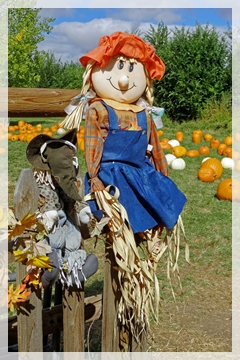
scarecrowHere in the United States, we enjoy political freedom. We have free and fair elections, competitive political parties, and the candidates we elect actually do govern. The opposition isn’t powerless and plays an important role in government while the interests of minority groups are represented. That level of freedom is not enjoyed by most of the world. According to the independent watchdog organization Freedom House, only 45% of the world’s nations are considered “free,” 30% are “partially free,” and 25% are “not free” at all. Tomorrow we have an opportunity to exercise our freedom by voting. In less than a week, we will honor those who fought for us so that we can have this priceless opportunity. Let them not have fought in vain.

Regardless of how you stand on the issues, I suspect many of us are disillusioned by the whole political process. The amount of money spent on advertising has been astronomical. $244 million has been spent on the Illinois governor’s race alone! It’s not just TV ads; both our snail mail and email mailboxes are filled with propaganda and we’re hesitant to answer our phones because of all the political robocalls! I have yet to see or read any ad, from either party, that hasn’t been negative, accusatory, and misleading. The issues on both sides have been blurred and distorted and it’s not easy to find the truth.

Some people may have clear ideas about the many candidates and issues on the ballot while others may still be confused. Here in Florida, with multiple county, state, and federal candidates and twelve proposed amendments, we have the longest ballot our voters have seen in twenty years. Throughout our nation, many voters may feel like their choice of candidates is between dumb and dumber, bad and worse, or crook and crookeder! Nevertheless, our vote matters. The people we elect and the decisions we make today will have an impact on our environment, economics, health, education, safety and quality of life for years to come.

Some choices we have to make are so tough that we may be tempted to take Solomon’s suggestion in Proverbs 18 and draw straws. Nevertheless, while easier, simply drawing straws or flipping a coin is not the way to preserve our nation. I would hope that, instead of letting luck guide us, we prayerfully will ask our Father in Heaven for some much needed political wisdom. Come Wednesday morning, regardless of who is elected, let us all start praying for our leaders.

Father, guide us as we cast our ballots. Help us see through the slick advertising and empty promises to the truth. Let your Holy Spirit show us how to apply our Christian principles when making choices in the voting booth tomorrow.

Let us never forget that government is ourselves and not an alien power over us. The ultimate rulers of our democracy are not a President and senators and congressman and government officials, but the voters of this country. [Martin Luther King, Jr.]

Be a good citizen. All governments are under God. Insofar as there is peace and order, it’s God’s order. So live responsibly as a citizen. If you’re irresponsible to the state, then you’re irresponsible with God, and God will hold you responsible. [Romans 13:1-2 (MSG)]

Blessed be the name of God, forever and ever. He knows all, does all: He changes the seasons and guides history, He raises up kings and also brings them down, He provides both intelligence and discernment, He opens up the depths, tells secrets, sees in the dark—light spills out of him! [Daniel 2:20-22 (MSG)]

Copyright ©2018 jsjdevotions. All rights reserved.