
When it was time for the harvest, Cain presented some of his crops as a gift to the Lord. Abel also brought a gift—the best portions of the firstborn lambs from his flock. The Lord accepted Abel and his gift, but he did not accept Cain and his gift. [Genesis 4:3-5a (NLT)]
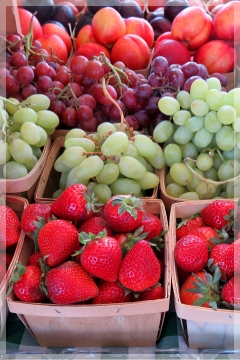 My guests never get the first piece of pie or lasagna because it always turns into a broken, sticky mess with half of it remaining in the pan. They also don’t get the over-baked cookies, the frayed towels, chipped china, or last night’s left-overs. Since I would never serve a guest anything but the best I have to offer, why is it so tempting to give God less than our best?
While Abel offered his first and best, Cain didn’t and we’ve continued much the same way today. We often complain when we’re asked to serve and begrudge the time spent serving. We give God our money after we’ve purchased everything we want and our prayers only when we can find the time or want something. We read His word when there’s nothing better to do, worship Sunday morning if we wake up in time or the golf game is cancelled, and volunteer only at our convenience. It’s our outdated cans that we bring to the food pantry and our stained and torn clothing that we donate to the resale shop.
When Cain and Abel brought their gifts to the Lord, Cain, a farmer, gave from his crops and Abel, a shepherd, gave from his flock. Literally translated, Cain “bringeth from the fruit of the ground a present to Jehovah” and Abel brought “from the female firstlings of his flock, even from their fat ones.” While God was pleased with Abel’s offering, He wasn’t with Cain’s. Some commentators explain God’s displeasure by saying He wanted an animal (blood) sacrifice rather than the bloodless sacrifice from the soil. Scripture, however, doesn’t say that it had to be a blood sacrifice. The Hebrew word used was minchah which clearly meant gift, tribute, or offering and the later law of Moses tells us that both animal and plant offerings were acceptable. The brothers’ offerings were appropriate for their occupations.
God’s problem wasn’t that one gift was fauna and the other flora; he was displeased with one giver’s heart! Showing his love for God, Abel didn’t give just any animal from his flock; he gave the “firstlings.” The Hebrew word used was bakar, meaning the first and best animals. While there is a similar Hebrew word, bakkurah, (translated as “firstfruits”) for the first and best of a grain or fruit offering, that word was not used for Cain’s gift. While the subtle difference is easily missed by 21st century readers, it would have been abundantly clear to the Israelites. While Abel gave the best, Cain just gave some. We don’t know if his offering was blemished, bruised, or just the leftovers from his harvest, but we do know it wasn’t the first and best!
God didn’t confront Cain because he failed to offer meat; he confronted him because Cain’s heart wasn’t in the right place. Rather than an act of worship, his gift was offered begrudgingly rather than willingly, out of a sense of duty than one of love.
We know from the story of the widow’s two coins that it’s not the kind or size of the offering that matters—it’s the heart attitude of the giver that’s important. Man sees only the gift but God sees the heart of the giver. Hallmark’s “When You Care Enough to Send the Very Best” is one of the most recognized slogans of all time. God gave us His best in Jesus; can we give Him anything less in return? Do we care enough to give Him our very best?
We offer with joy and thanksgiving what you have first given us—our selves, our time, and our possessions, signs of your gracious love. Receive them for the sake of him who offered himself for us, Jesus Christ our Lord. Amen. [Lutheran Book of Worship]
 When prophesying about Jesus, Isaiah called Him a “man of sorrows.” Indeed, Jesus carried a tremendous weight of sorrow upon his shoulders—the heaviest of which was the weight of the world’s sins, a weight totally undeserved by this man who was without sin. A compassionate man, Jesus also carried the burden of the world’s heartache. He knew the anguish of Jarius, the despair of the bleeding woman, the grief of Martha and Mary at Lazarus’ death, the self-reproach of the woman at the well, the centurion’s concern for his servant, the torment of the possessed man, and the distress of the lepers. He also knew the weight of the world’s rejection. He was scoffed at by people in his own hometown, many of his early disciples deserted him, and Judas betrayed him. Wanting none to perish, He wept upon his entry into Jerusalem because of the Israelites’ lost opportunity at salvation. The night of His betrayal, Jesus was filled with grief—indeed, He was a man of sorrows. But, He also was a man of peace, love, purity, holiness, eloquence and love.
 What do you hope to find tucked into your Christmas stocking or deposited under the tree Christmas morning? From the above words, it’s easy to think God is promising something like Christmas morning every day. Although He promises to hear and answer our prayers, let’s remember that He’s not so specific as to how He’ll answer them.
 Jesus said to him, “For sure, I tell you, unless a man is born again, he cannot see the holy nation of God.” Nicodemus said to Him, “How can a man be born when he is old? How can he get into his mother’s body and be born the second time?” [John 3:3-4 (NLV)]
 “A children’s story which is enjoyed only by children is a bad children’s story,” said C.S. Lewis. I agree and admit to enjoying the seven books comprising Lewis’ The Chronicles of Narnia both as a child and an adult. Even though the Narnia books take place in a make-believe world filled with talking animals, mythical creatures, and magic, there are Christian overtones to the entire series. For example, the first book calls up images from Genesis when Aslan, the Great Lion, sings Narnia into existence and evil is introduced to the land. In the second, Aslan willingly dies so that the sins of one boy are forgiven but comes alive again. In another book, Eustace, who had “greedy, dragonish thoughts” becomes a dragon. When Aslan strips away the boy’s scales and throws him into the water, the repentant boy is transformed and images of rebirth and baptism come to mind. Resembling the last book of the Bible, the final story in the series tells of a beast, a false prophet, Narnia’s fall, and a Narnian paradise (where sadness and weariness do not exist).
 Ask, seek, and knock—three easy instructions. Ask. Ask as if we mean it, as if we truly care about the answer. Ask as if we believe we’re being heard. Ask with the hunger of a beggar begging bread. Ask with the fervor of someone sinking in quicksand pleading for help. Ask with the thirst of a dying man in the desert requesting water. Ask as if our very lives depend on the answer. Ask.
 Devotions of the Heart