
Direct your children onto the right path, and when they are older, they will not leave it. [Proverbs 22:6 (NLT)]
And anyone who welcomes a little child like this on my behalf is welcoming me. But if you cause one of these little ones who trusts in me to fall into sin, it would be better for you to have a large millstone tied around your neck and be drowned in the depths of the sea. … Beware that you don’t look down on any of these little ones. For I tell you that in heaven their angels are always in the presence of my heavenly Father. [Matthew 18:5-6,10 (NLT)]
 Like all children, my grands are growing up and new challenges face them every day. The eldest is now driving and old enough to date. Come fall, she’ll be looking at colleges, two others will start junior high school, one enters kindergarten and the youngest is off to nursery school. Where did the time go?
One look back at my childhood (especially my teen years), tells me that I kept my guardian angel working overtime. Not wanting my grands to make the same mistakes I did, I’d love to put a protective bubble around each one of them. It would shield them from evil influences, bad people, poor choices and dangerous situations. Although a protective bubble won’t work, perhaps the armor of God will. While not the typical school uniform, we can clothe our children with the belt of God’s truth, the breastplate of righteousness, the peace of the gospel on their feet, the shield of faith, and the helmet of salvation. Although weapons aren’t allowed in school, we can arm them with the sword of God’s word and the power of prayer. In the end, however, it will be their battle to fight and not ours.
Blessed Lord, thank you for the children you have given us; please protect them. Shield them from influences that run counter to your teachings. May they come to know both you and your word so they can withstand the challenges of this troubled and confusing world. Movies, magazines, television, music, books, social media and even their peers bombard them with opinions, advice, and examples that challenge their values and faith. Fill their lives with positive influences to inspire, teach and guide them. May they flourish and grow in their relationship with you. Let your light shine brightly in their lives so that all of their attitudes and actions honor your holy name.
 “Compromise” and “cooperation” are words we hear all too rarely when it comes to our government. Illinois, with a $206 billion debt, has been operating without a budget for nearly a year because Republicans, Democrats and the governor can’t come to an agreement. Although Illinois managed to continue most operations this past year, the state’s poorest and neediest residents suffered the most. If an agreement isn’t reached by July 1, there will be additional shutdowns, more programs cut, schools will lose funding and all road projects will stop. Unfortunately, the winning of political arguments has become more important than serving the people.
 While writing yesterday’s meditation, I remembered back to my high school days when I studied theater at an arts academy in northern Michigan. I should have been happy for my friend when she got the lead in a play, but I wasn’t. Instead, I was annoyed because I thought that role should have been mine. While the play was still being rehearsed, my friend returned to Ohio with a medical emergency. Did I pray for her? Of course not; I was a self-involved teenager and my only prayer was one of thanks because the lead role became mine. The emergency, however, wasn’t that serious and she returned to school (and her part in the play) several days later. Did I say a prayer of thanksgiving for her? Of course not; being a self-involved teenager, I pouted and gave her the cold shoulder.
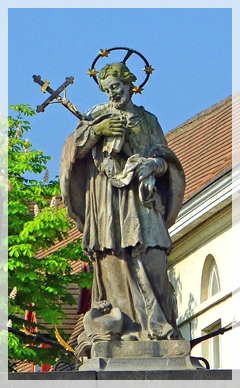 How would we prove we are Christians? If we were Islamic converts to Christianity, seeking asylum in the United Kingdom or several other nations, an assessor would interview us to determine whether or not we actually are believers. Unfortunately, many of those doing the interviewing have no real understanding of Christianity themselves. Worse, as new Christians, we probably won’t know the answers to the sort of questions that are asked while those who are pretending to be Christian might have all the answers memorized. After all, back in Jesus’ time, the Pharisees had all the answers but were sorely lacking in faith. If we failed our interviews, we’d be subject to deportation. For a Christian, especially a Christian convert (an apostate), returning to one’s Islamic homeland could have dire (even fatal) consequences.
 Within a day of having written yesterday’s words about trusting Jesus and following Him, God reminded me how difficult it is to actually do that. Granted, it wasn’t God’s voice we were following but His point was well taken. Mid-way through our 1,400 mile drive north, the GPS cautioned us of one accident after another within a few miles ahead of us. After the first such warning, I studied the map trying to find a detour but couldn’t seem to find a route that wouldn’t lead us right back into the accident area and the promised lane closures. When five accidents lay right in our path, not wanting to spend hours in a traffic jam, we reluctantly decided to let the GPS lead us around the congestion. Following its guidance, my husband exited the interstate while I kept trying to figure out what route we’d be taking. Although the GPS screen always indicated the direction of the next turn, we never knew the long-range plan for returning to the highway. We simply had to trust the GPS and take it one turn at a time. Of course, with my trusty map, I tried to second-guess the GPS the entire way. I just couldn’t cede complete control to that sweet calm voice directing us. Without any help from me, however, that voice got us back on the interstate well north of all of the accidents and congestion.
 Devotions of the Heart