
ON THE BOARDWALK

raccoons
The Lord is my shepherd; I have all that I need. He lets me rest in green meadows; he leads me beside peaceful streams. He renews my strength. He guides me along right paths, bringing honor to his name. [Psalm 23:2-3 (NLT)]

For I have given rest to the weary and joy to the sorrowing. [Jeremiah 31:25 (NLT)]

A weary body and a sorrowful soul described me Saturday morning. Twice in the last twelve days one family member came perilously close to death while another loved one entered Hospice care. Most of last week was spent in airports, on planes, or at a hospital bedside. Having finally gotten home well past midnight, I crawled out of bed that morning physically and mentally exhausted.

Hoping to clear the cobwebs from my mind, I took a walk in a nearby park. The psalms often speak of water refreshing us but, for me, it is a walk outside. As the butterflies danced in the sunshine, my spirits began to lift. Nevertheless, my mind was churning and I was still trying to solve and control situations that I can neither solve nor control.

Hoping to spot a few canna lilies from the boardwalk, I kept looking over the right railing. An inner voice clearly told me that I’d see something special on the other side. “Forget it,” said another voice, “God isn’t a park ranger guiding you on a nature walk. You’re going to feel like an idiot when nothing’s there!” Indeed, I had to agree. God certainly has better things to do than point out flowers in a park. Something, however, kept nudging me so, feeling rather foolish, I crossed to the opposite railing and looked down. There, right below me, invisible from the other side of the boardwalk, was a family of playful raccoons.

For many, that sighting might not mean much but, for me, those raccoons were a gift from God! They renewed me the way green meadows and peaceful streams refreshed David. They made me realize how my life overflows with blessings. Guiding me to those endearing critters was God’s way of saying “Listen to me and trust me. Trust me to guide your loved ones through this valley. Trust me for all the comfort, guidance and provision you and your family need.”

I don’t normally hear a voice that so clearly directs my actions; Saturday I did. Some might dismiss it as intuition but I think that small voice was the Holy Spirit bringing me a message of comfort and hope. The enemy, however, tried to steal that from me with doubt. Fortunately, I took a few steps in faith and God showed me that I can trust Him and take Him at His word.

The situation of those I love has not changed but, after sighting those masked bandits in the woods, my perspective has. If God can guide me to the other side of the boardwalk for an “Aha!” moment, I will trust that, in His own time and way, He will gently guide my loved ones through their dark valleys to the other side.

Even when I walk through the darkest valley, I will not be afraid, for you are close beside me. Your rod and your staff protect and comfort me. You prepare a feast for me in the presence of my enemies. You honor me by anointing my head with oil. My cup overflows with blessings. Surely your goodness and unfailing love will pursue me all the days of my life, and I will live in the house of the Lord forever. [Psalm 23:4-6 (NLT)]

Copyright ©2016 jsjdevotions. All rights reserved.

PARTY ETIQUETTE

No, when you are invited, go and take your seat in an inconspicuous place, so that when your host comes in he may say to you, “Come on, my dear fellow, we have a much better seat than this for you.” That is the way to be important in the eyes of all your fellow-guests! For everyone who makes himself important will become insignificant, while the man who makes himself insignificant will find himself important. [Luke 14:10-11 (PHILLIPS)]

monarch-butterfly-thistleI recently made up the guest list for my mother-in-law’s 100th birthday party. Shortly before the party, I will determine the seating arrangements and decide who gets to sit with the birthday girl and who gets to sit with the various youngsters. Without place cards, everyone will want to sit with the guest of honor and no one will be anxious to sit with the toddlers or near the kitchen.

Back in Jesus’ day, a Pharisee had a dinner party and, unlike me, he didn’t provide place cards for his guests. Jesus watched as the guests jockeyed for the best places—the seats of power and distinction—which were closest to the host. As the men maneuvered around the couches, playing a game of one-upmanship and a grown-up version of musical chairs without the music, Jesus stood back and told a story about a wedding banquet. Illustrating the wisdom of not rushing to grab the best seats, He spoke of the importance of humility and pointed out that honor is not something that is taken but rather something that is given. After hearing that those who exalt themselves will be humbled and those who humble themselves will be exalted, I wonder if any of the guests changed their seats.

After subtly rebuking the Pharisee’s guests, Jesus turned to his host and continued his message about entertaining. Although we simply want to share a happy occasion with those who love my mother-in-law, the Pharisee and his friends had hidden agendas when entertaining. They only extended hospitality to those who could repay the favor, as a way of impressing others or to improve their social status. Jesus pointed out that payback or profit hospitality is meaningless—hospitality is a gift and not an exchange of favors. It has nothing to do with pride, status, or power. He suggested inviting those who could never possibly reciprocate in kind.

Jesus wasn’t giving an etiquette lesson about seating arrangements and party invitations. He was giving us all a lesson in humility, service, kindness, generosity, grace and love—all of which have nothing to do with getting and everything to do with giving. Jesus welcomes everyone into His Kingdom even though none of us deserve an invitation let alone a place seated at His table!

Then, addressing his host, Jesus said, “When you give a luncheon or a dinner party, don’t invite your friends or your brothers or relations or wealthy neighbors, for the chances are they will invite you back, and you will be fully repaid. No, when you give a party, invite the poor, the lame, the crippled and the blind. That way lies real happiness for you. They have no means of repaying you, but you will be repaid when good men are rewarded—at the resurrection.” [Luke 14:12-14 (PHILLIPS)]

Copyright ©2016 jsjdevotions. All rights reserved.

COVETING PRAYERS

Thou shalt not covet thy neighbour’s house, thou shalt not covet thy neighbour’s wife, nor his manservant, nor his maidservant, nor his ox, nor his ass, nor any thing that is thy neighbour’s. [Exodus 20:17 (KJV)]

And he said unto them, Take heed, and beware of covetousness: for a man’s life consisteth not in the abundance of the things which he possesseth. [Luke 12:15 (KJV)]

Let your conversation be without covetousness… [Hebrews 13:5a (KJV)]

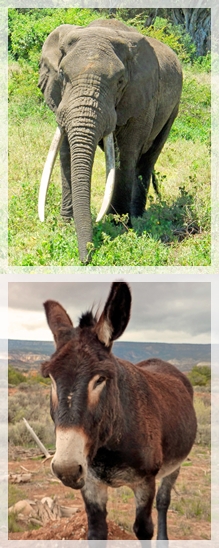
chicory-“We covet your prayers,” said the new pastor. This was the second time in two weeks I’d heard someone say they coveted my prayers and the phrase bothered me. For more than twenty-five years, I recited “Thou shalt not covet” as part of the Communion liturgy, so coveting anything speaks of sin to me. Granted, neither speaker was expressing a desire for my spouse, home or donkey; nevertheless, the phrase touched a nerve. If coveting is a sin, why did these men (both pastors) say they coveted my prayers?
When we covet something, we set our hearts and minds on it. The familiar meaning of covet, the one so clearly prohibited, is of desiring that which is forbidden or belongs to another. Throughout scripture, from Moses to Jesus to the Apostle Paul, we’re clearly warned about this sort of coveting. It can have serious consequences—think Eve and that apple, David and Bathsheba, or Achan and the spoils of battle. Coveting prayers, in this negative context, would use “coveting” as an adjective. We’d be saying prayers about wanting things that weren’t ours to have. Coveting prayers would be greedy, selfish and self-indulgent prayers—a little like Janis Joplin’s song that asks the Lord to buy her a Mercedes Benz, a color TV and a night on the town.

“Covet,” however, has another less commonly used meaning. We can covet and intensely desire something quite legitimate and set our hearts and minds upon it in a good way. “Covet” is used this way in the King James translations of the Bible. The Apostle Paul, while condemning the sinful kind of coveting, urges us to covet (or earnestly crave) spiritual gifts. Coveting prayers, in this sense would use “coveting” as a verb. We’d be longing for others to pray for us (and not so we’d get that Porsche or a holiday in Cabo San Lucas). We’d be urgently asking for their prayers to increase our faith and spiritual gifts.

While coveting or the love of worldly riches may be the root of all evil, not all coveting is evil. We can always covet the prayers of others to increase our spiritual riches. As to using this bit of Christianese myself, I’m not so sure. No matter what the context, for me it’s difficult to remove the negative connotation from the word covet. Although I will pray for our new pastor and his wife, rather than saying I covet your prayers, I will simply ask for them to empower me in my writing.

We have never had a single murmur from our missionaries in regard to salaries, but how earnestly do they covet the prayers and sympathies of our people! [The New England Presbyterian Messenger (1866)]

But covet earnestly the best gifts: and yet shew I unto you a more excellent way. [1 Corinthians 12:31 (KJV)]

Copyright ©2016 jsjdevotions. All rights reserved.

VOTING

But God told Samuel, “Looks aren’t everything. Don’t be impressed with his looks and stature. I’ve already eliminated him. God judges persons differently than humans do. Men and women look at the face; God looks into the heart.” [1 Samuel 16:7 (MSG)]

politics-vert-webIf there ever was a time for wisdom, this election season is it. I’ve watched debates, read articles, researched claims, listened to the pundits, and still haven’t decided. The choice seems to be between bad and worse and whoever is worse seems to change daily.

I came across an article in The Aquila Report that posed an interesting scenario. With apologies to its author John Barber, here’s my version. For a moment, pretend you and your family are stranded in a sinking boat. Along come two rescue vessels. One is captained by an infamous liar and thief while the other is captained by a notorious adulterer and reprobate. Both promise to take you and your family safely to shore. You, however, don’t want to ride in a boat with either sinner and you’re not convinced either one truly knows how to pilot a ship. You’d prefer to wait for an evangelical Christian captain who shares your faith and values.

Many might advise, “Stand your ground; don’t compromise your values. Stick to your guns and stay in the boat!” Others might tell you to get in whichever ship is captained by whoever appears to be the lesser of two evils. This is the situation many of us feel we’re in with the Presidential election fast approaching. We have two candidates claiming they will take us to safety and yet there are few people who want to trust their future to either one. So, do we pick the lesser of two evils, write in a name, or not vote at all?

Let’s go back to that sinking boat and the lesser of two evils option. That’s clearly a no-win situation since no matter which captain we choose, we’ve chosen wrong. Even the lesser of two evils is still evil! In good conscience, can we get in any boat with someone of poor character? Unfortunately, sticking to our principles and staying in the sinking boat is also a no-win solution. Since that hoped for Christian rescue ship isn’t on the horizon, our boat will sink and our family will perish. We’ve failed them by doing nothing to ensure their future. Perhaps our only option is to look carefully at those two scoundrel captains and choose whoever appears to be the better one or will do the least amount of damage while at the helm. The important thing is to save our family and safeguard their future the best we can.

As to which captain or candidate is the better one, I wouldn’t presume to tell you. I will, however, tell you how I’m deciding. I’m consulting with the Captain of my ship—God. He’s given me plenty of guidelines in His word as to the qualities of a good leader and I will prayerfully weigh both candidates against God’s wisdom. While I think God is sorely tempted to throw a few lightning bolts at both politicians, as I mark my ballot, I will be asking myself, “How would Jesus vote?”

For starters, unless Jesus of Nazareth is on the ballot, any election forces us to choose the lesser of evils. … Across every party and platform, all have sinned and fall short of the glory of God. [Russell Moore in “Christianity Today”]

A good leader motivates, doesn’t mislead, doesn’t exploit. God cares about honesty in the workplace; your business is his business. Good leaders abhor wrongdoing of all kinds; sound leadership has a moral foundation. Good leaders cultivate honest speech; they love advisors who tell them the truth. An intemperate leader wreaks havoc in lives; you’re smart to stay clear of someone like that. Good-tempered leaders invigorate lives; they’re like spring rain and sunshine. [Proverbs 16:10-15 (MSG)]

Copyright ©2016 jsjdevotions. All rights reserved.


ASKING FOR WISDOM

The man who knows right from wrong and has good judgment and common sense is happier than the man who is immensely rich! For such wisdom is far more valuable than precious jewels. Nothing else compares with it. Wisdom gives: a long, good life, riches, honor, pleasure, peace. Wisdom is a tree of life to those who eat her fruit; happy is the man who keeps on eating it. [Proverbs 3:13-18 (TLB)]

Knowledge is knowing a tomato is a fruit. Wisdom is not putting it in a fruit salad. [Miles Kington]

barred-owlI know a lot of knowledgeable people, educated and erudite, some of whom may even be MENSA members. I also know several wise people, many of whom are neither learned nor especially well-read. While they might never come close to passing MENSA’s membership requirements, I would much prefer their wise advice to that of someone who is merely book smart or scholarly.
Solomon, when asked by God what he wanted, recognized his own inadequacy and asked God for wisdom. Recently, our pastor asked us what we’d want if God gave us a similar offer. Since we were at Bible study, we knew the right answer and promptly responded “wisdom.” In actuality, however, given the opportunity, wisdom probably wouldn’t be our first response. More often than not, we would request something like riches, health, success or happiness.

When Solomon asked for wisdom, God gave him that along with riches, fame, and a long life. While there were no caveats with the first three gifts, there was with the fourth—to get that long life, Solomon had to remain obedient to the Lord. As Solomon’s actions proved, all the wisdom in the world is meaningless unless one uses it. Unfortunately, through the years, the wise king started to depend on his own knowledge rather than God’s wisdom; as a result, he never got those extra years God had promised.

Fortunately, if we want wisdom, we don’t have to wait for God to make us an offer like Solomon’s. He’s already given it to us. The Apostle James assures us that, if we need wisdom, all we need to do is ask and God will generously give it to us! Just as there was for Solomon, however, there is a condition to this offer. When we ask God for wisdom, we must believe in Him and trust that His way is best. We’d better be planning on being obedient to His direction and committed to what He says. His wisdom is not to be weighed as we might the advice of a friend or consultant nor is it to be considered in light of our personal preferences. When we ask, we must believe that God will answer and be willing to accept His answer unconditionally. Although Solomon’s wisdom came with riches and fame, we shouldn’t expect to get such an extravagant bonus with God’s gift of wisdom to us. Then again, maybe we will. After all, regardless of the amount, a truly wise man is more than satisfied with all the riches, fame and years with which he is blessed.

Wisdom is the right use of knowledge. To know is not to be wise. Many men know a great deal, and are all the greater fools for it. There is no fool so great a fool as a knowing fool. But to know how to use knowledge is to have wisdom. [Charles Spurgeon]

And if, in the process, any of you does not know how to meet any particular problem he has only to ask God—who gives generously to all men without making them feel foolish or guilty—and he may be quite sure that the necessary wisdom will be given him. But he must ask in sincere faith without secret doubts as to whether he really wants God’s help or not. The man who trusts God, but with inward reservations, is like a wave of the sea, carried forward by the wind one moment and driven back the next. That sort of man cannot hope to receive anything from God, and the life of a man of divided loyalty will reveal instability at every turn. [James 1:5-8 (MSG)]

Copyright ©2016 jsjdevotions. All rights reserved.


FAMILIARITY

What you must solemnly realize is that every time you eat this bread and every time you drink this cup, you reenact in your words and actions the death of the Master. You will be drawn back to this meal again and again until the Master returns. You must never let familiarity breed contempt. [1 Corinthians 11:25-26 (MSG)]

dandelionsI admit to having left some church services feeling like I just “mailed it in” and that’s not the way to worship our wonderful glorious God. It’s been said that familiarity breeds contempt. In the case of familiar gospels, epistles, songs and liturgy, while familiarity may not breed contempt it may breed boredom. We’ve listened to the Benediction, Consecration or Absolution so often that we don’t even hear them and we’ve said the Lord’s Prayer, recited the Apostle’s Creed, or sung certain hymns so many times that the words exit our mouths without needing to pass through our hearts or minds.

When I studied theater, my instructors spoke about the “illusion of the first time.” Although the lines had been memorized, rehearsed and performed countless times, the audience was to feel that the actors were saying and hearing those words for the very first time. I’ve watched a young man at our mountain church who always sits in the front row. New to Christ, he worships with fervor and joy. Of course, it really may be the first time he’s heard that verse or sung that song. For those of us who may have heard, said and sung the same words thousands of times, sometimes it’s harder to stir up that sort of passion in our church experience. Perhaps we need to think about recreating that “illusion of the first time” during services so that our worship is as passionate today as it was when we first knew our Lord.

Knowing we have little choice over the service itself, how do we reignite the passion in our worship? Just like good acting, it takes a fair amount of effort and begins with our mindset before the show begins. Instead of getting into the inner workings of our character, we need to set our hearts and minds on God before the service starts. Most of us, upon settling into our seats, probably peruse the program, visit with our neighbors, or check out the attire and hairdos of our fellow worshipers. Although I was taught to pray as soon as I sat down, I often don’t (nor do the people around me). But, when I start with a prayer of thanksgiving for the opportunity to be at church and then ask God to clear my mind of the day’s concerns and open me to His presence, my worship is more enthusiastic and meaningful. Instead of chatting or checking our email before service, perhaps we should prepare the way of the Lord with prayer and by reading the words of the day’s hymns, part of the day’s liturgy, or a few Psalms from the Bible.

The audience is cheated when an actor just walks through his role and God is cheated when we wearily listen to or repeat words rather than putting our heart into His worship. Every time we worship Him, He should experience the “illusion of the first time.” To do that, we must listen, speak and sing with such passion, excitement and joy that it seems as if it is the first time we’ve ever heard, said or sung those words! The more we give Him, the more we’ll get from our worship!

Thunder in the desert! Prepare for God’s arrival! Make the road straight and smooth, a highway fit for our God. [Isaiah 40:3 (MSG)]

It’s who you are and the way you live that count before God. Your worship must engage your spirit in the pursuit of truth. That’s the kind of people the Father is out looking for: those who are simply and honestly themselves before him in their worship. God is sheer being itself—Spirit. Those who worship him must do it out of their very being, their spirits, their true selves, in adoration. [John 4:23-24 (MSG)]

Copyright ©2016 jsjdevotions. All rights reserved.