
Be assured that I will send my blessing for you in the sixth year, so the land will produce a crop large enough for three years. When you plant your fields in the eighth year, you will still be eating from the large crop of the sixth year. In fact, you will still be eating from that large crop when the new crop is harvested in the ninth year. [Leviticus 25:21-22 (NLT)]
 As earth’s first gardener, God knew a thing or two about agriculture. Recognizing that continually working a field depletes the soil of valuable nutrients, He commanded the Israelites to let their land remain fallow every seven years. During this yearlong land Sabbath, no produce was to be planted, pruned or harvested and any food that grew by itself, such as grapes or figs, could not be harvested, sold or stored. God promised to grant an abundant crop in the sixth year so there would be plenty of food to carry the people through the Sabbath year and well into the next years until a new crop was harvested. Considered ownerless, the produce that grew by itself could be eaten by anyone or fed to the animals. The Sabbath year was a test of faith; it required the Israelites to acknowledge God as the true master of the land, to trust Him for His provision, and to share with those less fortunate.
You’d think people would be thrilled to take a year off from tilling the soil, planting crops, and pulling weeds. That seventh year was a gift—a year when farmers could take it easy—a year for travel, family, service, study, rest and worship. Unfortunately, in the eight hundred plus years between their exodus from Egypt and their captivity in Babylon, the Israelites failed to observe the land Sabbath seventy times.
What a sad state of affairs, when given a whole year’s rest, the people weren’t willing to enjoy it, but I’m not sure we’re much different from those ancient Israelites. We Americans can’t even rest one day a year without conducting business. Although not established by God, Thanksgiving Day (minus the football games and parade) is much like the original idea of the Sabbath day—a day of praise, thanksgiving, family, food, friends, fellowship, and rest. When I was a girl, all the stores were closed and everyone waited until Friday morning before even thinking about Christmas. As happened with the Israelites, however, fear and greed stepped in. Businesses began to worry that they’d never make a decent profit without having one more day of sales and consumers fretted about the number of shopping days remaining until December 25th. Many retail stores were open yesterday and I’m sure Amazon and other e-commerce sites made record sales. Our businesses are not much different from Judah’s farmers. Once a few of them ignored the Sabbath year, they all did and, eventually, no one even remembered the way it once had been. Once one store decided to open its doors on Thanksgiving, the retail flood gates opened. Yesterday, I even received emails from two Christian websites urging me to shop their great Thanksgiving deals! Although fifty national retailers opted to close their doors yesterday, the others seemed to double-down by opening their doors earlier and staying open later. I wonder if anyone will remember the quiet restful way Thanksgiving once was celebrated.
During those 490 years they failed to observe the land Sabbath, the Israelites drifted away from God and started worshipping pagan gods. Seventy years as captives in Babylon was the result of their disobedience. Unfortunately, it’s as easy to drift away from God and let fear and greed enter into our lives as it was for them. Yesterday, as one family member rushed away from the holiday table to return to her retail job (and others sped off to start their shopping), I realized we’ve become captives as well. We’re not slaves to our conquerors but we have become slaves to busy schedules, business competition, money, and the desire to acquire things (especially if they’re on sale). With His detailed instructions for observing both the Sabbath Day and Sabbath year, God did not intend us to live anxious lives where enough is never enough—never enough time, money, possessions, or shopping days. Ours is a more-than-enough God—a God of both abundance and rest.
Sunday is the first day in Advent—a season of preparation for the coming of Christ. As we prepare to celebrate His first coming and look forward to His return, let’s remember that God ordained both work and rest for His children. During this season of waiting, let’s take some time to rest and reflect on God’s amazing and abundant provision in our lives.
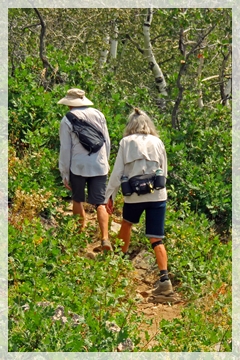 While visiting family in California, I joined my daughter-in-law and her walking group on their morning hike. The leader advised us that it was about a six mile walk—what she didn’t mention was it was all uphill for the first three plus miles. Although we started off together, the group quickly fragmented. The leader and some exceptionally fit and fast walkers were in the lead. I was in the middle group; unfamiliar with the area, I was not about to lose sight of our leader and risk getting lost. Behind us was another group and, bringing up the rear, were three stragglers who abandoned us within the first twenty minutes. After an hour of walking uphill, we finally reached level ground and heaved sighs of relief. The dozen remaining walkers stopped briefly while our leader explained the rest of the course—about a mile more of climbing before starting the descent back to the parking lot. At that point, mutiny occurred and more than half the group decided to take an easier and mostly downhill route back. Used to the flatlands of southwest Florida, I was happy to join my daughter-in-law in her desertion.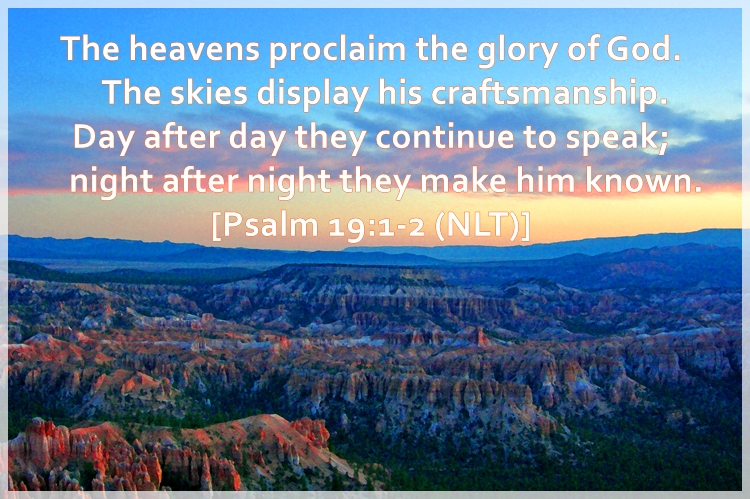
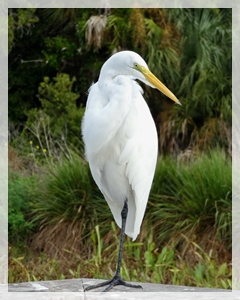 If I told you that 88% of Americans own four or five of these, you’d probably think of televisions until I told you that less than a fifth of Americans actually use them regularly. It’s the Bible—almost all of us have more than one and yet few of us ever open it more than a few times a year.
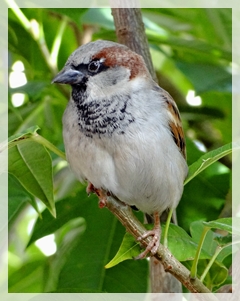 I recently walked by a home that has a large sign at its front door: “Smile, you’re on camera!” We’ve got baby monitors and nanny cams and can see who is at the door with a glance at our cell phones! Cameras are disguised as working clocks, lightbulbs, phone chargers and smoke detectors. No moment is private if a cell phone is nearby and our most embarrassing moments may find their way onto Facebook or YouTube. Police have body cams, cyclists have Go-Pros, drivers have dash cams, drones can watch us sunbathing in the yard, and schools embed RFID chips in student ID badges. We’re even monitored while in department store dressing rooms (an unsettling thought when trying on bathing suits!) Two years ago, hidden cameras were found in a beach house that was rented out to unsuspecting vacationers. Cameras are everywhere and no place is private; this whole surveillance thing is rather disquieting.
 In our part of Florida, yellow lights tend to mean “speed up” and red lights are just mere suggestions so no one really expects anyone to stop at a yellow. Although the light had just turned yellow, the elderly gentleman stopped his car. “The #@!% idiot should have sped through the intersection!” said the women following him. Having been tailgating his car, she was furious at having to brake so abruptly. Already late, now she’d be even later. Moreover, the unexpected stop caused her to spill her coffee and drop both her cell phone and makeup. Angry, she laid on the horn, called him a few more choice expletives, shook her fists and even gave him the middle-finger salute! She was in mid-rant when she looked up to see a police officer at her window. He politely ordered her to exit the car. Having forgotten her driver’s license in another purse, she was transported to the police station, fingerprinted, photographed, and finally placed in a holding cell.
 Devotions of the Heart