
And we are confident that he hears us whenever we ask for anything that pleases him. And since we know he hears us when we make our requests, we also know that he will give us what we ask for. [1 John 5:14-15 (NLT)]
 When asked about her boys, a friend used to answer, “They’re doing their own thing.” Years later, I learned “their own thing” meant they were breaking her mama’s heart with their addictions and run-ins with the law. Because she kept her pain concealed, she carried the weight of that burden alone for many years. We often hear similar answers when we ask someone how they’re doing— brusque responses like, “I’m fine,” “It’s taken care of,” or “We don’t need a thing.” Maybe everything really is hunky dory but those answers are often used when life has gone seriously awry and things are anything but fine. Those vague but terse responses are conversation stoppers. Even best friends, who suspect something is amiss, won’t pry and the subject is politely changed.
We wrap ourselves up in a nice package on the outside when inside we’re a mess. We allow people into the vestibule of our lives but won’t let them in to see the messy kitchen or dirty floor. We refuse to expose our vulnerabilities and then we wonder where our friends are when we need them. No one knows we need them if we refuse to allow them into our lives. The same goes for God. “Where are you God?” we complain without being willing to admit life’s a mess and we need Him.
Think of the paralyzed man whose friends took him to see Jesus in Capernaum. What if he’d told his friends he was just fine and didn’t need a thing? While his friends went off to see Jesus, he would have remained paralyzed at home and there would be one less miraculous healing. What if the blind man in Bethsaida or the centurion’s servant had said they were fine? Scratch two more healings!
As for Job’s friends—he could have rebuffed them at the door, telling them, “I’m fine; this is just a little setback.” Instead, he allowed them inside to see his scabs, sores and misery. Even with his friends’ erroneous theology, Job must have found comfort when they remained at his side. Perhaps their discussions even strengthened his faith in God.
We tell people we’re okay when we’re not and we often tell God the same thing. We’re so used to replying, “I’m fine,” when a stranger says, “How are you?” that we forget our friends and God actually care about the answer. Most of the time, when people inquire about our lives or ask how they can help, they sincerely want to know. If they’re not really interested, their response to our answer likely will be, “Sorry, I’m busy!” Even though God knows everything about us and all that we need, He tells us to ask Him. He knows we’re not fine, but do we? Fortunately, with God, we can be confident that He’ll never tell us He’s too busy!
Refusing to ask for help when you need it is refusing someone the chance to be helpful. [Ric Ocasek]
You haven’t done this before. Ask, using my name, and you will receive, and you will have abundant joy. [John 16:24 (NLT)]
Keep on asking, and you will receive what you ask for. Keep on seeking, and you will find. Keep on knocking, and the door will be opened to you. For everyone who asks, receives. Everyone who seeks, finds. And to everyone who knocks, the door will be opened. [Matthew 7:7-8 (NLT)]
Copyright ©2017 jsjdevotions. All rights reserved
 Most of us think of sloth as laziness: a dislike of work or any physical exertion. Having watched the local zoo’s sloth in action (or, rather, inaction), I think the sluggish animal is appropriately named. Spiritual sloth, however, is far different than being a couch potato. Originally, the sin of sloth was two sins: sadness and acedia. Compiled by Evagrius of Ponticus, a 4th century monk, these two “capitals sins” were part of a list of eight he believed to the greatest threats to devout monasticism.
 The store was called “Ms. Bossy Boots” and the sign in the window said, “I’m not bossy, I’m just helpful.” Having just had an encounter with a precocious youngster who’d been wearing some very bossy boots, I laughed. After advising me that I needed to put televisions in all my bedrooms, she informed me we couldn’t sell our house because she didn’t want new neighbors! She announced her disapproval of the appetizers, questioned the dinner menu, told me jam should be served with the bread, and criticized the vegetables. Following dinner, I was advised that any remaining cookies should be packed up for her. In a younger child, her behavior might have been slightly excusable. At her age, however, it was demanding and ill-mannered. Over-indulged by her mother and grandparents, she has not learned that it is the meek who will inherit the earth.
 There are always going to be poor and needy people among you. So I command you: Always be generous, open purse and hands, give to your neighbors in trouble, your poor and hurting neighbors. [Deuteronomy 15:11 (MSG)]
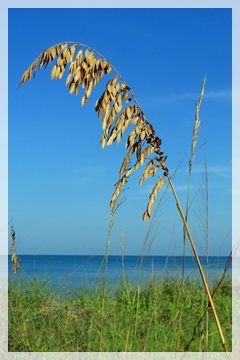 It’s not just light poles that were destroyed by Hurricane Irma’s winds; many trees also met their end at her hands. As I looked at the upended roots of a once mighty oak, I thought of one of Aesop’s fables about an oak in a storm. A proud oak stood by a stream, and like this one, had survived several storms in its many years. One day, a hurricane the likes of Irma arrived and the great oak fell with a thunderous crash. As the water rose, it was carried down to the sea. When the oak eventually came to rest along the shore, it looked up at the sea oats that were waving in the now gentle sea breeze, “How did you manage to weather such a terrible storm?” it asked. “I’m a great oak and even I didn’t have strength enough to battle the wind.”
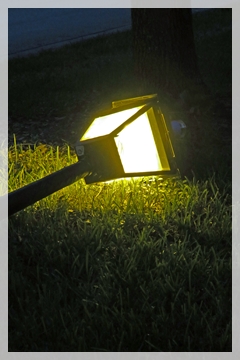 To avoid the southwest Florida heat, I waited until dusk to take my walk. Thanks to Hurricane Irma, most of the street lamps in my neighborhood don’t work. For a light to function, electrical energy has to be converted into light energy and both a source of electricity and a working connection are needed. For many of the lights, the connection was broken when blowing debris shattered their bulbs. For others, Irma’s 150 mph winds broke the connection when it blew off their tops, wrapped their poles around trees, or knocked them to the ground. Without a connection to their source of power, those street lights are useless—they’re just a tangle of wires and a pile of glass, plastic and metal. Even though they don’t work, people have been cautioned to remember that their exposed wires are live. It’s not the electricity that is missing; it’s the connection that is inoperative. Two poles, however, were down but not out. Even though they’d been flattened by the storm, neither wires nor bulb had broken. In spite of the storm’s violence, they remained connected and were beacons in the night’s darkness.
 Devotions of the Heart