
I will bring that group through the fire and make them pure. I will refine them like silver and purify them like gold. They will call on my name, and I will answer them. I will say, “These are my people,” and they will say, “The Lord is our God.” [Zechariah 13:9 (NLT)]
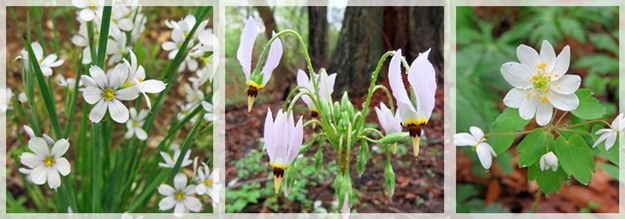
The darkned soil, scorched bark, blackened remains of dead trees, and faint aroma of smoke indicated a prescribed burn occurred earlier this spring. But, even without those tell-tell signs, the abundance and diversity of wildflowers blanketing the forest floor told me there’d been one. Fire used to be a natural occurrence in our woodlands, prairies, and wetlands. Nowadays, we suppress natural fires, and invasive plants crowd out native flowers and grasses. Planned and controlled, these prescribed fires defeat non-native plants, stimulate the growth of native ones, restore valuable nutrients to the soil and, by eliminating leaf litter and dead wood, reduce the chance of uncontrollable wildfires. When brush and small trees are checked by the fire, flowers and grasses get enough sunlight to grow and the native plants regrow from their roots. Unlike invasive species, native plants have deep tap-roots and thick bark that enable them to survive the controlled burn’s heat.
When something similar to a controlled burn happens to us, the Bible often refers to it as refining and likens this purifying process to separating out precious metals from ore, such as silver from lead. After the ore is melted over a hot fire, hot air is blown across the surface which changes the lead to powdered lead oxide. When this dross is blown away, pure silver remains. Being more a naturalist than metallurgist, I prefer the analogy of a prescribed burn to smelting metal.
While necessary for a healthy habitat and biodiversity, I’m not sure the plants and animals appreciate the fire when it happens. I know I don’t appreciate it when God refines me. Rather than impurities like lead or invasive weeds, He wants to eradicate offensive behavior, false ideas, and bad attitudes. When weeds like jealousy, self-reliance, self-centeredness, pride, covetousness, selfishness, materialism, intolerance, or impatience invade my heart, God has a way of refining me. Rather than fire, He allows things like challenges, trials, opposition, disappointment, loss, and even illness to eliminate my invasive unwelcome weeds.
Like the native plants in the forest, I have deep roots. Not only will I will survive the trials of a burn, but I also will thrive and (like both purified silver and the renewed forest) be all the better for the experience. I can reach up to the Son’s light and blossom with the flowers of God-dependence, hope, humility, thankfulness, love, joy, peace, patience, tolerance, generosity, compassion, self-sacrifice, goodness, faith, gentleness and self-discipline.
Trials are medicines which our gracious and wise Physician prescribes because we need them; and he proportions the frequency and weight of them to what the case requires. Let us trust his skill and thank him for his prescription. [Sir Isaac Newton]
 At my age, I’ve attended a fair share of funerals and they’ve run the gamut from full-blown productions complete with video presentations and choirs to a few mourners on a windy ski slope with a bag of ashes. Some ministers knew the deceased well and others couldn’t even pronounce the name correctly. There have been inspiring prayers and eulogies and some with no prayer at all. They’ve taken place in jam-packed churches and nearly empty mortuary chapels. Solomon was correct; there is a lot we can learn at funerals.
 My mother disliked having her picture taken. She didn’t think of herself as attractive and she probably wasn’t pretty in the conventional way. Yet, even with a face covered by freckles, unruly hair, an overbite combined with a toothy smile, thick glasses and a hearing aid, she was the most beautiful woman I’ve known.
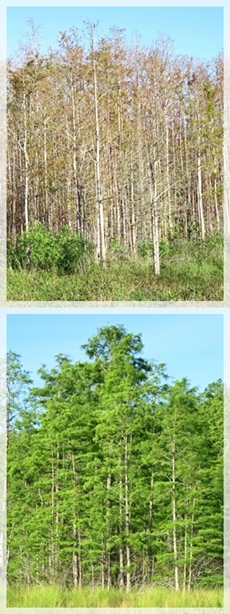 Earlier this year, upon seeing the browning and nearly naked cypress trees at the bird sanctuary, the visitor asked if Hurricane Irma had killed them. I explained that the bald and pond cypress weren’t dead, just dormant. Being deciduous, they shed their leaves annually and were just enjoying a much needed rest during the shorter days and dryer conditions of winter. I reassured her that, in a month or so, their bright green needles would return and new growth would sprout from their branches. Today, the forest is verdant throughout the swamp.
 Devotions of the Heart