
Look at the birds. They don’t plant or harvest or store food in barns, for your heavenly Father feeds them. And aren’t you far more valuable to him than they are? Can all your worries add a single moment to your life? And why worry about your clothing? Look at the lilies of the field and how they grow. They don’t work or make their clothing, yet Solomon in all his glory was not dressed as beautifully as they are. And if God cares so wonderfully for wildflowers that are here today and thrown into the fire tomorrow, he will certainly care for you. Why do you have so little faith? [Matthew 6:26-30 (NLT)]
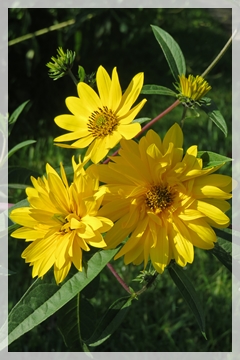
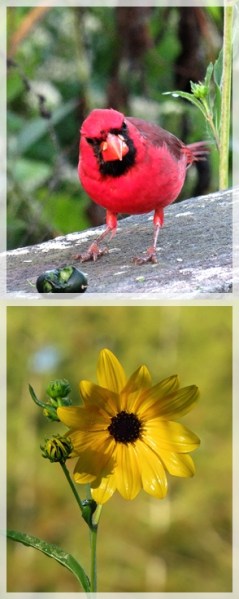 I’ve never seen a field of lilies in blossom but they couldn’t be any more beautiful than the field of narrow-leaved sunflowers that surrounded me at the bird sanctuary recently. Standing in wonder as their yellow faces smiled down on me, I was reminded of Jesus’s words about the lilies of the field. When I came upon a cardinal pecking away at a large ripe berry, I remembered His words regarding the birds. While watching the bird enjoy his breakfast, the story of Elijah and the ravens that fed him came to mind and I thought about God’s promise to provide.
Having more than enough clothes in my closet and a pantry full of food, I’m not worried about food or clothing. I do, however, tend to worry about God’s provision of words for these devotions. Trust in Him doesn’t come automatically—it is a learned response. Nevertheless, even though God has provided me with fodder for over 1,600 devotions, I’m a slow learner and I still have trouble trusting Him to continue with His provision.
Throughout Scripture, God promises over and over again to provide and, over and over again, people don’t trust Him. Consider the Israelites; after being told there would be manna enough every day, they tried to save it. Even though stored manna turned rotten and maggoty, I would venture a guess that some people continued trying to save it. If I’d been there, I probably would have tried different types of containers, hoping that I’d eventually find the right way to preserve manna (just in case God missed a day)! Later, when God promised to provide the power and strength to take Canaan, the Israelites didn’t believe that God’s provision would be enough and refused to enter. I’m afraid I wouldn’t have trusted God’s promise any more than did the rest of them.
You’re probably not worried about words and maybe not even food or clothing. Even so, we’re all worried about whether God will provide enough of something we need, be it money, health, time, comfort, friends, faith, strength, wisdom, peace or patience. Remember, God promises to provide for the birds and flowers and they’re not even made in His image! Jesus didn’t die on the cross for them and the Holy Spirit doesn’t dwell within them, yet God provides for them! God loves us—we’re created in His image, redeemed by His son, and given eternal life by Him. As His beloved children, we ought to trust Him enough to provide our necessities! When God brings us someplace, as He did with the Israelites and Elijah, He’ll provide us with a way to meet our needs, be it manna on the ground, ravens bringing us food, or wildflowers swaying in the breeze.
God looks at the anxious and says, I tore my Son to shreds for you, and you’re afraid I will not give you what you need? [Timothy Keller]
 Wow! Now there’s a troubling verse. God creates evil? Since evil is anything that contradicts God’s holy nature, it’s hard to understand how that could happen. Even other translations like the NLT’s, “I send good times and bad times,” the ESV’s, “I make well-being and create calamity,” and the NIV’s, “I bring prosperity and create disaster,” don’t make this verse sound much better. How do we reconcile a God who is good, a God who is love, with a God who says he creates evil?
 And after the earthquake there was a fire, but the Lord was not in the fire. And after the fire there was the sound of a gentle whisper. [1 Kings 19: 12 (NLT)]
 For most of us, the meat we purchase arrives at the grocery store prepackaged. We’re not used to seeing animals slaughtered, skinned or butchered and, unless we’re phlebotomists, rarely see large amounts of blood. As a result, much of Leviticus makes for rather gory reading since the temple, a place of worship, also served as a ritual slaughterhouse. Perhaps it’s my vegetarian sensibilities but, when the Bible refers to the pleasing aroma of sacrifice, I wince when thinking of the stench of dried blood and burnt meat.
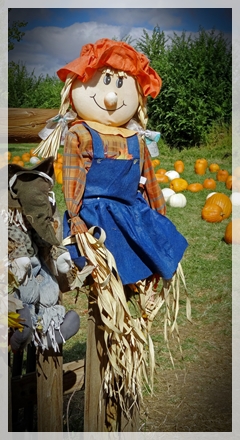 Last week was “Fall Prevention Week” but it wasn’t about keeping summer’s flowers blooming or preventing Jack Frost from coloring the maple trees. Although accidents can happen, most falls are preventable and last week was dedicated to preventing those falls. Apparently, because my age puts me in the group most at risk of falling, my son sent me an article identifying the best ways to prevent falls. Instead of clearing walkways or installing non-slip tape and a grab bar in the tub, I ended up thinking about ways to prevent another kind of fall—the one into sin. In reality, I’m far more likely to fall that way than to stumble over my entry rug.
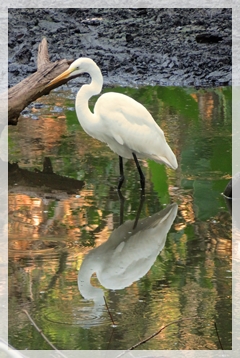 From the viewing platform at the marsh, I watched a Cooper’s hawk soar high in the sky. When I turned to leave, I looked down and saw several white egret feathers on the ground below. Whether it was the hawk, a raccoon, or some other predator, the park had one less egret in the pond. Those beautiful white feathers were a stark reminder of how precarious life is, not just for wild birds, but for us all. I was reminded of Ecclesiastes: “For people and animals share the same fate—both breathe and both must die.” [3:19]
 Devotions of the Heart