
The Lord says, “I will guide you along the best pathway for your life. I will advise you and watch over you. [Psalm 32:8 (NLT)]
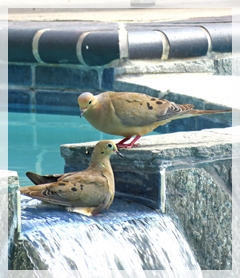 I’m not a good sitter and I’m even worse at soaking in a tub. Just wanting to get clean and get on with my day, I’m a shower person. Friends insist that sitting in the tub and reading is the best way to relax but that doesn’t work for me. I don’t have the patience to wait for the water to get high enough for a good soak or for the spa jets to work, I’ve never figured out how to turn pages without getting them wet and, rather than relaxing, I think about all the things I could and should be doing instead of sitting in hot water. I considered my inability to enjoy a bath when our pastor suggested that we bathe our decisions in prayer. Unfortunately, the same impatience that keeps me from enjoying my over-sized bath tub keeps me from bathing my decisions in prayer.
While most of us don’t neglect washing our bodies, whether in shower or tub, we tend to neglect bathing our decisions in prayer. Impatient, we tend to act before consulting God about our choices. Easy decisions may need only a quick shower of prayer and more significant ones might require a short soak. The critical ones, however, demand a long soak and should get thoroughly immersed. Bathing our decisions in prayer allows God to saturate our hearts and minds with His word and will. It also means waiting for His answer before getting out of the tub!
When we sit in the bathtub too long, the bath bubbles eventually dissolve, our skin wrinkles like that of a prune, the water gets cold, and someone is sure to complain about our monopolizing the bathroom. The only time a decision is bathed in prayer too long is when God has clearly given us an answer and we use continued prayer as an excuse to avoid His direction or to convince Him our plan is better than His!
James assures us that, if we need wisdom, all we need to do is ask; we do that by bathing our decisions in prayer. Our prayers, however, must be offered in faith and with a readiness to do as God directs. While some of us may not enjoy soaking in the bath tub, we can all benefit from immersing our decisions in prayer.
Goals not bathed in prayer or brought in humility before the Lord turn out to be downright useless. They don’t go anywhere. They don’t accomplish anything. [Charles R. Swindoll]
 When asked about her boys, a friend used to answer, “They’re doing their own thing.” Years later, I learned “their own thing” meant they were breaking her mama’s heart with their addictions and run-ins with the law. Because she kept her pain concealed, she carried the weight of that burden alone for many years. We often hear similar answers when we ask someone how they’re doing— brusque responses like, “I’m fine,” “It’s taken care of,” or “We don’t need a thing.” Maybe everything really is hunky dory but those answers are often used when life has gone seriously awry and things are anything but fine. Those vague but terse responses are conversation stoppers. Even best friends, who suspect something is amiss, won’t pry and the subject is politely changed.
 Most of us think of sloth as laziness: a dislike of work or any physical exertion. Having watched the local zoo’s sloth in action (or, rather, inaction), I think the sluggish animal is appropriately named. Spiritual sloth, however, is far different than being a couch potato. Originally, the sin of sloth was two sins: sadness and acedia. Compiled by Evagrius of Ponticus, a 4th century monk, these two “capitals sins” were part of a list of eight he believed to the greatest threats to devout monasticism.
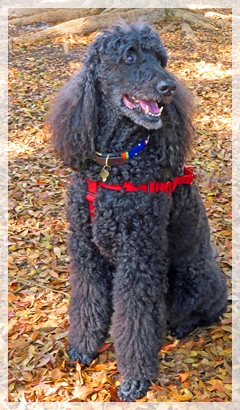 The store was called “Ms. Bossy Boots” and the sign in the window said, “I’m not bossy, I’m just helpful.” Having just had an encounter with a precocious youngster who’d been wearing some very bossy boots, I laughed. After advising me that I needed to put televisions in all my bedrooms, she informed me we couldn’t sell our house because she didn’t want new neighbors! She announced her disapproval of the appetizers, questioned the dinner menu, told me jam should be served with the bread, and criticized the vegetables. Following dinner, I was advised that any remaining cookies should be packed up for her. In a younger child, her behavior might have been slightly excusable. At her age, however, it was demanding and ill-mannered. Over-indulged by her mother and grandparents, she has not learned that it is the meek who will inherit the earth.
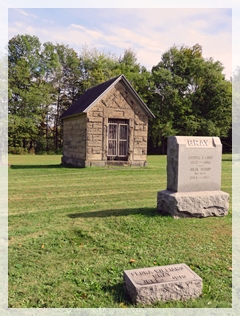 When touring a nearby resort town, a beautiful old mansion was pointed out. It was once owned by a man who made so much money on his invention of the sanitary milk bottle cap that he retired at the age of 26. For 93 years, the Chicago White Sox played at a ball field named for the team’s founder. In 2003, the field was renamed US Cellular Park and then, in 2016, it became the Guaranteed Rate Field. When I went to Northwestern University, the football venue was named for a former Evanston mayor. In 1997, the stadium was renamed to honor the family of a generous donor to the school’s athletic facilities. A friend’s daughter is attending a school named for a German immigrant who opened a Chicago butcher shop in 1883. Who were these men?
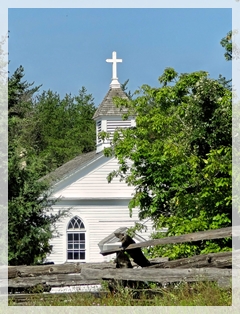 Yesterday I mentioned getting an email with the subject, “How firm is your foundation?” Although it was an advertisement for a new study Bible connecting Biblical teachings to Christian beliefs, that very question has been the topic of discussion in our northern church for the last few weeks. The parish is doing a church-wide study of Martin Luther’s Small Catechism. Back in the 1500s, Martin Luther was appalled at the lack of knowledge of both pastors and their congregations. Not especially tactful, he accused some pastors of being “lazy bellies and presumptuous saints!” His words for their congregations, “simple cattle and mindless pigs!” were no more diplomatic. People who called themselves Christians had no idea what that meant. They didn’t know the Ten Commandments, the Apostle’s Creed or even the Lord’s Prayer, let alone anything else in the Bible. Last week, our Pastor asked us what Luther might say if he visited today’s churches. We agreed that his words for our pastors would be more complimentary but that his words for their congregations might be the same or worse!
 Devotions of the Heart