WE PRAISE HIM

Praise the Lord! How good to sing praises to our God! How delightful and fitting! … Glorify the Lord, O Jerusalem! Praise your God, O Zion! [Psalm 147:1,12 (NLT)

Praise God, from Whom all blessings flow;
Praise Him, all creatures here below;
Praise Him above, ye heav’nly host;
Praise Father, Son, and Holy Ghost. [Thomas Ken]
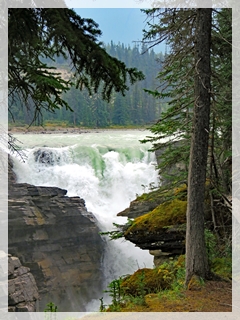
Athabasca Falls CanadaFortunately, the words to Vivaldi’s “Laudamus te” from his Gloria were shown on the screen in the front of the auditorium: “We praise you. We bless you. We adore you. We glorify you.” The soprano’s exquisite voice did that beautifully. When she was finished, I thought back to last summer when hiking in the Canadian Rockies. While gazing at the breathtaking scenery, I turned to my husband and said, “I’m singing at the top of my lungs—you just can’t hear me!” While relishing the splendor of a glacial lake and waterfall, I was silently singing the Doxology for a private audience and the One for whom I sang heard me loud and clear. Had I sung that song of praise aloud, however, it wouldn’t have sounded anywhere as pleasant as that soprano’s clear voice. Nevertheless, I think God enjoyed my song just as much.

After the concert, I wondered if we praise, bless, adore and glorify God anywhere near as much as we should. Every action we take, every thought we think, and every word we say should do those very things but, at least for me, that is not the case. Praising God is joyfully detailing all that God has done. As I did in the mountains, we often offer praise when we are overwhelmed by His magnificent creation but often forget Him in the little routine gifts of everyday life. Yet, I wonder, how can we possibly bless God? Whenever He’s blessed us, our lives have been enriched—we’ve been helped, healed, gifted or made stronger or wiser. How can we bless God when there’s nothing we can do for or give to Him that could make Him any better than He already is? When we bless God, however, we’re proclaiming our gratitude, appreciation and admiration for His blessings. To adore God is to love and worship Him and to glorify Him is to acknowledge His greatness. After all, it is He alone who deserves to be honored and worshipped; it is all His creation and anything we have achieved is only through His power. In all of these actions, we joyfully make an offering of self and surrender to God’s will.

Let’s not wait until we view majestic mountain scenery or a stellar sunset, hear Vivaldi’s Gloria or Handel’s Messiah, or even sing the Doxology to acknowledge God’s power and glory and take joy in His limitless grace. God’s fingerprints are as visible in our everyday chores as they are in a beautiful waterfall and our every thought, word and deed should be a prayerful song that praises, blesses, adores and glorifies His holy name.

God is most glorified in us when we are most satisfied in Him. [John Piper]

I will praise the Lord, and may everyone on earth bless his holy name forever and ever. [Psalm 145:21 (NLT)]

Shout with joy to the Lord, all the earth! Worship the Lord with gladness. Come before him, singing with joy. [Psalm 100:1 (NLT)]

Copyright ©2017 jsjdevotions. All rights reserved.

PSALM 88

O Lord, God of my salvation, I cry out to you by day. I come to you at night. Now hear my prayer; listen to my cry. For my life is full of troubles, and death draws near. [Psalm 88:1-3 (NLT)]

zebra swallowtailI woke to yet another cold dreary winter day. Troubled by a variety of concerns and hoping to improve my glum mood, I turned to Psalms. Unfortunately, I made a bad choice in Psalm 88. Written by Heman the Ezrahite, I saw that originally it was to be sung to the tune “The Suffering of Affliction” (which should have been my clue to read no further).
During David’s time, Heman was one of three chief Levites appointed to conduct music in the tabernacle (the equivalent of today’s worship leader). Perhaps he wrote this psalm to console David in his sorrow after the loss of his son but there seems to be nothing consoling about it. The speaker’s life is full of troubles; he considers himself a lost cause and as good as dead. Repulsive and depressed, he’s been forgotten by his friends, feels God’s anger, and asks God why he’s been rejected. Typically, psalms of lament eventually turn from despair to hope and from misery to confidence but there’s not even a glimmer of hope in this one! “Darkness is my closest friend,” are the psalmist’s final words. Although the RSV Bible subtitles the psalm a “Prayer for Help in Despondency,” a far better title would be “Job’s Lament!”

Later that morning, we attended worship at our northern church. The service, an Advent tradition there, was a celebration of the beautiful music of the Christmas season. As I listened to the words of the carols, my spirits lifted. Unlike Heman, this was a worship leader who knew what songs would help the despondent.

With my improved outlook, I thought back to that mournful psalm and realized that, as miserable and depressed as the psalmist was, he hadn’t given up on God. His words were honest—he was wretched and desolate—and yet he knew God heard his complaint. Even though he felt abandoned, he continued to pray which means he knew he hadn’t been forsaken. In fact, knowing his words were not falling on deaf ears, he vowed to continue his prayers. He knew that tears and prayers go together—that his troubles were a reason to talk with God rather than a reason to stop praying

It was the words of John 3:16 that made me finally understand that the sorrowful psalm and the joyful carols were telling me the same thing. No matter how wretched we feel, no matter how distressing our situation, no matter how severe our suffering, we are loved. Unfortunately, faith is no protection from trouble and sometimes we will sink in sorrow. Nevertheless, like the psalmist, we can remain earnest in prayer. Knowing that God loved us enough to give us His only son, we can know He loves us enough to hear our prayers. Even when we feel abandoned, God is with us; Immanuel is His name.

Those who are in trouble of mind may sing this psalm [Psalm 88] feelingly; those that are not ought to sing it thankfully, blessing God that it is not their case. [Matthew Henry]

For this is how God loved the world: He gave his one and only Son, so that everyone who believes in him will not perish but have eternal life. [John 3:16 (NLT)]

Copyright ©2017 jsjdevotions. All rights reserved.


AUDACIOUS PRAYERS

And without faith it is impossible to please him. For whoever would draw near to God must believe that he exists and that he rewards those who seek him. [Hebrews 11:6 (RSV)]

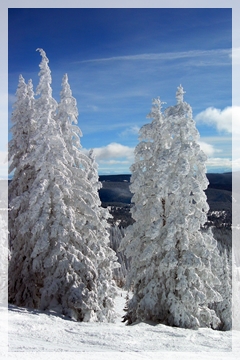
Steamboat Ski - COIt was a dreary winter day when the entire congregation exited the church into a weed-filled field. Like the Israelites, we were armed with horns, only ours were those silly blowout noisemakers seen at children’s birthday parties. Silently, we marched until we’d circled the muddy patch of ground seven times. Anyone observing us from the highway surely thought us foolish as we raised those noisemakers to our lips, blew hard and then cheered. Unlike the Israelites who marched around Jericho so God would knock down walls, we marched around that field to show our faith that God would erect walls for us!

That was a little more than five years ago in the Colorado mountain town where we spent our winters. Armed only with big prayers and bold faith, that church built a 15,000 square-foot Family Life Center. At its dedication last September, the congregation was again given noisemakers; when the service ended, the horns sounded as they celebrated God’s love, grace, and amazing provision.

Erecting that building wasn’t an easy task—blueprints were drawn and redrawn, delay after delay occurred, the red tape seemed never ending, and everything was more complicated and often more expensive than expected. The church never lost faith in the project nor did they cut back on serving God’s people. They faithfully continued their discipleship, benevolence, education, community outreach and missions work while raising additional funds for their expansion. This ski and ranch town is not a wealthy one and many are employed only seasonally. Nevertheless, they generously stepped out in faith, shared their resources, made sacrifices, and trusted God to provide. The pastor is fond of reminding his flock that God honors audacious prayers because audacious prayers honor God. The Family Life Center is a testament to that statement—when the people dared to dream and pray big, instead of walls falling, they were raised!

Picture the audacity of the bleeding woman who was so sure Jesus could heal her that she pushed her way through the crowd just to touch the hem of His robe. Imagine the audacity of Joshua asking God to stop the sun and moon from moving until the Israelites had defeated their enemies. When Elijah prayed for both drought and rain, he made some audacious predictions to Ahab. Like the bleeding woman and Joshua, he would have looked a fool if God had not answered those prayers. God came through for them all because their big bold prayers honored an even bigger God.

We insult our amazing Father with trivial prayers; they’re like asking famed chef Gordon Ramsey to make only a peanut butter sandwich. Inconsequential prayers imply we’re not sure He really can do anything that great. Courageous faith means bold audacious prayers and stepping out for God’s kingdom. Because they prayed, believed, and acted on their belief, that mountain church saw our awesome God provide in miraculous ways. He can do far more than we can imagine or ask and we must never doubt His power. Perhaps God will say, “No!” but, if we never ask, He can’t say, “Yes!” God honors audacious prayers because audacious prayers honor Him!

Then the disciples came to Jesus privately and said, “Why could we not cast it [a demon] out?” He said to them, “Because of your little faith. For truly, I say to you, if you have faith as a grain of mustard seed, you will say to this mountain, ‘Move from here to there,’ and it will move; and nothing will be impossible to you.” [Matthew 17:19-20 (RSV)]

Copyright ©2017 jsjdevotions. All rights reserved.

HALLOWED BE THY NAME

So you shall keep my commandments and do them: I am the Lord. And you shall not profane my holy name, but I will be hallowed among the people of Israel; I am the Lord who sanctify you, who brought you out of the land of Egypt to be your God: I am the Lord. [Leviticus 22:31-33 (RSV)]

water lilyFor several years, a well-known and highly regarded actor/comedian’s name was synonymous with fatherhood and family values. After becoming the subject of sexual abuse allegations, spanning more than fifty years, by more than fifty women, his name went from respected to scorned. Several universities rescinded the honorary degrees awarded him, removed him from their boards and fund-raising campaigns, and eradicated his name from buildings and scholarships. His statue was removed from a Disney theme park, reruns of his shows were cancelled, there was a petition to revoke his Presidential Medal of Freedom, and he was dumped by his agent. No one wanted their good names tarnished by any association with such disgraceful behavior.
Names and reputations are important and none of us want our names to be besmirched by someone else’s words or actions. Apparently, God felt the same way when He gave us that often ignored commandment about not taking His name in vain. Some Bibles translate “in vain” as misusing, using thoughtlessly or irreverently, or making empty promises in God’s name. Whatever Bible we use, the meaning is clear; we must honor God’s name and never use it in a disrespectful, false or blasphemous way.

When Jesus taught us to pray, after addressing our Father in heaven, He said the words, “Hallowed be thy name.” Although some Bibles translate that sentence as, “May your name be kept holy,” the King James’ words are the ones most of us use in the Lord’s Prayer. I used to think those words were a call to worship and pretty much dismissed them as part of the preface to the actual prayer. I hadn’t realized that they are the first petition (or request) the prayer makes. In those four prayerful words, “Hallowed be thy name,” we are appealing to God to help us keep His commandment about not dishonoring His name! That sentence, however, means far more than just not cursing or committing perjury after promising to tell the truth.

If we call ourselves Christians—followers of Jesus Christ—whenever we act or speak shamefully we are not keeping God’s name holy. If we distort God’s word with our witness or actions, His name is not hallowed. It’s not just blasphemy, irreverence or profanity; hypocrisy, deception, treachery, insincerity, falseness, and immorality of any kind profane His name! We don’t have to be celebrities and have our transgressions blasted across the tabloids; we disgrace His name whenever we speak or act in any way that dishonors Him.

If we never get beyond those four little words, “Hallowed be thy name,” we’ve said enough. In that one sentence, we ask God to make our words and actions reflect His holiness. We express our desire to live godly lives and ask Him to enable us to live in a way that makes His name holy. Heavenly Father, hallowed be thy name!

We always pray for you, that our God may make you worthy of his call, and may fulfil every good resolve and work of faith by his power, so that the name of our Lord Jesus may be glorified in you, and you in him, according to the grace of our God and the Lord Jesus Christ. [2 Thessalonians 1:11-12 (RSV)]

Bless the Lord, O my soul; and all that is within me, bless his holy name! [Psalm 103:1 (RSV)]

Copyright ©2017 jsjdevotions. All rights reserved.

OUR FATHER

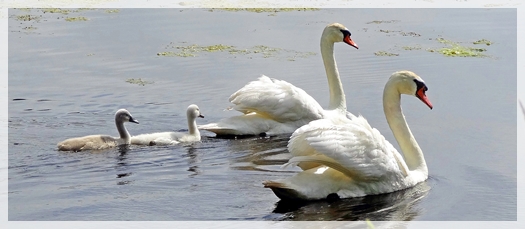
Mute swan - cygnetsPray like this: Our Father in heaven…” [Matthew 6:9a (NLT)]

Throughout Scripture, God is called by several ancient names that reflect His character: El Shaddai (God Almighty), El Olam (The Everlasting God), El Elyon (The Most High God), and El Roi, (The God Who Sees). He is Yahweh-Jireh (The Lord Will Provide), Yahweh-Rapha (The Lord Who Heals), and Yahweh-Roh (Our Shepherd). We also find references to God as both a Rock and a King. Yet, with all these ways to address God, when Jesus taught us how to pray, He chose to address God with the words “Our Father.”

As I pondered calling on our Father in prayer, I recalled an episode that occurred more than twenty-five years ago when two of our children attended college together. They went camping with a group of friends and enjoyed beers around the campfire. In the wee hours of the morning, the group was awakened by a police officer who breathalyzed them all. Unfortunately, the results indicated they’d been drinking and, since all were all under 21, each received a ticket for “illegal possession of alcohol by consumption” (a Class C misdemeanor). My children’s friends were amazed when they immediately called their dad, admitted their mistake, and asked his advice. My daughter’s response to her friends’ shock at their quick call was simple: “If I can’t call my father, who can I call?”

Our children called their father not because he paid their tuition and provided for them or even because he has a law degree. Even knowing he would expect them to face the consequences of their foolishness, they called on their father because he loves them! He’s their daddy and they are his children and they knew that, in spite of his disappointment in them, he would lovingly forgive and wisely counsel them.

“Our Father,” said Jesus. We can address God as Creator, Most High, Shepherd, Rock, Healer or any of a dozen other impersonal ways but it’s like calling on someone great and powerful; we know of Him but we don’t know Him. Prayer isn’t like scheduling an appointment to present a petition before a foreign king; it is an intimate conversation with someone we love who also loves us. It’s like my children coming to their daddy, confessing their error, and asking for his guidance. We appeal to God in love, not in fear of His anger or even awe of His power. God adopted us when we accepted Christ—we are His children, His heirs, and we can come boldly before Him with our prayers. That our unchanging, sovereign, all-knowing, all-powerful, ever-present, infinite God desires a relationship with us and wants us to address Him as “Our Father” is a privilege and an honor—let us never take it lightly.

For all who are led by the Spirit of God are children of God. So you have not received a spirit that makes you fearful slaves. Instead, you received God’s Spirit when he adopted you as his own children. Now we call him, “Abba, Father.” For his Spirit joins with our spirit to affirm that we are God’s children. [Romans 8:14-16 (NLT)]

May God our Father and the Lord Jesus Christ give you grace and peace. [Romans 1:7b (NLT)]

Copyright ©2017 jsjdevotions. All rights reserved.

IN HONOR OF OUR VETERANS

Veterans of WW IIOur fight is not against people on earth. We are fighting against the rulers and authorities and the powers of this world’s darkness. We are fighting against the spiritual powers of evil in the heavenly places. [Ephesians 6:12 (ERV)]

This morning, I quietly read my Bible, some Billy Graham, and prayed. Over coffee, I looked through the newspaper and watched the news. I laughed at a political cartoon, read editorials that both praised and criticized our president, and heard politicians from opposite sides of the aisle disagree about taxes and health care. Once at my computer, I checked my calendar (Bible study tonight) and read about Tuesday’s election. In my email, along with news from friends and Christian devotions, I got an action alert from a local conservation group asking me to contact my representative about a proposed bill. I also received several Veteran’s Day advertisements.

Veteran’s Day wasn’t meant to be another reason to go shopping. Originating in 1919 as Armistice Day, it celebrated the end of World War I — said to be the “war to end all wars” until WW II proved that wrong. In 1954, Armistice Day became Veteran’s Day — and a day to honor all military veterans for their service, patriotism, and willingness to sacrifice for the good of our nation.

Within the first two hours of my day, I’d experienced an incredible amount of freedom, in large part because of those veterans we’ll honor this weekend. We are comfortable and secure in our homes, able to speak openly, vote, run for political office, read without restrictions, gather together freely, and worship openly. We can even safely complain both about and to the government. We can do all that and much more because of the men and women who took a stand against evil—not just with their votes, voices, prayers, or money—but with their service. In many cases, they returned home with scars both visible and hidden. In some cases, they returned in body bags.

I came of age in an era of anti-war/anti-military sentiment and I continue to abhor the thought of weapons and warfare. Nevertheless, time has taught me that sometimes fighting evil means real soldiers and an actual battlefield. As the character Ransom learned in C.S. Lewis’ novel Perelandra, when reasoning fails to defeat Satan, one may have to resort to actual combat. The struggle against the enemy is not always a spiritual one; sometimes it is physical and the hands God uses belong to real men and women. Until the day when our weapons can be turned into agricultural tools, we will continue to need people who will put their lives on the line to fight evil. While we continue to pray for peace, may we also pray for the members of our armed forces (both past and present) and thank God for their service. Let’s remember to express our deep and lasting gratitude to them, as well.

The Lord will mediate between nations and will settle international disputes. They will hammer their swords into plowshares and their spears into pruning hooks. Nation will no longer fight against nation, nor train for war anymore. [Isaiah 2:4 (NLT)]

Copyright ©2017 jsjdevotions. All rights reserved.