DOING A MITZVAH

Jesus replied, “‘You must love the Lord your God with all your heart, all your soul, and all your mind.’ This is the first and greatest commandment. A second is equally important: ‘Love your neighbor as yourself.’  The entire law and all the demands of the prophets are based on these two commandments.” {Matthew 22: 37-40 (NLT)]

florida cooter laying eggsIn Hebrew, mitzvah means command and the mitzvoth are the 613 commandments that came from God in the Old Testament. In Reformed Judaism (and Yiddish), mitzvah has come to mean “good deed.” In actuality, I’m sure any good deed falls somewhere within one of those 613 original commands! Moreover, isn’t every good deed a way to connect with God and express both our love for Him and for our neighbor?

Recently, we did what my Jewish friends would call a “mitzvah.” As my husband and I started out on the boardwalk, we politely greeted a young woman. Hoping to walk by ourselves, we headed in the opposite direction. The woman, however, asked if she could join us. Although not what we’d planned, something about her told me she needed more than a guide through the swamp; she needed someone with whom to talk. My husband walked ahead, occasionally stopping to wait for us at various benches along the way. She and I strolled along, taking pictures and chatting. Although I pointed out birds and flowers, most of the conversation centered on her, her pain and uncertainty. We talked about trusting God, having faith, and church.

As a result of her joining us, our walk at the swamp took more than twice the usual time. Our mitzvah, however, came with a reward. Yes, we saw the usual: anhingas, herons, and a limpkin. Then, as we arrived at the raised viewing platform, we glanced up to see three swallow-tail kites. Had we been anywhere else in the swamp, we’d never have spotted them. Seeing those graceful birds with their long pointed wings and forked tails as they soared effortlessly in the sky was an “Aha!” moment from God. After a few minutes, the birds flew off and we walked on. Later, we stopped to look over the prairie. Our new-found friend saw a green anole and we patiently waited while she tried to get a shot of it. Had we not paused, we wouldn’t have seen a doe and her fawn as they pranced across the field, kindly stopping once for a photo opportunity. This rare sighting was another one of God’s “Aha!” moments. As we continued our walk along a side trail, we warned our companion that we’ve never seen any wildlife there. To our surprise, we came upon a Florida cooter just starting to make her nest. We stopped and watched as she dug in the soft dirt. Then, to our delight, she dropped her eggs and carefully buried them. While I’ve seen turtles laying eggs, this was the first time I’ve ever watched the whole process, start to finish, and from the “business end” of the turtle. This was the “hat trick” of “Aha!” moments for the day. Yet, we wouldn’t have been witness to any of them had we not taken the time to give a little of ourselves to someone who needed some companionship.

Jesus told the Pharisees the two greatest commands: love God and love your neighbor. Those two mitzvoth were the basis for all the rest of those 613 Old Testament commands. Every time we are helpful, generous, kind, compassionate, responsive, caring, supportive, and obliging we are obeying His command and doing a mitzvah! Cynics often say, “No good deed goes unpunished.” I prefer thinking that a good deed is its own reward! Moreover, while every good deed is its own reward, God usually puts a little something extra there for us, even if it is three kites, two deer, and a turtle in labor!

Kind deeds often come back to the givers in fairer shapes than they go. [Louisa M. Alcott]

Give, and you will receive. Your gift will return to you in full—pressed down, shaken together to make room for more, running over, and poured into your lap. The amount you give will determine the amount you get back. [Luke 6:38 (NLT)]

Copyright ©2016 jsjdevotions. All rights reserved.
 

IT’S IMPECCABLE


We put our hope in the Lord. He is our help and our shield. In him our hearts rejoice, for we trust in his holy name. Let your unfailing love surround us, Lord, for our hope is in you alone. [Psalm 33:20-22 (NLT)]

Trust in the Lord with all your heart; do not depend on your own understanding. Seek his will in all you do, and he will show you which path to take. [Proverbs 3:5-6 (NLT)]

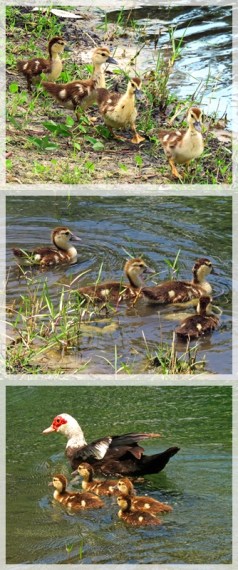
muscovy (Florida) ducks and ducklings

While relaxing on the lanai and watching the sun set, we saw a pair of Muscovy ducks usher their little ones along the far side of the canal. Too far away for a photo, we just enjoyed another of God’s “Aha!” moments and commented on how blessed we are to be surrounded by His feathered creatures. We have a pair of fish crows tending to their newborns in the palms to our left and a pair of blue jays waiting for eggs to hatch in the palms to our right. Earlier that day, we’d watched a red-bellied woodpecker hammer away in a tree by the pool and witnessed a mockingbird “dive bomb” both a squirrel and crow who’d ventured too near her nest. Although the ducks were long gone, suddenly I felt compelled to grab my camera and walk down to the edge of the water. There, right in front of me was the duck family! I’d never seen those ducks on our canal before that evening and I’ve not seen them since. Had I remained on the lanai or been a few minutes earlier or later, I would never have seen them at all! God put me there at precisely the right moment—it seems He always has a few surprises up His heavenly sleeve.

Although I’d just composed yesterday’s devotion about trusting God’s timing and knew the words I’d written to be true, I’m not so sure I really believed them deep in my heart. I was still troubled by His delay. Just to make sure I truly understood and believed the words I’d just penned that morning, God blessed me with the ducks that evening. It was His way of reminding me that He knows what He’s doing. Indeed, while unpredictable and rarely what we’ve planned, His timing is always impeccable!

Thank you, God, for always knowing what we lack and for providing us with it at exactly the moment we most need it. Thank you for your inspiration, encouragement, and the unexpected blessings of life.

Trust in the Lord and do good. Then you will live safely in the land and prosper. Take delight in the Lord, and he will give you your heart’s desires. … Be still in the presence of the Lord, and wait patiently for him to act. [Psalm 37:3-4,7a (NLT)]

Copyright ©2016 jsjdevotions. All rights reserved.
WHITER THAN SNOW

“Come now, let’s settle this,” says the Lord. “Though your sins are like scarlet, I will make them as white as snow. Though they are red like crimson, I will make them as white as wool. [Isaiah 1:18 (NLT)] 

The next day John saw Jesus coming toward him and said, “Look! The Lamb of God who takes away the sin of the world! [John 1:29 (NLT)]

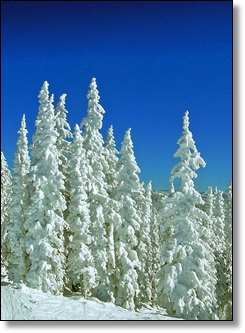
Steamboat Ski AreaIt’s springtime in the mountains and I’m thrilled to see that it’s snowing. Although I was hoping for at least one more powder day on the mountain, that’s not why I’m pleased. I’m happy because, once again, everything looks pristine and clean. You see, March’s warmer temperatures and sunshine have been busy melting the nearly 300 inches of snow we’ve had this season. As that white stuff gradually disappears, ugliness is uncovered. Hidden under those mounds of snow is four months’ worth of unsightly litter, pollution, exhaust and smoke residue, scoria and gravel. That filthy accumulation is now making its appearance along the roadways. As the snow recedes along the footpaths, it’s not just lost mittens, discarded tissues and cigarette butts that emerge but also the dog dirt and moose and elk pellets from the animals who have ventured onto the trails. As beautiful as springtime in the mountains can be, this ugliness is part of what we call “mud season.” Today’s snow covers it all up again and I can briefly forget the filth hiding beneath it. It’s sort of like sweeping dirt under the carpet or painting over handprints on the wall; although the grime is still there, it doesn’t bother us because it can’t be seen.
As I look out at the snow falling, I think of God’s words in Isaiah that our sins will be “white as snow.” Although the snow falling outside merely conceals the dirt, God’s grace washes that filth away. With God’s forgiveness, when the snow melts, no grime will remain. Instead of hiding the dirt under the carpet, God vacuums it away and rather than concealing the handprints, He scrubs them until they disappear. Indeed, our sins will be white as new snow!

Thank you, dear Jesus, for the cleansing power of your blood; thank you for taking away the sins of the world.

Have you been to Jesus for the cleansing power?
Are you washed in the blood of the Lamb?
Are you fully trusting in His grace this hour?
Are you washed in the blood of the Lamb?
Lay aside your garments that are stained with sin
And be washed in the blood of the Lamb.
There’s a fountain flowing for the soul unclean.
O, be washed in the blood of the Lamb!
[Are You Washed in the Blood?” by Alan Jackson]

Purify me from my sins, and I will be clean; wash me, and I will be whiter than snow. [Psalm 51:7 (NLT)]

Copyright ©2016 jsjdevotions. All rights reserved.

WHY DO I DO IT?

Anyone who calls upon the name of the Lord will be saved. But how shall they ask him to save them unless they believe in him? And how can they believe in him if they have never heard about him? And how can they hear about him unless someone tells them? [Romans 10:13-14 (TLB)]

I’d been asked to answer why Jesus moved me to write a Christian daily devotional. There certainly are times I ask myself that same question. I wondered how to reply to that query as I walked the swamp/bird sanctuary this morning.

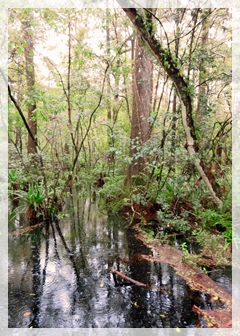
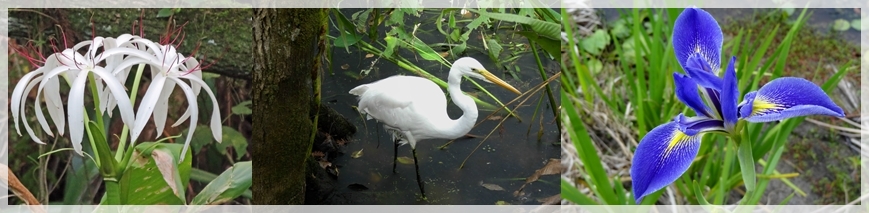
corkscrew swamp sanctuaryOriginally a city girl, I never would have expected spending at least one day a week on this boardwalk in the midst of water, ferns, cypress, herons, hawks, spiders and gators. A private person, I would never have expected to share my faith journey so publicly either. While contemplating why I do it, I started taking pictures of the swamp. I silently complained that, no matter how many shots I take, I’ve never managed to capture the beauty, mystery and sense of peace I find in this strange place. Neither words nor photos can capture why I love it so—and yet I continue to try. I will admit that I didn’t love it at first. We first visited out of curiosity but became intrigued enough to come again and again and learn more about it. Now, whenever we have visitors, the swamp is a “must do” activity. Being so familiar with it, we can show them where the deer might be found, the gator family lives, the scarlet hibiscus and blue flag iris hide, the baby owls roost, and the woodpeckers nest—all of which we missed on our earlier visits. We can explain how the strangler fig grows, about the cypress knees, which wading bird they’re seeing, and what the seemingly dead resurrection fern will look like after a rain—none of which we knew when we first visited. We didn’t love the swamp at first but, as we came to know it, we grew to love it and want to share that love with others.

So, what compels me to post a Christian devotion five times a week? Just as I want to share my love of the swamp with our guests, even though I’m neither botanist nor zoologist, God has somehow tasked me with the sharing of my love of Jesus with strangers, even though I’m neither theologian nor minister! He’s given me the desire to share my faith and my failings, the peace of God and the struggles of a follower, the comfort of His presence and the guidance of His word so that others can experience the peace, love and joy that comes from a relationship with Jesus and reading the Bible.

My words and photos can’t do justice to the swamp so, if you’re ever in Southwest Florida, be sure to spend some time at Corkscrew Swamp Sanctuary. You’ve just got to experience it for yourself. The words of my devotions can’t do justice to God, either. My prayer is that people will find them interesting enough to encourage them to delve into God’s word for themselves and take their own journey of faith. You’ve got to experience God firsthand and, as we found with the swamp, once you know Him, you’ll love Him. Unlike our favorite swamp, however, there’s no admission fee.

A true faith in Jesus Christ will not suffer us to be idle. No, it is an active, lively, restless principle; it fills the heart, so that it cannot be easy till it is doing something for Jesus Christ. [George Whitefield]

When the Council saw the boldness of Peter and John and could see that they were obviously uneducated non-professionals, they were amazed and realized what being with Jesus had done for them! … [Peter and John replied] “We cannot stop telling about the wonderful things we saw Jesus do and heard him say.” [Acts 4:13, 20 (TLB)]

For just preaching the Gospel isn’t any special credit to me—I couldn’t keep from preaching it if I wanted to. I would be utterly miserable. Woe unto me if I don’t. If I were volunteering my services of my own free will, then the Lord would give me a special reward; but that is not the situation, for God has picked me out and given me this sacred trust, and I have no choice. [1 Corinthians 9:16-17 (TLB)]  

swamp lily-great egret-blue flag iris

CYPRESS KNEES

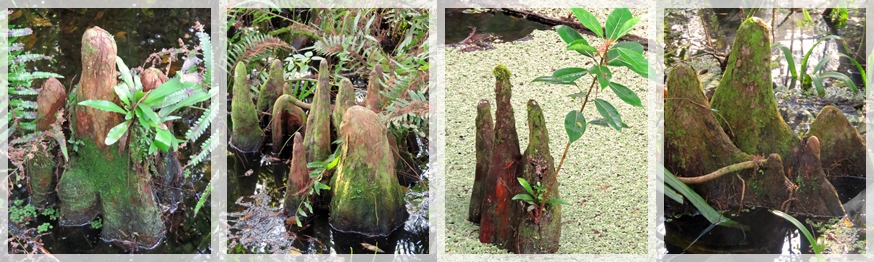
cypress knees - Corkscrew Swamp
The seeds on the rocky soil represent those who hear the message and receive it with joy. But since they don’t have deep roots, they believe for a while, then they fall away when they face temptation. [Luke 8:13 (NLT)]

But since they don’t have deep roots, they don’t last long. They fall away as soon as they have problems or are persecuted for believing God’s word. [Matthew 13:21 (NLT)]

The summer storms caused a few of the palms trees by our ponds to fall over. The landscapers had to pull them back up and erect wooden supports around them to keep the trees upright. They’d been planted too shallow and, without a deep stable base, it didn’t take much water or wind for the palms to go down. I couldn’t help but compare them with the bald cypress trees found in the nearby swamps. While the fallen palms in our neighborhood are barely out of their teens, some of Corkscrew Swamp’s enormous bald cypress trees are over 500 years old. Our palms had trouble with a few summer storms but those cypress trees have survived centuries of hurricanes! Granted, like a lot of old folks, the years have taken their toll and they look a little worse for wear. Hurricane winds may have blown away branches and pruned off tree tops, but they remain proudly standing in the swamp.

Perhaps the biggest reason these trees (cousins of the Redwoods) have survived so well is their unusual root structure. They have an extensive system of horizontal roots and woody conical bulges called “knees” that grow up from those roots. No matter how deep the water in the swamp, cypress knees protrude out of it in a fascinating variety of shapes and sizes. While there are a variety of hypotheses about these quirky swamp sculptures, it is commonly accepted that their unique root system is what gives these trees the extra stability needed to grow over 120 feet tall while standing in several feet of water and still survive centuries of storms and hurricanes. Their knees serve another, totally unrelated purpose in the swamp, as well. They serve as “nurseries” by providing a surface for smaller plants to take root and reach toward the sky.

The point is simple – we need a strong root system if we are going to survive the storms of life. With a firm faith foundation, while life may leave us a bit battered and bruised, like the bald cypress, we can remain upright and survive both temptation and troubles. Instead of knobby wooden knees, we have the word of God, prayer, our church family, and the Holy Spirit to keep us strong. With a foundation like that, doubt is replaced by belief, deceit by truth, worry by hope, and fear by trust. Moreover, just as the cypress knees nurture the ferns of the swamp, our faith examples can help inspire the faith of new believers. Remember, if we don’t stand firm in our faith, we won’t stand at all.

Let your roots grow down into him, and let your lives be built on him. Then your faith will grow strong in the truth you were taught, and you will overflow with thankfulness. [Colossians 2:7 (NLT)]

Wickedness never brings stability, but the godly have deep roots. [Proverbs 12:3 (NLT)]


TUMBLEWEEDS

Russian thistle (tumbleweed)-Kodachrome Basin State Park,UT 009-cropwebThe Lord says: Cursed is the man who puts his trust in mortal man and turns his heart away from God. He is like a stunted shrub in the desert, with no hope for the future; he lives on the salt-encrusted plains in the barren wilderness; good times pass him by forever. But blessed is the man who trusts in the Lord and has made the Lord his hope and confidence. He is like a tree planted along a riverbank, with its roots reaching deep into the water—a tree not bothered by the heat nor worried by long months of drought. Its leaves stay green, and it goes right on producing all its luscious fruit. [Jeremiah 17:5-8 (TLB)]

The stunted shrub about which Jeremiah speaks is much like the tumbleweed. If you haven’t seen it in real life, you’ve probably seen it blowing across the desert in movies. The tumbleweed is actually the Russian thistle, a common western weed, and has a pretty little flower. Once mature and dry, however, the entire plant separates from the root; shaped like a ball, it looks like the dead shrub’s skeleton. In the western states, you can see tumbleweeds as small as soccer balls or as large as a Smart Car in ditches or tumbling along the desolate landscape.

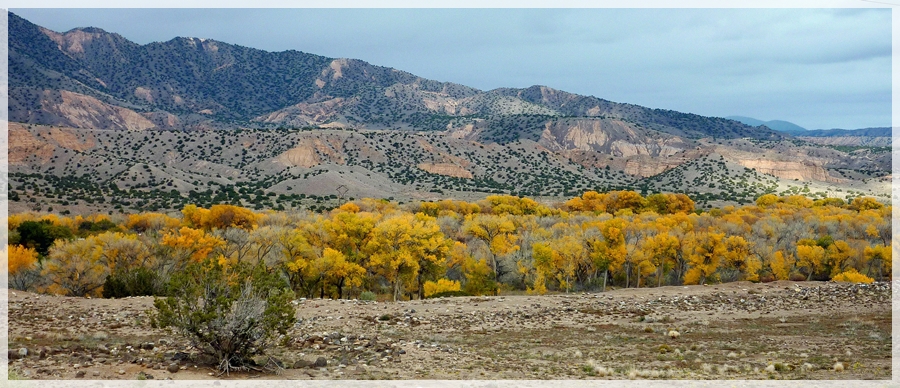
On the other hand, cottonwoods are hardy trees. Much like the ones mentioned in Jeremiah, they put their roots down near rivers, lakes, and irrigation ditches throughout the southwest. Large trees, they have been known to grow up to eighty feet tall with trunks over five feet wide. Because they grow on the water’s edge, they typically survive prairie fires and can live over one hundred years. The hardy Rio Grande cottonwood even flourishes in New Mexico’s White Sands National Monument, an environment too harsh for most plants. In an area of scorching heat, scant rainfall, relentless winds, poor soil and blowing sand, the cottonwood survives because its roots are planted firmly down into the life-giving water hidden beneath the sand.

Do we want to live as a tumbleweed, dry and rootless in a barren land, with no hope for the future? That is what it will be like if we put our trust in our own strength or that of other people. Or do we want to be like the cottonwood, with deep roots, able to withstand fire, heat, wind and drought? If we put our trust in the Lord, we will never be alone and we’ll be able to survive, perhaps even thrive, in the most stressful of situations.

They shall neither hunger nor thirst; the searing sun and scorching desert winds will not reach them anymore. For the Lord in his mercy will lead them beside the cool waters. [Isaiah 49:10 (TLB)]

And now just as you trusted Christ to save you, trust him, too, for each day’s problems; live in vital union with him. Let your roots grow down into him and draw up nourishment from him. See that you go on growing in the Lord, and become strong and vigorous in the truth you were taught. Let your lives overflow with joy and thanksgiving for all he has done. [Colossians 2:6-7 (TLB)]
cottonwoods (NM) -cropaweb