The people who walk in darkness will see a great light. For those who live in a land of deep darkness, a light will shine. [Isaiah 9:2 (NLT)]
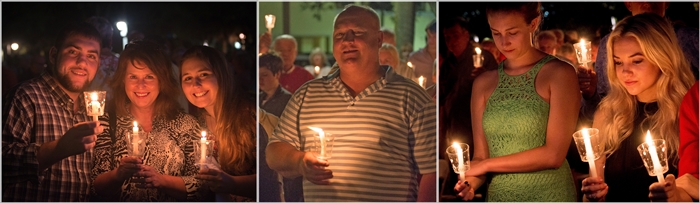
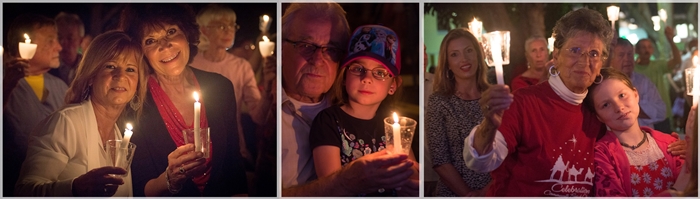
Tomorrow night is Christmas Eve and most of us will gather with friends and family around a table heavy laden with delicious food, exchange gifts, sing carols, pray and gather in worship. Before the evening is over, many will light candles as part of our worship services. Other candles will be lit tomorrow night by our Jewish brothers and sisters as they celebrate the first night of Hanukkah, the Festival of Lights. They will light two candles on their menorahs and, like us, celebrate their holiday with traditional food, family and friends, gifts, prayers, and songs.
More than twenty-one centuries ago, Israel was ruled by the Seleucids (Syrian-Greeks) who wanted to wipe out all Jewish traditions. The study of the Torah was prohibited as was kosher food, circumcision, and the observance of other Jewish rituals. The Temple in Jerusalem was vandalized, defiled by pig sacrifices and an altar to Zeus was erected. A revolt against this paganism was led by the Jewish priest Mattathias and his five sons. When Mattathias died, his son Judah Maccabee led the rebels. Against all odds, they drove the Seleucids from Jerusalem and reclaimed the Temple. In 165 BC, the temple was restored and, during its rededication, the seven-branched candelabrum was relit. Although this light was supposed to burn constantly, there was only enough untainted oil for one night. Miraculously, the flame continued for eight days until new ritual oil was prepared. In memory of this miracle of God’s provision, the sages appointed an annual celebration of thanksgiving and candle lighting known as the Festival of Dedication, now known as Hanukkah.
For the next eight nights, Jews throughout the world will light their menorahs as a way of memorializing and publicizing God’s miracle of victory and His eight-day provision of oil. Using the center candle to light the others, one other candle is lit the first night. Each night, another candle is added until all nine are aflame the eighth night. Traditionally, the menorah lights are to be displayed in windows or on doorsteps making them visible to the public.
Like Hanukkah, Christmas celebrates a victory over evil and a miracle of God’s provision, not just for eight days but for all eternity. Christmas, like Hanukkah, is a Festival of Lights, or rather a festival of one light: Jesus Christ. Although the Maccabees defeated the Seleucids with their swords, God defeated the forces of darkness by sacrificing His son for our salvation. Unlike a candelabrum that needs a source of fuel to shine, the light of Christ truly is an eternal light—it can’t be diminished, depleted or extinguished. Moreover, just as a menorah should be displayed for all to see, the light of Christ should shine through Christians for the world to see. Unlike Hanukkah with only eight days of lit candles, however, the light of Christ should be visible all year long. Let your light shine and Merry Christmas!
We are indeed the light of the world—but only if our switch is turned on. [John Hagee]
Jesus spoke to the people once more and said, “I am the light of the world. If you follow me, you won’t have to walk in darkness, because you will have the light that leads to life.” [John 8:12 (NLT)]
You are the light of the world—like a city on a hilltop that cannot be hidden. No one lights a lamp and then puts it under a basket. Instead, a lamp is placed on a stand, where it gives light to everyone in the house. In the same way, let your good deeds shine out for all to see, so that everyone will praise your heavenly Father. [Matthew 5:14-16 (NLT)]
Copyright ©2016 jsjdevotions. All rights reserved.
 When I was young, back in the 1950s, sex education pretty much consisted of some talk about bees pollinating flowers. Married couples on television didn’t sleep in the same bed and husbands always seemed completely surprised when wives announced a baby was arriving. As a little girl, I naively thought marriage (not intercourse) was what produced babies and that God put babies in a woman’s tummy once she was married.
 Printed on the tee-shirt were Paul’s words from Philippians 4:13, “I can do all things.” While the shirt, part of a new line of Christian workout wear, would be a great conversation starter at the gym, the message is somewhat misleading. I could wear that shirt and say those words but, try as I might, I’d still be unable to bench press 450 pounds! That, however, is not why the message is misleading. It’s because the rest and most important part of Paul’s words—“through Christ who strengthens me”—are missing. Paul’s words are not words of self-sufficiency but of God’s all-sufficiency. The apostle was not boasting of himself and his strength but rather of God’s strength and power that enable us to do His work.
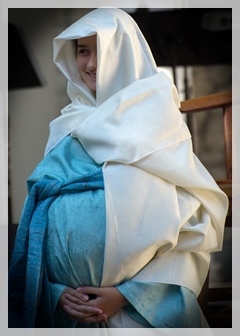
 The elderly Abraham and Sarah laughed at the thought of the two of them making a child and the old Jewish priest Zechariah doubted his barren wife could conceive. Yet, a thirteen-year old virgin believed that she would miraculously bear a son and a pagan Roman officer believed Jesus could heal his servant with just a word.
 Upon receiving an invitation from a business acquaintance to a “Celebrate Life” picnic, my first response was “Who died?” The words “It is just for fun!” along with the promise of pony rides, moonwalk, magician and games seemed rather odd for a Celebration of Life. That this was the 19th such picnic further confused me. Fortunately, accompanying the invitation was a brief note explaining that nineteen years ago his son had overcome serious health issues and every year since his family has gathered with friends and family to celebrate. Rather than celebrating the life of someone who died, they were celebrating that he lived!