
By his divine power, God has given us everything we need for living a godly life. We have received all of this by coming to know him, the one who called us to himself by means of his marvelous glory and excellence. [2 Peter 1:3 (NLT)]
 I have a friend who describes herself as being a “Birth and Resurrectionist.” Her idea of Christianity simply consists of church attendance on Christmas and Easter (maybe), with an occasional funeral or wedding thrown in.
Setting aside the promise of salvation and how we will spend eternity, what would our lives be like if our relationship with Jesus and His church was merely a twice a year event? We’d still have a code of ethics, a sense of right and wrong. Yet knowing what’s right doesn’t mean we do the right thing. When we have a relationship with Jesus, we also get the Holy Spirit to guide (and prod) us through our moral choices. Without Jesus, our sense of worth would depend on things like social status, wealth, education and looks; without those assets, we would feel worthless and unlovable. With Jesus in our hearts, we know we’re worthy of God’s love not because of who we are or what we have but because of who made us. Without Jesus in our lives, the blessing of God’s forgiveness would be missing; we’d be burdened with guilt, regrets and even anger. If we had no relationship with Jesus, we’d miss that wonderful sense of peace that comes from Him. We’d always be searching for the next best thing without ever realizing that we have the best thing right beside us. Without Jesus in our hearts, would we be able to love? Probably, but certainly not with the unconditional love about which Jesus spoke. Finally, without Christ, we’d lose our sense of hope and trust; we’d fight our troubles instead of accepting them with the knowledge that God will get us through them. While salvation is the final reward for our faith in Christ, our daily lives are continually blessed for that faith.
Let us pray for those many “Christians in waiting.” May they accept Jesus as their Lord and come to know the joy and peace that can be theirs when, instead of occasionally visiting church, they have a daily relationship with our Savior. May they enjoy the rewards of Christianity that come both in this life and in the next.
 Recently, our pastor asked us to write down both a prayer concern and a joy that anonymously could be shared with the congregation. Once compiled on a sheet of paper, the list was made available to anyone who wanted to offer those worries, needs and joys to God in prayer. As expected, most of the joys had to do with family, friends, health, and God’s love and forgiveness. Most of the concerns also were what we’d expect: health and the health of loved ones, finances, government, family turmoil, and children. At our Florida church, we start our weekly Bible study with prayer requests and praise reports and the list from our northern church was remarkably similar with one glaring exception. One person wrote, “I’m always afraid.”
 His testimony enraged the Jewish high council and he was taken from the city and stoned to death. Stephen was the first of the Christian martyrs but clearly not the last. We’ve all been horror-stricken by the recent news from Egypt where ISIS thugs attacked Coptic Christians on their way to a remote monastery. According to witnesses, the men were told their lives would be spared if they recited the shahada, the Islamic declaration of faith. When they refused to do so, they were gunned down. Since December, more than 100 Coptic Christians have died in Egypt in four different attacks. On Palm Sunday, two of their churches were bombed leaving forty-four dead. It’s not easy being a Christian in Egypt.
 The “Last Lecture,” a tradition at many universities, is given by a professor as if it is the last one delivered in the speaker’s lifetime. Hoping to inspire the audience to become better versions of themselves, the lecturer usually reflects on his life’s journey and shares his hard-earned wisdom. New meaning was given to this tradition in 2007 when Randy Pausch, a professor at Carnegie Mellon University, gave what truly was his last lecture. Terminally ill with pancreatic cancer, he was dead less than a year after giving it.
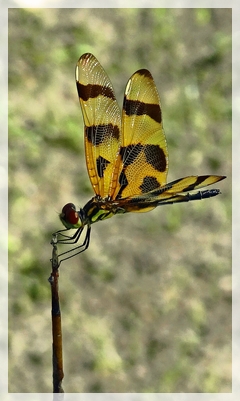 “We can’t attack those people! They’re too strong for us! … The land we explored is one that devours those who live there. All the people we saw there are very tall. … We felt as small as grasshoppers, and that’s how we must have looked to them.” [Numbers 13:31-33 (GW)]
 Devotions of the Heart