THE DASH

For everything there is a season, and a time for every matter under heaven. [Ecclesiastes 3:1 (ESV)]

I read of a man who stood to speak at the funeral of a friend.
He referred to the dates on the tombstone
from the beginning…to the end.
He noted that first came the date of birth
and spoke of the following date with tears,
but he said what mattered most of all
was the dash between those years. [Linda Ellis]

clock - ChicagoAfter scrutinizing the website for the umpteenth time in a futile search for the perfect gift for my daughter-in-law, I closed the iPad and announced, “What a waste of time! This is why God created checks and gift cards!” I remembered last Friday when both Linda Ellis’s poem “The Dash” was read and the recently deceased David Cassidy was mentioned. The former Partridge Family heartthrob’s last words were: “So much wasted time.” Indeed, too much time is wasted in unproductive activities or agonizing over what, in actuality, are trivial matters. Searching the same website, over and over, and expecting to find something different was certainly one of those.

Last Friday morning, I made better use of my time; after looking at a photo of a friend’s niece, I prayed for her. This two-year old, bald from undergoing chemotherapy for stage 4 cancer, was asleep in her mother’s arms and doesn’t understand that the chemicals making her so miserable are a last ditch effort to destroy the cancer that has ravaged her body. Later that day, I attended a Celebration of Life for a man who, less than a week earlier, set out for an afternoon ride on his motorcycle never knowing that would be his final ride in life. Absent from that memorial service were our senior pastor and his wife. They’d been in a car accident earlier in the day. Like the toddler and the motorcyclist, they never expected what came hurtling into their lives. One child is fighting for her life, one man lost his life, and one couple escaped with their lives.

Many of us might say we have too little time but the quantity of time granted us and our loved ones, whether just days or several decades, is exactly the right amount of time and has been determined by someone far greater than we are. The way we spend those precious moments, however, is our choice alone. Unfortunately, David Cassidy had it right: “so much wasted time.” When the book of Ecclesiastes tells us there is a season for everything, wasting time is never mentioned as one of them. We can fritter away our minutes in all sorts of futile ways—anger, nitpicking, regret, lethargy, worry, complaint, conflict and fretting are just a few—or we can use them generously, joyfully, thankfully and with love.

This week we celebrate my mother-in-law’s 101st birthday; her dash has been long and well spent. While she has been blessed with exceptional longevity, last Friday was a reminder that we all have expiration dates and none of us know that day. In many cases, it will be far sooner than expected. The dates we are here, however, are not as important as how we spend the time between those dates. How will we spend our dash?

So teach us to number our days that we may get a heart of wisdom. [Psalm 90:12 (ESV)]

Copyright ©2017 jsjdevotions. All rights reserved.

MARA

Monarch butterfly - queen anne's laceBut she said, “Don’t call me Naomi; call me Bitter. The Strong One has dealt me a bitter blow. I left here full of life, and God has brought me back with nothing but the clothes on my back. Why would you call me Naomi? God certainly doesn’t. The Strong One ruined me.” [Ruth 1:20-21 (MSG)]
The final lesson of learning to be independent – widowhood…is the hardest lesson of all. [Anne Morrow Lindberg]

When we first meet her in the book of Ruth, the widowed Naomi does not seem the sort of unpleasant meddlesome mother-in-law about whom jokes are made; she is much loved and respected by her daughters-in-law. After great tragedy strikes their family, Naomi’s widowed daughter-in-law Ruth chooses to leave home, return with her to Israel, and adopt the God of the Israelites. Naomi must have been a very special woman to have a daughter-in-law so determined to stay at her side. By the time the widows arrive in Bethlehem, however, we see another side to the older woman. “Don’t call me Naomi,” she says, telling people to call her Mara, meaning bitter. For Naomi and Ruth, circumstances improve when Ruth meets and marries Boaz and presents her mother-in-law with a grandchild. Unfortunately, not every widow has a Boaz to act as her redeemer and provide a happy ending to the story.

I have a group of widowed friends who, if comparing tragic sob stories with Naomi, could put hers to shame. They lost as much or more and have endured as many hardships and challenges as did Naomi. Nevertheless, in spite of having their lives turned upside down by their losses, none of them would call themselves bitter. While they have their moments of complaint, sorrow and loneliness, their faith strengthens them and allows them to face their new reality with an eagerness and joy that does not depend on outer circumstances. Their grief hasn’t left them bitter; if anything, it has made them better. They radiate a sense of peace, purpose and zest for life because their redeemer isn’t a relative who has chosen to take care of them; their Redeemer is Jesus Christ!

I can’t pretend to know what it’s like to lose a spouse but I imagine it’s like being ripped in half. Someday, either my husband or I will face the grief and uncertainty that comes with widowhood. When the “we” of our lives becomes just “me,” loneliness, anger and resentment can easily follow. We can become bitter or allow our faith to fill us with hope. Death may take away a spouse, but Jesus will take that spouse away from death! I pray that, in our grief, we will be strengthened by our faith in God’s purpose and receive the consolation offered by our Comforter, the Holy Spirit.

Most loving God, you know the pain and sorrow of death; mercifully hear our prayer for those who mourn the death of their beloved. The nights are lonely and the days are too long. Comfort them and bring an end to the days of tears. Bless them and bring an end to their days of sorrow. Renew them with the joy of life and bring to an end their days of mourning. Let the bond of love which you have for your people be the foundation of their hope that love never ends and that precious moments with our beloved are forever held dear in our hearts. Amen. [Vienna Cobb Anderson]

The Friend, the Holy Spirit whom the Father will send at my request, will make everything plain to you. He will remind you of all the things I have told you. I’m leaving you well and whole. That’s my parting gift to you. Peace. I don’t leave you the way you’re used to being left—feeling abandoned, bereft. So don’t be upset. Don’t be distraught. [John 14:26-17 (MSG)]

You’re blessed when you feel you’ve lost what is most dear to you. Only then can you be embraced by the One most dear to you. [Matthew 5:4 (MSG)]

Copyright ©2017 jsjdevotions. All rights reserved.

THE ENEMY – FEAR

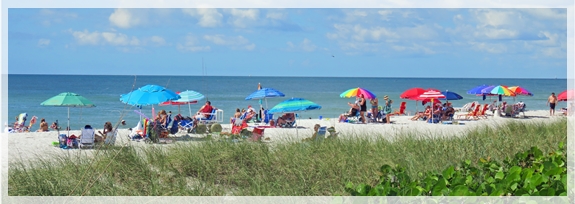
Laudermilk Park Naples FLWe, therefore, can confidently say: ‘The Lord is my helper; I will not fear. What can man do to me?’ [Hebrews 13:6 (PHILLIPS)]

“The only thing we have to fear is fear itself,” said Franklin D. Roosevelt in his first inaugural address. It was 1933 and the nation was in the dark days of the Great Depression. Although the reason for our nation’s darkness differs, his words still hold true.

Like many others, our church spent last week discussing and implementing security measures. How can a house of worship—a place that welcomes the lost and the least, the weary and the burdened—protect itself from the violence that increasingly surrounds us? As so many schools do, should we require everyone to have laminated ID cards for entrance through our doors? Do we pat down people or pass them through metal detectors? Should we carry guns in shoulder holsters and purses? Do we cease welcoming strangers? Will we refuse entry to anyone involved in a domestic dispute lest their angry spouse chooses to vent his anger on our doorstep?

Will we allow fear to stop us from attending church? If we do, we might as well stop going to concerts, schools, theaters, shopping centers, street festivals, airports, parades, marathons, or sporting events—all of which are perfect targets for both terrorists and the mentally ill. No place is entirely safe, especially when cars and trucks can become weapons with just a turn of the wheel and a little pressure on the gas pedal.

I admit to being more cautious nowadays. I look for exits and avoid confrontations but that’s being sensible rather than afraid. Told to say something if we see something, I am attentive to my surroundings but for what are we supposed to look? The concert goers in Las Vegas never saw the shooter and, by the time the parishioners in Texas saw the gunman, it was too late. Once it was easy to identify the deranged—they were the ones talking or screaming to themselves, gesturing wildly, or dancing to their own inner music. Now, because of cell phones, blue tooth, and iPods, many on the street seem unbalanced when they aren’t and terrorists don’t wear t-shirts announcing their hateful plans.

Admittedly, we live in a world of random violence but it’s not nearly as violent as we think it is. The odds of dying of either heart disease or cancer are more than 30,000 times greater than dying at the hands of a terrorist. While those odds are of no comfort to the families who have lost loved ones to terror, they tell us to be watchful rather than afraid.

There is more to FDR’s quote: “The only thing we have to fear is fear itself—nameless, unreasoning unjustified terror which paralyzes needed efforts to turn retreat into advance.” When we allow fear to keep us from our daily routine, when fear keeps us from attending  our children’s football games or  flying on a plane, when we become too afraid to go the beach or even to church, we are retreating from the real enemy—Satan. Rather than arming ourselves with weapons, let’s put on the armor of God and, as Christ’s soldiers, bravely advance onward into battle.

Never be afraid of those who can kill the body but are powerless to kill the soul! Far better to stand in awe of the one who has the power to destroy body and soul in the fires of destruction! [Matthew 10:28 (PHILLIPS)]

Copyright ©2017 jsjdevotions. All rights reserved.

WITH FEET OF CLAY

It’s a wonder God didn’t lose his temper and do away with the whole lot of us. Instead, immense in mercy and with an incredible love, he embraced us. He took our sin-dead lives and made us alive in Christ. He did all this on his own, with no help from us! Then he picked us up and set us down in highest heaven in company with Jesus, our Messiah. [Ephesians 2:4-6 (MSG)]

The same Jesus who turned water into wine can transform your home, your life, your family, and your future. He is still in the miracle-working business, and His business is the business of transformation. [Adrian Rogers]

TIGER SWALLOWTAIL BUTTERFLY - WILD BERGAMOTIn the Sunday school stories we learned as children, the Bible’s heroes were larger than life. When we read about them as adults, however, we read the parts skipped in Sunday school and realize they were real people with feet of clay. Yet, it’s their sins and weaknesses that make their lives as relevant today as they were centuries ago. No matter how great, all except Jesus were flawed. Peter denied knowing Jesus, Matthew was a dishonest tax collector, Thomas doubted Jesus’ resurrection, Noah and Lot got drunk, Abraham lied to protect himself, David was an adulterer and murderer, Rahab was a prostitute, Jacob deceived his father, Jonah refused and fled, Sarah doubted and grew impatient, Samson allowed lust to lead him, Paul persecuted Christians, Elijah got so depressed he wanted to die, Gideon dared to question God, and, in spite of his great wisdom, Solomon disobeyed Him. The disciples argued amongst themselves and deserted Jesus, Isaac played favorites with his sons, and both Eli and Samuel tolerated the shameful behavior of their boys. Nevertheless, flawed as they all were, there is much to learn from their stories. We see the possibility of transformation and redemption. The prostitute was instrumental in an Israelite victory and became one of Jesus’ ancestors. The corrupt taxman became a disciple and turned his record keeping skills into gospel writing. The Pharisee became Christ’s messenger throughout the Roman Empire and the fisherman who denied Christ became the leader of the disciples. In spite of their faults, all of them were saints of God.

Like us, the Bible’s heroes disobeyed and doubted, erred and strayed, lied and cheated, quarreled and despaired. Their sins illustrate God’s mercy; we truly do have a God who can forgive seventy times seven and more. Moreover, when we see that such flawed people can achieve great things, we see examples of God’s power. When He touches a life, great things happen. In each of the Bible’s heroes, we see God’s transforming power. He doesn’t just turn water into wine, He turns sinners into saints!

No, we neither make nor save ourselves. God does both the making and saving. He creates each of us by Christ Jesus to join him in the work he does, the good work he has gotten ready for us to do, work we had better be doing. [Ephesians 2:9-10 (MSG)]

Copyright ©2017 jsjdevotions. All rights reserved.

RESTORATION SPECIALISTS

RainbowThese people are false apostles. They are deceitful workers who disguise themselves as apostles of Christ. But I am not surprised! Even Satan disguises himself as an angel of light. So it is no wonder that his servants also disguise themselves as servants of righteousness. In the end they will get the punishment their wicked deeds deserve. [2 Corinthians 11:13-15 (NLT)]

More than four weeks have passed since Hurricane Irma wreaked havoc on southwest Florida. Debris is piled into mini-mountains along the roads and, with over $320 million in damages in our county alone, the storm chasers have descended. Calling themselves restoration specialists, their trucks prowl the neighborhoods. They claim expertise in water extraction, mold removal, window and screen replacement, roofing, landscaping, carpet cleaning, drywall, plaster, demolition and reconstruction. At best they are anything but expert and do shoddy work; at worst, they are scam artists who take their money and run! Desperate to get back to some semblance of normalcy after this devastating storm, people will hire just about anyone who promises speedy restoration. These swinders are having a heyday while leaving behind a mess for the homeowners.

As Christians, we have the genuine restoration specialist: Jesus Christ. Rather than restoring flooded houses, He restores sight to the blind and life to the dead. His death and resurrection restored our relationship with God the Father. Nevertheless, during the hurricanes that occur in our lives—those storms that leave us emotionally battered and bruised—we can fall prey to another team of counterfeit restoration specialists. Called false prophets or false apostles in Scripture, I think of them as the pseudo philosophers and ersatz preachers of today. Some just may be misguided but others are charlatans and hypocrites. Either way, their teachings are incorrect and, like faulty wiring, dangerous!

When desperate, we tend to grab onto the first thing we see and the enemy is no fool; he quickly has his restoration specialists at our doors with their false promises of repair and renewal. Knowing that outright lies are far easier to recognize than half-truths, their deception is usually mixed with a little truth. Rather than denying the entire Gospel, they distort and misrepresent its message. Like storm chasers, they’re  great salesmen—friendly, empathetic and smooth talkers who tell us what we want to hear. Instead of a new roof in two days, they promise hope and a means to a better life but, like any scammer, their work is costly and defective!

Knowledge is power. The more we know about our homes, the more knowledgeable we are about their repair. We can recognize a solution that is too easy, too expensive or too cheap to be true. Knowledge is power when it comes to our faith, as well. The more we know about the Bible, the better able we are to recognize incorrect or fabricated doctrine. The entire message—not just a few cherry picked verses—must come from the Bible. Jesus is essential; the only salvation is through Christ and the cross. Rather than asking for a business license, we should make sure our spiritual storm chaser exhibits the Fruit of the Spirit and that his message will yield that same fruit in us. Moreover, we must be wary of any message that promises a quick easy fix. If it promises forgiveness without repentance or heaven without hell, it really is too easy (and too cheap) to be true! Repair and renovation after a hurricane takes time and effort and so does spiritual renewal after we’ve been hit by any storm in life. Just be sure to depend on the number one restoration expert—Jesus Christ!

Satan is the counterfeiter. …He has a false gospel, preached by false ministers, producing false Christians. …Satan plants his counterfeits wherever God plants true believers. [Warren Wiersbe]

Dear friends, do not believe everyone who claims to speak by the Spirit. You must test them to see if the spirit they have comes from God. For there are many false prophets in the world. This is how we know if they have the Spirit of God: If a person claiming to be a prophet acknowledges that Jesus Christ came in a real body, that person has the Spirit of God. But if someone claims to be a prophet and does not acknowledge the truth about Jesus, that person is not from God. Such a person has the spirit of the Antichrist, which you heard is coming into the world and indeed is already here. [1 John 4:1-3 (NLT)]

Copyright ©2017 jsjdevotions. All rights reserved.

COMPASSION FATIGUE

Then he went on alone into the wilderness, traveling all day. He sat down under a solitary broom tree and prayed that he might die. “I have had enough, Lord,” he said. “Take my life, for I am no better than my ancestors who have already died.” [1 Kings 19:4 (NLT)]

hibiscusMost of us think of sloth as laziness: a dislike of work or any physical exertion. Having watched the local zoo’s sloth in action (or, rather, inaction), I think the sluggish animal is appropriately named. Spiritual sloth, however, is far different than being a couch potato. Originally, the sin of sloth was two sins: sadness and acedia. Compiled by Evagrius of Ponticus, a 4th century monk, these two “capitals sins” were part of a list of eight he believed to the greatest threats to devout monasticism.

We know what sadness is and it’s important to remember that the sadness which Evagrius found problematic for his monks was not clinical depression; it was that despondency or gloom that easily came upon a monk living an ascetic life of prayer, fasting and labor in the middle of the Egyptian desert in the 4th century. It was unhappiness with one’s present situation and the melancholy that comes from longing for something different. It was distress at one’s circumstances and the inability to give thanks in all things. In this troubled world, we certainly don’t have to be monks to suffer that kind of sadness.

Acedia comes from the Greek and means without care or concern. Rather than laziness, it is apathy or a fatigue of mind and soul. A spiritual boredom or weariness, acedia results in listless prayers, study or service. In the midday heat, the monks were tempted to let their minds wander during study and prayers and then fall asleep causing Evagrius to call acedia the “noonday demon.” Seeing the correlation between sadness and acedia, in the late 6th century, Pope Gregory combined the two sins into sloth .

A few mornings ago, I fell victim to compassion fatigue and began to understand spiritual sloth. The previous night’s discussion in Bible study had been disheartening. We’d talked of the recent hurricanes (with yet another one on the horizon), Mexico’s earthquakes, Puerto Rico’s devastation, Korea’s threat, the horrendous carnage in Las Vegas, a polarized nation, and the unrest in the Middle East. As I added that night’s heartbreaking prayer requests to my already burgeoning and depressing list, I grew numb with grief. “What’s the point? I wondered as I listed a two-year old just diagnosed with metastasized stomach cancer, a woman who may lose her feet because of nursing home neglect, and a friend’s suicidal son. “What difference can I make? Why bother?” I cried. At that point, my heart was so weary with grief that I no longer wanted to care or pray. I probably felt as Elijah did when, while fleeing Jezebel, he sat down under that broom tree and said he wanted to die. That’s spiritual sloth and it’s not just monks and Old Testament prophets that can be afflicted with it. The enemy wants us all to become so downhearted and world-weary that we fall into spiritual inactivity or sloth.

Elijah was cured of his spiritual sloth by food, rest, and a talk with the Lord. Although I didn’t eat, I was nourished by Scripture. I didn’t sleep but I rested in the words I read and then, like Elijah, I had a prayerful chat with God. God whispered to Elijah and gave him new strength. He whispered to me and refreshed me with his words of love, comfort, reassurance and hope.

I cried out, “I am slipping!” but your unfailing love, O Lord, supported me. When doubts filled my mind, your comfort gave me renewed hope and cheer. [Psalm 94:18-19 (NLT)]

And now, dear brothers and sisters, one final thing. Fix your thoughts on what is true, and honorable, and right, and pure, and lovely, and admirable. Think about things that are excellent and worthy of praise. [Philippians 4:8 (NLT)]

Copyright ©2017 jsjdevotions. All rights reserved.