HE LIFTS US

Save me, O God! The water is up to my neck; I am sinking in deep mud, and there is no solid ground; I am out in deep water, and the waves are about to drown me. [Psalm 69:1-2 (GNT)]
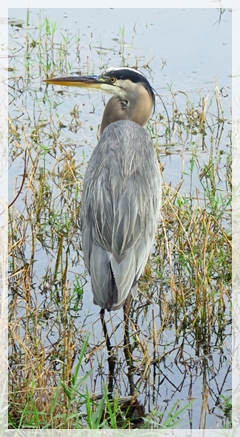
Great Blue HeronQuicksand forms in saturated loose sand and, when undisturbed, appears to be solid ground. If a person steps into it, however, there is a decrease in its viscosity which causes the water and sand to separate so the soil becomes liquefied. When I was growing up, a scene of someone sinking into the death trap of quicksand was a staple of adventure movies. Because of those Saturday matinees in the 1950s and 60s, countless children probably had a fear of plunging into quicksand while walking in the woods; I know I did!

Even though an Arizona man was recently stuck in quicksand at Zion National Park, the old Hollywood cliché doesn’t stand up to scrutiny and a person is unlikely to submerge completely. As that trapped man discovered, the real danger comes from hypothermia, bad weather, predators, dehydration, or even drowning from rising tides while stuck.

Without ever going near a swamp, beach or river bank, we can easily encounter quicksand-like conditions in our lives. Trusting ourselves rather than God, we think we’re on firm ground only to misstep and fall into a pit of problems. As we’re sucked into the muck of doubt, fear, worry, deceit, or depression, we start to panic. As happens in real quicksand, the more we struggle, the faster we sink.

Stuck in a quagmire of despondency or pit of despair, Satan finds us easy prey. Frightened, feeling alone, and thirsting for relief, we’re tempted to accept whatever comfort he offers. Feeling defenseless in the swamp of hopelessness, we reach for whatever seems easiest and, instead of rescue, a rising tide of more troubles sweeps over us.

Although I feared quicksand as a child, I’m not likely to be sucked into a bottomless pit of muck any time soon. Nevertheless, since quicksand does remain a minor threat wherever super-saturated sand exists, it’s reassuring to know that, if we step into quicksand, we don’t have to stay there. We don’t have to remain in situational quicksand, either. In both cases, we should get rid of anything that weighs us down, whether backpacks or negative thoughts and emotions. Frantic movement can agitate quicksand which further liquefies the soil but, by remaining calm, breathing deeply, and relaxing, it’s possible to float on top of the muck. In situational quicksand, the same rule holds. Knowing that God has not abandoned us, there’s no need for anxiety or panic. By pausing, praying, and following God’s direction, we can rise above our problems. Life’s challenges can’t sink us because our God will teach us how to float through them. Finally, in both situations, we must be patient. It usually takes a long time to move through both muck and troubles. In God’s time, He will lift us out of the pit and put our feet on solid ground!
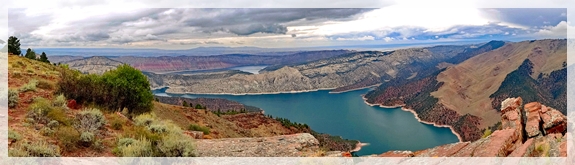
I waited patiently for the Lord’s help; then he listened to me and heard my cry. He pulled me out of a dangerous pit, out of the deadly quicksand. He set me safely on a rock and made me secure. [Psalm 40:1-2 (GNT)]

Copyright ©2019 jsjdevotions. All rights reserved.

BE STRONG AND COURAGEOUS

UtahThis is my command—be strong and courageous! Do not be afraid or discouraged. For the Lord your God is with you wherever you go.” [Joshua 1:6a,9 (NLT)]

Joshua 1:9 was my Bible verse for the day but I decided to make it my verse for the week. To make sure I kept it in mind, I wrote it on a post-a-note and stuck it where I’d be sure to see it: on my phone!

Wanting to put this inspirational verse in context, I reread the first chapter of Joshua. The book of Joshua is about the fulfillment of God’s promises to Abraham made four hundred years earlier. Its first chapter is one of my favorite chapters of the Old Testament narratives. To set the stage: Israel is camped on the east side of the Jordan River with the Promised Land in sight. Forty years have passed since the parting of the Red Sea. Moses is dead and only Caleb and Joshua remain of the adults who’d once been slaves in Egypt. The Israelites are standing on the edge of the unknown and the Jordan River is at flood stage. With no bridges or ferry boats, they must have wondered how they’d manage to get safely to the other side. Joshua is the new leader of the Israelites and God tells him to be strong and courageous.

Granted, God’s words were spoken to Joshua around 1400 BC in an entirely different setting but, because I’m standing on the edge of the unknown as well, God’s words to Joshua are both comforting and encouraging. Then again, we’re all standing on the edge of the unknown. None of us know what tomorrow (or even the rest of today) will bring: be it good news or bad, tornadoes or sunny skies, an accident or a near miss, the making of a new friend or the loss of an old one.

When Joshua is told to be strong, God wasn’t talking about working out at the gym. This strength had nothing to do with muscles unless, of course, we’re talking about spiritual muscles. It had to do with having the strength to prevail, withstand, and sustain. Being of good courage, is more than not being a fearful coward; it’s being alert both physically and mentally, steadfast, and determined. It wasn’t powerful foes or a lack of weapons, battle strategy, or seasoned warriors that threatened Israel; it was fear, discouragement, and weakness of faith.

Being strong and courageous is easier said than done. Nevertheless, God tells Joshua exactly how to do that: meditate on and obey the instructions in the Torah (the first five books of the Bible and the only scripture at the time). Authored by God through Moses, those books contained the people’s history and God’s law, promises and plan. If the Israelites had only done that, the Old Testament would be an entirely different (and far less violent) story! 3,400 years later, we’re no longer limited to a mere five books; we have both Old and New Testaments to make us strong and courageous. Just the same, knowing and obeying those words can be as much of a problem for us as it was for the Israelites.

At least for me, the best part of Joshua 1:9 is God’s promise that He is with us wherever we go. Whether we’re crossing a deep river or just going across the street, confronting an enemy army or a CT scan, or facing a walled city or the loss of a spouse, we know that, no matter what befalls us, God is with us. When we’re standing at an abyss, facing the great unknown, there is no need to be afraid or discouraged. We can be strong and courageous because we have his promise in writing; He is always with us, “even to the end of the age.”

If the Lord be with us, we have no cause of fear. His eye is upon us, His arm over us, His ear open to our prayer – His grace sufficient, His promise unchangeable. [John Newton]

Teach these new disciples to obey all the commands I have given you. And be sure of this: I am with you always, even to the end of the age. [Matthew 28:20 (NLT)]

Copyright ©2019 jsjdevotions. All rights reserved.

WHICH ARE YOU? 

I will appoint over them four kinds of destroyers, says the Lord: the sword to kill, the dogs to tear, and the vultures and wild animals to finish up what’s left. [Jeremiah 15:3 (TLB)]

hummingbird - vulturesWe were enjoying hundreds of exotic butterflies amid tropical plants in the conservatory of a nearby botanic garden when I turned around to see a hummingbird hovering nearby. In spite of the building’s double-door containment procedures, this beautiful little bird managed to find his way into what, for him, must be paradise and no one seemed to mind. Seeing him reminded me of a question asked several years ago: “Which would you rather be—a hummingbird or a vulture?”  I thought, “That’s a no-brainer!” as I watched the iridescent bird hover over the flowers; then I remembered the question wasn’t what we wanted to be but rather what we actually were.

Most of us want to think we’re hummingbirds—those beautiful delicate birds with the fluttering wings—but I’m not sure we always are. Hummingbirds may be small but they’re fearless; they’ll even pursue hawks in defense of their nest. Are we that fearless? Hummingbirds are optimists who always look for the bright and sweet in the garden of life. Do we? These avian helicopters, often thought of as harbingers of good luck, are welcome everywhere. Does seeing us bring joy the way seeing a hummingbird does or is the reaction to us more like that of seeing vultures at the side of the road—something like “Yuk!”

When we search for something or someone to pick apart, we’re like the vultures soaring in the sky and sniffing for the stink of rotting carcasses. Rather than road kill, we’re sniffing around for rumor and scandal so we can dine on other people’s misery or disgrace. When we discourage rather than build up or disparage rather than praise, we’re not much different than the hungry vultures who gather as the swamp dries and anxiously wait for the fish to die so they can pick at the remains. When we remorselessly spew hate, bigotry, or anger, we’re like vultures that, with a well-aimed shot of acidic vomit, can slime someone or something they don’t like. When we choose to live with resentment, bitterness, and the rotten leftovers of yesterday, we’re not much different than vultures who defecate on their feet.

If we want to be hummingbirds, there can be no more concentrating on the unpleasant garbage of our lives or the lives of others. There can be no more feasting on sour guilt, fetid anger, foul-smelling regrets, or the rotten remains of past relationships and issues that died long ago. Hummingbirds don’t just seek out the sweeter things in life; they are one of those sweet things. As hummingbirds, we can’t just enjoy the happiness we find, we must bring joy to those we meet. After all, people plant brightly-colored flowers and hang special feeders for hummingbirds, but I’ve never heard of anyone trying to entice vultures into a garden.

The hummingbird and vulture have no choice—they are what they were born to be. We, however, can decide if we’re going to be hummingbirds and welcome spreaders of joy, or vultures, those unwelcome omens of misery. The choice is ours!

Lord, guide us in our thoughts and actions so we can be like hummingbirds from this day forth!

Always be full of joy in the Lord; I say it again, rejoice! … Fix your thoughts on what is true and good and right. Think about things that are pure and lovely, and dwell on the fine, good things in others. Think about all you can praise God for and be glad about. [Philippians 4:4,8b (TLB)]

Copyright ©2019 jsjdevotions. All rights reserved.

QUESTIONS AND ANSWERS

Make the most of your chances to tell others the Good News. Be wise in all your contacts with them. Let your conversation be gracious as well as sensible, for then you will have the right answer for everyone. [Colossians 4:5-6 (TLB)]

doris longwing butterflyWhen Meg and John walked into the church narthex, Meg was visibly disturbed. “I just can’t believe they said that. How can they call themselves Christians?” she asked her husband. Seeing Meg’s obvious distress, the pastor who’d been greeting at the door went over to talk. The two had been at a small group study before service when, after class, another couple nonchalantly dismissed the virgin birth as fiction and, as they walked out the door, added that the resurrection was as much a fabrication as the virgin birth.

The virgin birth is a doctrine plainly stated in the Apostle’s Creed—a creed that is regularly recited at that church. Christianity holds that Jesus had no earthly father and was not the product of intercourse. How it happened, we don’t know and certainly can’t understand. The resurrection of Christ is also affirmed in the Apostle’s Creed. For the most part even non-believers won’t argue the crucifixion, death and burial of Jesus nor will they dispute that his tomb was empty on the third day. They simply can’t accept how the tomb came to be that way. Just because we can’t understand how something happened, however, doesn’t mean that it didn’t occur!

This devotion, however, isn’t about defending the virgin birth and the resurrection. It’s about Meg and John. “I don’t think that group is right for us,” she said. “Let’s find another group; we’re not going back there again.” Her husband, however, emphatically disagreed: “Oh, yes we are! We’re not going to let this go unanswered.” Meg and John have a valuable opportunity to share the gospel and one that I hope they use wisely.

This devotion is also about that other questioning couple and I think back to nearly fifty years ago when a young woman, from a Buddhist background, was about to join our church. Having grown up in a Buddhist home with a family altar, she was struggling with a way to reconcile praying to her ancestors (something she had always done) with her new Christian beliefs. While there is no place for ancestor worship in Christianity, our pastor’s answer was gentle and loving. Rather than condemning her for her past beliefs and practices, he encouraged her to grow in her new ones. His words were encouraging and accepting—not of ancestor worship—but of her.

Meg and John’s experience is a reminder that not everyone we meet at church, Bible study, or small group is a firm believer. The fact they are there, however, is a step in the right direction! We must do our best to keep them there by being sympathetic, compassionate, humble, loving, gracious, patient, and willing to listen. If people can’t freely question doctrine, express their disbelief, or ask for further explanation in church, where should they go? Remember, even Thomas had doubts! Rather than telling them what we think and why we think it, perhaps we should start by asking them what they think and why they think it. Let’s meet them wherever they happen to be, walk with them into a deeper understanding of the gospel, and pray with and for them.

Try to help those who argue against you. Be merciful to those who doubt. Save some by snatching them as from the very flames of hell itself. And as for others, help them to find the Lord by being kind to them, but be careful that you yourselves aren’t pulled along into their sins. Hate every trace of their sin while being merciful to them as sinners. [Jude 1:22-23 (TLB)]

Copyright ©2019 jsjdevotions. All rights reserved.

HE KNOWS WHAT WILL FIT

Then the Lord asked Moses, “Who makes a person’s mouth? Who decides whether people speak or do not speak, hear or do not hear, see or do not see? Is it not I, the Lord? Now go! I will be with you as you speak, and I will instruct you in what to say.” [Exodus 4:11-12 (NLT)]

white admiral butterflyWe were window shopping and celebrating our anniversary. Wanting to get me a gift, my husband spotted a dress he liked in the window of a little boutique and insisted we go inside. The owner greeted us, said the dress in the window wouldn’t fit and showed me a different dress. It was so unlike anything I’d ever worn that I immediately said it wouldn’t look right on me—wrong color, wrong style, wrong material, and wrong fit. ”Don’t you tell me what it will look like,” she said indignantly. “I created this dress and know exactly who it will fit. It will be beautiful on you.” Chastened, but still sure it would look terrible, I reluctantly tried it on. The designer, however, was right. As the creator of the dress, she knew what she had in mind when making it and that it would be right for me.

Through the years, we got to know this woman rather well; as a Messianic Jew, I imagine she was familiar with the book of Exodus. Our first exchange was much like that between God and Moses when God spoke out of the burning bush and gave Moses the task of leading the Israelites out of Egypt. Like me, Moses protested that the job wasn’t a good fit. Who was he to approach Pharaoh? Why would the Israelites listen to or believe him? God responded by giving Moses three miraculous signs to convince them but Moses still objected that the task was not right because he wasn’t eloquent. Like the dress designer, God took that complaint personally and was angry that Moses didn’t seem to trust the One who made Him. As Creator of the man’s mouth in the first place, God knew what it could and couldn’t do. When He promised to empower Moses by putting the words in his mouth, Moses still balked so God provided him with Aaron.

It’s not just trying on dresses and freeing Israelites at which we balk. Whenever we feel one of those God nudges to step out of our comfort zones, our first response is usually something like, ”But God, that’s not the right task for me. I’m not designed for that sort of thing!” Be it sharing our faith or offering to pray with someone, volunteering at the food pantry, greeting at church, teaching Sunday school, writing a blog, visiting a shut-in, planning a fund raiser, organizing a blood drive, starting a Bible study or leading a grief group, we’re sure there is someone better qualified.

Perhaps there is; nevertheless, if God calls us to a task, it’s one He wants us to do and, as our creator, He knows exactly what it is we are capable of doing. Besides, He’ll give us the skills we need. He gave Moses the words and, when God appointed Bezalel and Oholiab to be in charge of building the Ark, the Tabernacle and its furnishings, God filled them with His spirit, wisdom, ability and expertise and gave special skill to all of their craftsmen. He’ll do the same for us! Moreover, just as He provided Moses with the assistance of Aaron, He’ll give us all of the help we need to do His work.

What sorrow awaits those who argue with their Creator. Does a clay pot argue with its maker? Does the clay dispute with the one who shapes it, saying, “Stop, you’re doing it wrong!” Does the pot exclaim, “How clumsy can you be”? [Isaiah 45:9 (NLT)]

For we are God’s masterpiece. He has created us anew in Christ Jesus, so we can do the good things he planned for us long ago. [Ephesians 2:10 (NLT)]

Copyright ©2019 jsjdevotions. All rights reserved.

HIS PEDAGOGY

Dear brothers and sisters, when troubles of any kind come your way, consider it an opportunity for great joy. For you know that when your faith is tested, your endurance has a chance to grow. So let it grow, for when your endurance is fully developed, you will be perfect and complete, needing nothing. [James 1:2-4 (NLT)]

pink hibiscus

“May the Holy Spirit give us grace to not begrudge the pedagogy of God,” wrote John Piper. Pedagogy being a somewhat archaic word, I was unsure what Piper meant. Associating pedagogy with an old, boring, stodgy, and authoritarian teacher, I thought it wise to consult the dictionary. “Pedagogy” comes from two Greek words: pais, meaning child, and agogos, meaning leader. A paidagogos was a slave who led the boys to and from school, taught them manners, and tutored them after school. “Pedagogy” eventually came to mean the method and practice of teaching and “pedagogue” to mean teacher. While God is neither boring nor stodgy, He is older than time and an authoritarian (but loving) teacher with some unique, innovative and often challenging teaching methods or pedagogy.

I don’t know about boys in ancient Greece, but I imagine they were like boys today: often less than enthusiastic about learning their lessons, spending time in a classroom, and being taught restraint, civility, and good behavior. Like schoolboys, we are often less than enthusiastic about learning the lessons God is teaching us. Sometimes life seems bizarre or unreasonable and other times it’s downright difficult or heartbreaking; almost all of the time it’s hard to understand. It’s easy to begrudge the way God teaches us.

I think of a scene from the movie Peggy Sue Got Married in which the middle-aged Peggy Sue goes back in time to high school. When asked to solve a problem in algebra class, she responds, “I happen to know that, in the future, I will not have the slightest use for algebra, and I speak from experience.” I agree with Peggy Sue—once out of school, I had no need to know about coefficients, variables, constants or exponents. But, I didn’t know that when I took freshman algebra more than half a century ago.

We are finite beings and can only see what is right before us. God, however, is infinite and can see far into our future both here and in the hereafter. When He teaches us lessons about patience, humility, loss, conflict resolution, pain, worry, pride, fear, trust, obedience, persistence, and faith, we rarely know for what purpose we’re in His schoolroom or when we’re going to need the skill we’re being taught. God’s pedagogy only makes sense when we look back in time. It is then that we realize the benefit we’ve gained from His extraordinary and often bizarre teaching methods. Indeed, as John Piper said, “May the Holy Spirit give us grace to not begrudge the pedagogy of God.”

I never had a trial I wanted to have, but I never had trial I wasn’t glad I had. [Jack Hyles]

My suffering was good for me, for it taught me to pay attention to your decrees. Your instructions are more valuable to me than millions in gold and silver. You made me; you created me. Now give me the sense to follow your commands. [Psalm 119:71-73 (NLT)]

Copyright ©2019 jsjdevotions. All rights reserved.