FREE TO BE…

I form the light, and create darkness: I make peace, and create evil: I the Lord do all these things. [Isaiah 45:7 (KJV)]

sunflowerWow! Now there’s a troubling verse. God creates evil? Since evil is anything that contradicts God’s holy nature, it’s hard to understand how that could happen. Even other translations like the NLT’s, “I send good times and bad times,” the ESV’s, “I make well-being and create calamity,” and the NIV’s, “I bring prosperity and create disaster,” don’t make this verse sound much better. How do we reconcile a God who is good, a God who is love, with a God who says he creates evil?

There’s certainly no mention of God creating evil in Genesis. We are told that He created the world and everything in it, that man was made in His own image, and when God was finished, He looked over everything and saw that it was good. This is where we again see the flexible nature of Hebrew verbs in Scripture. As discussed yesterday, many verbs such as create, harden, send, blind, or deceive are used in a permissive sense as well as a causative one. As a result, we frequently find God represented as doing something when, in actuality, He is only permitting it or predicting that it will be done. Reading it that way, God didn’t create evil but He does allow it. Nevertheless, how can a righteous, just, and loving God even allow evil?

Our being made in God’s image means that, like Him, we have intelligence, reason and the ability to make conscious choices. Personal volition means that we have a choice as to whether or not we love and obey God. When God gave us the ability to choose, He also gave us the responsibility to choose well. Adam and Eve didn’t choose wisely when they ate the forbidden fruit and we’re not much better. While we can choose obedience over rebellion or love over hate, we also can choose deception instead of truth or vindictiveness rather than forgiveness. Because God allows us to choose, we can abandon good for evil as easily as we can close our eyes to His light, shut our ears to His truth, and harden our hearts to His love. C.S. Lewis pointed out that “If a thing is free to be good it’s free to be bad. And free will is what made evil possible.”

Knowing we’d mess up by the third chapter in Genesis, why did our omniscient God allow us freedom to go against His will? Yet, if He compelled us to be obedient, wouldn’t He be more a puppet master than a God of love? Without freedom of choice, would we be unique individuals, made in His image, or marionettes moving only when He pulled the strings? A relationship must be voluntary to be authentic and love must be freely given to be genuine. God didn’t create evil but He did create a people who can rebel and turn from righteousness and it is that rebellion that creates evil.

I don’t understand it completely; someday, I will. I do know that our good and loving God has a good reason for allowing evil to exist. I also know that God can use evil for our good and His glory; after all, from man’s rejection and murder of His only Son, came our salvation!

If a thing is free to be good it is also free to be bad. And free will is what has made evil possible. Why, then, did God give them free will? Because free will, though it makes evil possible, is also the only thing that makes possible any love or goodness or joy worth having. [C. S. Lewis]

For God so loved the world, that he gave his only begotten Son, that whosoever believeth in him should not perish, but have everlasting life. For God sent not his Son into the world to condemn the world; but that the world through him might be saved. … And this is the condemnation, that light is come into the world, and men loved darkness rather than light, because their deeds were evil. [John 3:16-17,19 (KJV)]

Copyright ©2018 jsjdevotions. All rights reserved.


GOD NUDGES

blanket fower - tulip - golden cannaAnd after the earthquake there was a fire, but the Lord was not in the fire. And after the fire there was the sound of a gentle whisper. [1 Kings 19: 12 (NLT)]

God’s nudges—we all get them and, all too often, we ignore them.

Last week, one of my pastors felt an uncanny impulse to call an old friend who lives across the country. As far as she knew, all was well with her friend and, as often happens with that sort of thing, she got busy and forgot about making the call. Today, she was reminded of her failure when she received a call telling her that her friend had died suddenly over the weekend. As she shared her regret, she reminded us all to respond to God’s gentle nudges. As Elijah learned, sometimes God’s voice is in a whisper!

When asked how to know whether we’re getting a nudge from God or simply have an idea, the pastor suggested we look to the source; if it comes from our heart, it’s probably from God and if it comes from our head, it’s probably us. Nevertheless, our own feelings and desires certainly can influence our perception of the idea and, for some people, “God laid it on my heart,” is just a euphemism for, “This is something I want to do.” A friend’s ex-daughter-in-law claimed that God “laid it on her heart” to leave her husband and children for another man—proof that our hearts can be as deceitful as our thoughts. We must be cautious of attributing our feelings to God. Not every good idea is a mystical message from the Lord; sometimes it’s just an idea!

Discerning the voice of God is not always an easy task. When something is weighing heavy on our heart, perhaps we ought to weigh the message against God’s word. Every one of God’s nudges will match up with His word and none will be something Scripture forbids! Of course, the better we know His word, the easier it is to recognize His voice. Checking Scripture, however, doesn’t mean randomly opening the Bible, picking the first verse we see, and saying that is God’s specific word for us; that’s little different than using a Magic 8-Ball for decisions.

Not everyone will get the same nudge and what God lays on my heart may not be what He lays on yours. His nudge is for us alone and rarely does anyone need to know the reason for our actions. Moreover, we should never say God told us to do something merely to add credibility to what we’re doing. Finally, just because someone says God laid it on his or her heart doesn’t mean He actually did! Just as we, on occasion, can mistake our own desire for one of God’s nudges, so can others. If someone tells us that God laid it on their heart that we should join choir or donate to their cause, we must be wary of getting pressured into something that isn’t God’s plan for us. If God really wants us to do something, most likely, He’ll be the one to tell us!

If God is nudging me about something of major consequence, I pray, study His word, and do research. For the most part, however, those little God-nudges are pretty easy to identify and don’t ask much of us: cross the room to speak with someone, make a call, offer to pray with them, give a hug, ask what you can do, or invite him to church. When in doubt, as long as it’s not contrary to Scripture, I’d rather risk looking foolish than miss a God-given opportunity. Most important, when we get a God-nudge, we should respond (and the sooner the better). We certainly wouldn’t want to miss our last chance to chat with a dear friend.

Your own ears will hear him. Right behind you a voice will say, “This is the way you should go,” whether to the right or to the left. [Isaiah 30:21 (NLT)]

My sheep listen to my voice; I know them, and they follow me. [John 10:27 (NLT)]

Copyright ©2018 jsjdevotions. All rights reserved.

FALL PREVENTION

If you think you are standing strong, be careful not to fall. The temptations in your life are no different from what others experience. And God is faithful. He will not allow the temptation to be more than you can stand. When you are tempted, he will show you a way out so that you can endure. [1 Corinthians 10:12-13 (NLT)]

The Lord directs the steps of the godly. He delights in every detail of their lives. Though they stumble, they will never fall, for the Lord holds them by the hand. [Psalm 37:23-24 (NLT)]

scarecrowLast week was “Fall Prevention Week” but it wasn’t about keeping summer’s flowers blooming or preventing Jack Frost from coloring the maple trees. Although accidents can happen, most falls are preventable and last week was dedicated to preventing those falls. Apparently, because my age puts me in the group most at risk of falling, my son sent me an article identifying the best ways to prevent falls. Instead of clearing walkways or installing non-slip tape and a grab bar in the tub, I ended up thinking about ways to prevent another kind of fall—the one into sin. In reality, I’m far more likely to fall that way than to stumble over my entry rug.

When most of us think of sin, we usually think of the “felony” sins: theft, murder, adultery, drug abuse, drunkenness, perjury, idolatry, bribery, extortion, wantonness, sorcery and witchcraft. Billy Graham, however, described sin as “any thought or action that falls short of God’s will.” Falling short of God’s will includes all sins, even those  “misdemeanor” ones like complaint, envy, attachment to possessions, selfishness, irreverence, laziness, arguing, hypocrisy, greed, backbiting, whining, jealousy, anger, broken promises, shortness of temper, and even gluttony. Sin isn’t just missing the target; it’s anything short of hitting the bull’s eye!

While the bathroom is the number one danger zone for slips and falls, it’s probably not our biggest danger zone for sin. That zone is harder to identify and probably varies from person to person. For some it may be the computer or refrigerator, for others the water cooler at work or an afternoon with the bridge group. It may seem as obvious as a bar, bachelor party or casino or as innocuous as the mall, TV, or the in-law’s house. It’s wise to identify our personal danger zones and either avoid them or do our best to slip-proof them. Sometimes hazards, like a child’s toy or spilled water, can be where we least expect them. Even a chat over coffee after church can turn into gossip or disparagement. No matter where we are, if we want to prevent either kind of fall, we should always be looking for hidden hazards. Keeping homes and work places tidy by cleaning up our messes is another bit of advice that works both ways. When our personal lives are in disorder and disarray, when we’re too rushed to spend time in prayer, when we’re not honest with others or ourselves, when we’re disgruntled or discouraged, sin has a way of tripping us up as easily as can a pair of shoes left in a hallway.

According to the fall prevention article, one of the best ways to prevent falls is exercise which increases flexibility, builds muscles, and improves balance. We don’t need get in our 10,000 steps or lift weights to avoid falling into sin but we do need to build up our spiritual muscles with Bible study, Christian fellowship and prayer. Using things like night lights, photocell outdoor lights, or photoluminescent tape to light the way was the final bit of advice in the article. While fine ideas, they’re not very effective when avoiding sin. A better solution is the light of Christ; He’s the light of the world and our never-ending supplier of spiritual light. His light allows us to spot temptation and step away from sin. His Holy Spirit enables us to look at life and people with godly eyes—and walk in God’s will. Stay safe!

Jesus spoke to the people once more and said, “I am the light of the world. If you follow me, you won’t have to walk in darkness, because you will have the light that leads to life.”  [John 8:12 (NLT)]

Copyright ©2018 jsjdevotions. All rights reserved.

SEIZE THE DAY

Even so, I have noticed one thing, at least, that is good. It is good for people to eat, drink, and enjoy their work under the sun during the short life God has given them, and to accept their lot in life. And it is a good thing to receive wealth from God and the good health to enjoy it. To enjoy your work and accept your lot in life—this is indeed a gift from God. [Ecclesiastes 5:18-19 (NLT)]

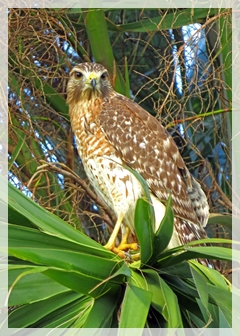
great egretFrom the viewing platform at the marsh, I watched a Cooper’s hawk soar high in the sky. When I turned to leave, I looked down and saw several white egret feathers on the ground below. Whether it was the hawk, a raccoon, or some other predator, the park had one less egret in the pond. Those beautiful white feathers were a stark reminder of how precarious life is, not just for wild birds, but for us all. I was reminded of Ecclesiastes: “For people and animals share the same fate—both breathe and both must die.” [3:19]

Beginning with the words, “Everything is meaningless,” much of Ecclesiastes expresses disappointment, discontent, and a cynical world-weariness. The world is a fallen place where life is unfair: good happens to the bad and bad befalls the good. The future is unknown and filled with uncertainties and satisfaction is not guaranteed. We can strive for a goal and never reach it or attain the goal and discover it wasn’t worth the effort. The pursuit of pleasure, possessions, wealth, achievements, wisdom, or power comes to nothing. As disheartening as the author’s words are, I’m not sure we can really argue with them. Life is capricious and frequently makes no sense and the same destiny—death—awaits both the righteous and wicked. Sadly, sometimes, our efforts really do feel like an exercise in futility.

Yet, hidden in those sobering verses are nuggets of beauty and comfort. Just because life is hard and its meaning is hard to find doesn’t mean life is meaningless. Granted, some seasons of life are perplexing, challenging, or downright unpleasant but, as much as we wish we could control or understand them, they are beyond human control and understanding. The seasons of life are not in our hands but God’s. Rather than knowledge and comprehension of His plan, however, God gives us sort of a consolation prize: the ability to find enjoyment in life. While we can’t control the seasons, we can accept and find contentment in them.

Those feathers on the ground were a reminder to live life with gusto—to accept and enjoy whatever we’ve been given—to seize the day! Yet, Ecclesiastes is not an “eat, drink, and be merry because tomorrow you die!” promotion of hedonism. Woven throughout its verses is one more theme—that of fearing God. We can’t find the meaning to life apart from God and we certainly can’t live life on our own terms. The enjoyment of life neither permits us to disobey God not does it exempt us from His law. Telling us to enjoy life, Ecclesiastes also tells us to fear (i.e., obey, revere, love, serve, honor and worship) God while doing so!

Yet God has made everything beautiful for its own time. He has planted eternity in the human heart, but even so, people cannot see the whole scope of God’s work from beginning to end. So I concluded there is nothing better than to be happy and enjoy ourselves as long as we can. [Ecclesiastes 3:12 (NLT)]

That’s the whole story. Here now is my final conclusion: Fear God and obey his commands, for this is everyone’s duty. Go will judge us for everything we do, including every secret thing, whether good or bad. [Ecclesiastes 12:13 (NLT)]

Copyright ©2018 jsjdevotions. All rights reserved. 

THERE BUT FOR THE GRACE OF GOD…

The human heart is the most deceitful of all things, and desperately wicked. Who really knows how bad it is? [Jeremiah 17:9 (NLT)]

For from within, out of a person’s heart, come evil thoughts, sexual immorality, theft, murder, adultery, greed, wickedness, deceit, lustful desires, envy, slander, pride, and foolishness. [Mark 7:21-22 (NLT)]

Grand Canyon of YellowstoneI recently saw a play in which the only character, Lisa, presents a monologue about her life and family. The audience learns that her father, Walter, a German-born Jew, escaped to the U.S. as part of the kindertransport effort but that the rest of his family perished at Auschwitz. During her monologue, Lisa tells of taking her then 75-year old father to visit the Auschwitz Memorial. While touring the concentration camp, Walter tells his daughter about attending school with members of the Hitler Youth. Being a Jew, he couldn’t wear one of their uniforms but another boy in his school, a Gentile, refused to wear one. Her father then tells her that, in spite of the horror of Auschwitz and the loss of his family, he is glad he was born a Jew—because he didn’t have the option of becoming a Nazi! Unlike the Gentile boy who refused to join (and suffered because of it), Walter realized that, had he not been Jewish, he might have joined the Nazis. He knew that part of him could have been as merciless and evil as the men who rounded up and exterminated his family.

After the war, Walter returned to Germany as an interrogator of German personnel. In her soliloquy, Lisa tells how he admitted to callously browbeating one prisoner into confessing that he’d rounded up Jews from the Ghetto. Rather than turn the prisoner over to the allies for trial, Walter handed him over to the Russians, men he knew would summarily execute the German in the woods. Perhaps Walter was right; in other circumstances, he might have joined the Hitler Youth.

Hearing this story made me wonder what darkness lurks in my heart. In other circumstances, could I spew hate, inflict pain, ignore my conscience, turn my back on my brothers and sisters, or close my eyes to evil? Could I ever be like Haman (who plotted to exterminate the Jews) or Abimelech (who killed his 70 brothers)? Could I have worn a Hitler Youth uniform? Sadly, in another time, in another place, perhaps my heart could have deceived me to do just that.

Just because I’m capable of evil, however, doesn’t mean I have to be evil. Rather than betray Jesus as did Judas, I could be as faithful as John. Rather than the closed minds and murdering hearts of those who stoned Stephen, I could be as holy and forgiving as the martyred man. While I could be as scheming and immoral as Herodias, I also could be as obedient and fearless as her victim John the Baptist. Yes, I could have joined the Hitler Youth, but I also could have refused to be part of such evil and willingly suffered the consequences.

There is something terribly wrong with our hearts that, if allowed to grow, can become horrendous and unthinkably evil, but there also is something beautifully right with them. We are made in the image of God; deep inside us there is something of Him and He has written his law in our hearts. He gave us the gift of free will and, with every choice, we either become more or less like the person God made us to be. Because our hearts can be deceitful, corrupt, and self-serving they can lead us astray but they don’t have to! When led by the Holy Spirit, our hearts can be so filled with good that there is no room left for evil.

For I was born a sinner—yes, from the moment my mother conceived me. … Create in me a clean heart, O God. Renew a loyal spirit within me. Do not banish me from your presence, and don’t take your Holy Spirit from me. [Psalm 51:5,10-11 (NLT)]

But the Holy Spirit produces this kind of fruit in our lives: love, joy, peace, patience, kindness, goodness, faithfulness, gentleness, and self-control. There is no law against these things! Those who belong to Christ Jesus have nailed the passions and desires of their sinful nature to his cross and crucified them there. [Galatians 5:22-24 (NLT)]

Copyright ©2018 jsjdevotions. All rights reserved.

ONLY HE CAN MAKE A TREE FROG

For ever since the world was created, people have seen the earth and sky. Through everything God made, they can clearly see his invisible qualities—his eternal power and divine nature. So they have no excuse for not knowing God. [Romans 1:20 (NLT)]

A friend sent a link to some of the most beautiful landscapes in the world; you’ve probably gotten a similar one and been amazed by photos of the northern lights in Iceland, the red and orange pillars of Bryce Canyon, or the Glowworm caves in New Zealand. Awestruck by God’s amazing creation, I thought of how He makes Himself known through all that He’s made. Unfortunately, we tend to hear God better when He shouts with the exceptional and impressive than when He whispers with the small and familiar. obedient plant (false dragonhead) - green tree frogWe’re sure to notice God in the Grand Canyon, the multitude of stars in the night sky, or when watching two million wildebeest, zebra and gazelles migrate through the Serengeti. We sense Him in extraordinary or exotic things like the peacock’s splendid tail, Devil’s Tower, or spectacular sunsets and sunrises. But do we notice Him in the commonplace and unremarkable?

Yesterday, I watched, spellbound, as several bees visited the flowers I was photographing. A bee would enter one of the purple tubular blossoms and disappear as it inched its way deep into the corolla to gather pollen and nectar. After backing out, it would move on to another bloom. A perfect fit, it was as if bee and flower had been designed for one another (and they were). The flowers’ scent attracted the bees and, while the bees gathered food for their hive, they pollinated the plants. What was happening in these ordinary flowers growing wild by the road was truly extraordinary!

God’s grandeur is revealed in the giant trees of the redwood forest but His attention to detail is found in the one billion bacteria that live in just one gram of the forest’s soil. His greatness is made known in the 1,600 miles of the Great Barrier Reef but also in the 1,500 species of fish, 5,000 species of mollusks, 17 species of sea snakes and 6 species of turtles living there. We see our ingenious Creator in the enormous African elephant but also in the oxpeckers and cattle egrets that ride on its back and in the lice, ticks and parasites living on the elephant that are eaten by those birds. God’s artistry is revealed in the 28,000 species of orchids and but also in His amazing design of the wasps, bees, flies, moths, ants and gnats that pollinate them.

God teaches us, speaks to us, and provides for us through his creation. Let’s not fail to see His marvelous work in the everyday and mundane: wasps building a nest, mushrooms appearing on the lawn after a rain, maple leaves turning red in autumn, raindrops glistening on a flower petal, or a squirrel gathering nuts. You may remember the first line of Joyce Kilmer’s poem Trees: “I think that I shall never see A poem lovely as a tree.” The last line reads: “Poems are made by fools like me, But only God can make a tree.” Only God can make a tree, but He’s also the only one who can make the lichens and fungi living on its bark, the small tree frog hiding in its leaves, and the sparrow nesting in its branches.

Praise God, from whom all blessings flow!

Nature is the living, visible garment of God. [Johann Wolfgang Von Goethe]

All things bright and beautiful, All creatures, great and small, All things wise and wonderful, The Lord God made them all. [Cecil Francis Alexander]

O Lord, what a variety of things you have made! In wisdom you have made them all. The earth is full of your creatures. … I will sing to the Lord as long as I live. I will praise my God to my last breath! May all my thoughts be pleasing to him, for I rejoice in the Lord. [Psalm 104:24,33-34 (NLT)]

 Copyright ©2018 jsjdevotions. All rights reserved.