SELFWILL – The Pilgrim’s Progress

Examine yourselves to see if your faith is genuine. Test yourselves. Surely you know that Jesus Christ is among you; if not, you have failed the test of genuine faith. [2 Corinthians 13:5 (NLT)]

strawflowersJesus clearly promises forgiveness of our sins but some people treat this gift as little more than a Monopoly game’s “Get Out of Jail Free” card. The pilgrims Honest and Great Heart meet such a person in John Bunyan’s The Pilgrim’s Progress. Motivated by God’s promise of “eternal security,” Mr. Selfwill feels free to live any way he wants. Since David committed adultery, Rahab lied, and Jacob deceived, he believes he can do those things, as well. He thinks anyone who believes that Jesus has forgiven his sins has the freedom to sin willfully as long as he has some virtues to go along with his sins. Assuming his good deeds cancel out his bad ones, Selfwill deliberately sins.

Because we are sinners, all Christians will struggle with sin and it is not until we see Jesus face to face that we’ll be completely free from sin. Nevertheless, Christ didn’t die on the cross so mankind would continue to sin! Honest and Great Heart point out that falling into sin and deliberately committing it are not the same things. There is a difference between a stumble into the mud puddle and an eager and deliberate leap into the muck so one can wallow in it!

Selfwill has the attitude of, “Since I’m saved and all my sins are forgiven, I can keep sinning.” While a genuine believer won’t lose his share in Christ’s salvation when he sins and repents, Selfwill isn’t a genuine believer. Confident that he can’t lose his salvation when he eagerly and intentionally sins, Selfwill doesn’t realize he’s never been saved! Believing that Jesus died for our sins is the correct doctrine but believing in a doctrine is not what saves us. We are saved when we believe in and give our lives to the right person: Jesus Christ (a distinction Selfwill missed). Forgiveness is not something to be taken lightly and, for the true believer, willfully continuing to sin is not an option. Rather than deliberately committing a sin, the true believer wants to be delivered from his sins.

If we are living a life that is indistinguishable from that of an unbeliever, it’s time to look in a mirror and examine ourselves. Have we truly received Christ as our Lord and Savior? Mr. Selfwill (like Misters Formality, Talkative, Hypocrisy, Ignorance, and Moneylove) didn’t come to the Way through the narrow Gate: Jesus. Unfortunately, when these men come to the Celestial City, they will find the door locked and not gain admittance.

You can enter God’s Kingdom only through the narrow gate. The highway to hell is broad, and its gate is wide for the many who choose that way. But the gateway to life is very narrow and the road is difficult, and only a few ever find it. … Not everyone who calls out to me, “Lord! Lord!” will enter the Kingdom of Heaven. Only those who actually do the will of my Father in heaven will enter. On judgment day many will say to me, “Lord! Lord! We prophesied in your name and cast out demons in your name and performed many miracles in your name.” But I will reply, “I never knew you. Get away from me, you who break God’s laws.” [Matthew 7: 13-14, 21-23 (NLT)]

Copyright ©2019 jsjdevotions. All rights reserved.

REMEMBER LOT’S WIFE – The Pilgrim’s Progress

For there are many unruly and vain talkers and deceivers…Whose mouths must be stopped, who subvert whole houses, teaching things which they ought not, for filthy lucre’s sake. [Titus 1:10-11 (KJV)]

Smith Mine

Demas was a fellow worker of Paul’s during his ministry but, during Paul’s second imprisonment in Rome, Demas left abruptly. Paul wrote Timothy that Demas had deserted him because he loved the good things of the world. How sad it had to have been for Paul to write that he’d been forsaken by one of the men he’d trained, a man with whom he ministered, a man he loved. We don’t know if Demas forsook the Lord along with Paul or whether the worldly things he loved in life were fortune, fame, or flesh. Nowhere in Scripture do read any more of Demas or if he ever returned to the faith.

In John Bunyan’s The Pilgrim’s Progress, Christian and his companion Hopeful come to a hill called Lucre where they encounter Demas. Not a word we use nowadays, “lucre” is a Middle English word for money and both the King James Version of the Bible and Bunyan’s allegory were written in Middle English.

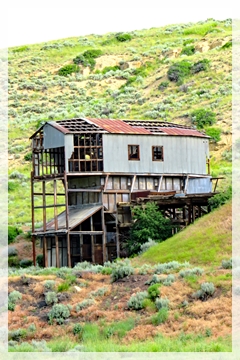
On Lucre hill, and just a little off the Way, is a silver mine. The ground around the mine is quite unstable (Bunyan calls it “deceitful”) and often collapses, causing severe injury or death to anyone who’s ventured too close. Calling to the Pilgrims and inviting them to step off the path is Demas. He promises that, with a little effort, they’ll become rich. Whether it’s merely curiosity or the lure of earthly treasures, Hopeful is tempted to step out of the Way but Christian cautions him. The Pilgrim asks Demas about the danger and whether the stop might hinder people on their pilgrimages. Although Demas assures them it’s not very dangerous if one is careful, his blush gives away the deceit in his answer.

Although Christian calls him an enemy of the Lord of the Way, Demas claims to be one of their comrades. Christian knows better and says Demas is the great-grandson of Gehazi [2 Kings 5:20-24] and the son of Judas [Matthew 26:14-15]: both men who betrayed the Lord for money. As Christian and Hopeful go on their way, other Pilgrims heed Demas’ call and disappear into the pit.

Christian and Hopeful then see a strange monument beside the Highway that looks much like a woman. Its sign reads: “Remember Lot’s wife!” They realize it is the pillar of salt that once was the woman who looked back at Sodom with a “covetous heart.” That she escaped one judgment (Sodom) only to be destroyed by another was a lesson not lost on the men. Serving as both a caution about sin and an example of God’s judgment, the monument stands in sight of Demas and the Pilgrims who prefer earthly treasures to the Way. Those tempted by Lucre’s promise could see the monument’s reminder if only they’d lift their eyes!

As others did before him and more have done after, Demas lost his way because of the allure of lucre. Bunyan’s lesson is clear: the lure of riches can lead us to a slippery and deceitful slope. Don’t venture too close or you may plunge into the depths! Run from sin and don’t turn back. Heed God’s warnings and “always remember Lot’s wife!”

Remember Lot’s wife. Whosoever shall seek to save his life shall lose it; and whosoever shall lose his life shall preserve it. [Luke 17:32-33 (KJV)]

Love not the world, neither the things that are in the world. If any man love the world, the love of the Father is not in him. [1 John 2:15 (KJV)]

Copyright ©2019 jsjdevotions. All rights reserved.

EXTRA WEIGHT

Then Jesus said, “Come to me, all of you who are weary and carry heavy burdens, and I will give you rest.” [Matthew 11:28 (NLT)]

Don’t be afraid, for I am with you. Don’t be discouraged, for I am your God. I will strengthen you and help you. I will hold you up with my victorious right hand. [Isaiah 41:10 (NLT)]

Are we weak and heavy-laden, cumbered with a load of care? Precious Savior, still our refuge — take it to the Lord in prayer. [“What a Friend We Have in Jesus” by Joseph Scriven]

Indian PaintbrushBecause of my foot surgery, I was stuck in an air boot (and “air” definitely does not mean “light as air”) for five weeks. Weighing just a little over three pounds, it felt more like thirty by the end of each day. Wearing a cumbersome boot that never quite matched the height of any of my shoes took its toll on me. Eventually, my foot didn’t hurt as much as did my knee, hip, and back from hobbling along in my heavy unmatched footwear. Carrying extra loads of anger, resentment, worry, heartache, guilt, or regret can weigh us down in much the same way that boot affected my body and gait. Instead of walking with confidence and strength, we limp along in fear, discomfort and doubt. The difference, of course, is that there was purpose to my burdensome boot but there is no purpose in being saddled with emotional baggage. Jesus asks us to give Him our burdens; with Him in our lives, we don’t have to carry any extra weight in our hearts.

Now that I’m out of the boot, my toes, foot, ankle and leg are sore. In spite of doing physical therapy during recovery, my muscles got weak and tight from lack of use and it’s taking time and effort to regain my strength and flexibility. Nevertheless, I go walking, increasing the distance incrementally each time, and it becomes a little easier every day. Healing of both body and soul takes patience, effort, and time.

Like other muscles, our hearts weaken when we don’t exercise them. Our capacity to give and forgive, to love and share, to be compassionate and understanding can atrophy from lack of use. Maybe that’s what happened to the Grinch’s heart when it became “two sizes too small.” Fortunately, like the Grinch, we can strengthen and expand those shriveled parts of our hearts. It requires prayer and effort and probably won’t happen overnight. That first bit of forgiveness given after a long stretch of blame probably will be a struggle, a show of generosity after a period of stinginess could hurt a little, a gesture of compassion after a bout of indifference might cause discomfort, and the hand of friendship may not extend easily if it hasn’t been stretched out recently. Take heart; it gets easier the more we do it. And, even better than a physical therapist, we have the Holy Spirit to strengthen and empower us.

O Holy Spirit, descend plentifully into my heart. Enlighten the dark corners of this neglected dwelling and scatter there Thy cheerful beams. [St. Augustine]

Therefore, since we are surrounded by such a huge crowd of witnesses to the life of faith, let us strip off every weight that slows us down, especially the sin that so easily trips us up. And let us run with endurance the race God has set before us. [Hebrews 12:1 (NLT)]

Copyright ©2019 jsjdevotions. All rights reserved.

ON THE RADIO

So Joshua told the Israelites, “Come and listen to what the Lord your God says.” [Joshua 3:9 (NLT)]

While recovering from foot surgery, I had home visits from Mike, a physical therapist. He told me of a day, more than eighteen years ago, when he visited a new elderly patient. The obviously wealthy man lived alone in a beautifully appointed 6,000 square foot penthouse overlooking the Gulf of Mexico. Mike remembers him as the most unpleasant, uncooperative, bitter and miserable person he’s ever met. After that visit, the therapist drove to a nearby town for another new patient visit. Although less than an hour’s drive northeast of the affluent man’s luxurious home, it was a world apart. Today, the population in the first town has a median age of 65.6, a median household income of over $90,000, and a poverty rate of less than 10%. Just thirty miles away, the second town has a median age of 26, with a median household income of less than $29,000, and 41.6% of its population live below the poverty level. Although the numbers were different eighteen years ago, the disparity would have been the same (or even worse).

The home Mike visited was a stark contrast to the beachfront luxury penthouse. As he gingerly walked up rickety wooden stairs and knocked on the screen door of a mobile home, Mike wondered what to expect. Visiting a woman who’d had a total knee replacement, he was warmly greeted at the door by her husband and offered a cup of coffee and a churro. As he entered their cramped home, he saw pictures drawn by grandchildren decorating the refrigerator and family photos on all the tables. He knew they were people of faith from the pictures of both Mary and Jesus hanging on the walls and the cross by the door. Yet, even without those signs, the couple’s words, joy, optimism, generosity, and love for one another were evidence of their faith.

That first day, as Mike was driving back to town, Danny’s Song, by Loggins and Messina, played on the car radio. When he heard the words, “And even though we ain’t got money, I’m so in love with you honey, And everything will bring a chain of love,” he couldn’t help but think of the couple he’d met that morning. It was when he heard, “Yeah, don’t you live alone, Try to earn what lovers own,” that Mike thought of his wealthy old client; he was so affected that he had to pull over to the side of the road. The man had everything that money could buy and, yet, he lived alone and had nothing of real value. The couple, living in a rented trailer, had next to nothing and, yet, they had everything: faith, family, purpose, love, and one another! As rich as the old man was, he couldn’t buy the love that the couple owned.

Eighteen years later, Mike still remembers that couple and how, in a beautifully orchestrated God-incident, Kenny Loggins’ words in a popular song helped point him to the things that mattered most in his life at a time he most needed to rethink his priorities. My therapist learned a valuable lesson that day, one his wealthy client never did. The woman became his favorite client (and not just because of the churros and loving family he met during his several visits). Every time he left their home, he felt that some of their faith, joy and hope rubbed off on him. That moment eighteen years ago has stayed with Mike all these years as a constant reminder of what actually is important in life.

Just in case Mike didn’t get His message about priorities, did God arrange that song to come on the radio at exactly that time for him? I don’t know any more than I know if God was responsible for having Zach Williams’ song Fear is a Liar come on my car radio the afternoon I desperately needed that reminder. All I know is that God, with his quirky sense of humor and amazing sense of timing, could certainly manage a song on the radio!

God speaks to us in a number of ways: Scripture, Jesus (the Word who became flesh), the still small voice of the Holy Spirit, other believers, and His amazing creation. Scripture also tells us He’s spoken in some unusual ways including the urim and thummim that were kept in the high priest’s breastplate, the fleece of a sheep, a burning bush, a rainbow, and even a donkey! Capable of speaking to us at any time in any way He chooses, He might well have used a Kenny Loggins’ song. God keeps after us until we get the message and Scripture tells us that it never went well for people when they failed to listen to Him. Let’s always be open to hearing God’s voice and receptive to His message, whether it’s in the sky with a rainbow or on the radio with a song!

As it is written in the Scriptures, “They will all be taught by God.” Everyone who listens to the Father and learns from him comes to me. [John 6:45 (NLT)]

I listen carefully to what God the Lord is saying, for he speaks peace to his faithful people. But let them not return to their foolish ways. [Psalm 85:8 (NLT)]

Copyright ©2019 jsjdevotions. All rights reserved.

SHARING

For “everyone who calls on the name of the Lord will be saved.” How then will they call on him in whom they have not believed? And how are they to believe in him of whom they have never heard? And how are they to hear without someone preaching? [Romans 10:13-14 (ESV)]

tulips - keukenhof gardens -netherlandsThe king of Aram was at war with Israel, Samaria was under siege, and there was a great famine in the city. Even food that wouldn’t normally be eaten was prized. For example, the head of a donkey, considered an unclean animal, sold for about two pounds of silver. The situation was so dire that some people had even resorted to cannibalism. Without the intervention of God, there was no hope in sight.

Unwelcome in the city, four lepers, the outcasts of society, sat outside the city gate. The men were desperate; either they would die of starvation where they sat or violently at the hands of the enemy. Having nothing to lose, and on the off chance they might even be spared, they decided to surrender to the Arameans.

That evening, the lepers entered the enemy camp only to discover that it had been abandoned. As the prophet Elisha predicted, God had intervened; the Aramean soldiers, thinking they heard the sounds of a great army approaching, had fled the camp in panic. Although the camp was deserted, food, tents, clothing, livestock, silver and gold remained. The men went from tent to tent, enjoying the spoils as they ate and drank their fill and gathered up riches. The four then realized they had to let the townspeople know that the enemy had fled. These pariahs may well have been the last to receive any food had it become available. Nevertheless, fearful that something bad might happen to them if they didn’t share the good news and bounty of the deserted camp, they returned to the people who had shunned them as the “unclean.” The men told the city’s gatekeepers the good news that the siege was over and abundance lay just outside their gate.

We’re unlikely to be under siege and facing starvation in a walled city or to be considered “unclean” lepers and forced to sit outside the city gates, yet I wonder if this story might apply to 21st Christians. The lepers knew they were obligated to share the good news and that it was wrong not to share God’s blessings with the people of Samaria. If they hadn’t, the city could have starved while blessings lay just outside their gates. Their story teaches us about forgiveness and not bearing a grudge and is a reminder to share our blessings. Could this also be a lesson about evangelism? Do we have good news that should be shared? Do we know anything about the living water and bread of life that can feed a starving people and give them eternal life? Could those four lepers also be showing us the importance of sharing the good news of the gospel?

For if I preach the gospel, that gives me no ground for boasting. For necessity is laid upon me. Woe to me if I do not preach the gospel! [1 Corinthians 9:16 (ESV)]

Copyright ©2019 jsjdevotions. All rights reserved.

IN PREPARATION FOR THE JOURNEY

We broke camp at the Ahava Canal on April 19 and started off to Jerusalem. And the gracious hand of our God protected us and saved us from enemies and bandits along the way. So we arrived safely in Jerusalem. [Ezra 8:31-32a (NLT)]

Bryce - Losee CanyonAfter years of exile, the Jews were finally returning home from their captivity in Babylon. Ezra assembled a group of 1,500 men and their families and led the second emigration back to Jerusalem. It would take about four months for the over 5,000 people to make the 900 mile journey across the desert. Since they were transporting about 30 tons of silver, gold, and bronze along with wheat, wine, olive oil, and salt, there was serious danger from marauding bandits.

When Persia’s King Artaxerxes offered Ezra an armed escort, he refused. Having assured the king that God’s hand of protection was all they needed, it would have been embarrassing and hypocritical to then accept military help. The Judeans couldn’t just “talk the talk” about the Hebrew God, they had to “walk the walk” and live as if they truly believed Ezra’s words and God’s promises.

Instead of trusting in soldiers, Ezra chose to trust in God. Although he was confident in God, Ezra did not take His protection for granted. He gave orders for the people to fast and earnestly pray that God would take care of them. Knowing the trip could be disastrous without God’s protection, they committed themselves to trusting in God alone. This choice was a strong test of everyone’s faith. It’s remarkable that two chapters in the book of Ezra are written about their preparation for the trip, but just a few sentences tell about the journey itself and their safe arrival. Perhaps, if we spent more time in prayer and faith preparing for our life’s journeys, they would be as free of difficulty as Ezra’s.

Prayer is the key to Heaven,
But faith unlocks the door;
Words are so easily spoken,
Prayer without faith is like a boat without an oar.
Have faith when you speak to the Master,
That’s all he asks you for.
Prayer is the key to Heaven,
But faith unlocks the door.
[Samuel T. Scott & Robert L. Sande]

But when you ask him, be sure that your faith is in God alone. Do not waver, for a person with divided loyalty is as unsettled as a wave of the sea that is blown and tossed by the wind. Such people should not expect to receive anything from the Lord. [James 1:6-7 (NLT)]

Copyright ©2019 jsjdevotions. All rights reserved.