
For we live by faith, not by sight. [2 Corinthians 5:7 (NIV)]
 An early morning rainstorm left a rainbow over the Gulf. “Oh, thank you, Lord,” I said, “That’s just what I needed.” You see, I was suffering from a serious case of the glums and gloomies. Having recently undergone foot surgery, I knew some of my blues had to do with pain, poor sleep, the nuisance of immobility, undone tasks, and “cabin fever.” Nevertheless, that didn’t seem to fully explain my melancholy. Struggling to discern its underlying cause, I’d prayed that God would lead me to the root of the problem. In my darkness, I’d also asked Him to give me a little sign that He heard my pleas. God is big on rainbows—just ask Noah—and it felt like He hung that rainbow out just for me and hope was on the horizon.
Later that day, I came across an article listing the qualities of the prodigal son’s father. It included “willing to live with ambiguity” which struck a chord with me. Perhaps my prayers had been answered with that simple phrase. Preferring certainty to ambiguity, I knew that several unresolved issues, unanswered questions, and unclear courses were troubling me. Perhaps, my sadness was because, wary of living with the unknown, I wanted to walk by sight rather than faith!
Out of curiosity, I took an on-line test as to whether or not I’m a risk taker (someone willing to live with ambiguity). By this point in life, I knew the answer and the test results concurred with my assessment. “While you may take risks on rare occasions, you usually choose the well-traveled path,” it said while adding that I prefer a “stable environment in which changes are made gradually and with ample warning.” Telling me that I rarely seek out situations with uncertain outcomes was just another way of saying I don’t like to live with ambiguity. I’m not comfortable unless I know what’s around the next corner!
If I’d been Elisha, before joining Elijah as a prophet, I would have asked a neighbor to care for my plow and oxen rather than cooking the oxen over a plow-fueled fire. If I’d been Peter, I might not have stepped out of the boat. If I’d been Mary, I would have asked Gabriel a whole host of questions before saying I’d be the Lord’s servant. If I’d been Ruth, rather than go to Judah, I probably would have stayed in Moab. And, if I’d been Moses, I would have asked God for a detailed itinerary and map to the Promised Land. All of these people lived with ambiguity and answered God’s call without being given a step-by-step plan or knowing the outcome. They could live with ambiguity because they wholly trusted in the Lord.
Life is filled with unanswered questions and unknown outcomes. While I tend to think of risk and uncertainty as leading to things like loss, sorrow, weakness, insufficiency, insecurity, sickness, trouble, and failure, they also can lead to gain, joy, strength, plenty, confidence, health, opportunity, and success. Elisha, Peter, Mary, Ruth, and Moses all took risks and were blessed for it! Wanting a divine road map, I’d forgotten that I already have one in my Bible where I’m told to trust in God’s plan and reassured that He’s always with me.
Rather than seek to know what the future holds for us, we can seek God’s will and let Him show us where to go. We may not know what tomorrow brings but we know the One who holds our tomorrows in His hands. We can’t control every situation but, by the grace of God, we can control our attitude in every situation and learn to embrace the ambiguity of life.
It is not the cares of today, but the cares of tomorrow, that weigh a man down. For the needs of today we have corresponding strength given. For the morrow we are told to trust. It is not ours yet. It is when tomorrow’s burden is added to the burden of today that the weight is more than a man can bear. [George Macdonald]
 Yesterday, when writing about various translations of Scripture, I was reminded of a story about four ministers who were discussing their preferred Bible translations. The first pastor said he favored the King James because, in spite of the archaic language, its words conveyed divine power with their elegance and majesty. The second pastor noted that he preferred the Amplified Bible because its alternate readings helped clarify and broaden the meaning of the original text. Explaining that his church was made up of new believers, the third pastor said he liked the Living Bible because its modern paraphrase of traditional Scripture was easily understood by his congregation. The three men then turned to the fourth minister and asked what Bible version he favored. The man answered that his favorite translation was his father. “You see,” he explained, “He put God’s word into practice which is the best translation of Scripture that I’ve ever seen!”
 Author John Greco wrote of answering a call for a 24-hour phone prayer ministry to find a man in crisis. Sobbing, the caller confessed that he was a dog breeder and that he hadn’t known that every dollar he gave to the church was a sin that made God angry. A new believer, the man had been following a Scripture reading plan with his King James Bible. That morning, he’d read Deuteronomy 23:18: “Thou shalt not bring the hire of a whore, or the price of a dog, into the house of the Lord … for even both these are abomination unto the Lord thy God.” Thinking God found his tithe from selling dogs disgusting and sinful is what had him so distraught. What the man didn’t understand, but Greco patiently explained, was that, in the Old Testament, “dog” was a euphemism for “male prostitute.” Reassuring his caller, Greco read the same verse from the NIV translation: “You must not bring the earnings of a female prostitute or of a male prostitute into the house of the Lord….” The King James, being a word-for-word translation, had given the literal translation rather than the original meaning. The NIV, being about half way between word-for-word and thought-for-thought translations, used “male prostitute” with a footnote that explained it had been “dog” in the original Hebrew.
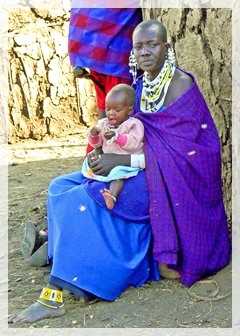 Yesterday’s devotion made me do some hard thinking about my commitment to Christian missions. Unfortunately, there are large segments of the world’s population that have never heard of Jesus. According to the Joshua Project (an organization that gathers, integrates and shares information to facilitate the implementation of the Great Commission), 41.6 % of the world’s population is considered “unreached,” meaning they have little or no history of Christianity and the number of native Christians and available resources are so minimal that outside assistance is necessary if the Gospel is going to be heard.
 Last week, in That Was God, I wrote these words: “For those who do not believe in Jesus Christ as their Savior, death means punishment and eternal separation from God,” but reminded readers that the exclusive truths of Christianity don’t mean that we are exclusive in our love; everyone is our neighbor and a person to be loved! Finding the devotion thought provoking, a friend forwarded it to the members of his small group. One man found the message contradictory and responded this way: “In other words, if you weren’t lucky enough to be born a Christian, you’re screwed. But, we still love you, neighbor!”
 Thrilled at the result of her biopsy, Mary joyfully announced, “God is good and God always answers prayers!” Indeed, He is and does but we must remember that God does not always answer prayers the way we want Him to. I recently wrote that God is not a miser and our prayers should not be puny half-hearted ones. Nevertheless, regardless of the size of our petitions, we must remember that it is God’s will, not ours, that will be done. In spite of fervent prayers, some biopsies will say “malignant,” some prodigals will never return, some marriages will fail, and some people will not recover.
 Devotions of the Heart