
Work at living in peace with everyone, and work at living a holy life, for those who are not holy will not see the Lord. Look after each other so that none of you fails to receive the grace of God. Watch out that no poisonous root of bitterness grows up to trouble you, corrupting many. [Hebrews 12:14-15 (NLT)]
 In speaking about prayer recently, our pastor referred to the 2009 church-wide assembly of our denomination. Knowing that the agenda included some divisive topics, the Presiding Bishop asked the delegates to spend the 50 days leading up to the convention devoted to both prayer and the study of Scripture. Once the Assembly convened, there was heated discussion among the delegates about the writing of a statement on human sexuality. The debate about this controversial subject was unique because the Presiding Bishop, Mark Hanson, halted the proceedings every twenty minutes to lead the assembly in prayer. Delegates on opposing sides, who had been vehemently arguing minutes earlier, often would lay hands on one another and pray for each other during these breaks. Praying for unity in spite of their disagreements, the delegates showed respect and love for one another. Although the final statement passed by only one vote and there is still disagreement within the church about it, without those pauses for prayer, that debate could have caused far more damage to the church than did the tornado that accompanied the assembly.
As I thought about the power of prayer, I couldn’t help but think of a friend who recently left the church choir over a disagreement with the choir director. I have no idea what caused their rift but I’m sure it was less consequential and certainly less controversial than a church-wide statement regarding sexuality. I couldn’t help but wonder what would have happened if these two women of faith had paused, gently laid hands on one another, and prayed together. As it is now, neither woman won the argument; the choir lost a good soprano and the singer lost the opportunity to use her God-given talent to raise her voice in worship.
The Bishop’s consistent call for prayer demonstrates a Christian way of settling arguments. Following his example, perhaps we could rethink our approach to conflict resolution. When we have a concern or complaint, we could prepare with Scripture and prayer before voicing our point of view and then pause for prayer during our dispute. Praying with and for someone helps us connect with one another; it’s difficult to stay angry with someone when praying for him. Praying together takes our focus off us and puts it where it should be—on God and what He wants. Instead of asking God to change the other person, we find ourselves asking God to show us where we need to change. While prayer can help resolve conflict, even when it doesn’t, prayer brings us guidance, peace and the possibility of remaining friends with our adversaries. When we pray together, we just might find our confrontations sounding more like conversations and our squabbles, if not settled, becoming agreements to disagree.
Have no fear, we will pray! [Bishop Mark Hanson]
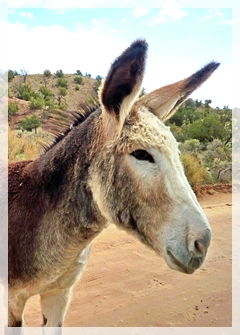 While reading C.S. Lewis’ The Horse and His Boy, I couldn’t help but think of the proud Babylonian King Nebuchadnezzar. He was so full of himself that he erected a 90-foot golden statue and then demanded that people fall down and worship it as a sign of loyalty to him. When interpreting one of the king’s dreams, Daniel told Nebuchadnezzar that he would be driven from human society and only regain his kingdom when the king learned that heaven, not man, rules. The king was warned to change his evil behavior. In spite of the caution and even though he’d seen the power of the Israelites’ one true God when Shadrach, Meshach, and Abednego survived the fiery furnace, Nebuchadnezzar didn’t change his ways. While looking down from his rooftop and surveying the wonders of Babylon, he expressed pride in his accomplishments and congratulated himself on his mighty power. Before the words were even out of his mouth, a voice from heaven pronounced judgment upon him. The king developed what is known as boanthropy, a psychological disorder in which one becomes delusional and thinks he or she is a cow. The high and mighty king was driven from society and lived and ate like an animal for the next seven years.
 After struggling with the writing of a devotion, it was finally finished. Thankful, I listed its completion in my gratitude journal that night. The next morning, I discovered it was lost—vanished into thin air and nowhere to be found (and believe me, I tried)! Looking back, I probably cut the devotion from my “Work On” file but got distracted and never pasted it into my “To Post” file. Unfortunately, by the time I discovered my error, both files had been saved in versions without the words over which I’d labored so long. When it became clear that those paragraphs truly had vanished into the black hole of my computer, I was annoyed with myself and upset, upset enough to want that thanks entry crossed out in my gratitude journal!
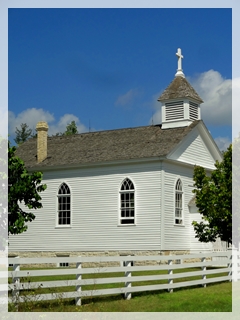 His testimony enraged the Jewish high council and he was taken from the city and stoned to death. Stephen was the first of the Christian martyrs but clearly not the last. We’ve all been horror-stricken by the recent news from Egypt where ISIS thugs attacked Coptic Christians on their way to a remote monastery. According to witnesses, the men were told their lives would be spared if they recited the shahada, the Islamic declaration of faith. When they refused to do so, they were gunned down. Since December, more than 100 Coptic Christians have died in Egypt in four different attacks. On Palm Sunday, two of their churches were bombed leaving forty-four dead. It’s not easy being a Christian in Egypt.
 I’m in the midst of reading a series of seven children’s fantasy novels, The Chronicles of Narnia, by C.S. Lewis. Some of them, like The Lion, the Witch and the Wardrobe, I read as a girl but others are new to me. The world of Narnia is a world to which one wants to return again and again and I’m enjoying my visit ever so much. C.S. Lewis, however, was much more than a writer of fantasy, non-fiction and poetry; he was a well-known lecturer, a brilliant scholar and a renowned Christian apologist.
 Devotions of the Heart