
 Pray like this: Our Father in heaven…” [Matthew 6:9a (NLT)]
Throughout Scripture, God is called by several ancient names that reflect His character: El Shaddai (God Almighty), El Olam (The Everlasting God), El Elyon (The Most High God), and El Roi, (The God Who Sees). He is Yahweh-Jireh (The Lord Will Provide), Yahweh-Rapha (The Lord Who Heals), and Yahweh-Roh (Our Shepherd). We also find references to God as both a Rock and a King. Yet, with all these ways to address God, when Jesus taught us how to pray, He chose to address God with the words “Our Father.”
As I pondered calling on our Father in prayer, I recalled an episode that occurred more than twenty-five years ago when two of our children attended college together. They went camping with a group of friends and enjoyed beers around the campfire. In the wee hours of the morning, the group was awakened by a police officer who breathalyzed them all. Unfortunately, the results indicated they’d been drinking and, since all were all under 21, each received a ticket for “illegal possession of alcohol by consumption” (a Class C misdemeanor). My children’s friends were amazed when they immediately called their dad, admitted their mistake, and asked his advice. My daughter’s response to her friends’ shock at their quick call was simple: “If I can’t call my father, who can I call?”
Our children called their father not because he paid their tuition and provided for them or even because he has a law degree. Even knowing he would expect them to face the consequences of their foolishness, they called on their father because he loves them! He’s their daddy and they are his children and they knew that, in spite of his disappointment in them, he would lovingly forgive and wisely counsel them.
“Our Father,” said Jesus. We can address God as Creator, Most High, Shepherd, Rock, Healer or any of a dozen other impersonal ways but it’s like calling on someone great and powerful; we know of Him but we don’t know Him. Prayer isn’t like scheduling an appointment to present a petition before a foreign king; it is an intimate conversation with someone we love who also loves us. It’s like my children coming to their daddy, confessing their error, and asking for his guidance. We appeal to God in love, not in fear of His anger or even awe of His power. God adopted us when we accepted Christ—we are His children, His heirs, and we can come boldly before Him with our prayers. That our unchanging, sovereign, all-knowing, all-powerful, ever-present, infinite God desires a relationship with us and wants us to address Him as “Our Father” is a privilege and an honor—let us never take it lightly.
 In Leviticus, we find Aaron’s sons, Nadab and Abihu, offering incense to worship God. Although their goal was good, priests were required to fulfill their duties without variation and the brothers disregarded the method specified by God. Worshiping God was the right intent but using prohibited fire was the wrong way to do it and they were consumed by God’s fire. Bringing the Ark of the Covenant back to Jerusalem was a good goal but using a cart to transport it was the wrong method and Uzzah was struck dead when he reached out to steady it.
 We, therefore, can confidently say: ‘The Lord is my helper; I will not fear. What can man do to me?’ [Hebrews 13:6 (PHILLIPS)]
 Our fight is not against people on earth. We are fighting against the rulers and authorities and the powers of this world’s darkness. We are fighting against the spiritual powers of evil in the heavenly places. [Ephesians 6:12 (ERV)]
 Although more people prefer to believe in heaven than in hell, the Bible tells us that hell is as real as heaven. It exists whether or not someone likes the idea of a place of eternal punishment or refuses to believe in its actuality. The Bible uses words like fire, brimstone, pits of darkness, torment, anguish, weeping and gnashing of teeth to describe it. I won’t pretend to know what hell is like but, based on Scripture’s description (whether literal or figurative), hell doesn’t sound like any place I (or anyone I know) would deliberately choose to be.
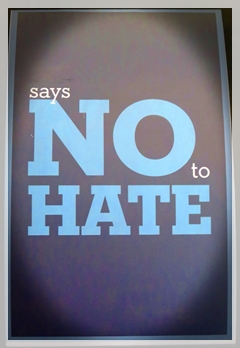 I walked into the university workout facility and was greeted by a large sign telling me the school says no to hate. I was surprised that a Christian University felt the need to say what should be obvious. Has hate become so much a part of our everyday lives that we have to be reminded not to do it? There wasn’t a sign telling us not to pee in the pool, have fist fights, or swear. Evidently, certain acceptable behavior was assumed but not hating wasn’t! Apparently, the sign is necessary because people feel freer to express their prejudice, intolerance, and bias than do any of those other things.
 Devotions of the Heart