
 Jesus replied, “The most important commandment is this: ‘Listen, O Israel! The Lord our God is the one and only Lord. And you must love the Lord your God with all your heart, all your soul, all your mind, and all your strength.’ The second is equally important: ‘Love your neighbor as yourself.’ No other commandment is greater than these.” [Mark 1:29-31 (NLT)]
Last summer, we enjoyed beautiful sand sculptures created by Bil Pavlacka on Coronado beach. One had been constructed as a memorial to the seven sailors who died on the destroyer Fitzgerald that month. It was not Pavlacka’s first memorial; he’s sculpted sand to honor a Navy Seal killed in Iraq and to recognize the victims of the Orlando nightclub shooting and the Paris and Brussels attacks. Those sculptures were labors of love—love for people he never personally knew but people he knew were his neighbors.
What a contrast his work is to the bumper stickers I recently saw on a truck parked beside us. There didn’t seem to be a minority group the driver wasn’t anxious to hate, insult or possibly worse since the back window also sported a “License to Kill Arabs.” According to the Southern Poverty Law Center, 917 hate groups (such as white nationalists, black separatists, racist skinheads, the Ku Klux Klan, neo-Nazis, neo-Confederates, anti-Muslim, anti-LGBT and anti-Semitic zealots) currently operate in the United States. Based on his bumper stickers, the truck’s owner must have belonged to several of them. How easy it is to spout hate for people we don’t even know; yet, they are our neighbors!
We are called to love one another—not romantic (eros) or friendship (philia) love—but agape or unconditional sacrificial love—like the love God had for us when he sacrificed His son and the love the good Samaritan had for a total stranger. It has nothing to do with attraction, affection or even liking one another. Agape love isn’t emotional; it is a choice. It also happens be one of God’s commands.
Agape love is like building an intricate sandcastle; it takes time, effort, dedication and patience. On the other hand, hate is like those bumper stickers or a well-placed kick aimed at a sandcastle; it is thoughtless and destructive. Jesus doesn’t ask us to like everyone but He does expect us to love them—to be kind, considerate, understanding, patient, tolerant, polite, and good to them. Fortunately, we don’t have to do it on our own—the Holy Spirit empowers us to love one another as God loves us. Like building a sand castle, however, it doesn’t come easy and there will be times our efforts fail. Nevertheless, we must keep at it until we get it right. What we can’t do is take the easy way out with hate!
It is the duty of every Christian to be Christ to his neighbor. [Martin Luther]
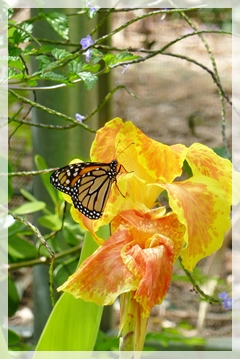 Jesus had returned to Capernaum and the word was out—the rabbi from Nazareth could heal. People were flocking to Him and the crowd followed Jesus right into the house where he was staying. Four friends of a paralyzed man carried him to see Jesus but the house was so full they couldn’t get through the door. Determined to get to Jesus, they carried the paralyzed man up the outside stairs to the rooftop and started to dig through the thatch. Picture the scene. The room is jam-packed when a disturbance is heard overhead. Dried mud and straw start to fall into the room, a head peaks through, more straw and dirt come spilling through the opening, a mat is dropped, and then four men lower their paralyzed friend down to the ground right at the feet of Jesus.
 Back in January, many people made resolutions to read the Bible. If you pledged to read the entire Bible this year, good for you. Like many who make that resolution, however, you may already have fallen behind schedule and are tempted to quit. Having tried to do it in a year, I feel your pain. After finally getting through Leviticus, Jeremiah nearly did me in with his doom and gloom. It’s not just the reading that takes time; it’s the understanding, the digesting, of what we’ve read that can slow us down. After all, there’s no point of reading it if we don’t understand it! I could read the words in a college astrophysics text but, if I didn’t understand them, I’d know no more about astrophysics on the last page than I did on the first. This year, I’m reading the Bible in chronological order and, in spite of my goal to do it in a year, it will probably take longer. For those who are discouraged or soon will be, I thought I’d rerun a previous devotion for you.
 Don’t be afraid, I’ve redeemed you. I’ve called your name. You’re mine. When you’re in over your head, I’ll be there with you. When you’re in rough waters, you will not go down. When you’re between a rock and a hard place, it won’t be a dead end—Because I am God, your personal God, The Holy of Israel, your Savior. [Isaiah 43:2-3a (MSG)]
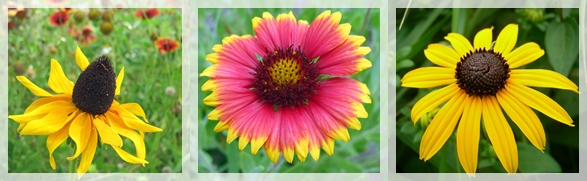 Listen, O heavens, and I will speak! Hear, O earth, the words that I say! Let my teaching fall on you like rain; let my speech settle like dew. Let my words fall like rain on tender grass, like gentle showers on young plants. I will proclaim the name of the Lord; how glorious is our God! [Deuteronomy 32:1-3 (NLT)]
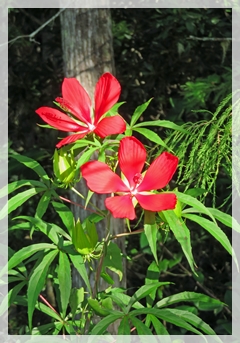 Every Saturday, our newspaper runs a guest editorial written by one of the local pastors. In one of these commentaries, the author shared that a ministerial colleague begins every pastoral prayer with, “O kind and loving God, fill us with your love.” There’s a whole lot of prayer packed into those few beautiful words. God doesn’t just love; He actually is love. So, when we ask God to fill us with His love, we’re inviting Him to fill us with His Holy Spirit, as well.
 Devotions of the Heart