
For everyone has sinned; we all fall short of God’s glorious standard. Yet God, in his grace, freely makes us right in his sight. He did this through Christ Jesus when he freed us from the penalty for our sins. [Romans 3:23-24 (NLT)]
 Although my husband attended law school, there is one law he never knew until he became a father: the Toddler Property Law. Starting out with the basic premise of “What’s mine is mine!” it then defines exactly what is meant by “mine.” The toddler defines “mine” as the following: it’s mine if I like it; if I think it’s mine, it is; if it’s yours, it’s mine; if I can take it from you, it’s mine; if I had it but put it down, it’s still mine; if you had it but put it down, then it’s mine; and, if it is broken, it’s yours.
If we ever doubted the existence of original sin, we only need to watch a few toddlers at play to see that we are born into this world with sinful natures. Granted, the toddler doesn’t exhibit vanity or pride or practice sorcery, watch porn, get drunk and disorderly or commit adultery, but he sure knows a lot about greed, selfishness, coveting, hitting, defiance, anger, and the attachment to worldly goods (especially if made by Fisher-Price or Melissa & Doug).
Since I have difficulty following the various theological arguments and isms regarding original sin, I’m not going to define it or expound on how it came to be. Nevertheless, I don’t need a theologian to tell me that it’s not necessary to teach a toddler how to be a selfish grabby little beast but we do have to teach him how to share. I don’t think we’re born defective; after all, we were created in God’s image. Nevertheless, we were given that troublesome thing called free will which means we have the capacity to choose between right and wrong. Simply put, we sin because we can.
C.S. Lewis posits that Satan gave Adam and Eve the idea that “they could be like gods” and “be their own masters.” Without the theology, that’s pretty much the toddler mind set; he thinks he’s the master of the universe, the world revolves around him, and all that he wants is his. Sadly, some of us never grow out of thinking that way.
I don’t think God is holding me responsible for Adam and Eve’s poor choices; He doesn’t have to! Long ago, I started making plenty of my own poor decisions. If we didn’t have a tendency or predisposition to sin, you’d think someone (other than Jesus) could have remained sinless in all of this time! One reading of Scripture, however, tells us no one seems to have been able to keep perfectly the moral standards and precepts set by God. For example, Abraham, a man who walked with God, was a liar and a coward and David, said to be “a man after God’s own heart,” was an adulterer and murderer. Under mankind’s own power, we don’t appear to have the ability to stop sinning even when we want to do so.
Christianity tells us that we are unable to overcome the power of sin without the power of the Holy Spirit. That power comes by turning to Christ and relying on his sacrifice to atone for our sins. It’s only when we admit that we are helpless in the face of sin and that our sin has separated us from God, that we see the need for a savior and understand why Jesus (the perfect sacrifice) died for us. It is only through God’s grace that we finally have the power to renounce the sin of the world.
The beautiful thing about God’s grace is that when we sin (and try as we might not to do so, we will), God has enough grace to shower us with His undeserved mercy again and again. He gives us yet another chance to grow in godliness and His Spirit will empower us to do just that.
 Sent by God to warn the people of Nineveh of God’s judgment, Jonah went in the opposite direction. After he survived three days in the belly of a fish, God gave Jonah another chance to deliver His message to the people of Nineveh. This time, Jonah delivered the news that God intended to destroy the city in forty days. When Nineveh’s king heard Jonah’s warning, he called for fasting, praying, and repenting their evil ways. People and animals were to cover themselves with sackcloth (a coarse fabric of goat’s hair) as a sign of grief, submission, and contrition. Seeing their repentance, God was merciful and gave them another chance.
 Legend had it that an angel of the Lord occasionally would come into the pool at Bethesda, stir up the water, and that the first person to enter the pool would then be healed. Jesus, however, simply said to the crippled man lying there: “Stand up, pick up your mat, and walk!” and the man did just that. Since it was the Sabbath, the man later was stopped by the Jewish leaders and condemned for carrying his mat and working on the day of rest. According to the law, either he should have stayed and watched his mat or left it behind and walked away. When he explained that the man who’d healed him told him otherwise, they wanted him to identify his healer. Their curiosity, however, had nothing to do with knowing who had performed this amazing miracle; they wanted to know who’d broken the law!
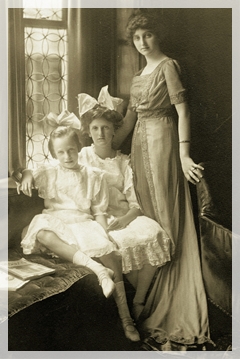 My Great-aunt Camilla began to lose her hearing as a girl and was completely deaf by the time she reached adulthood. Although she didn’t sign, she did lip-read quite well. In spite of her deafness, as long as we were face-to-face, we were able to converse without much difficulty. However, if Camilla didn’t want to continue the discussion or disagreed with us, she’d simply turn away and refuse to look at us. Tug as we might at her sleeve, she’d not turn back to rejoin the conversation until we’d convinced her that the subject had changed to one she preferred or that we agreed wholeheartedly with her opinion.
 In our pastor’s absence, I led worship for two Sundays. For me, giving the sermons was far easier than leading the prayers. Our pastor has a way with words that inspire, enlighten and lift my spirits and his extemporaneous prayers appear to flow effortlessly from his heart through his mouth to my ears and up to God. He always seems to have the perfect Bible verse up his sleeve, the wisest thoughts in his mind, and the power of the Holy Spirit in his words. The Holy Spirit has truly given him a beautiful spiritual gift and our entire congregation is blessed by it.
 To explain her sisters’ bitterness and sour outlook on life, my mother-in-law would say, “Well, their lives didn’t turn out the way they’d hoped.” Those women had no reason to complain when comparing their lives to Naomi (the mother-in-law in the book of Ruth).
 Devotions of the Heart