A HANDMAID’S HEART

And Mary said, “Behold, I am the handmaid of the Lord; let it be to me according to your word.” And the angel departed from her. [Luke 1:38 (RSV)]
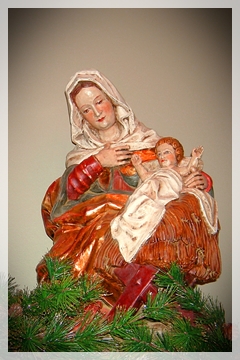
Mary - ChristmasIgnoring the fact that most of us in the room couldn’t qualify as virgins, are well-past child-bearing age, and our genealogies don’t link us to the tribe of Judah and the line of David, the pastor leading our women’s Bible study asked if we were the kind of women God would chose to give birth to His son.

Aside from being young, virginal, and of the right lineage, what kind of woman was Mary? At first glance, she seems little different than any other young girl in the obscure village of Nazareth. There is no mention of her having wealth, exceptional beauty, or social status. Looking like any other peasant girl, she seems unsuitable for a job as mother of God. What about Mary set her apart from every other girl in Palestine who met the lineage and virtue requirements?

Rather than looking at outward appearance, God looks into hearts; while we don’t know about Mary’s physical beauty, her character must have been exceptionally beautiful. Faithful, obedient and humble, she was filled with love for God. She risked her entire future when she submitted to Him. In many translations, Mary calls herself the “Lord’s servant.” The original Greek, however, was doule, which means bondmaid, female slave or handmaid. A doule wasn’t hired help who could quit when she wanted. She was someone who surrendered completely to her Master’s will.

I thought about the pastor’s question. Had I fit the physical and lineage requirements, would God have chosen me to bear His son? He wouldn’t have given me a second look when I was Mary’s age—I was far too willful, rebellious, selfish and unsure of myself to ever call myself a servant to anyone, even God! Even if the woman I am today fit the physical and lineage requirements, God wouldn’t consider me. It’s not that He wouldn’t trust me to feed, comfort, teach, love, guide, encourage, and protect His Son; I’d qualify in the mothering department. It’s that submission thing; I don’t think I’d freely surrender my will to His and God will not force Himself upon anyone. Mary had enough faith to yield her will to God but, even with 72 years of experiencing God’s faithfulness under my belt, I’m not sure I have the heart of a handmaiden. Humble and complete submission to the Master’s will does not come easily. “Thy will be done,” are some of the hardest words to pray and truly mean.

Both Mary and Jesus submitted to God’s divine will; should we do anything less? Father, forgive us for choosing our will over Yours. Give us a handmaid’s heart.

And he withdrew from them about a stone’s throw, and knelt down and prayed, “Father, if thou art willing, remove this cup from me; nevertheless not my will, but thine, be done.” [Luke 22:41-42 (RSV)]

Pray then like this: Our Father who art in heaven, Hallowed be thy name. Thy kingdom come, Thy will be done, On earth as it is in heaven. [Matthew 6:9-10 (RSV)]

Copyright ©2019 jsjdevotions. All rights reserved.

HIS FAMILY

mallard familyYou must have the same attitude that Christ Jesus had. Though he was God, he did not think of equality with God as something to cling to. Instead, he gave up his divine privileges; he took the humble position of a slave and was born as a human being. [Philippians 2:5-7 (NLT)]

Jesus may have been the Son of God but, for most of His life, He chose to live as the son of a man. Luke’s words that Jesus “grew in wisdom and in stature” [2:52] lead us to believe that Jesus was bound, both physically and mentally, by the normal course of human development. He didn’t arrive as an infant who could speak in full sentences, recite the Torah, discuss Scripture with the rabbis, turn water into wine, or walk (let alone walk on water). Like other human children, Jesus had to grow, mature, and obey His earthly parents. While fully God, Jesus also was fully man, with a human nature and will; when He overcame mankind’s sinful nature by never sinning, He did that as a man.

Even though Mary and Joseph knew Jesus was conceived by the Holy Spirit and would reign over Israel, they didn’t know the details of God’s plan or the magnitude of His power. Although they knew their son was special, they had no idea how special He really was! I can’t help but wonder what Jesus was like as a child, what was it like for Joseph and Mary to raise the Son of God, and what it was like to have God for a brother.

The gospels specifically mention Jesus’ sisters and four brothers: James, Joses, Simon, and Judas. [Matthew 13:55; Mark 6:3] Some say that these siblings weren’t the children of Joseph and Mary but were cousins or distant relatives. The Greek words used, however, were specific: adelphos (brothers) and adelphe (sisters). After the wedding at Cana, John tells us that Jesus went to Capernaum with Mary, the disciples and “his brothers.” [John 2:12] Matthew, Mark, and Luke all mention that ”Jesus’ mother and brothers” came to see Him and John tells us that our Lord’s brothers had doubts about Him being the Messiah. That they eventually came to believe in Jesus is clear; they were united in prayer with the disciples after the resurrection prior to Pentecost. Paul refers to James as “the Lord’s brother” and both James and his brother Jude wrote epistles we find in the New Testament. That Jesus had siblings is clear; how they came to be is less clear.

There are many who hold that Mary remained a perpetual virgin: that she and Joseph never consummated their union. The Bible, however, does not support that assertion. Matthew wrote that Joseph did not “know” Mary (a polite euphemism for having sexual relations) until the baby was born, clearly implying that he did “know” her later. Both Matthew and Luke refer to Jesus as Mary’s “firstborn” rather than her “only” son. God ordained marriage and sex before sin entered the world and there is no reason to think Joseph and Mary did not follow His command to “become one flesh” and “be fruitful and multiply.” The sin would have been if Mary had refused to have relations with her husband. For those who want to think of Mary as a perpetual virgin, however, an alternate explanation is that Joseph was a widower and those six or more siblings were from his earlier marriage. In that case, Joseph would have been quite a bit older than Mary and, while he is described as being a righteous man, nothing indicates he’d been previously married. In this scenario, unless those children were all grown and out of his house, where were they that Christmas night in Bethlehem? No mention of a family is made.

Although He was God, Jesus came to earth to live and die as a man. I can’t imagine God wanting Jesus to grow up without experiencing the mayhem, noise, tears, conflict, teasing, and laughter that come with brothers and sisters in the house. As part of a family, Jesus learned how to play, share, wait His turn, tolerate annoying siblings, and help the little ones. The lessons He taught us about love, patience, forgiveness, generosity, and turning the other cheek were all lessons Jesus had to learn as part of a family unit. As Jesus “grew in wisdom and in stature,” he learned how to live peacefully with others, lessons that were invaluable when dealing with the petty rivalries and disputes of His disciples. As we approach the holiday season and the stress of large family gatherings, let us remember that we’re not encountering any challenges that Jesus didn’t face. He managed to do it without sin; can we?

This High Priest of ours understands our weaknesses, for he faced all of the same testings we do, yet he did not sin. So let us come boldly to the throne of our gracious God. There we will receive his mercy, and we will find grace to help us when we need it most. [Hebrews 4:15-16 (NLT)]

Copyright ©2019 jsjdevotions. All rights reserved.

WORDS

A word out of your mouth may seem of no account, but it can accomplish nearly anything—or destroy it! It only takes a spark, remember, to set off a forest fire. A careless or wrongly placed word out of your mouth can do that. By our speech we can ruin the world, turn harmony to chaos, throw mud on a reputation, send the whole world up in smoke and go up in smoke with it, smoke right from the pit of hell. [James 3:4-6 (MSG)]

rabbitJames warns of the dangers of an untamed tongue and the damage that can be done with ill-considered words. Although he was speaking of speech, the same goes for the written word. Whether we’re holding a pen, our fingers are speeding across a keyboard, or our thumbs are tapping out a text, our words are powerful. Whether we use them to build or destroy is our choice.

C.S. Lewis, one of the great Christian minds of the 20th century, authored more than thirty books. A man who never used a typewriter, he also was a prolific letter writer. Writing not just to friends and colleagues, he answered every letter sent to him. Most of us probably have trouble responding to someone with a quick email, yet this busy man never hesitated to handwrite a response, even to strangers or children who wrote after reading one of his books or hearing him on radio. More than 3,200 of Lewis’ handwritten letters remain and have been published in various collections. They range from the somewhat mundane (thanking someone for a ham) to the exceptional (reassuring a woman who is afraid of dying).

Often writing more than 100 letters a month, his letters show not just a deep thinker with a brilliant mind but also a compassionate man generous enough to take the time to instruct, explain, empathize, encourage, and reveal himself and his vulnerabilities. Nevertheless, Lewis once complained, “If I didn’t have so many letters to answer, I’d have time to write another book.” His words from another letter, however, explain why he did it: “Ever since I became a Christian, I have thought that perhaps the best, perhaps the only service I could do for my unbelieving neighbours was to explain and defend the belief.” He wrote those letters out of obedience to God and concern for the people who’d written to him.

While many proverbs give dire warnings about imprudent words, the other half of those proverbs often are about judicious ones. That C.S. Lewis’ letters continue to be read today illustrates the power of the written word. Rather than start a wildfire with cruel words, Lewis sowed seeds of Christ with his kind ones; may we do the same. Let us never forget the beautiful things our words, both spoken and written, can do when used wisely and with love!

Words kill, words give life; they’re either poison or fruit—you choose. [Proverbs 18:21 (MSG)]

The words of the wicked kill; the speech of the upright saves. [Proverbs 12:6 (MSG)]

Copyright ©2019 jsjdevotions. All rights reserved.

A WONDERFUL LIFE

And so, dear brothers and sisters, I plead with you to give your bodies to God because of all he has done for you. Let them be a living and holy sacrifice—the kind he will find acceptable. This is truly the way to worship him. [Romans 12:1 (NLT)]

irisAround this time of year, I frequently return to Bedford Falls and get reacquainted with the conflicted George Bailey, the money-grubbing Mr. Potter, and Angel 2nd Class, Clarence Odbody. This year’s version of It’s a Wonderful Life was somewhat different. Rather than seeing the movie, I attended a theatrical production set in a New York City radio station in the 1940s. The well-known story unfolded as if it were a live radio broadcast. Just five actors took on all of the roles (along with producing the various sound effects required for a radio show). In spite of the unusual adaptation, the production remained true to the original movie’s message.

George Bailey, a building and loan banker, is an unlikely hero. Having abandoned his dreams for a life in Bedford Falls, he feels that life has passed him by. About to be thrown into jail because of his uncle’s carelessness (and Mr. Potter’s dishonesty), George realizes he’s worth more dead than alive. The other unlikely hero is Clarence Odbody, an ineffective guardian angel desperately trying to earn his wings by helping this despairing man on the brink of suicide. In spite of the story’s incredibly flawed angel theology, it’s a good tale. When George wishes he’d never been born, Clarence shows him what an ugly depraved community Bedford Falls would have been had he never lived. When George Bailey realizes how many lives would have been ruined, lost, or never even have happened, he chooses life.

While George’s perspective changes and there is a happy ending, it’s not a happily-ever-after one. Unlike Scrooge in A Christmas Carol, the evil Mr. Potter doesn’t transform. We know he’ll persist in trying to take over the town and that George will continue to have too little money at the end of the month. The challenges, disappointment, and disillusionment of George’s life don’t disappear. His sacrifices cost him dearly; his aspirations were surrendered, he lost his hearing, never attended college or traveled, worked in a job he hated, and endured financial hardship. Nevertheless, it’s a happy ending because George finally understands the sacrifice was worth it! He realizes the most important work we do is not the work we ever planned on doing.

The missing $8,000 wasn’t what caused George’s despair. He was unhappy and unfulfilled because he was concentrating on the life he wanted to live rather than loving the life he was leading. Like George, most of us have given up opportunities, hopes and dreams or endured hardship of some kind or another for the sake of others. If not, we should have because that’s what God tells us to do. Jesus made it clear that our lives were to be ones of sacrifice. We belong to Jesus rather than to ourselves. Following Jesus means we surrender to His purposes, which inevitably means we don’t always get what we wanted! We do, however, get something better (but often don’t recognize it).

The difference between George Bailey and a Christian is motivation. Bailey sacrificed out of a sense of duty to family, friends and town. Although family, friends, and community often benefit from our sacrifice, the Christian sacrifices out of love and obedience to God. George’s sense of duty was to Bedford Falls; ours is to Jesus! Our Lord was the suffering servant; can we be anything less? In spite of the difficulties encountered along the way, when we sacrifice ourselves to God, we will find such joy and peace that we’ll have no need for an angel to show us that it’s been a wonderful life!

All you can take with you is that which you’ve given away. [The motto Peter Bailey’s office in “It’s a Wonderful Life”]

If any of you wants to be my follower, you must give up your own way, take up your cross daily, and follow me. If you try to hang on to your life, you will lose it. But if you give up your life for my sake, you will save it. [Luke 9:23-24 (NLT)]

Copyright ©2019 jsjdevotions. All rights reserved.

THE ARK

giraffeThen God said to Noah, “Leave the boat, all of you—you and your wife, and your sons and their wives.  Release all the animals—the birds, the livestock, and the small animals that scurry along the ground—so they can be fruitful and multiply throughout the earth.” Genesis 8:15-17 (NLT)]

The National Geographic Photo Ark is on display at our local zoo. This travelling exhibition features large-scale animal portraits taken by Joel Sartore, a man on a quest to photograph all of the world’s animals. Sartore has photographed a little more than 9,800 of the 1.2 million species of animals that have been identified by zoologists so far.

Attributing human traits or emotions to non-humans is anthropomorphism and I admit being guilty of it as I viewed Sartore’s amazing photographs. An embarrassed-looking mandrill with its hand covering his mouth seemed to be politely concealing a burp. With his cocked head and puzzled expression, a white arctic fox looked perplexed. The Sumatran rhino’s wistful look made me wonder if he knew there are less than 100 like him on the planet. Clearly unaware that he also is an endangered species, the giant panda looked content and rather pleased with himself. The young chimp appeared to be proudly flexing his biceps, as do toddlers when they want to show how big and strong they are. The Sumatran tiger lay regally, his head erect with paws crossed in front of him as if the photographer had posed him for his royal portrait. A black-footed ferret seemed forlorn, as if he knew that only a few hundred of his species still live in the wild. Perhaps my favorite photo was that of a bashful Brazilian porcupine on his hind legs. Looking a bit anxious, he was scrunched over a bit, legs squeezed together, with his front paws tucked down between his legs. He looked just like a toddler who desperately needs to go potty!

The purpose of the National Geographic Photo Ark is to use “the power of photography to inspire people to help save species at risk before it’s too late.” Although ours is a small zoo with only 70 species and just 52 of Sartore’s photographs on display, the amazing diversity in God’s creation was evident in both the enclosures and photographs. Sadly, many animals had words like “endangered” or “at risk” beside their names. God entrusted mankind with the task of looking after His amazing creation and we haven’t done a very good job of that.

The extinction of various species has always existed (i.e. dinosaurs) but it is increasing at an alarming rate. If the current trend continues, it is estimated that one in every three animal species on earth now will have disappeared by the end of this century. Following the flood, God vowed to never again destroy all living things. He won’t have to; we seem to be doing that on our own!

As we left the zoo, I thought about my anthropomorphic view both of Sartore’s photos and the zoo’s residents. Perhaps God gave us the tendency to attribute human emotions to animals so that we’d connect with them. It’s when we connect that we begin to care. Martin Buber said that, “An animal’s eyes have the power to speak a great language.” While I’m not sure exactly what Buber meant, the eyes I looked at told me to care.

Scripture is filled with admonitions to care for animals; domestic animals were not to be overworked or treated cruelly and Jesus told us that God knows when even a single sparrow falls to the ground. What does God think when an entire species ceases to exist? All of creation belongs to Him and we are little more than tenant farmers responsible for its care. When God gave us dominion over the earth, He expected us to behave conscientiously and we will be held accountable for the way we’ve tended His world. Are we good stewards or have we become exploiters? Will our zoos become the arks of the future and the only place God’s beautiful creatures will exist? Noah once saved the animals; can we do anything less?

It is folly to think that we can destroy one species and ecosystem after another and not affect humanity. … When we save species, we’re actually saving ourselves. [Joel Sartore]

The Lord God placed the man in the Garden of Eden to tend and watch over it. [Genesis 2:15 (NLT)]

Look, the highest heavens and the earth and everything in it all belong to the Lord your God. [Deuteronomy 10:14 (NLT)]

Copyright ©2019 jsjdevotions. All rights reserved.

THE SNOW GLOBE

Steamboat SkiAnd we are confident that he hears us whenever we ask for anything that pleases him. And since we know he hears us when we make our requests, we also know that he will give us what we ask for. [1 John 5:14-15 (NLT)]

Along with the typical things you’d expect to find on my desk is an odd collection of other items. A small resin figure of the Holy Family reminds me that God deliberately chose to be born of a woman and to live as a man while the small olive wood cross tells me how He chose to end that life. When I see the three-inch square-cut nail, a souvenir from a Good Friday service, I remember how He suffered for mankind while on the cross and a small candle reminds me to let my light shine. My wooden “God box” holds some long-term prayers, Niebuhr’s “Serenity Prayer,” and my promise “to face life, not with doubt and pessimism, but with hope.” In the desk’s corner is a small African carving of two people facing one another with arms connected. Made of just one piece of stone, it continues to remind me that, in marriage, two become one and we must never turn away from one another.

Something new has just been added to my quirky collection: a small snow globe. Probably designed to be a baby gift, in it is a pink-cheeked little girl gently touching a lamb and printed on its base are the words “Jesus loves me.” This bit of nursery décor seems rather strange for a woman my age but, along with telling me that Jesus loves me, it reminds me that God answers prayers in unexpected ways!

When filling in for our pastor recently, my message was about God’s grace, the faith necessary for salvation, and the discipleship that comes from that faith. While preparing it, I’d asked God to help me bring it all together with one final example. The following day, I came across the story of Izabella McMillon. Years before she started working for Samaritan’s Purse, she lived in Romania and was the recipient of one of their gift-filled shoe boxes. Having already been introduced to Christianity, 13-year old Izabella had asked God to prove His existence by giving her snow but, after three months of waiting, the girl was ready to give up. The prayer for faith is one God always answers and inside Izabella’s shoe box was a snow globe! As she watched the snow fall through the water, she was assured of God’s presence in her life; it was then that Izabella decided to carry Jesus into the world as His disciple!

God answered my prayer with one woman’s witness about salvation, grace, faith and discipleship! He answered hers with an inexpensive snow globe! That our church was packing 75 shoeboxes for Samaritan’s Purse was just God’s way of putting frosting on the cake for me! That Izabella received other gifts in that box, gifts that told her not just of God’s presence but also of the love and compassion found in His disciples, was the frosting on hers!

God answers prayers in unexpected ways. When the Israelites complained of hunger and God promised them bread from heaven, I’m pretty sure they weren’t expecting manna—something like coriander seeds that tasted like honey and was found on the ground. When God promised a Messiah who would deliver His people, Israel expected a political savior who would free them from Rome rather than a spiritual savior to deliver them from sin. Although the Israelites accepted manna as God’s provision, most didn’t recognize God’s answer to their prayers for a Messiah. Had Izabella insisted on cold wet snow falling from the sky, she would have missed God’s glorious answer to her prayer, as well. While my new snow globe says that Jesus loves me, it also reminds me to expect the unexpected!

And may you have the power to understand, as all God’s people should, how wide, how long, how high, and how deep his love is. May you experience the love of Christ, though it is too great to understand fully. Then you will be made complete with all the fullness of life and power that comes from God. [Ephesians 3:18-19 (NLT)]

Copyright ©2019 jsjdevotions. All rights reserved.