
O Lord, how long will you forget me? Forever? How long will you look the other way? How long must I struggle with anguish in my soul, with sorrow in my heart every day? How long will my enemy have the upper hand? [Psalm 13:1-2 (NLT)]
 While some of us may have become couch-potatoes during his time of sheltering in place, that’s not truly the sin of sloth. Thought of as one of the seven “deadly sins,” sloth originally was two sins: acedia (meaning absence of care) and trisitia (meaning sorrow). A 4th century monk, Evagrius of Ponticus, listed them (along with gluttony, lust, greed, anger, vainglory, and pride) as the “terrible temptations” of life. Acedia and sadness were seen as particularly dangerous threats to the ascetic life of a monk living in the Egyptian desert, as was Evagrius. The monks easily could grow despondent, lonely, weary or discontented as they prayed, fasted, and labored in their harsh and isolated setting.
While not in a desert monastery, the new normal of COVID-19 can seem as desolate as one and tempt us with sloth’s spiritual lethargy. With the pandemic’s disruption of routine—the unstructured time, depressing news, monotony, isolation, financial challenges, uncertainty, and loss of purpose and community—acedia and tristia can set in as it did for those ancient monks. We may experience worry or fear, dullness to our prayers, emptiness in our hearts, unproductive study, an inability to give thanks in all things, and even apathy toward God’s word. Joy can seem but a distant memory.
Unlike wrath, lust or greed, sloth is subtle and difficult to spot until it has taken hold. During a dark time several years ago I struggled with sloth. Calling it compassion fatigue, I was emotionally spent and felt hopeless, discouraged, and despondent. I imagine I’m not the only person facing this “terrible temptation” again today.
Jesus told us the most important commandment was to love God but sloth keeps us from doing that. It makes us focus on ourselves and our emptiness rather than God and His abundance. When discussing this sin, the Catechism of the Catholic Church explains that “spiritual sloth goes so far as to refuse the joy that comes from God.” Sloth’s rejection of God’s gift is like a slap in His face—it’s no wonder Evagrius called it a “terrible temptation.”
David’s psalms indicate that he frequently experienced spiritual emptiness. In Psalm 13, we find him asking God, “How long?” not once, but four times in a row! Having lost the sense that God was there, life felt like an endless struggle; troubled and discouraged, he’d begun to doubt God’s plan. Yet, after asking God to “restore the sparkle to my eyes,” [13:4] he finished the psalm with words of trust and even joy.
In times like these, the enemy tries to steal our zeal, keep us from experiencing the joy of the Lord, and sabotage our sense of purpose with spiritual lethargy and inner emptiness. Whether or not sloth will be allowed to linger, however, is our choice. Like David, let us trust in God (even when it seems He isn’t there) and persevere in praying for relief from our emptiness and despair. He will restore the sparkle to our eyes!
 It’s been five years since I’ve skied but I still remember that the three scariest words I ever heard when on the slopes were, “Follow me, Nonnie!” My grands loved to venture off the groomed runs into the bumps and through the woods. On my own, I never would have chosen to leave the main trail but, because I loved those little guys, I faithfully followed behind as they maneuvered between the trees and over the moguls.
 After Simon Peter professed his belief in Jesus as the Messiah, the Lord declared that he would be known from then on as Peter (Petros) meaning rock (petra). Yet, a short time later, the Rock became a stumbling block when he resisted all that being the Messiah required: Jesus’ suffering and death. When studying the man our Lord chose to lead His church, we find Peter had enough faith to climb out of the boat but not enough faith to trust Jesus when the wind started to blow. Impetuous, Peter immediately wanted to memorialize the Transfiguration rather than learn from it. Presumptuous, he hastily spoke for Jesus regarding paying tax to Caesar. Rash, he used his sword to wound the high priest’s slave. He resisted Jesus when the Lord knelt with a wash pan at his feet and, after boldly declaring his commitment to Jesus, denied him three times within a few hours! Yet, it was to this man that Jesus entrusted the job of shepherd and the task of feeding His sheep!
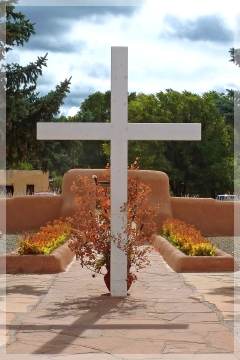 This pandemic may have may have postponed the Olympics but it hasn’t delayed the National Day of Prayer. Today’s observances, however, will look quite different from previous ones. There won’t be any prayer breakfasts or luncheons and large groups won’t assemble in parks, churches or on courthouse steps. Instead, churches will stream their services and religious leaders from across the county will participate in a national broadcast to be aired tonight from 8 to 10 PM ET (see their website or Facebook page for details). Because of the many “virtual” events planned, today’s observance actually could be this day’s largest prayer gathering.
 I recently read about Derek Black, a young man who grew up immersed in white nationalism. The heir apparent to the WN movement, by the age of twenty, he’d already created a racist website for children and was co-hosting a national radio show advocating prejudice and hostility toward blacks, Jews, immigrants, and other minorities. During college, Black gradually recognized the ugliness of his beliefs but it wasn’t confrontation, heated debate, or ostracism that led to his transformation; it was the hand of friendship!
 Devotions of the Heart