
Still other seed fell on fertile soil. This seed grew and produced a crop that was a hundred times as much as had been planted! … And the seeds that fell on the good soil represent honest, good-hearted people who hear God’s word, cling to it, and patiently produce a huge harvest. [Luke 8:8a,15 (NLT)]
 In Jesus’ parable of the four soils, the farmer’s seed finally falls on fertile soil: the people who do more than just hear the Word. Receiving it into their hearts, the Word takes root, grows, and eventually bears fruit. This is the kind of soil we’d all like to think describes us!
The very same seed was sown in what we think of as four different soils but, in actuality, it was the same kind of dirt in four different conditions: hard packed, shallow and rocky, filled with weeds, and fertile. All of that soil had the potential to receive the word—but only if it yielded to the plow! Sadly, at various times in our lives, our hearts can grow hard, become shallow, or be overwhelmed by life’s weeds. If we are willing to yield to God’s plow and accept His seed, even the hardest soil can be farmed.
We often think of the heart only in terms of emotions but, in the Bible, the heart is more than the core of our feelings. The center and source of our belief and faith, the heart is the seat of our thinking: our imagination, ideas, interests, intentions, purposes, and understanding. Fertile soil is the honest and good heart that receives the word eagerly and with good intentions. Moreover, such hearts don’t stop at hearing the word (receiving the seed); they retain it, let it shape their lives and, with perseverance, yield a large harvest.
In this parable, we are both the soil—the hearer of the Word—and the farmer—the one who spreads the Word. The fertile soil of a receptive heart allows us to see, hear, understand and apply God’s Word so that we bring forth an abundant harvest of good fruit. To bring forth that harvest, however, the cycle must continue as we become the farmer in the parable and sow God’s word far and wide. It is our responsibility to spread the seed; whether or not it takes root, however, is between God and the soil!
The quality of the soil determines the future of the seed. [Mike Murdock]
 Some of the farmer’s seeds fell among the thorns (probably what we’d call thistles). Prolific seed producers, thorny plants like thistles can grow in the harshest environment. While they may have been cut down and no longer were visible to the farmer, their seeds and roots remained. With their deep roots, thistles are masters of survival and can flourish in adverse conditions. Stealing the moisture and sunlight from the plants around them, they stunt their growth and, if allowed to grow, can overtake a field.
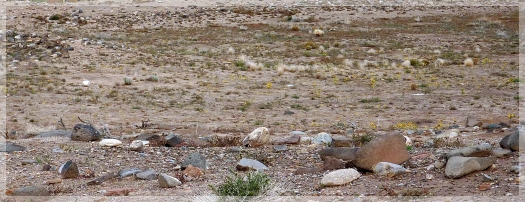 Other seed fell among rocks. It began to grow, but the plant soon wilted and died for lack of moisture. [Luke 8:6 (NLT)]
 In the gospels of Matthew, Mark and Luke, we find Jesus telling the parable of the four soils in which the farmer’s seed falls on four types of ground and yields four different results. Although the same good seed is sown over the entire field, only one kind of soil will yield a good crop. Jesus isn’t giving a lesson about agricultural practices; the seed that is sown is God’s word and the soils represent the different responses we have to God’s word. The lessons taught are both for the sowers—those who teach, preach, or witness—and for the soil—the people who hear the Word.
 Although it was noon during the heat of the day when most people would be resting, the woman came to the well for water. Perhaps, because she’d been married five times and was living with a man not her husband, the other women in the village made it clear that she wasn’t welcome in the early morning or late evening when they gathered there. Nevertheless, it was with this woman that Jesus had the longest one-on-one conversation recorded in Scripture. It was to this Samaritan woman that Jesus revealed He was the Living Water she so desperately needed.
 Yesterday, I wrote about the sin of sloth, a sort of spiritual weariness; fortitude is considered its contrasting virtue. Taken captive in 605 BC and forced to trudge the 500 miles from Jerusalem to Babylon, Daniel is an example of fortitude. He lost his home, family, name, language, culture, nation, and possibly his manhood but the one thing he never lost was his faith in God. From the moment he arrived in Babylon, Daniel refused to compromise his principles by refusing to defile himself with prohibited food. Sixty-six years later, he was still determined to stay true to God. In spite of knowing he would be thrown to the lions for his actions, he ignored the law prohibiting praying to anyone but King Darius. Instead, Daniel opened his windows and, as he’d “always done,” prayed to the one true God while offering thanks and asking for God’s help. [Daniel 6:10-11]
 Devotions of the Heart