
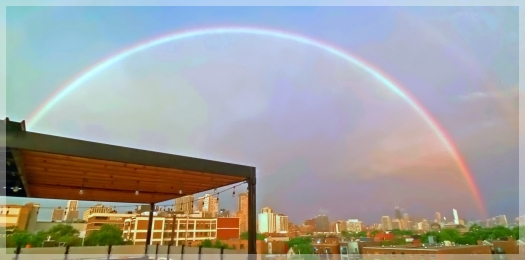
 I will never again curse the ground because of the human race, even though everything they think or imagine is bent toward evil from childhood. I will never again destroy all living things. As long as the earth remains, there will be planting and harvest, cold and heat, summer and winter, day and night. [Genesis 8:21-22 (NLT)]
Tears are the material out of which heaven weaves its brightest rainbow. [F.B. Meyer]
With everyone stuck inside because of the rain, the day had been challenging as my son and his wife tried to get in eight hours of Zoom meetings, conference calls, report writing and computer programming while keeping their two youngsters busy (and relatively quiet). The rain finally stopped shortly before dusk and, when my grand ran out onto the rooftop deck to celebrate her freedom, she stopped in amazement. There, above the city, a city plagued not just by COVID-19 but also by gang violence, shootings, racism, rioting, and poverty, was a beautiful ray of hope: a double rainbow.
Rainbows are among my favorite things. The glory of the Lord “looked like a rainbow shining in the clouds on a rainy day,” to Ezekiel and John described the Lord’s glory circling Him like a rainbow and glowing like an emerald in Revelation. The rainbow shows us God’s light in the darkness of our troubled world and is probably the closest thing we have to seeing His radiance while we’re on this side of the grass.
Scripture’s first mention of a rainbow is in Genesis 9. Once the floodwaters had receded and the earth was dry enough, God told Noah to leave the ark and release all of the animals. Even though God knew mankind’s heart was still inclined toward evil, He gave us another chance with His promises to never again destroy every living thing by flood and that the normal cycles of nature would continue as long as the earth existed. The rainbow provided Noah and future generations with a sign of God’s covenant.
After a rain storm, with its clouds, thunder, and lightning, we frequently are blessed with a rainbow: a beautiful reminder of God’s love, mercy and faithfulness. It reminds us of both God’s grace and our sinfulness; after all, it was mankind’s sin that caused the flood in the first place! Rather than saving us by putting us on an ark of cypress wood, God saved us by putting Jesus on a cross. The rainbow reminds us of our redemption and salvation; because of Jesus, we have an opportunity for a new beginning. God packed a whole lot of supernatural meaning into a natural phenomenon when He hung the rainbow in the sky!
Before Noah and his family left that ark, they’d been in close quarters with one another and all of those animals for a year. If we think sheltering in place is challenging, imagine doing it with four families and an enormous menagerie but without the internet, Amazon, Netflix or Door Dash. Today’s bad news, like rain, keeps showering down and we’re in a season that seems to have no end. The storm clouds of life can obscure God’s presence but, when we remember that He is in the storm with us, we might just see a rainbow! Like my grand, I love seeing rainbows; they remind me that God is faithful to His promises for “all generations to come.”
And when it rains on your parade, look up rather than down. Without the rain, there would be no rainbow. [G.K. Chesterton]

 Blessed are the peacemakers, for they will be called children of God. [Matthew 5:9 (NIV)]
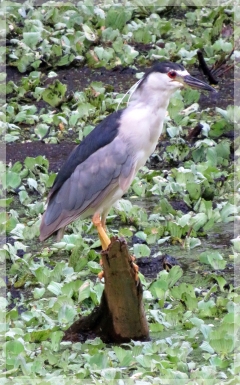 Jerusalem and Samaria may only have been about 40 miles apart but centuries of hostility separated them. Both politics and religion alienated the Jews from the Samaritans—much as they did Catholics from Protestants in Northern Ireland during the violence plagued decades of The Troubles. Because of the enmity between the people, even though the shortest path from Judea to Galilee was through Samaria, most Jews detoured east to avoid Samaria entirely. John 4:4, however, tells us that Jesus “had to” pass through Samaria. The word used was edei meaning “it was necessary.” Why?
 Jesus was never one to follow man-made rules and, when He spoke with the woman at the well, He broke several. Jewish tradition considered it beneath any man’s dignity to publicly speak with a woman. Rabbinical writing taught: “Let no one talk with a woman in the street, no not with his own wife.” That a rabbi like Jesus did such a thing was scandalous. Those same writings considered women incapable of religious instruction with these words: “Rather burn the sayings of the law than teach them to women.” Jesus speaking of God with a Samaritan woman just made it more outrageous! But, we know from His interactions with women like Martha, Mary, and Mary Magdalene that Jesus wasn’t much for rabbinic tradition so His speaking with this Samaritan woman shouldn’t surprise us.
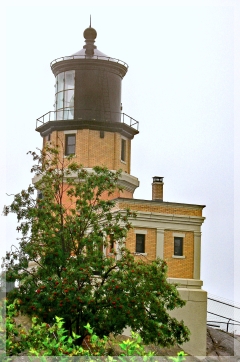 An old maritime legend describes the conversation between a U.S. Naval ship and Canadian authorities off the coast of Newfoundland. The ship kept telling the Canadians to divert their course 15 degrees north to avoid a collision while the Canadians repeatedly responded with the suggestion that the Americans divert their course 15 degrees to the south. Finally, the Navy sent the following message: “This is the aircraft carrier USS Lincoln. We are accompanied by three destroyers, three cruisers and numerous support vessels. I demand that you change your course 15 degrees north or counter-measures will be undertaken to ensure the safety of this fleet.” It was only when the Canadian authorities responded, “This is a lighthouse. It’s your call,” that the American vessels stopped being so unyielding and changed their course! While this story of an aircraft carrier trying to bully a lighthouse out of its way is just fiction, it’s a lesson about stubbornness, inflexibility, and pig-headedness.
 Devotions of the Heart