
This is what the Lord says: “Cursed are those who put their trust in mere humans, who rely on human strength and turn their hearts away from the Lord. They are like stunted shrubs in the desert, with no hope for the future.” [Jeremiah 17:5-6 (NLT)]
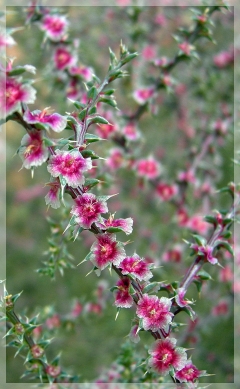
Russian thistle – tumbleweed
Because Judah had trusted in false gods and foreign alliances rather than God, Jeremiah pronounced God’s judgment on the southern kingdom. After saying their sins were as if they’d been etched on their stony hearts with a diamond-pointed iron chisel, he compared them to a stunted shrub. That shrub may have been the tumble thistle, a common plant found in Israel’s grasslands. I’ve never been to Israel but I’ve seen a similar plant in the western states: the Russian thistle, commonly known as tumbleweed or wind witch. Both kinds of weeds begin with flowers on a spiny plant. As their seeds mature, the entire plant dries and breaks from its roots at the soil surface. Shaped like a ball and rootless, the wind blows and rolls these plant “skeletons” across the prairie.
In stark contrast to a stunted shrub, Jeremiah likened those who trust in the Lord to deep-rooted trees planted by the riverbank—trees untroubled by heat or drought. I’m reminded of our hardy American cottonwoods found near rivers, lakes, and irrigation ditches throughout the nation. The fastest growing trees in North America, cottonwoods can grow to over 100-feet tall, with a trunk diameter of 6-feet, and a leaf canopy over 75-feet wide. Instead of being blown by the wind like tumbleweed, the cottonwood’s size makes it an excellent windbreak. When we trust in ourselves and false gods, we’ll be blown every which way like a tumbleweed but, when we trust in God, we can withstand life’s headwinds like a cottonwood.
Growing on the water’s edge, cottonwoods typically survive adverse conditions and prairie fires. Few plants can survive the scorching heat, scant rainfall, relentless winds, blowing sand and poor soil of New Mexico’s White Sands National Monument but the deeply rooted Rio Grande cottonwood thrives there! When we trust in God and sink our roots deep in His word, like the cottonwood, we will flourish and have a full life, even in harsh conditions.
Dubbed “the pioneer tree,” the cottonwood was a welcome sight for settlers crossing the plains because it meant shade from the heat, fuel for a fire, and a source of water. Those same settlers considered tumbleweeds a menace. They leeched nutrients from the soil, crowded out forage grass and, being highly flammable when dry, could become flying fireballs and spread a grass fire. Just as pioneers found refuge in the cottonwood, those who trust in the Lord find refuge in Him. Those who trust only in man are as worthless as a noxious weed and as dangerous as burning tumbleweed.
When we put our trust in man, false gods, or empty ideologies, we’re no different than a tumbleweed: dry and rootless, rolling in whatever direction the wind is blowing, and with no hope for the future. When we trust in the Lord, we’re like the cottonwood: deeply rooted in His word, fed by His living water, and able to survive, even thrive, in the bleakest of situations.
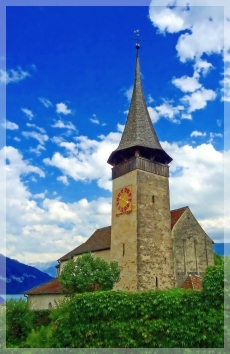 The cornerstone metaphor continues into the New Testament with both Paul and Peter referring to Jesus as the cornerstone of our faith. Nowadays, cornerstones are structurally unneeded and a growing number of commercial buildings no longer have them. Symbolic rather than functional, many serve as time capsules holding material relevant to the building and the year it was built. Because commercial buildings so frequently change hands, even the custom of inscribing the building’s name on a cornerstone is disappearing. The latest practice is a freestanding cornerstone/time capsule resting on a pedestal placed in a prominent part of the building. That way, a new stone can replace the old one every time the building’s owner changes.
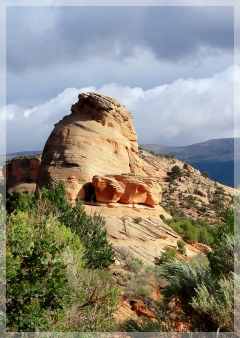 In the Old Testament, “cornerstone” as a metaphor for the Messiah is found in Psalms, Isaiah, and Zechariah. In Zechariah 10, the prophet describes Israel’s need for purification because of their idolatry, fortune-tellers, and false prophets. Holding the nation’s leaders responsible for these transgressions, Zechariah says the people are like lost sheep without a shepherd. Proclaiming the arrival of the ”Lord of Heaven’s Armies” who will look after the flock, the prophet says he’ll come from Judah and describes him as a cornerstone, tent peg, and battle bow.
 After telling the Parable of the Two Sons, Jesus told one about the Evil Farmers. As parables go, it’s pretty easy to follow. The landowner (God) builds a vineyard (Israel), sets up a protective wall (the Law), and leases it to tenant farmers (religious leaders). When he sends his emissaries (faithful priests and prophets) to collect his rent, the farmers ignored, mistreated and even killed them. The landowner, thinking the farmers would respect his son (Jesus), sends him to the vineyard. Wanting the estate for themselves, the farmers murder him. When Jesus asked his listeners (who were the chief priest and elders) what the landowner would do to the famers when he returns to his land, they responded that he’d kill the tenants and lease the vineyard to new farmers who would honor him with his share of the crop.
 “It’s all about getting a second chance!” said the back of the man’s T-shirt. I then saw the dog paws printed on both sides of the message and realized his shirt was advertising a dog rescue organization. Nevertheless, the shirt’s words made me think of the parable Jesus told the Pharisees about two sons. The vineyard owner told his sons to go work in the vineyard. The first son rudely refused but the second son respectfully promised he’d do the work. As it turned out, the defiant son had a change of heart and went to work in the vineyard while the second seemingly dutiful son never did. Jesus then asked the Pharisees which of the two sons had done his father’s will. Of course, they had to say that the first son, in spite of his initial rebellion, was the obedient one.
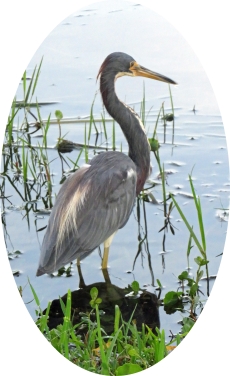 The Synsepalum dulcificum is a West African fruit better known as the “taste berry” or “miracle fruit.” This almost tasteless red berry can make lemons, Dijon mustard, Brussels sprouts, pickles and even vinegar taste sweet. A protein in the berry temporarily binds to the tongue’s taste buds and causes sour or acidic foods to taste sweet. Miracle fruit tablets, powder, freeze-dried berries and plants can be purchased from several websites. Along with suggesting using the berry as a way to get fussy eaters to eat their fruits and vegetables, sellers suggest hosting “flavor-tripping parties” where guests get a berry and a strange buffet of foods like sauerkraut, kimchi, radishes, grapefruit, cheap tequila, goat cheese, vinegar, and Tabasco sauce. Why anyone would want to alter the delicious flavors of kiwi, pineapple, strawberries, Granny Smith apples, grapes, or tomatoes is beyond me and I certainly have no desire to drink pickle juice or Sriracha chili sauce.
 Devotions of the Heart