
We were filled with laughter, and we sang for joy. And the other nations said, “What amazing things the Lord has done for them.” Yes, the Lord has done amazing things for us! What joy! [Psalm 126:2-3 (NLT)]
Sometimes your joy is the source of your smile, but sometimes your smile can be the source of your joy. [Thich Nhat Hanh]
 In the Pearls Before Swine comic drawn by Stephen Pastis, Pig may be a little naïve but, sometimes, the sweet fellow has the right idea. In a recent strip, when asked why he was wearing an enormous hat decorated with a smiley face, he explained it was “the hat o’ great happiness” and he wore it as a way of sending happiness to others. I thought of Pig’s silly hat of happiness while viewing an ad made by Coca-Cola as part of their 2015 Belgian “Choose happiness” campaign.
It began with people walking into a subway tram. Among the commuters was a man who stood in the middle of a crowded car. Wearing ear buds and looking at his tablet, he suddenly erupted in laughter. Ignoring the stares of the people around him, he continued to laugh—not polite little giggles but loud and unembarrassed guffaws. Hidden cameras filmed the reactions of his fellow commuters. As his laughter increased, they began to smile and then their smiles turned into laughter. A promotional team from Coke revealed themselves and handed out cans of Coke with a leaflet linking laughter and happiness. The ad closed with the words, “Happiness starts with a smile, what are you waiting for?” followed by the hashtag “choosehappiness.” Filmed over two days on 17 trains and six different metro lines, the commercial brought laughter to over 4,000 commuters! Millions more have caught themselves laughing as they’ve viewed the video since it first aired. (You can find it on YouTube.)
Scientific studies actually have found that actions like yawning, smiles, and laughter are contagious. Because of a primitive reflex in the cortex of our brains, the urge to mirror another person is triggered by something called echophenomena: the automatic imitation of another’s words (echolalia) or actions (echopraxia). Moreover, other studies have found that a smile brings hidden blessings by releasing a cocktail of body chemicals that relax the body, lower the heart rate and blood pressure, decrease stress levels, and serve as antidepressants and mood lifters!
The joy we have in Jesus should be obvious and as contagious as any yawn, smile, laugh, or virus. Like Pig, we need to find ways to send happiness to others and we don’t need a silly hat or a fit of laughter on a train to do that. Just as the Lord smiles upon us, we must smile upon all who cross our path (even if that smile is hidden by a mask). We have to make that smile pass into the rest of our body: our face, eyes, voice, hands, and heart. Like Pig, let us find ways to send happiness and joy to those around us; we just might find our spirits lifting as we do!
Too often we underestimate the power of a touch, a smile, a kind word, a listening ear, an honest compliment, or the smallest act of caring, all of which have the potential to turn a life around. [Leo Buscaglia]
 That Jesus chose Cana for His first public miracle and turned water into wine may not be as random as it first seems. By providing wine for the wedding, Jesus took on the bridegroom’s role which foreshadowed things to come.
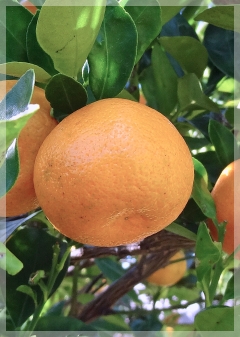 “What’s your orange?” the teacher asked her remote learning class. Before having them answer, she explained the “monkey trap.” In Southeast Asia, hunters capture monkeys by drilling a hole in a pumpkin. The hole is just large enough for a monkey’s hand but too small for his fist. They secure the pumpkin to a tree, put a piece of sweet juicy orange inside the gourd, then retreat and wait. Eventually, an unsuspecting monkey comes along, smells the orange, and reaches through that small hole into the pumpkin. Once he’s grabbed hold of the orange, however, his fist can’t get back through the same hole. The monkey pulls and pulls but can’t free his hand. While he’s struggling to pull out his orange-filled fist, hunters easily throw a net over him. Not understanding that he can’t have both his freedom and the orange, he loses them both. After telling this story, the teacher again asked her students, “What is your orange? What is it you can’t release?”
 Back in 1963, Bob Luman sang “You can take the boy from the country, But you can’t take the country from the boy.” Along the same line, Brookes & Dunn sang that while you could take the girl out of the honkey-tonk, you couldn’t take the honkey-tonk out of the girl. I wonder if Moses thought about singing, “You can take the people out of Egypt, but you can’t take Egypt out of the people!”
 Devotions of the Heart