
Enter his gates with thanksgiving; go into his courts with praise. Give thanks to him and praise his name. For the Lord is good. His unfailing love continues forever, and his faithfulness continues to each generation. [Psalm 100: 4-5 (NLT)]
 When an irrevocable law was signed that prohibited praying to anyone but King Darius, Daniel prayed! Knowing he’d be thrown into a den of lions for doing so, the devout man went home, opened the windows, and prayed to God just as he always had done. Rather than starting with a fervent plea for God’s help, however, Daniel began with a prayer of thanks. His prayer of thanksgiving showed Daniel’s faith in a good God who was present in all circumstances!
Back in the 1630s, in the midst of the Thirty Years’ War when all of Europe was in turmoil, a Lutheran minister named Martin Rinckart also understood the importance of thanking God in all circumstances. Life seemed hopeless, especially in the walled city of Eilenburg where Rinckart lived. Refugees overcrowded the city, people were starving, and the city was surrounded by enemy soldiers. Poverty, famine and disease reigned. Mercenary soldiers committed atrocities, looted, and extorted tribute. Rinckart had to quarter soldiers in his house and endure their plundering of his possessions and stocks of grain. Diseases like typhus, dysentery, and scurvy already were widespread when the plague took control and devastated the population in 1637. And we think we have it tough in 2020!
Rinkart faithfully served the sick and dying. As the last living pastor in town, he performed as many as fifty funerals a day and buried over 4,400 townspeople, including his own wife. It was during this horrific time, one of the darkest in Europe’s history, that Rinckart counted his blessings and wrote a beautiful family prayer of thanksgiving. We know that joyful prayer as the popular Thanksgiving hymn Now Thank We All Our God. Martin Rinckart, like Daniel, offered thanks to God in the midst of challenging circumstances. Can we do anything less?
I saw a cartoon in which the heavy-set husband, after looking down at his skimpy plate of dieter’s salad, looked up at his wife and said, “You better say grace this time. If I do it, God will know I’m lying.” Unlike Daniel and Martin Rinckart, most of us are like him: blind to the blessings of life and deficient in our thanks to God for those blessings, however great or small. Today, as we celebrate our national day of thanks, let us remember that every day should be a day of giving thanks—even if, instead of sweet potatoes, stuffing, turkey, and pumpkin pie, our plates have only lettuce, carrots and celery!
Now thank we all our God, with heart and hands and voices,
who wondrous things has done, in whom this world rejoices;
who from our mothers’ arms has blessed us on our way
with countless gifts of love, and still is ours today.
O may this bounteous God through all our life be near us,
with ever joyful hearts and blessed peace to cheer us;
and keep us still in grace, and guide us when perplexed;
and free us from all ills, in this world and the next.
All praise and thanks to God the Father now be given;
the Son, and him who reigns with them in highest heaven;
the one eternal God, whom earth and heaven adore;
for thus it was, is now, and shall be evermore. [Martin Rinckart)]
 Stories—everyone loves a good one and we all have stories to tell. My children loved hearing their Grandpa tell stories of boyish pranks like stealing watermelons and tipping over outhouses but it wasn’t just his tales of mischief they enjoyed. They relished hearing about him working on the farm, playing basketball and wrestling, working his way through college, having a victory garden, and starting a business. The stories we never heard, however, are the ones I wish he had shared: the stories of his faith journey. He was a Christian, yet I don’t know how he came to be such a man of faith. I know he met his wife at a church social and they both attended the Lutheran church in our town, but that doesn’t tell me when and how the Holy Spirit truly entered his life. It doesn’t tell me about the times he might have doubted or been afraid or the times he knew without question that God was holding his hand or had answered his prayers.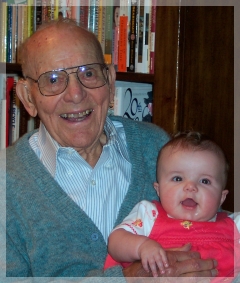
 As a child, I loved the way fairy tales always ended with these words: “and they lived happily ever after.” Real life, however, is anything but a fairy tale. I suspect that after Cinderella and the Prince had two kids, she went right back to cooking and cleaning all day and never went to another ball. Prince Eric’s fondness for ahi tuna sushi and sashimi led to his divorce from Ariel for irreconcilable differences. Snow White ended up under arrest for dwarf exploitation and trafficking in blood diamonds while Barbie, who turned 60 last year, keeps undergoing plastic surgery in an unsuccessful attempt to regain her youth. Because of Ken’s bad investments, their dream house went into foreclosure and their dream cars, boat and motor home were repossessed. In real life, no fairy godmother shows up with a magic wand to turn pumpkins into carriages, mice into horses, and our sweetest dreams into reality.
 In the Pearls Before Swine comic drawn by Stephen Pastis, Pig may be a little naïve but, sometimes, the sweet fellow has the right idea. In a recent strip, when asked why he was wearing an enormous hat decorated with a smiley face, he explained it was “the hat o’ great happiness” and he wore it as a way of sending happiness to others. I thought of Pig’s silly hat of happiness while viewing an ad made by Coca-Cola as part of their 2015 Belgian “Choose happiness” campaign.
