ALL THINGS BRIGHT AND BEAUTIFUL

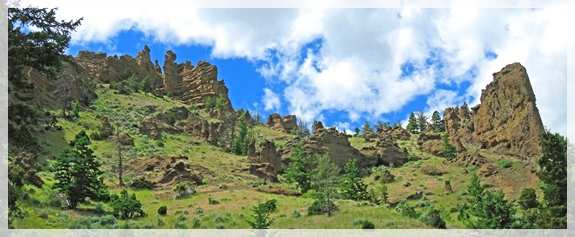
Absarokas - Cody WyomingFor ever since the world was created, people have seen the earth and sky. Through everything God made, they can clearly see his invisible qualities—his eternal power and divine nature. So they have no excuse for not knowing God. [Romans 1:20 (NLT)]

All things bright and beautiful, All creatures great and small,
All things wise and wonderful: The Lord God made them all.
[“All Things Bright and Beautiful” by Cecil F. Alexander]

“When in doubt, trust your horse!” was the sign I’d seen earlier in the corral and so, as we slowly wended our way through the pinyon-juniper forest and up the mountain trail, I trusted my mount. After all, he didn’t want to fall down the ravine any more than did I. When we reached the ridge, I gasped—somewhat out of relief but more so out of wonder. The scenery was breathtaking! As I looked across the Wapiti Valley, I saw the incredible volcanic rock formations of the Absaroka Mountain Range and, when I looked down into the valley, I saw some of what Teddy Roosevelt called “The fifty most beautiful miles in America”. Surrounding us in the sage meadow on the ridge was an incredible array of wildflowers. An abundance of color, there were red Wyoming paintbrush, bright yellow mule’s ears and sunflowers, purple lupine, white snowbells, low pink bitterroot, tall green gentians, delicate bluebells, and a few pale yellow prickly pear cactus. Fritillaries and a white admiral red clover - beebutterfly flitted among the blossoms and a marmot peeked out from behind a rock. So as to not spook the horses or spoil the day for my fellow riders, I silently sang the chorus to All Things Bright and Beautiful.
Only able to remember the hymn’s chorus, I looked up the lyrics when I got home. The author is Cecil F. Alexander. An Irish woman known as Fanny to her friends and family, she lived in the mid-19th century and was married to a clergyman. It is said that she based her hymn on the words of the Apostles’ Creed: “I believe in God the Father, Maker of heaven and earth.” She easily could have been inspired by Psalms 19 or 104. I doubt she ever visited a ranch in Wyoming so she wasn’t thinking of the Absarokas and a colorful mountain meadow. Nevertheless, I imagine the Irish countryside can be just as extraordinary; perhaps Fanny’s inspiration came from visiting some place like Ireland’s Cliffs of Moher where she stood in awe of God’s handiwork.

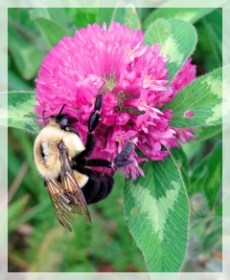
I couldn’t help but think of the Apostle Paul’s words in the first chapter of Romans; we see evidence of God everywhere in His amazing creation and there is no excuse for denying His existence or not knowing Him. It doesn’t have to be majestic mountains and spectacular scenery; God’s workmanship is just as evident in our backyards in the exquisiteness of things like red clover and the wings of a bumblebee. Indeed, “How great is God Almighty, who has made all things well!”

Each little flow’r that opens, Each little bird that sings,
He made their glowing colors, He made their tiny wings.
The purple-headed mountains, The river running by,
The sunset and the morning That brightens up the sky. …
He gave us eyes to see them, And lips that we might tell
How great is God Almighty, Who has made all things well.
[“All Things Bright and Beautiful” by Cecil F. Alexander]

The heavens proclaim the glory of God. The skies display his craftsmanship. Day after day they continue to speak; night after night they make him known. They speak without a sound or word; their voice is never heard. Yet their message has gone throughout the earth, and their words to all the world. [Psalm 19:1-4 (NLT)]

O Lord, what a variety of things you have made! In wisdom you have made them all. The earth is full of your creatures. [Psalm 104:24 (NLT)]

Copyright ©2018 jsjdevotions. All rights reserved.

OUR PRAYERS

Sing praises to God, sing praises; sing praises to our King, sing praises! For God is the King over all the earth. Praise him with a psalm. [Psalm 47:6-7 (NLT)]

O what peace we often forfeit, O what needless pain we bear, All because we do not carry Everything to God in prayer! Have we trials and temptations? Is there trouble anywhere? We should never be discouraged, Take it to the Lord in prayer. [“What a Friend We Have in Jesus” by Joseph Scriven]

ZINNIA“That’s more like it!” I thought as I read Psalm 47; I certainly preferred it to the curses of the previous set of Psalms I’d read. I’m reading the Bible in chronological rather than in canonical order which means that the various books and chapters have been divided and rearranged. As a result, the psalms of lament and complaint were grouped together during David’s trials and the praise psalms were placed after the chapters outlining the duties in the Temple. These psalms of worship, adoration and thanksgiving seem more appropriate for Israel’s book of hymns than the earlier ones about wickedness, treachery, calamity and vengeance.
Although I prefer the joyful psalms, there is a reason Israel’s prayer book has lasted over 3,000 years and continues to be our prayer book today. Rather than a sappy feel-good book of poetry, Psalms reflects the gamut of human experience and emotions. When the disciples asked Jesus how to pray, I’m surprised He didn’t tell them they already knew and direct them to the Psalms for guidance. The Psalms’ words are intense, raw and honest; they conceal nothing. If the Psalmist is suffering, fearful, angry, depressed, or exhausted, he says so as readily as when he expresses his elation, adoration and thanksgiving. Never pretending that all is well when it isn’t, he fearlessly lays out his emotions before God. Wretchedness and joy, pain and jubilation, wickedness and virtue, despair and hope, grief and thanksgiving, fear and confidence: all are articulated. It is in that depth of personal expression and experience that we find words of consolation, faith, trust, and hope.

When I seriously evaluate my own prayer life, I’m nowhere near as honest and bold as the psalmists. Of course, God knows my personal struggles but, unlike David and the rest of the psalmists, I’m not as willing to lay them so passionately or openly at His feet. When Joseph Scriven wrote the words, “Take it to the Lord in prayer,” he meant all of it, not just the pretty stuff. I’m sure God would prefer honest words of grievance to false words of praise any day.

A human heart is like a ship on a wild sea, driven by the storm-winds from the four quarters of the world. Here it is struck with fear, and worry about coming disaster; there comes grief and sadness because of present evil. Here breathes a breeze of hope and of expectation of happiness to come; there blows security and joy in present blessings. These storm-winds teach us to speak with earnestness, and open the heart, and pour out what lies at the bottom of it. … What is the greatest thing in the Psalter but this earnest speaking amid these storm-winds of every kind? Where does one find such words of joy as in the psalms of praise and thanksgiving? … On the other hand, where do you find deeper, more sorrowful, more pitiful words of sadness than in the psalms of lamentation? … And, as was said, it is the best thing of all that they speak these words to God and with God. [Martin Luther, Preface to the Psalter]

The Lord is close to all who call on him, yes, to all who call on him in truth. [Psalm 145:18 (NLT)]

Copyright ©2018 jsjdevotions. All rights reserved.

SACRIFICES

I want you to show love, not offer sacrifices. I want you to know me more than I want burnt offerings. [Hosea 6:6 (NLT)]

And the King will say, “I tell you the truth, when you did it to one of the least of these my brothers and sisters, you were doing it to me!” [Matthew 25:40 (NLT)]

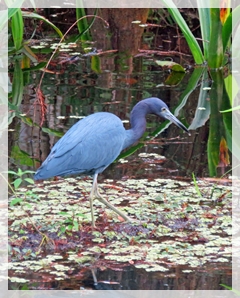
little blue heronA 2013 United Healthcare Group study found that volunteering is linked to better physical, mental and emotional health. Apparently it reduces stress, brings people together, promotes personal growth and self-esteem, strengthens our sense of community, and helps us learn new skills. Something their study did not mention is that volunteering is an act of worship and sacrifice. A sacrifice is an offering to God and every time we sacrifice time, talents, or resources by doing for His Kingdom, we are worshipping Him.
Because Jesus was the perfect and final sacrifice when He died for our sins, we no longer bring pigeons or sheep to God’s altar. Rather than dead animal sacrifices, we offer ourselves as living sacrifices, not to atone for sins but to worship our Lord. When we drop that envelope in the offering plate, give a dollar to a street person, write a check to a charity, or bring groceries to the food pantry, we’re really not giving to the church, homeless, Red Cross, or the hungry; we’re giving to God. When we lift a hammer at a Habitat home, sort clothes at the charity resale shop, pack lunches for the migrant workers, give someone a ride to church, visit the ill or assist at Sunday school, we are worshipping God with our service. Our sacrifice of resources, time, and talent is as much an act of worship as singing hymns or offering prayers of praise and thanksgiving.

The Old Testament often spoke of God being pleased with the aroma of a sacrifice. While our New Testament sacrifices are not burned on an altar and have no aroma, I think God finds them just as pleasing to His senses. When those ancient sacrifices were not the first and best or were accompanied by a bad attitude, God found a stench to them. It would seem to follow that when our Christian sacrifices are offered begrudgingly or we fail to give the best we can, our hypocrisy will cause them to stink, as well.

Let us worship the Lord with our hearts and hands as well as our voices! Let us joyfully worship Him with service as well as with song!

And so, dear brothers and sisters, I plead with you to give your bodies to God because of all he has done for you. Let them be a living and holy sacrifice—the kind he will find acceptable. This is truly the way to worship him. [Romans 12:1 (NLT)]

Therefore, let us offer through Jesus a continual sacrifice of praise to God, proclaiming our allegiance to his name. And don’t forget to do good and to share with those in need. These are the sacrifices that please God. [Hebrews 13:15-16 (NLT)]

Copyright ©2018 jsjdevotions. All rights reserved.

THE PRICE IS RIGHT (Naaman – Part 2)

And there were many lepers in Israel in the time of the prophet Elisha, but the only one healed was Naaman, a Syrian. [Luke 4:27 (NCV)]

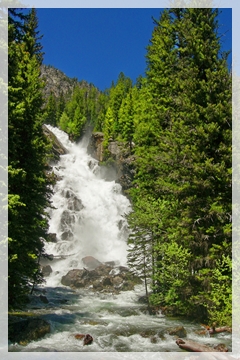
Fish Creek Falls - SteamboatA friend of ours has several jewelry stores in Colorado. When he opened a store in a posh resort town, he priced his goods as he always has: reasonably. To his chagrin, plenty of wealthy shoppers came into his shop but no purchases were made. After three days of disappointment, he re-tagged everything with higher prices. The following day, instead of leaving empty-handed, most shoppers left carrying pricy purchases (and they continue to do so today). Apparently, his rich customers believe affordable means second-rate or shoddy and that quality only comes with an exorbitant price tag.

When Naaman, the commander of the king of Aram’s army, was afflicted with leprosy, he was told that a prophet in Samaria could heal him. Rather than go to the prophet, he went to Israel’s king and offered 750 pounds of silver, 150 pounds of gold, and ten sets of clothing for a cure. The king, of course, could do nothing for the man but Elisha sent a message requesting the leper be sent to him. Rather than the prophet, it was Elisha’s messenger who greeted him with instructions to wash in the Jordan River seven times. A celebrated warrior, Naaman expected an impressive cure, if not from the king, at least from the prophet himself—not a servant’s directions to bathe in a dirty little river. Failing to understand how washing in the Jordan would heal him when the great rivers of Damascus couldn’t, Naaman left in indignation. When his officers convinced him to give the simple solution a try, he was miraculously healed and Naaman returned to Elisha. Convinced in the power of Israel’s God, he offered the prophet the lavish gifts brought from Aram. Elisha politely refused; God’s grace was not for sale!

Are we a little like those wealthy Colorado shoppers or Naaman? Do we tend to associate an item’s worth with its price tag, rarity, or the complexity of getting it? Let’s not make that mistake with God’s gift of grace; it’s free and incredibly simple to receive! Jesus has already paid for our salvation; it’s ours just for the asking and washing in the water of the Spirit is even easier than washing in the Jordan. Nevertheless, while grace is free, as Dietrich Bonhoeffer points out, grace is never cheap!

Cheap grace is the grace we bestow on ourselves. Cheap grace is the preaching of forgiveness without requiring repentance, baptism without church discipline, Communion without confession…. Cheap grace is grace without discipleship, grace without the cross, grace without Jesus Christ, living and incarnate. … Costly grace is the gospel which must be sought again and again…It is costly because it costs a man his life, and it is grace because it gives a man the only true life…what has cost God much cannot be cheap for us. [ Dietrich Bonhoeffer]

God saved you by his grace when you believed. And you can’t take credit for this; it is a gift from God. Salvation is not a reward for the good things we have done, so none of us can boast about it. [Ephesians 2:8-9 (NLT)]

Copyright ©2018 jsjdevotions. All rights reserved.

LEAVING THE NEST

anhinga chicksMy child, pay attention to what I say. … Guard your heart above all else, for it determines the course of your life. … Look straight ahead, and fix your eyes on what lies before you. Mark out a straight path for your feet; stay on the safe path. Don’t get sidetracked; keep your feet from following evil. [Proverbs 4:20a,23, 25-27 (NLT)]

This past spring we watched an anhinga family who’d nested near the swamp boardwalk. At first, mom and dad provided around the clock nest service for their brood of blind and helpless chicks. When the chicks were about three weeks old, rather than returning to the nest with food, the parents would perch nearby. If the youngsters wanted dinner, they had climb out of the nest and hop along a branch to get it. As the babies grew, mom and dad perched further and further from the nest until, at about six weeks, their chicks had to fly for their supper. Within two months of hatching, the youngsters were flying across the pond and the nest was abandoned. Mom and dad, however, were never too far away; perched nearby, they watched their brood learn to fend for themselves around the swamp. I wonder if they worried about their youngsters becoming dinner for an alligator while they fished or sunned on a log. Nevertheless, mom and dad knew their young ones had outgrown the nest; it was time to let them lead their own lives.

Today, my eldest grand receives her high school diploma. An honor student, she’s a delightful young woman and I know her parents are immensely proud of her many accomplishments. That pride, however, is combined with a fair amount of apprehension on their part. Later this summer, this young woman will leave the nest and move 5,500 miles to London where she’ll spend her freshman year of college. Although her parents won’t be worried about alligators, there will be plenty of other concerns that might keep them awake at night.

Our children: we love them, teach them, correct them, encourage them, support them, lead them, and guide them in an effort to prepare them for adulthood. As a mama, I know how difficult it is to let our children go, but let them go we must. After all, parenthood is a job that is supposed to become obsolete; it’s when our children are confident enough to leave home that we know we’ve done our job well. Let us praise God when we see them spread their wings and fly. No matter how far away they go, however, we still have the job of acting as prayer warriors for our children and we’ll do that for the rest of our lives.

Heavenly Father, we thank you for the gift of children and the privilege of leading them into adulthood. Reassure those parents who are struggling with letting go; may their tears of sadness become ones of joy as they watch their children take their next steps. As we release our children to your tender care, we ask you to wrap your loving arms around them and protect them from the dangers of the world. May they always walk in your ways and grow in courage, strength and wisdom. Let your Holy Spirit fill them with faith, hope, and love. Teach them, guard them, lead them and lift them so that they soar!

A wise woman once said to me that there are only two lasting bequests we can hope to give our children. One of these she said is roots, the other, wings. And they can only be grown, these roots and these wings, in the home. We want our sons’ roots to go deep into the soil beneath them and into the past, not in arrogance but in confidence. [Hodding Carter]

My child, never forget the things I have taught you. Store my commands in your heart. … Trust in the Lord with all your heart; do not depend on your own understanding. Seek his will in all you do, and he will show you which path to take. Don’t be impressed with your own wisdom. Instead, fear the Lord and turn away from evil. [Proverbs 3:1,5-7 (NLT)]

May the Lord bless you and protect you. May the Lord smile on you and be gracious to you. May the Lord show you his favor and give you his peace. [Numbers 6:24-26]

Copyright ©2018 jsjdevotions. All rights reserved.

PICTURING GOD

sunriseAfter his baptism, as Jesus came up out of the water, the heavens were opened and he saw the Spirit of God descending like a dove and settling on him. And a voice from heaven said, “This is my dearly loved Son, who brings me great joy.” [Matthew 3:16-17 (NLT)]

 A little boy was busy with his crayons and a large sheet of paper. When his mother asked what he was drawing, he proudly answered, “I’m drawing a picture of God.” The mother tried to explain: “But sweetie, no one has seen God so we don’t know how he looks.” Smiling proudly, the boy continued coloring and reassured his mom. “Well, they will when I get done!”

That story reminded me of last Sunday’s sermon. In honor of Trinity Sunday, our pastor asked us how we picture God the Father, God the Son, and God the Holy Spirit. Had there been any children present, I wouldn’t have been surprised if one had described him as an old gentleman with a flowing beard, wearing a white robe, and sitting on a golden throne. Actually, I was a little surprised that no one said they picture God as Morgan Freeman, George Burns, or even Octavia Spencer. Instead, people shared how they saw or felt God’s presence in things like babies, sunrises, rainbows, and sunsets.

When asked about Jesus, no one described the man who walked the dusty roads of Judea, wept at the tomb of Lazarus, or reassured the doubting Thomas. Instead, they spoke of seeing Jesus in actions like love, sharing, forgiveness, service, and sacrifice. As for the Holy Spirit, people described hearing His still small voice in things like insight, inner conviction or experiencing a compelling force.

Our assignment for the week was to become more aware of our triune God’s presence in our lives. Early Tuesday morning, my husband called to me while I was reading Scripture in my windowless office. When I looked out the east facing window I understood his urgent call: the sunrise was absolutely majestic. As our Creator God announced Himself, remembering Sunday’s sermon, I responded to God’s proclamation by finishing my prayers on the deck while watching the sun rise. The show in the sky was accompanied by a heavenly chorus of robins, wrens, sparrows and cardinals. Our Triune God made His presence known and felt.

I had a pastor who used to start her morning prayer with, “Good morning, Lord. It’s so nice to see your face.” I hadn’t thought about the fact that she was looking out at the congregation when she said those words. Indeed, she was seeing God the Father, God the Son, and God the Holy Spirit in the sea of faces before her. We are, after all, made in His image, saved by His blood, and filled with His Spirit.

As for that little boy’s picture: I don’t know if he drew a grandfather, a sunset, a long-haired man in robe and sandals, a hospice volunteer, a breeze, or a dove descending from the sky. Perhaps he drew Jesus’ baptism when all three of the Godhead were present. The youngster is probably too young to understand the Trinity but I hope, in his own unique way, he found a way to incorporate three beautiful images into one. Praise Father, Son and Holy Spirit!

May the grace of the Lord Jesus Christ, the love of God, and the fellowship of the Holy Spirit be with you all. [2 Corinthians 13:14 (NLT)]

May the grace of the Lord Jesus Christ, the love of God, and the fellowship of the Holy Spirit be with you all. [Matthew 28:19 (NLT)]

Copyright ©2018 jsjdevotions. All rights reserved.